
Charles Dickens was one of those authors whose books, I think, might be very difficult to adapt to cinema. Most of his works have a plethora of characters, and characters, too, who are described in great detail: people who play an important part in the proceedings. The books are long and involved, and there’s a style to them that would be more suited, I’ve always thought, to a television series rather than a film.
But every now and then, there comes along a fine adaptation of a Dickens novel that manages to retain the essence of the original, and translate it effectively to screen. Adapted for the screen (along with several other people) by David Lean, and directed by him, Great Expectations was a film I’d approached with some trepidation, wondering how it would work as a film.
The story begins with orphaned Philip Pirrip ‘Pip’ (Tony Wager) running along near the marshes that border the village he lives in. Pip’s parents died years ago, and Pip has been brought up by his very hot-tempered, sharp-tongued sister, Mrs Joe Gargery (Freda Jackson) and her husband, the blacksmith (Bernard Miles). What Mrs Gargery lacks by way of human kindness, Joe makes up for: he’s a sweet, gentle, wise man, who is very fond of Pip.

Pip goes to the graveyard to his parents’ graves, and it is here that he stumbles on to an escaped convict, a man he later comes to know is called Abel Magwitch (Finlay Currie, in one of his most famous roles). The convict is hungry; he takes away whatever few crumbs Pip has in his pockets, and then tells Pip to get him more, food as well as drink. And, when he learns that Pip is the blacksmith’s charge, he also asks for a file. These instructions come with a caveat: do not utter a word, or else.
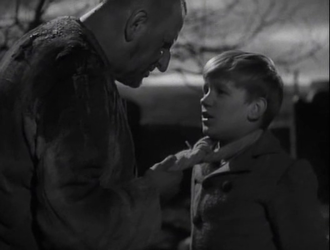
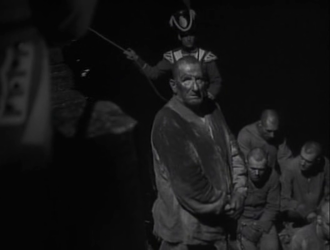
Pip, suitably scared, does as he’s told. He steals food and drink, as well as a file, and takes them to Magwitch. Magwitch files off his leg-irons, eats and drinks, and is, in his gruff way, grateful to Pip. Shortly after, though, Magwitch is arrested again, along with another escaped prisoner. Pip, his eyes meeting Magwitch’s, is able to convey that he did not sneak: this arrest is not because of him.
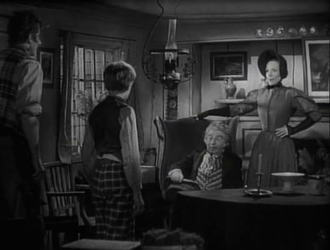
After that dramatic encounter, there’s another, even more dramatic, meeting in store for Pip. Their Uncle Pumblechook (Hay Petrie), who’s very pally with Joe’s sister, comes with an invitation for Pip from the very wealthy Miss Havisham. Miss Havisham lives all by herself in the decrepit old mansion of Satis House, and everybody around knows she’s very strange. She now wants a boy to entertain her: and Pip has been recommended by Uncle Pumblechook.
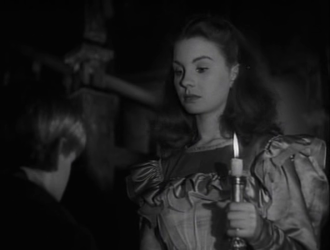
At Satis House, a diffident Pip meets the imperious and rather nasty Estella (Jean Simmons, in her debut role): Estella is Miss Havisham’s adopted daughter, and seems to think very highly of herself. She’s constantly berating Pip and calling him names, but Pip (for no reason I’ve been able to fathom, in the book or in the film) falls instantly in love with her. Even when Estella slaps him, when she rejoices to see him cry, he loves her.
Then, there’s Miss Havisham (Martita Hunt). Miss Havisham was jilted on her wedding day many years ago, and since then has insisted that time stop for her, and for her household. Still clad in her now ragged wedding dress, she sits amid the ruins of her wedding feast, the table still laid with the many-tiered wedding cake and an array of other long-decayed delicacies, everything wreathed in cobwebs, with mice running about hither and thither.
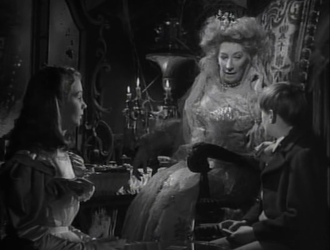
Pip soon becomes a regular at Satis House, where he spends time playing cards with Estella while Miss Havisham watches; or chatting with the old lady while he takes her around in her wheelchair. Miss Havisham realizes quickly enough the effect Estella has on Pip, and she—like Estella, who after all Miss Havisham has trained to be a copy of herself—gloats about it. These two females take special pride in the fact that Pip is so hopelessly, helplessly fascinated by Estella, even though she treats him like dirt.
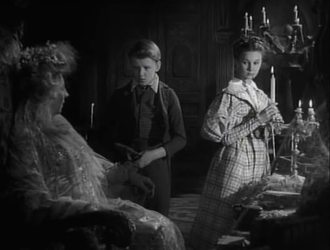
One day Pip meets some of Miss Havisham’s sniffy relatives, come to greet her on her birthday. Another day, he briefly encounters a lawyer named Mr Jaggers (Francis L Sullivan), though Pip doesn’t come to know of this man’s identity till much later.
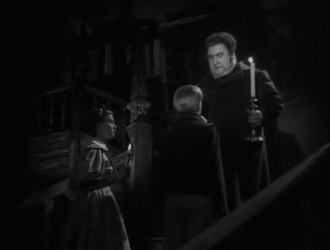
And one day, as he’s walking through the grounds of Satis House, Pip meets another boy (John Forrest), who challenges Pip to a fight, and is very good-natured about it all. Including the fact that Pip manages to fell him more than once.
When Pip turns fourteen and his apprenticeship with Joe begins, Pip cannot come to Satis House any more. For six years, he labours away at the forge, training to be a blacksmith (and growing up into John Mills in the process) …
Until one momentous day, when Mr Jaggers comes back into Pip’s life. And he brings astonishing news: Pip has been left a handsome bequest by some unknown benefactor. He is to move to London, there to become a gentleman. He is not to ask who this anonymous benefactor might be.

Thus, suddenly, Pip finds himself catapulted into the high life in London. Here, arrangements have been made for Pip to stay with a young man named Herbert Pocket (Alec Guinness, in his first speaking role onscreen), whom Pip soon recognizes as the boy who had challenged him to a fight in the grounds of Satis House. Herbert and Pip, within moments of their meeting, are firm friends, and it is Herbert who shows Pip the ropes when it comes to living in London.
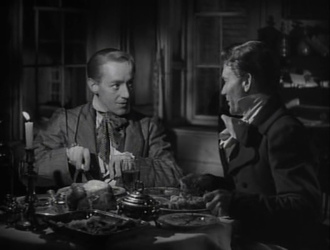
And it is to Herbert that Pip turns when, one stormy night, a long-forgotten figure from Pip’s childhood reappears, and with an unsettling secret to reveal.
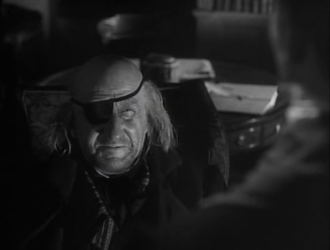
Great Expectations got several nominations at the Academy Awards in 1948, including one for Best Picture and another for Best Director; the two awards it did win, though, were for Best Cinematography (Black and White) for Guy Green; and for Best Art Direction-Set Direction (Black and White) for John Bryan and Wilfred Shingleton. It won or was nominated for many other awards, and is regarded as one of the best cinematic adaptations of a Dickens novel.
What I liked about this film, what I didn’t like, and come comparisons:
Yes, a lot to fit into a few paragraphs, but I think the best way to analyze this film is to view it as a comparison to the novel from which it has been adapted. Dickens’s Great Expectations is not an excessively long novel, but it’s complicated (see my review here), and it has a large cast of characters, so I would not have thought it an easy work to adapt for the screen, especially for cinema, which is bound by time limits more strictly than television is (for me, most of Dickens’s better-adapted works, like Little Dorrit, David Copperfield and even Great Expectations, are most faithful to the book in their TV series forms).
In that context, David Lean’s work here becomes even more praiseworthy, when you see how well this is adapted. The film is not, of course, a completely faithful copy of the book (that would be impossible), but the way it’s been adapted, it retains the spirit of the book superbly. The two major incidents of Pip’s early life—his encounter with Abel Magwitch, and the visit to Satis House, including his interactions with Miss Havisham, Estella, a young Herbert and Mr Jaggers—are allowed to remain pretty much intact, but beyond that, Lean takes artistic liberties in cutting out superfluous bits and tweaking the story (not changing it completely, as so many scriptwriters/directors are prone to doing). For instance, the long-drawn-out illness of Mrs Joe Gargery is done away with, and the villainous Orlick is missing from the film. Once Pip arrives in London, there are many more thus shortened sections, with fewer of the humorous digressions, the peripheral characters, and (naturally) the narrator’s voice.
The end result is an enjoyable, interesting film. The acting is top-notch, though I must admit John Mills, by then close to 40 years of age, doesn’t make a believable 20-year-old. The award-winning cinematography is atmospheric and impressive (Pip in the cemetery, or Pip running along near the marshes, are among the most visually striking scenes, as is the climactic scene on the river). And you get a very good sense of Dickens, including the somewhat (to me) unconvincing, hard-to-swallow ‘romance’ between Pip and Estella (the latter, by the way, played as an adult by Valerie Hobson).
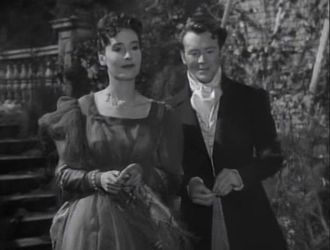
Highly recommended. You can watch the film online, here.
 Dustedoff
reading your review of a film is like watching a very well made video summary of it. thanks a lot for helping us generate visuals on our minds’ screens through your magical way of writing. Good luck and godspeed to you!
LikeLiked by 1 person
It is kind words like this that encourage me to go on. Thank you so much. You have made my day.
LikeLike
you’ve been making our days for years now. thank you very much for that. one of the things i do whenever i find time besides cooking and watching sitcoms, is reading your film reviews. it gives the same joy. please keep inspiring us by posting your original take on things.
LikeLiked by 2 people
Thank you so much. I am really grateful for your kindness. Not too many people take the time or the effort to offer such positive comments, little realizing, perhaps, that it can make a huge difference.
LikeLike
Your review is dead on. I had seen this film a long time ago and have always regarded it as a wonderful adaptation. Great Expectations is one of my favorite works of Dickens.
LikeLiked by 1 person
Yes, it’s an excellent adaptation, isn’t it? I also agree with this book being an especially good Dickens work – I think the balance between grimness, humour, adventure etc is very good in Great Expectations; some of his other books tend to be too depressing for me.
LikeLike
We had _Great Expectations_ in our academic course in final year B Sc in 1973 and hence I was raring to see it when I saw it is on YouTube. I also wondered how such a variety of characters can be accommodated in a feature film, but was happy on seeing David Lean’s version.
A very apt review. Thanks!
LikeLiked by 1 person
I am so glad you agree with this review. Yes, indeed, this is a very good adaptation – Lean manages to retain the essence of the book excellently without really compromising on the plot.
LikeLike
”
Here, arrangements have been made for Pip to stay with a young man named Herbert Pocket (Alec Guinness, in his first speaking role onscreen),
”
Fine review. And rare inro about Alec Guinnes. .quoted above. Thank you.
LikeLiked by 1 person
Thank you. Glad you enjoyed this review.
LikeLike
Great novel, great movie and a great review.
I’ve always had great empathy for Pip.
LikeLiked by 1 person
Well said. Pip does come across as a character deserving of empathy – not a ‘poor fellow’ like Oliver (who always inspires pity in me, not empathy).
LikeLike
Hi
I haven’t seen this adaptation, there are plenty of those I am sure. I watched the one with Ralph Fiennes, Helena Bonham Carter and Robbie Coltrane.
That was good, but I would love to watch this one especially after reading your review.
Anagha
LikeLiked by 1 person
I haven’t watched the Ralph Fiennes version – I must try and get hold of that sometime. Thank you for the recommendation!
LikeLike
Lovely review, Madhu (when is it not?) I am always wary of books being adapted into films because rarely does the end result match what my imagination conjured up. Great Expectations is my favourite Dickens’ novel (with the exception of The Pickwick Papers) and I particularly loved this adaptation of it.
LikeLike
Thank you, Anu! And yes, I could count on the fingers of one hand the films that have matched up to my expectations from the novel they were based on. It’s such a shame that film-makers tend to tamper so ruthlessly even with novels that you might imagine would be not too difficult to adapt fairly faithfully for the big screen. Lean did a very job with this one.
LikeLike