Ten of my favourite workplace songs

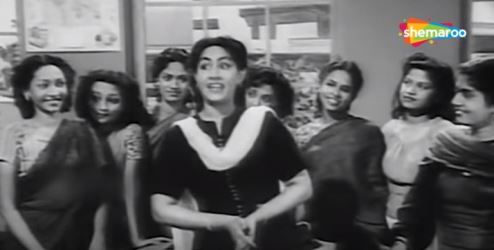
Several months back, as I was posting my housework songs list, I couldn’t help but think that there are a fair number of songs, too, of people going about singing as they do other work: paid work, not just the unpaid labour that is housework. Work done with the hands, especially—repetitive, monotonous work which requires little focus—is easily accompanied by a song. A workplace songs list seemed doable.

My original plan had been to restrict the songs in this list to those where the singer works as he/she sings. But then I realized that a few of my very favourite songs have people singing in their workplaces, though not necessarily working at the same time. While I have tried to ensure at least some of these songs have people working while singing, some are merely what the title of the post indicates: workplace songs. Whether you’re actually working, or taking a break while you sing a song.

Continue reading

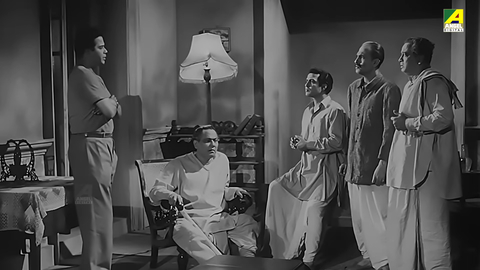
Chupi Chupi Aashey (1960)

In 1947, as a birthday present for Queen Mary, Agatha Christie wrote a radio play called Three Blind Mice, about eight people snowed in, in a manor—one of them (who, we don’t know till the end) a murderer. Later adapted into a short story and then a theatrical play called The Mousetrap (because Three Blind Mice was already the title of a play), Christie’s work set a record. The Mousetrap, which saw its 30,000th performance in March 2026, is the longest-running play in history.

Such an iconic play, such a popular one, surely it must have been adapted for the screen many times (especially given the popularity of Christie’s books as source material for cinema)? But no; when the play was first staged at West End, one of the clauses in the contract was that no work on a cinematic adaptation could begin until the West End production had been closed for at least six months. And the play continues to be performed at West End…

But that, it seems, didn’t stop film-makers in other countries from using the story and making their own versions of it. The Bengali film Chupi Chupi Aashey (‘He Comes Stealthily‘) is an adaptation of The Mousetrap, and was supposedly the first Indian film to be based on a book by Agatha Christie.

Continue reading

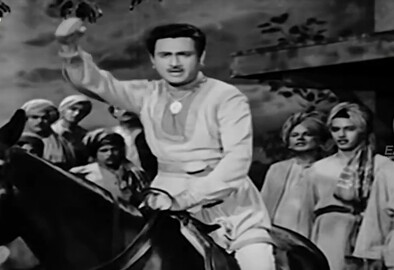
Amardeep (1958)

Given that I am a fan of mid-1950s-early 1960s Dev Anand, and that this film also stars Vyjyanthimala (whom I like a lot), it should come as no surprise that I’ve had this film bookmarked for several years now. Somehow it kept getting ignored, until some weeks back, when I discovered that Amardeep was a remake of the 1956 Tamil film Amara Deepam (starring Shivaji Ganesan, Savitri, and Padmini). And that Amara Deepam was based on Random Harvest.

Continue reading

Asha Bhonsle: Ten Duets, Ten Co-Singers: Part 2

When I posted this list  of ten Asha duets last week, the plan had not been to post a follow-up list as well. But then, blog readers began commenting on the post, and several of them posted songs that I really like, with playback singers I hadn’t mentioned. After all, when you’re doing a list of just ten songs, the tendency—and I admit I succumbed to this temptation—is to include your favourite songs. All the duets with Rafi, Kishore, Mukesh, et al, featured there. And those songs with these singers that didn’t actually get listed, I at least made it a point to mention.

Even when I’d posted that list, I was ruing the fact that I had still not got around to writing about Asha’s songs with, say, her sister Usha Mangeshkar. There were, in addition, a few rare songs with relatively little-known singers, too, that I had had in mind, but hadn’t written about.

So many good songs on the back burner. I decided a Part 2 was in order. So here it is. Ten duets sung by Asha Bhonsle with a fellow singer who wasn’t listed in the earlier post. As always, these songs are all from pre-1970s Hindi films that I’ve seen. These are in no particular order.

Continue reading

Ten Singers, Ten Duets: The Timelessness of Asha Bhonsle

(Apologies for the hiatus, the result of a series of unavoidable circumstances). 

Last month, when I posted a solos list as a tribute to Asha Bhonsle, a couple of blog readers asked me if I would be posting one (or more) follow-up posts. After all when Lata Mangeshkar passed away, I ended up publishing five posts, a total of fifty songs showcasing the solos Lata had sung with fifty different music directors or music director pairs. Surely Asha merited something similar? Yes, indeed she does, but I personally think Asha’s most stunning solos were sung for a handful of composers like OP Nayyar and SD Burman during the 1950s and 60s. She did sing songs for a wide range of music directors, but I find a lot of those songs relatively forgettable.

I decided therefore to focus this post on another aspect of Asha’s career: her duets: Romantic, funny, flirtatious, poignant—and so much more. Songs where her voice merged with that of a co-singer to create magic.

Continue reading

Ten Composers, Ten Solos: The Magic of Asha Bhonsle

I know I am late. Asha Bhonsle passed away, at the age of 92, on April 12. Within a couple of hours of the news of her death, there were tributes cropping up all across the net. Song lists, essays, memories, some misplaced attempts to jump on the bandwagon even if one wasn’t too sure what the fuss was about.

I am late, yes. I have to admit I was a little benumbed—Asha has always been one of my very favourite singers (dare I be an iconoclast and admit that I liked her more than Lata?). But more than that, she symbolized for me an older, sweeter time: an era of kinder films, gentler films, of sublime music and innocence. Asha was the last of the stalwarts, the last one standing of those who had created the magic of the 50s and 60s.

Continue reading

Raahi (1952)

This was a film I watched by way of tribute to Nalini Jaywant earlier this year. I had initially not planned to review it, but there were several points about Raahi that I found unusual enough to make me decide it needed to be documented.

I first heard about Raahi on Anitaji’s blog, where she mentioned that it was based on Mulk Raj Anand’s novel Two Leaves and a Bud—which is where one of the songs of the film, Ek kali aur do pattiyaan, draws its inspiration. Anitaji had included this song in a list of songs picturized in tea gardens, and it intrigued me. The story, set in a tea garden where friction between the workers and a heartless, predictably colonial (money-minded, racist, contemptuous) management causes problems, sounded like something that might merit watching.

Raahi begins on a country road in Assam in 1945. A Britisher (S Michael) going by in a jeep loses his temper at Ramesh (Dev Anand), who’s walking in the middle of the road.

Continue reading

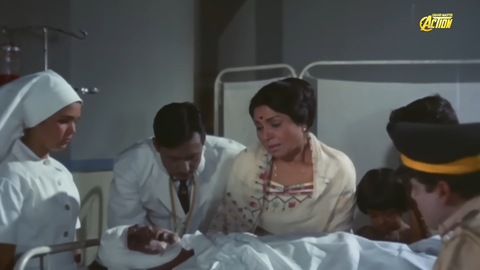
Ashwamedham (1967)

My go-to expert for opinions on old Malayalam and Tamil cinema is Anu. Some years back, I’d been complaining to Anu about how so few old films from the South are available with English subtitles, but then I found a bunch of them on Jio HotStar. Anu asked which ones I’d found, and then was kind enough to give me her opinion on the films. About Ashwamedham, she wrote: “Ashwamedham deals with the social attitudes towards leprosy patients. Fabulous performances, especially from Sathyan. If you want to see the then-reigning triad of Malayalam actors from that age – Sathyan, Prem Nazir and Madhu – this is the film to watch.”

That sounded good, so why not watch (finally!)?

The film begins in the home of Keshavan (PJ Antony), whose wife Laxmi (Santha Devi) is expecting her tenth child. She’s quite sick of the whole thing and had been wanting to get surgery done to prevent her getting pregnant again, but Keshavan had refused. Now she’s pregnant again, and very upset about it. Already they have lost three children; already they have four daughters whom they need to marry off… the strain, both financial as well as emotional (not to mention physical, on Laxmi) is tremendous.

Continue reading

Ten of my favourite ‘Housework Songs’

This needs some explaining. I don’t mean songs that extol the virtues of doing housework (as someone who does more housework than the average middle class Indian woman, I cannot imagine ever extolling the virtues or joys of housework—it’s possibly the most thankless, relentless and utterly monotonous job out there). But the monotony of housework, the fact that you can get nearly all of it done without really applying your mind or having to concentrate, means that you are free to do something else. Especially something musical.

My mother-in-law invariably turns on the radio and listens to songs as she goes about her work. But my mother, from as far back as I can remember, used to sing. As she went about dusting and the cooking and whatnot, I’d hear her singing. She still has a wonderful voice, and back in her heyday, it was stunning—and her repertoire was amazing, all the way from hymns to hits by Elvis and Jim Reeves (and some old Hindi songs: as lullabies, she sang O mere pyaar aaja to my sister, and Yehi woh jagah hai to me).  I too, when I’m doing housework—especially when I’m cooking—sometimes sing. All sorts of songs.

So, too, do a fair number of people onscreen. Here, then, are ten songs that feature people singing as they go about doing housework. Besides my usual criterion, about the film in question being a pre-70s one that I’ve seen—I’ve imposed one more rule: that the person should be doing some work in the course of the song (this is why Kismat ki hawa kabhi naram doesn’t feature on my list; while Bhagwan’s character is in a kitchen, surrounded by pots and pans and even wearing a chef’s cap, he never uses any of those for anything remotely connected to housework).

Continue reading

Walk Like a Dragon (1960)

I don’t know how many of those reading this post know about the actor James Shigeta. Shigeta, a third-generation Japanese American, was one of the first Asian-Americans to really make a mark in Hollywood, playing roles that were different from the (till then) standard supporting characters. I first saw Shigeta in the excellent noir The Crimson Kimono, and then in the delightful (and unusual) Rodgers and Hammerstein musical Flower Drum Song, but this is one film I’ve been wanting to watch for a while. I finally discovered it on YouTube, and so here’s a review.

Walk Like a Dragon is set in the 1870s, in California. Linc Bartlett (Jack Lord) owns a freight line and is headed home to the town of Jericho when he stops en route at San Francisco, to collect a consignment. The old Chinese man from whom he takes the goods asks him for a favour: with him is a young Chinese fellow, newly arrived from China, who needs to go to Jericho. Will Linc take him along? 

Continue reading