
Lata Jagtiani’s Thank You, Guru Dutt! was released a few months back, to mark Guru Dutt’s birth centenary year. This is a book that follows on the heels of several other (well-acclaimed) books about Guru Dutt, his life and cinema: Nasreen Munni Kabir’s Guru Dutt: A Life in Cinema; Yasser Usman’s Guru Dutt: An Unfinished Story; and Ten Years with Guru Dutt: Abrar Alvi’s Journey, by Sathya Saran, among others. I will admit that I haven’t read any of the aforementioned books, so for me Jagtiani’s book was a first, in that sense.

The author divides her book into three sections. The first part focuses on Guru Dutt’s cinema; the second, on the people who were close to him—his family, his close friends, people he worked with over a period of several decades. The third section is about the music in Guru Dutt’s films.
After an introduction, followed by various essays on the ‘genius of Guru Dutt’ (Jagtiani’s description, not mine), a timeline and Guru Dutt’s filmography, Jagtiani launches into a chronologically-arranged listing of Guru Dutt’s films, which forms the first part of the book: Guru Dutt’s Film Albums. The films here are listed by year and include works in which Guru Dutt was involved, in whatever capacity: producer, director, choreographer, actor, etc. For each film, there’s an exhaustive listing of cast and crew; songs (including details of singers and actors for each song, as well as notes on songs that were subsequently deleted); and a synopsis.
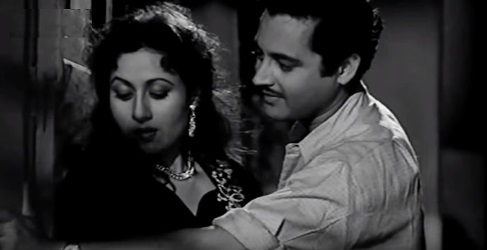
Accompanying this information about each film are titbits of information, interesting little behind the scenes trivia, and Jagtiani’s analysis of the film in question. This becomes a focal point, in particular, of Guru Dutt’s most important works: Pyaasa, Kaagaz ke Phool, and Sahib Biwi aur Ghulam. For these films, Jagtiani explains in detail how the film came about, how it fell into place, how it (in some cases) evolved over time during the production. What themes, what nuances, what depths Guru Dutt was trying to show through the medium of the film.
The second part of the book, Guru Dutt’s Family and Friends, includes articles about each of the people who had a significant impact on Guru Dutt’s life, whether personal or professional (or, in some cases, both). Essays devoted to each of these people draw from their reminiscences, from biographies, interviews, letters, and more; and each serves to help delineate the character of Guru Dutt that much better. For me, this was one of the more insightful parts of the book, because it really brings Guru Dutt to life. The generosity, the sensitivity, the gentlemanliness—and yet, the bouts of drunkenness, the (perhaps paradoxical?) insensitivity, the constant battle with issues of mental health. There are some really piercing, hard-hitting anecdotes and memories here, from people like Bimal Mitra and Abrar Alvi, as well as Guru Dutt’s own family, which shook me up.
This—the way Jagtiani is able to build up a picture of the man and the director—is what I found most impressive about Thank You, Guru Dutt! She does this both for Guru Dutt the man as well as Guru Dutt the director, and she does it very well.
Guru Dutt, of course, is one of those rare film-makers who seems to have pretty much bared his soul in at least two of his films; but Jagtiani does an especially good job of drawing parallels between his life and his cinema. Her way of highlighting themes in his cinema (and how they might reflect his personality) is perceptive, and mostly subjective.
The subjectivity, I think, suffers a bit when it comes to discussing Kaagaz ke Phool and Pyaasa. Granted, both are excellent films and deserve the in-depth analysis that Jagtiani subjects them to; but after a while, it seemed to me that her praise of these two films became rather repetitive. This was one area where I felt the author’s admiration for Guru Dutt went overboard and tipped the book over into the realm of hagiography. A bit more restraint (and stricter editing) might have helped tone this down.
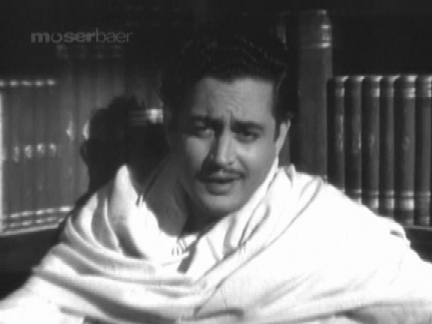
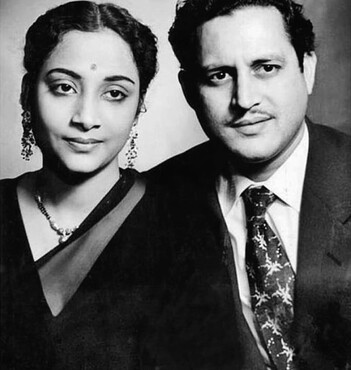
The book has plenty of photographs—stills from the films, posters, and photographs of the people mentioned in the book. While the screenshots from the films don’t really need any explanation, I would have appreciated captions for the other photos: there were several which made me wonder what occasion this was, or who so-and-so was, etc.
There’s one other area in which it seemed a little more effort might have helped: the Hindi. Besides the Hindi dialogues which are quoted, there are lots of other sentences in Hindi, primarily reminiscences of people connected with Guru Dutt. None of these have been translated into English, which could be a problem for some readers (especially given the fact that Guru Dutt has a decent fan following even outside India).
One last niggle: the comments on the use of Urdu. Jagtiani, in comments on films like Pyaasa and Jaal, remarks on the characters’ use of ‘chaste Urdu’ (I assume by that she means ‘highly Persianized Urdu’). She implies that a Hindu (Pyaasa’s Vijay) writing in, and speaking, chaste Urdu, is an anomaly—as are the ‘Indian Catholics’ of Jaal, speaking equally ‘chaste Urdu’.
This, I will concede, is no fault of Jagtiani’s; it’s a widespread stereotype. Just to set the record straight: it’s only in recent times that Urdu has begun to be associated with Muslims. From the beginning, Urdu was a non-religion-specific language, and it remained so till at least well into the 1950s. Both my father (who is Christian) and my father-in-law (who is Hindu) began their schooling with Urdu as the medium of education; my father is still fluent in it, and in fact prefers to use his Urdu Bible rather than the King James version. (If Jagtiani had written that ‘Goan Catholics’ wouldn’t know chaste Urdu, I would have agreed; but ‘Indian Catholics’ might cover many outside Goa, and in parts of North India too, who may conceivably have been fluent in Urdu).
Interestingly enough, a recently-released book addresses this very stereotype: edited and translated by Rakshanda Jalil, Whose Urdu is it Anyway? Stories by Non-Muslim Urdu Writers is a collection of sixteen short stories, all originally written in Urdu, by non-Muslim writers. Included in the anthology are stories by names well-known in the realm of Hindi cinema: Rajinder Singh Bedi, Ramanand Sagar and Gulzar among them.
But, as I mentioned, I don’t hold this against Jagtiani; it’s a common enough fallacy.
Even though I’ve devoted the last few paragraphs of this review to all that might have been better about this book, I must end with the admission that despite all those niggles (and they are niggles; none of these is a huge problem, or really impacted my enjoyment of the book), I was glad to have read this. Lata Jagtiani has obviously done a lot of research, and it shows. This book is expansive, and it goes deep into its subject. It really shines the spotlight on Guru Dutt, illuminating him, warts and all.
 Dustedoff
I must confess that I haven’t read any of the books except Abrar Alvi’s years with Guru Dutt. I must also confess to a bias against Ms. Jagtiani’s writing. That said, this book sounds interesting. Though again, like you, I find it weird that she thinks that Hindus didn’t speak Urdu. You would have thought that with all the research she undertook, and the praise lavished on Pyaasa, she would have checked that assumption at the door?
if she only knew about the famous Hindu poets who wrote in Urdu…
I might pick this up the next time I’m in India. Thanks for the review, Madhu.
LikeLiked by 2 people
if she only knew about the famous Hindu poets who wrote in Urdu…
Exactly! Some really stellar names there. Interestingly, one of the best books I’ve read on Urdu love poems is by a Hindu, Sanjiv Saraf. :-) Or also, actually, the very fact that a good deal of even Shailendra’s poetry is more Urdu than the Sanskritized ‘Hindi’.
LikeLiked by 1 person
On behalf of Lata Jagtiani, who was unable to post this to WordPress:
Thanks so much for reading the book and giving it a balanced critique! You have made excellent observations, Madhulika Liddle, grateful for your analysis!
LikeLiked by 2 people
You’re welcome, Lata. Thank you for a book that I enjoyed a lot, and learnt much from!
LikeLiked by 1 person
You have nicely assessed the book. Hearty thanks for sharing your take on the same. Appears to be a must read for the fans of Guru Dutt. I have reviewed Guru Dutt : A Life in Cinema by Nasreen Munni Kabir (sent you the link of my review too). It’s a simpler book and contains an article written by Guru Dutt himself – Classics and Cash.
LikeLiked by 2 people
Thank you, Jitendraji.
Many years ago, I had happened to share a cab with Nasreen Munni Kabir – both of us had been invited to the Bangalore Lit Fest, and the organisers had booked a cab for us to share from the airport to the city. I remember her also recommending this Guru Dutt book. I must read it sometime.
LikeLiked by 2 people
Sounds to be a nice book, although the comment about Urdu hurts, after we all learnt in school, that Premchand wrote in Urdu. The way Urdu is ostracized in India nowadays, I would love to learn it just out of spite.
LikeLiked by 3 people
The way Urdu is ostracized in India nowadays, I would love to learn it just out of spite.
Incidentally, my sister has worked to make herself fluent in Urdu, mostly of course because it helps in her work – she specializes in the history of 19th century Delhi, so a lot of primary research has to be done in Urdu. Because pretty much everybody in Delhi – Hindus, Sikhs, Christians included – used that language. :-)
LikeLiked by 2 people
Madhuji,
I feel there are too many biographies and books on Guru Dutt. I am not sure the data which is being used is any different. I have read two of the books you mentioned in the beginning. They are no different. Yaseer perhaps had greater access to Lalitha Lajmi ji and thus may have more data on Guru Dutt as a brother and a family man.
Anita
LikeLiked by 2 people
I agree with you. Lata Jagtiani does quote all of these books (and various online interviews, some biographies etc) but I had a strong suspicion, even while I was reading, that if I read any of the other books, I would end up reading pretty much the same things over and over again, just expressed in different words. Guru Dutt – not just because of his cinema, but also his very tragic life – is one director many people have focussed on for their books.
LikeLiked by 1 person