Sleeping Car to Trieste (1948)

This little-known British film was recommended to me by YouTube, and given that I am a fan of train films (The Lady Vanishes is a favourite, as are Murder on the Orient Express and North-West Frontier), I decided I had to watch.

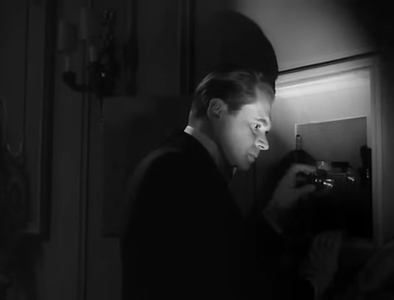
The story starts off with a bang (actually, almost literally: there’s a fatal gunshot in the very first scene). In an unnamed embassy in Paris, a party is in progress, when one of the guests, a Captain Zurta (Albert Lieven) slips out of the ballroom, makes his way to one of the more secluded rooms in the embassy, and having broken into a safe there, purloins a diary. He is caught red-handed by a footman who enters just then.
Continue reading

Great Expectations (1946)

Charles Dickens was one of those authors whose books, I think, might be very difficult to adapt to cinema. Most of his works have a plethora of characters, and characters, too, who are described in great detail: people who play an important part in the proceedings. The books are long and involved, and there’s a style to them that would be more suited, I’ve always thought, to a television series rather than a film.

But every now and then, there comes along a fine adaptation of a Dickens novel that manages to retain the essence of the original, and translate it effectively to screen. Adapted for the screen (along with several other people) by David Lean, and directed by him, Great Expectations was a film I’d approached with some trepidation, wondering how it would work as a film.

The story begins with orphaned Philip Pirrip ‘Pip’ (Tony Wager) running along near the marshes that border the village he lives in. Pip’s parents died years ago, and Pip has been brought up by his very hot-tempered, sharp-tongued sister, Mrs Joe Gargery (Freda Jackson) and her husband, the blacksmith (Bernard Miles). What Mrs Gargery lacks by way of human kindness, Joe makes up for: he’s a sweet, gentle, wise man, who is very fond of Pip.

Continue reading

People Will Talk (1951)

This wasn’t the film I’d been meaning to watch last weekend. That was the Humphrey Bogart-starrer, The Treasure of the Sierra Madre. But ten minutes into that, and I realized my mind was wandering. It’s probably a good film (it won several Oscars), but right then, I wasn’t in the mood to watch it. So I scrolled through my list of bookmarked videos, and came across a Cary Grant film, People Will Talk.

Cary Grant, I will have you know, is one of those rare actors for whom I will watch any film (and I have watched some less-than-enjoyable ones, simply because he happened to star in them). Mostly, though, his films range from good to excellent, so I decided I’d watch this one, dedicated to “… one who has inspired man’s unending battle against Death, and without whom that battle is never won… the patient.”

Continue reading

Quo Vadis (1951)

For Easter, it seemed appropriate to rewatch (and, subsequently, review) a film with a biblical touch to it. I could’ve opted for The Robe or the superb Ben Hur, but decided instead on Quo Vadis—partly because it’s been a while since I saw the film. And also, perhaps, because it stars two people who are just such a feast for the eyes: Robert Taylor and Deborah Kerr. As if that wasn’t enough reason, Quo Vadis also boasts of a brilliant performance by Peter Ustinov.

Quo Vadis - Peter's memories

Continue reading