Ten of my Favourite Ravi Duets

Another birth centenary, and another list of favourite songs from the 1950s and 60s.

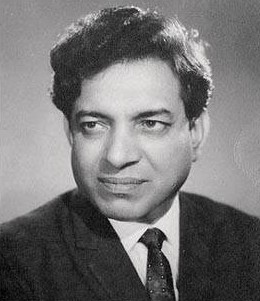
Today, March 3, 2026, marks the 100th birth anniversary of the composer mononymously known in Hindi cinema as Ravi, and in Malayalam cinema as Bombay Ravi. In the course of a long and illustrious career, Ravi composed music for a very wide range of films, first in the Hindi film industry and later mostly for Malayalam cinema. I will leave those who know his work in the latter to compile lists of his Malayalam songs; what I would like to focus on here are the songs he composed for Hindi films. For films like Gharana and Khandaan, yes (both of which won him Filmfare Best Music Direction Awards); but also for many other films—both hits like Waqt and Chaudhvin ka Chaand, and films that were otherwise duds but the songs of which have far outlived the films themselves.
Continue reading

Ten of my Favourite ‘Multiple Version’ Songs: Duets

By which I mean two versions of the same duet.

This is part of an admittedly sporadic series of posts that focus on multiple versions of songs in old Hindi cinema. Composers and film directors have, again and again, homed in on songs that have staying power: songs that audiences wouldn’t mind listening to repeatedly in a film. Multiple version songs, as I’ve shown in previous posts of this type, take various forms. The type, for instance, where both a woman and a man sing the same song, but as solos. Or where a song is sung both as a duet and as a solo. Or, even, where the same singer (male or female) sings the same at two different points, but usually in two different moods.

And then there’s this: where a duet is repeated. Invariably, in two distinct moods. Given that the overwhelming number of duets in Hindi cinema tend to be romantic ones, there’s a certain predictability to the tones of these songs. One version is, more often than not, a happy version: two lovers celebrating their love and vowing eternal fidelity. The other version, just as often, is the complete opposite in tone. Things have fallen apart, fate (or disapproving parents, nasty relatives, lecherous villains, etc) have intervened and either sown the seed of suspicion, or used emotional blackmail to force one of the couple into giving up the other. There are also sorts of possibilities—and they lead, as below, to the old duet being again sung (often as an impossible duet, the estranged lovers physically too far apart to be really singing together).

Continue reading