
This post is a little late. It was the birth centenary of Hindi film lyricist, composer, and choreographer Prem Dhawan earlier this year (he was born on June 13, 1923, in Ambala), but what with one thing and another, I just couldn’t find the time to work on this post back then. Anyway, better late than never, I guess. And Prem Dhawan was one person I did want to write about on this blog, because he is one of those rare individuals who didn’t merely excel in one realm of the film industry; he was rather more of a polymath than most.
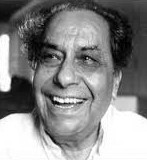
Prem Dhawan was educated in Lahore, where his father was warden at Lahore Jail. After college studies, Dhawan moved to Bombay, where he joined the Indian People’s Theatre Association (IPTA)—which, of course, had as members many film personalities, including the Anand brothers, Guru Dutt, Balraj Sahni, Salil Choudhary and Sahir Ludhianvi. Dhawan studied dance under Uday Shankar and Ravi Shankar, and began writing patriotic songs for IPTA. His first songs were for the IPTA film Dharti ke Laal; at the same time, he was also assisting music director Khurshid Anwar in composing music.
Over the course of a career extending across over four decades, Prem Dhawan composed music (for well-loved songs in films like Shaheed and Pavitra Paapi), wrote hundreds of songs, and choreographed dances. To create a ‘ten of my favourite Prem Dhawan-as-a-composer songs’ would have been impossible, because most of his compositions are from years beyond this blog’s focus. I could have tried my hand at ‘ten of my favourite dances choreographed by Prem Dhawan’, because that could have included gems like Udein jab-jab zulfein teri and Hariyaala saawan dhol bajaata aaya; but, to be honest, I know too little about dance to hope to do justice to that. But yes, I will point you to two further instances of Dhawan’s onscreen appearances related to dance. Here, in Ari ho mohe chhed gaya (Singaar, 1949) he dances with Cuckoo: Corrected to add: please see this link, which explains exactly where Prem Dhawan appears as a dancer in Singaar.
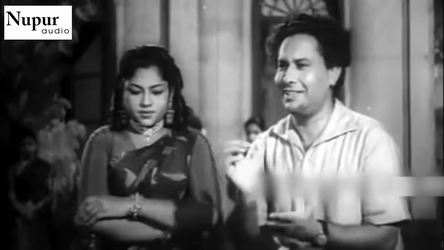
And here, in Sitaaron se Aage, he appears onscreen as a dance ustad, ‘Masterji’, teaching a theatre actress to dance. You can see the scene beginning at about the 15:15 mark in this video.
I will therefore restrict this post to talking about the songs Prem Dhawan wrote. As always, these are from pre-70s Hindi films that I’ve seen (note that Dhawan also wrote and composed songs for Punjabi cinema; his lyrics for the 1970 Punjabi film Nanak Dukhiya Sab Sansar won him the National Award). Also, as is usual when I’m compiling a list for a lyricist, you can refer to, and download, a transliteration of the lyrics, along with my translation into English, here.
Here are the songs, in no particular order:
1. Ae mere pyaare watan (Kabuliwala, 1961): Perhaps because of Prem Dhawan’s early grounding in IPTA, and the fact that he wrote a good deal of patriotic poetry while associated with that organization, some of his best songs are patriotic ones. Including this, easily my favourite patriotic song. While Salil Choudhary’s music and Manna De’s rendition of Ae mere pyaare watan are soul-stirring, Prem Dhawan’s lyrics never fail to move me. The eponymous Kabuliwala’s love for his homeland comes through laden with so much emotion here: not the brash, overblown sentimentality of so many other songs, but pure love. You can feel the intense longing, the ache for the land he misses so much.

2. Chhodo kal ki baatein (Hum Hindustani, 1961): In the same year that Kabuliwala was released, so was another film for which Prem Dhawan wrote lyrics: Hum Hindustani, very different in style and form from the Balraj Sahni-starrer, and yet with one song that tied the protagonist to his homeland and its ethos. Written not even fifteen years after Independence, Chhodo kal ki baatein has an energy and fervour that reflects a newly-independent India very well: the urge to stride ahead, to forge new paths, to reach for the stars. I love the way Dhawan brings the past into the present and future too: that ‘humko kitne Taj Mahal hain aur baaane, kitne hi Ajanta humko aur sajaane’, and the way he sets out a mission for the future.
3. Sab kuchh lutaake hosh mein aaye (Ek Saal, 1957): A young woman is diagnosed with a fatal illness and is given only one year to live. A crook with an eye on her wealth woos her, and is pricked, too late, by his conscience. The woman too discovers the truth—about the faithlessness of her lover—soon after. Two songs, one male (sung by Talat), the other female (Lata), and both exquisite. Both are songs of regret. He regrets the mercenary attitude, the greed that prompted him to behave as he did; she regrets ever having fallen in love. Both songs woeful, but woeful in two different ways: one is saddled with guilt, one is crushed under the weight of betrayal. Prem Dhawan’s lyrics for each of the songs are beautiful, the distinct emotion coming through incisively.


4. Kaanton ke saaye mein phoolon ka ghar hai (Vallah Kya Baat Hai, 1962): Vallah Kya Baat Hai had several good songs written by Prem Dhawan, mostly the usual romantic or come-hither sort that were so often to be found in the standard Shammi Kapoor film. This one, though addressed to a child, is actually deeply philosophical, with the sort of philosophy that would be well addressed to anybody, child or adult. Find your own happiness, learn to train your eyes on the good, and the evil will not harm you. Be a beacon, be a star that lights up your path. Beautifully worded, and sadly often overlooked.
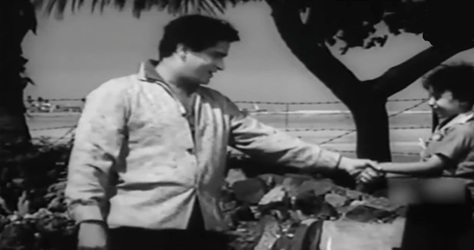
5. Jiska joota usi ka sar (Guest House, 1959): Despite that ‘Arre wah re wah re teri Bambai’ (which might have made this song seem like a reboot of the famous Ae dil hai mushkil), this song from Guest House seems superficially to mirror its picturization. Ajit’s dhoti-khurta-clad villager, newly arrived in Bombay, finds himself conned by a roadside crook, and then at daggers drawn with a posh miss (Shakila). Frustrated, he sings a song which seems as if it’s really a hardly-disguised bit of flirtation. But no; listen to the lyrics carefully, and you’ll see the cynicism. The materialism, the big-city small-heartedness, the callousness of Bombay.
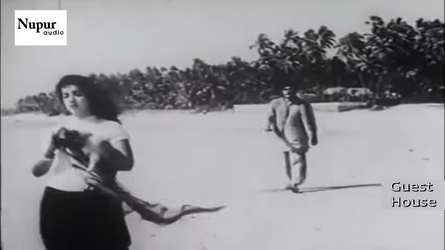
6. O mister O mister suno ek baat (Agra Road, 1957): Agra Road wasn’t a great suspense film, but one thing I appreciated about it was the very sweet, believable romance between the lead characters. Vijay Anand’s and Shakila’s characters here were great friends, true buddies who didn’t just love each other, but confided in, trusted, and argued with each other too. They were a warm, wonderful couple, and this song—a classic ‘battle of the sexes’ one—reflects that relationship: they pull each other’s legs, they joke about the flaws and shortcomings of the other, but admit, too, that they can’t possibly survive without each other. Delightfully light-hearted and frothy lyrics by Prem Dhawan show another side of the lyricist: an amazingly versatile poet.

7. Ainvein duniya deve duhaayi (Jaagte Raho, 1956): This song I couldn’t possibly not include on a list of Prem Dhawan’s top songs. To me, Ainvein duniya deve duhaayi is one of Hindi cinema’s best cynical songs. The earthiness of the music (Salil Chaudhury’s), coupled with the pitch-perfect singing of Punjabis Mohammad Rafi and S Balbir, and Prem Dhawan’s words, written in Punjabi, bring it all together. That say-it-like-it-is of rustic Punjab, the no-holds barred honesty: this is Dhawan being very Punjabi, very true to his roots.
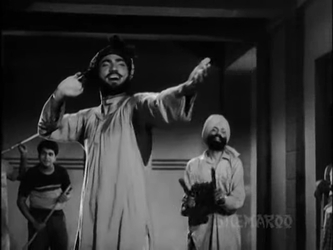
8. Ae watan ae watan humko teri kasam (Shaheed, 1965): Even though he wrote songs of many different tones and emotions, Prem Dhawan did write some of his best songs as an expression of love for the country. One of Hindi cinema’s most popular patriotic films, the 1965 Shaheed had some of its songs both written as well as composed by Dhawan (some songs, like Ramprasad Bismil’s Bismil Azimabadi’s Sarfaroshi ki tamanna and Banke Lal’s Pagdi sambhaal jatta, were also used in the film). This stirring, inspirational song, brims over with not just love for the country, but the sort of do-or-die vigour one associates with Bhagat Singh and his companions. Classic.

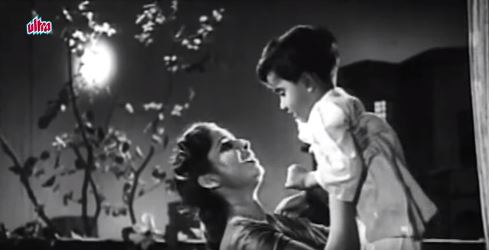
9. Chanda mama door ke pue pakaayein boor ke (Vachan, 1954): For me, a sign of a song that can be considered ‘iconic’ is that it becomes so intrinsic a part of life that people forget it’s not ‘traditional’, not something that has come down, in the oral tradition, through generations. This lullaby is one of those: over the decades, Chanda mama door ke has become such a popular children’s song that few people know that it’s actually from a film. Or, of course, that Prem Dhawan wrote it. I like the playfulness here, and the way he builds in elements that would appeal to a child: something sweet to eat; places to go and playmates to have fun with; and just sweet, simple, words.
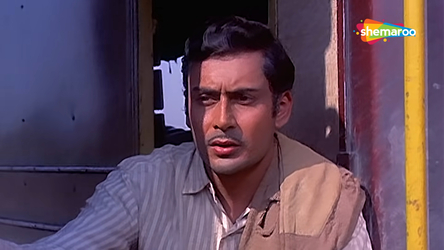
10. Teri duniya se hoke majboor chala (Pavitra Paapi, 1970): And, to end this list, a song that was both composed, and written, by Prem Dhawan. Pavitra Paapi had several songs, of which some (Le de saiyyaan odhni and O munni ke lala among them) are nice enough, but its standout song, the one for which this rather tragic film is mostly remembered, is this one. As Parikshit Sahni’s protagonist, guilt-ridden and heartbroken, leaves the home where he’s fallen in love, he sings of his situation: how he’s leaving behind all that is dear to him, going who knows where. But the regret here is not tinged with the angst of betrayal that so often accompanies songs where one half of a couple ends up married to another. This young man knows there is no other option, and so, with dignity and grace, he goes his way, leaving only his good wishes for the woman he loves. Beautiful lyrics, lovely music.
Thank you for the words, thank you for the music, Mr Dhawan. May your songs live on.
 Dustedoff
Agra Road … the description of the lead couple makes me want to watch this . Have you reviewed this yest?
LikeLiked by 1 person
Yes, I’ve reviewed it, here:
https://madhulikaliddle.com/2010/10/18/agra-road-1957/
A somewhat inept movie, but Vijay Anand and Shakila’s characters are really sweet together.
(By the way, for each description of a song in a list, if I’ve reviewed the film, I link the name of the film to its review, so if you see that the name is hyperlinked, you can click through to read the review).
LikeLiked by 1 person
Another lovely compilation. Interesting that you chose for representing Agra Road a song other than the evergreen ‘Inse Rippy Tippy’. I’m guessing you were apprehensive about using that one song to excess?
LikeLiked by 1 person
Heh. Yes, it would have been overkill! But more than that, the lyrics of Unse rippy-tippy ho gayi aren’t especially interesting.
LikeLike
oh yes, seene mein sulagte hai armaan is another gem
LikeLike
Excellent songs written by Dhawan sahib, in my list I would have certainly included ‘seene mein sulagte hein armaan’a gem sung by Lata/Talat from Tarana His association with Composer Anil Biswas is legendary
LikeLiked by 1 person
Yes, indeed. Seene mein sulagte hain armaan is beautiful.
LikeLike
never knew that “chhodo kal ki batein” and ” aye mere pyaare watan” were P.dhawan’s compositions. he was a man of substance. these songs as so popular having transcended decades and still thrive. in our school, no 15th of august or 26th of january passes without them. but i think i ain’t wrong in saying that prem dhawan is not as passionately reverred as other composers are. like naushad, the burmans, shankar jaikishan or nayyar sahab. he’s more of a B-category, though is taleny was A category,was history discriminate to him in having his legacy waned?
LikeLiked by 1 person
Yes, it’s a pity that Prem Dhawan never quite got his due as a composer. If he’s remembered, most people remember him more as a lyricist than a composer. Unrightfully – he has some excellent tunes to his credit.
LikeLike
Thank you for this appreciation of the multi-talented Prem Dhawan.
I never knew that he has written almost all of my favourite patriotic songs.
Another favourite Prem Dhawan song is Sanwari Surat man bhayi re piya from the film Ada. The film and the song don’t appear to be available on video
About ‘Ki main jhoot boleya’ –
In an interview I remember watching, Salil Chowdhury seemed to suggest that ‘my friend Prem Dhawan’ was responsible for the music too. At the very least, he helped SC with the music.
Hindi film music has many songs with a Punjabi touch. This is one of the few that is TOTALLY Punjabi (it’s an urban style of Punjabi, not rustic)
The next such Punjabi song is probably Mauja hi Mauja from Jab We Met, with lyrics by Irshad Kamil. He has since written more such songs, including Dil Diyan Gallan, which immediately took its place among classic love songs of Hindi cinema.
LikeLiked by 1 person
Thank you for Saanwari soorat mann bhaayi – I had never heard it before. Very nice!
LikeLike
Shaheed has to be Prem Dhawan’s tour de force. He was both music director and lyricist, and every song is a gem.
Rafi and the others have performed with so much feeling. As music director, he must be given credit for that too, because he directed the singers.
This must be the only Lata Mangeshkar song in the film. It’s really sweet and bubbly:
LikeLiked by 1 person
I really like Jogi hum toh lut gaye tere pyaar mein. Lovely, sweet song, so quintessentially Punjabi. :-)
LikeLike
Late to join the party!
One addition to the information, O P Nayyar’s first film Aasman had all the songs penned by Prem Dhawan. But I think they never had a film together thereafter.
From Aasman, I’ve a couple of favorites
Dekho Jadu bhare more nain by Geeta Dutt
And,
Is Bewafa jahan mein wafa by C H atma
Prem Dhawan also had a good number of films with Anil Biswas and Chitragupt.
LikeLiked by 1 person
Thank you for these songs, Anupji – beautiful. I hadn’t realized Aasmaan was the only collaboration between Prem Dhawan and OP Nayyar. Given the Punjabi antecedents of both, I would’ve thought they could have come up with some great Punjabi-themed songs (though, of course, there’s a tangential connection – Prem Dhawan did the choreography for Udein jab-jab zulfein teri).
LikeLike
Madhu,
This was a very nice and informative post. Prem Dhawan’s misattribution as the dancer in ‘Ari wo mohe chhed gaya’ made me revisit the whole discussion on Surya Kumar-Krishna Kumar dancer brothers. In this song the male dancer is one of the brothers, I am not sure which one – I ahve seen Surjit Singh’s article.
“Ramprasad Bismil’s Sarfaroshi ki tamanna” – I too knew it as written by the revolutionary. Now it transpires that it was written by another poet, Bismil Azimabadi from Patna. This was adopted by the revolutionaries as their anthem as they went smiling to the gallows.
AK
LikeLiked by 1 person
AK, your comment, I think, confirms the sad fact that old Hindi cinema is so purely documented. It’s a pity that so little was written about it back then, and even what was written was either so gossipy (Baburao Patel), or took the form of mindless idolization, that the truth is more often obscured than not. :-(
Thank you for the clarification about Sarfaroshi ki tamanna – I’ll correct that.
LikeLike
Prem Dhawan was indeed an extraordinary personality. And this is definitely an extraordinary post. Many songs listed in it are the ones which I love to listen to again and again. Hearty compliments for this post which is a fitting tribute to the multi-talented Prem Dhawan.
LikeLike
Thank you for your kind words, Jitendraji. Glad you liked this post.
LikeLiked by 1 person
Madhuji, what strikes one about Prem Dhawan was that he worked as a lyricist even in films where he had to share space with other lyricists. For example, in Jaagte Raho, all the other songs barring the one you have listed above were written by Shailendra. Similar is the case in Hum Hindustani. He worked closely with Chitragupt, Roshan, Ravi and Salil Chowdhury. Undoubtedly, he was multifaceted but not all his facets received the kind of acclaim that they deserved.
LikeLike
Congratulations on the 15th Anniversary of your blog!! It is very difficult to create quality content with such a consistency.
‘Shaheed’ songs first introduced me to Prem Dhavan songs. ‘Ae Watan’ and ‘Mera rang de Basanti chola’ never fail to move me.
Another all-time favorite is Seene Mein Sulgate Hai Armaan. The first line of Mukhada sets the tone for the song so well.
Never thought I might confess in public, but I do like Tuze Suraj Kahu Ya Chanda. I find lyrics very simple yet heart tugging and notes soothing.
LikeLiked by 1 person
Thank you for the appreciation. It’s because of supportive readers like you that I’ve managed to keep going so long.
Seene main sulagte hain armaan is a lovely song, thank you for mentioning it. I have to admit I don’t care for Tujhe suraj kahoon ya chanda, but that probably has more to do with the fact that I found the film very irritating!
LikeLike