
By which I mean two versions of the same duet.
This is part of an admittedly sporadic series of posts that focus on multiple versions of songs in old Hindi cinema. Composers and film directors have, again and again, homed in on songs that have staying power: songs that audiences wouldn’t mind listening to repeatedly in a film. Multiple version songs, as I’ve shown in previous posts of this type, take various forms. The type, for instance, where both a woman and a man sing the same song, but as solos. Or where a song is sung both as a duet and as a solo. Or, even, where the same singer (male or female) sings the same at two different points, but usually in two different moods.
And then there’s this: where a duet is repeated. Invariably, in two distinct moods. Given that the overwhelming number of duets in Hindi cinema tend to be romantic ones, there’s a certain predictability to the tones of these songs. One version is, more often than not, a happy version: two lovers celebrating their love and vowing eternal fidelity. The other version, just as often, is the complete opposite in tone. Things have fallen apart, fate (or disapproving parents, nasty relatives, lecherous villains, etc) have intervened and either sown the seed of suspicion, or used emotional blackmail to force one of the couple into giving up the other. There are also sorts of possibilities—and they lead, as below, to the old duet being again sung (often as an impossible duet, the estranged lovers physically too far apart to be really singing together).

So here are the ten songs. I will admit that though the title of this post mentions ‘favourite songs’, not all of these are really favourites. But the ones at the top of the list are definitely songs I like. As always, these are all from pre-1970s Hindi films that I’ve seen.
One caveat, though: I do not impose on myself the restriction that the duet must be sung by the same playback singers in both versions of the song.
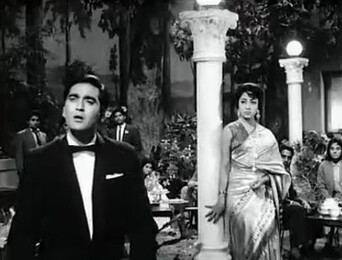
1. In hawaaon mein in fizaaon mein (Gumraah, 1963): Pretty much the standard situation for when a pair of star-crossed lovers repeat a song from earlier, happier times. Gumraah was one of those rare films that talked openly about adultery, and not as something indulged in only by the depraved and debauched. Mala Sinha’s character here is a believable one, a woman catapulted into an unwanted marriage (with her late sister’s now-widowed husband) but unable to shake free of her emotional bond with the man (Sunil Dutt) she really loves. A natural, very human, response, and depicted tellingly through this set of two songs.
In the happy version of In hawaaon mein in fizaaon mein, the two lovers sing cheerfully as they wander through the hills above Nainital. Much later, when everything has turned topsy-turvy and she is now another man’s wife, her lonely ex-lover sings the song, slow and painful, at a party. And she, though she cannot of course sing along, thinks of that song: for her (with playback singing by Asha Bhonsle), it becomes a background song. One of my favourite duets featuring Mahendra Kapoor (who I think had some of his best songs in this film: kudos to Ravi and Sahir too).

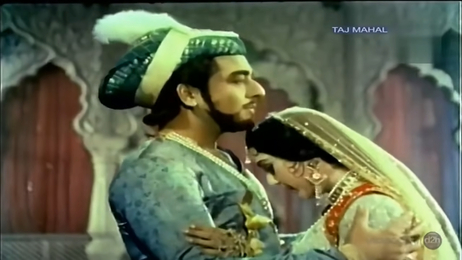
2. Jo vaada kiya woh nibhaana padega (Taj Mahal, 1963): From the same year as Gumraah, was another film that also had lyrics by Sahir—and which, like Gumraah, had one great song after another. The love story of Khurram (Pradeep Kumar) and Arjumand Bano (Beena Rai) was depicted through an array of wonderful songs, from Jo baat tujh mein hai teri tasveer mein nahin to Paaon chhoo lene do phoolon ko: but the one which perhaps best exemplifies the immortal love that the Taj Mahal is supposed to represent is Jo vaada kiya woh nibhaana padega.
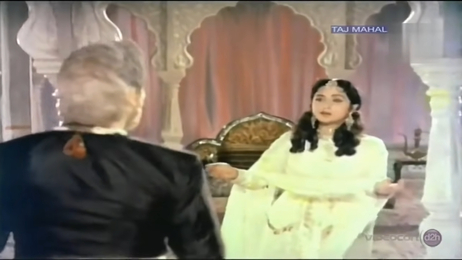
And this one (sung by Lata and Rafi), actually appears not twice, but thrice, and all three times as a duet. The first time, the most cheerful version, is from the days of heady young love, when the prince and his beloved are first serenading each other. The second, tragic, version is from when Shahjahan, his hair turned grey overnight out of grief over the death of his Mumtaz Mahal, cries out to her, begging her to return—and she does, a spirit whose voice echoes their song. Lastly, the song plays as a background song when Shahjahan finally dies: against a backdrop of the Taj Mahal, he is finally reunited with Mumtaz, their voices singing of eternal love.
Click on the link of the song title to go to a single link that contains all three versions of the duet.
3. Kisne mujhe sada di kisne mujhe pukaara (Saaz aur Aawaaz, 1966): Spoiler ahead, in case you haven’t seen Saaz aur Aawaaz and intend to watch it.
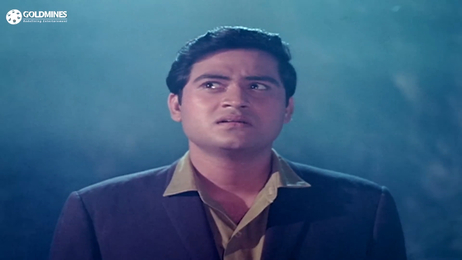
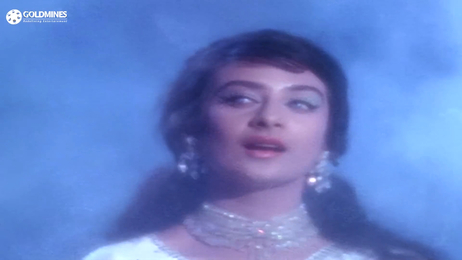
Taj Mahal had a song that was repeated between two humans/human+ ghost/two ghosts (the last, sort of). Saaz aur Aawaaz had this lovely song which seems, the first time it appears in the film (which is fairly early on) as if it’s one of those spooky singer songs: Saira Banu’s character, barely glimpsed through all that swirling mist and bare trees, seems very much like one of those deliberately mysterious femme fatales designed to lure the hero (Joy Mukherjee) to his doom. The second version of the song, at the other end of the film, is very similar in tone, in ambience, everything.
Kisne mujhe sada di kisne mujhe pukaara, however, is actually different from the run-of-the-mill spooky singer song. Because this is not crime disguised as supernatural; this is really supernatural. Saira Banu’s character, though it’s not revealed until the end, is actually a ghost. When alive, she had been the hero’s girlfriend, but was killed off by a villain who had a dog-in-the-manger attitude when it came to this woman: If you can’t be mine, I won’t let you be anyone else’s either. A bit weird, this film, though I like this song very much: Rafi and Suman Kalyanpur are superb.
4. Tu mera chaand main teri chaandni (Dillagi, 1949): I find it interesting that film-makers (sometimes) seem to realize that couples who have been torn apart and are no longer perhaps even in close proximity to each other may not have the chance to sing a duet. But because that tune is so good, because the lyrics are so appropriate, and because that song has all the makings of a hit—why not milk it for all it’s worth? Find a way to have them sing the song all over again. BR Chopra in Gumraah managed to do that by having Mala Sinha’s character sing, in her mind perhaps, the song her ex-lover sings at a party. AR Kardar in Dillagi uses another method, something which reminds me of Ramaiyya vasta vaiyya: a passerby hears the song, and likes it enough to carry it away and sing it.
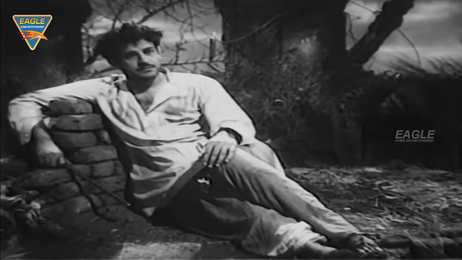
In Dillagi, Suraiya’s and Shyam’s characters (she singing playback for herself, he lip-syncing to the voice of the character actor Shaam Kumar) sing Tu mera chaand main teri chaandni in happier times. Later, when fate has separated them and she has been forced to marry another man (played by Shaam Kumar, the same singer/actor who sang for Shyam), the bereft lover sings the song. A passing girl (who just happens to be the heroine’s sister-in-law) hears his song, and by the time she gets home, she’s singing it too and the heroine hears her. In its second appearance, the duet is sung by Geeta Dutt and Shaam Kumar.

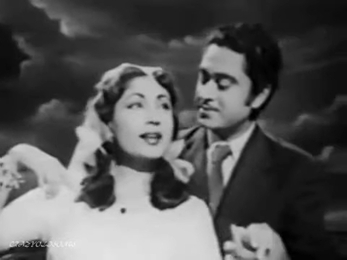
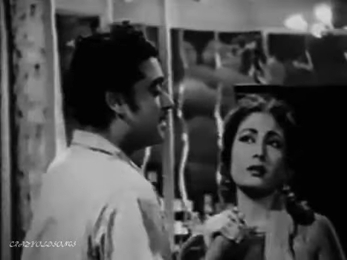
5. Meri neendon mein tum mere khwaabon mein tum (Naya Andaaz, 1956): A romantic duet, but the second (sad) version isn’t as outright dejected and depressed as several of the others on this list. In the initial version of this song, Kishore Kumar and Meena Kumari play two people who have just discovered their love for each other: it’s full of joy, a sweetly charming ode to being in love. Many twists and turns later, a villain (played by Pran, who else?) has thrown a spanner in the works, and our hero finds himself disillusioned and alone, under the impression that his girlfriend has abandoned him. He sits down at the piano and begins to sing their song in a mournful tone, but she (having escaped the villain’s clutches) turns up and joins in.
Shamshad Begum and Kishore sing the song in both versions, and I like the way these two songs end up reflecting two different moods of love. The first one is a little more tentative: starting off as nothing more than a performance, a song these two actors are rehearsing—but it develops into a genuine admission of love. Romantic, shy, sweet. The second version, with a storm raging in the background, is more intense.
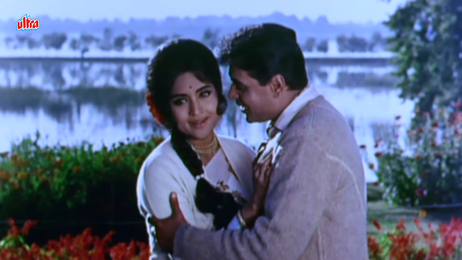
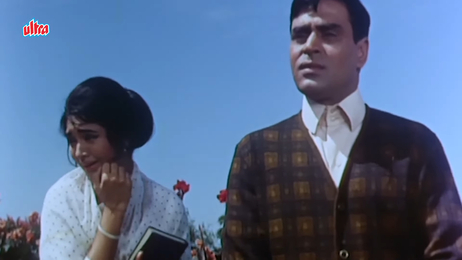
6. Mera pyaar bhi tu hai (Saathi, 1968): This is one of those songs that was pretty popular, but which I personally don’t like very much. I suspect part of the reason is that the film itself was teeth-grittingly irritating, with so much weepy self-sacrificing, I found myself unable to even enjoy the songs in it. Anyhow: another duet which appears in two versions, one where the romantic couple are all happy, and another where they’re sad.
In the happy version of Mera pyaar bhi tu hai, the characters of Rajendra Kumar and Vyjyanthimala have just got married and are on their honeymoon in Kashmir. Their idyllic life falls apart rapidly (and with extremely exhausting complexity): she falls critically ill and runs away to spare him the pain of looking after her. Then, she ends up presumed dead in a train accident whereas all the while she has been rescued by a well-wisher who takes her abroad, helps her get surgery and eventually helps her return to her husband—who, by then, has not just been forced into marrying another woman, but has also been blinded in an accident. Our heroine pretends to be a stranger come to nurse the blind man, and when he begins singing miserably a song of lost love, she joins in the misery.
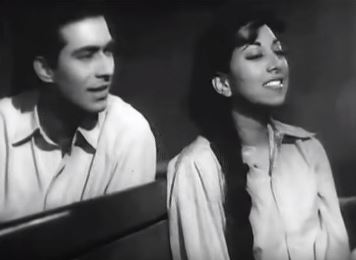
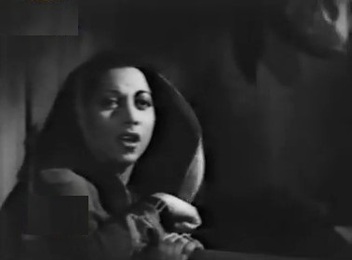
7. Raahi matwaale (Waaris, 1954): This is a song that also appeared on another multiple version songs list: as a song which had a duet version as well as a solo. Rahi matwaale, composed by Anil Biswas (and based, quite obviously, on Rabindranath Tagore’s beautiful Ore grihobashi) is probably best known in the cheerful version in which it first appears in Waaris. Talat Mahmood’s character, a passenger on a train, breaks into song—and is joined by a stowaway (Suraiya, briefly in drag but abandoning that pretence quickly enough). The two of them, singing playback for themselves, are wonderful here: such an ebullient, lovely song.
Later, after much has transpired and she has been given the news that he (gone off to war) is now presumed dead, she rides in a train again. Alone this time, and missing her beloved, she sings the same song, but in a low, sad tone. His voice too joins hers, an echo from the past but moderated to her own mood. Though this is a duet, Talat comes in only near the end; Suraiya sings most of the song on her own.
8. O babu saab o memsaab (Talaaq, 1958): Not a well-known song, but a worthy addition to this list, because the two versions of the duet (sung by Manna Dey and Asha Bhonsle) are such a refreshing change from the usual trope of romantic song/blighted romance song. In the first version which appears in the film, lovers (played by Rajendra Kumar and Kamini Kadam) tease their friends, a couple who’re constantly quarrelling over the smallest and most trivial of matters.
The situation changes over time. The lead pair, now married and parents of a little kid, find their marriage falling apart. Their priorities have diverged, the happiness they got from just being together is all gone. This is when their old friends (who, actually, despite their constant bickering, are much more compatible than it would seem at first glance) sing the same old song back to them, reminding them in a humorous sort of way that they were meant to be together.
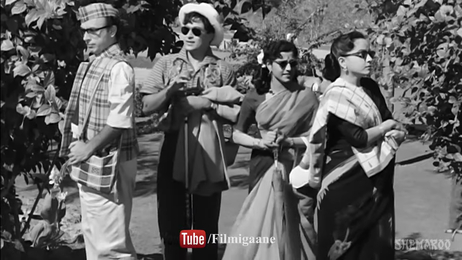
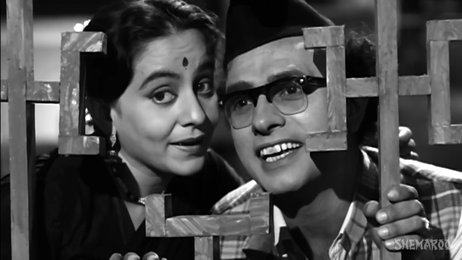
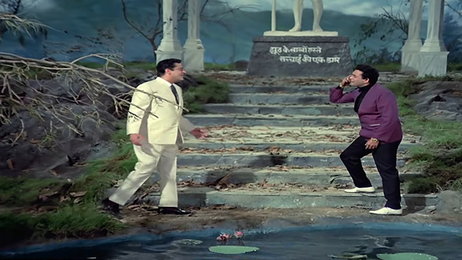
9. Ae dost mere maine duniya dekhi hai (Sachchai, 1969): For a change, a song which does not follow the usual trope of lovers in two different time periods, in two different moods. In Sachchai, Shammi Kapoor and Sanjeev Kumar play best friends whose outlook on life changes over the years. As collegemates, they are like chalk and cheese: Sanjeev Kumar’s character is the ‘good’ man, the upright and honest Kishore, who will do anything to stay on the path of righteousness. Ashok (Shammi Kapoor), on the other hand, is footloose and fancy-free, unscrupulous and with no qualms about using underhand ways to get his way. The first instance of Ae dost mere maine duniya dekhi hai reflects the differing views of these two friends (lip-syncing to Rafi for Shammi and Manna Dey for Sanjeev).
The story, however, takes one turn after another, and Kishore and Ashok find their roles switched, their philosophies in life turned upside-down. Kishore ends up taking to a life of crime and becomes a dacoit, while Ashok sees the light, turns over a new leaf—and becomes a cop. Years later, they meet again, and sing the same song, but reversed. Kishore now sings in praise of an unfettered conscience; Ashok is now the goodie-goodie. Oddly enough (some carelessness here?) while Manna Dey begins the song by singing for Shammi and Rafi for Sanjeev, they later switch.

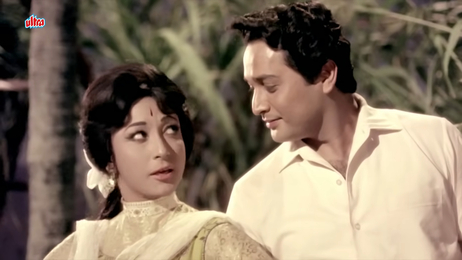
10. Tumhaari nazar kyon khafa ho gayi (Do Kaliyaan, 1968): To end this list, a rather more predictable duo of duets. In the first (upbeat) version of Tumhaari nazar kyon khafa ho gayi, Biswajeet’s character is the one trying to wheedle his sweetheart (played by Mala Sinha): a fairly classic song of the roothna-manaana style, where both parties know and accept that this is all done in play; neither is seriously annoyed with the other.
Further down the line, though, things have soured considerably. The couple, after having married and had twin daughters, drift apart so drastically that they end up estranged, one twin each with one parent. The parents, though their differences seem irreconcilable, still love each other deep down. Thus, when she starts singing this song, admitting her own culpability in the stressful situation they’re in, he (thanks to ESP?) also joins in and sings the duet.
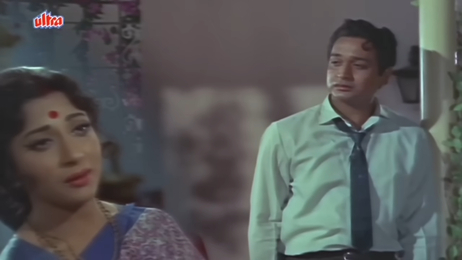
That’s my list. Which other songs do you like that are duets in two versions?


Ooh… what a lovely addition to the oft-repeated theme of ‘multi-version’ songs. I was racking my brains to remember songs that fit this theme, and I thought of Ab yaad na kar from Anokha Pyar (1948). One version is by Mukesh and Meena Kapoor, the other by Mukesh and Lata. But unfortunately, those were only for the record. The film version had Mukesh, Meena and Lata singing together.
But perhaps this song from Jeet will fit the bill: Kaam karo bhai kaam karo. The first version is sung by Vinod and Suraiya, and is a plea to the workers to work hard so they can build a nation. The second version, sung by Vinod and Geeta Roy (Dutt) is a version which exhorts the workers to lay down their tools and let machines do the work.
And what about this one? Not one of my favourites but… Hum tum yug yug se ye geet milan ke. Both versions are by Lata and Mukesh. Reincarnation sagas are usually good for multiple version songs. :)
I’m sure I’ll kick myself for not remembering others, but my sieve of a brain is very fickle these days.
LikeLiked by 1 person
I am kicking myself for not remembering Hum tum yug yug se – not a favourite of mine either, but it fits so perfectly into this list! Thanks for that one, Anu. And also, of course for the Jeet songs. I think I’ve heard this one before, but can’t be certain.
LikeLike
I was looking up songs for another post and am shocked I forgot this one: Jab jab bahaar aaye from Taqdeer. That had two versions – one with Lata and Mukesh, the other sung by Usha and Mahendra Kapoor, I think.
Then there is Yaadon ki Baraat; the first version is by Lata, accompanied by Padmini and Shivangi Kolhapure; the second is a male duet sung by Kishore and Rafi.
LikeLiked by 1 person
Thank you for Yaadon ki Baaraat – I should’ve remembered that, even if it didn’t feature on my list!
And Jab-jab bahaar aayi didn’t have two versions; it had three, and one of them was a solo. Also, the third version isn’t a duet, it had three singers: Mahendra Kapoor, Usha Mangeshkar, and Usha Timothy. It featured on my previous multiple songs list, here. :-)
LikeLike
A nice post in the series of multiple version songs – Multiple duets are less common than multiple solos and solo/duets.
Specially glad to see the O babu saab o memsaab song from Talaq. I have always liked this song and the two situations shown. Its a welcome change and the two character artists do a good job.
One from the 80s – Zindagi har kadam ek nayi jung hai – Meri Jung
First version by Lata and Nitin Mukesh, is during the hero’s childhood which shows the parents, Nutan and Girish Karnad, singing and the second one by lata and Shabbir on the grown up son Anil K with Meenakshi.
https://www.youtube.com/watch?v=hYPktmwYA-g
https://www.youtube.com/watch?v=IMj-tYGTtTw
LikeLiked by 1 person
Thank you, and yes, I agree – duets in multiple versions are relatively rare. Even rarer, though, are solos sung by two people of the same gender (e.g, Tum bin jaaoon kahaan, sung by both Rafi and Kishore).
I remember Zindagi har kadam ek nayi jang hai – it was so popular at one time, one heard it everywhere. I don’t think I ever saw the film though, and didn’t realize there were two versions.
LikeLike
Oye Oye tirchhi topiwale from Tridev had two versions – the happy dance song and the other sad party version
LikeLiked by 1 person
Oh, yes, I remember these two versions!
LikeLike
Main na bhoolunga main na bhoolungi – Roti Kapda Aur Makan – Two versions – Happy and Sad
https://www.youtube.com/watch?v=UGl34-cDPa8
https://www.youtube.com/watch?v=Q97aYTCqgJ0
LikeLiked by 1 person
Nice. I’d forgotten this one. Thank you!
LikeLike
Main na bhooloonga… Happy n sad. ROTI KAPDA AUR MAKAN.
Zindagi Zindagi mere ghar aana.. Courtship period n After childbirth. DOORIYAN.
Does ek pyar ka nagma hai have 2 duet and one solo versions?
LikeLiked by 1 person
Ek pyaar ka naghma hai is a lovely song, thank you for reminding me of that – I’d forgotten it had two versions. Here they are, the happy one:
https://www.youtube.com/watch?v=aFddnIvmgi0
and the sad:
https://www.youtube.com/watch?v=PJ6AZzSDg6U
LikeLike
There is a Mukesh solo also, if I remember correctly.
LikeLiked by 1 person
Yes, there is.
LikeLike
Great list as always! Esp. Jo vaada kiya wo nibhana padega – this song is so beautifully sung, it gives me goosebumps!
Was trying to remember similar duets and couldn’t think of many that others hadn’t mentioned already but your friendship song reminded me of the classic Salamat rahe dostana hamara.
There’s the happy version when they’re still friends and the sad version when they’re separated but manage to find their way back to each other.
If I remember correctly, Tere mere milan ki yeh raina from Abhimaan also has 2 versions but I can’t find video links for both versions.
Since you mentioned that the song need not have the same playback singers, I believe Tu mujhe kubool from Khuda Gawah would also apply. One version has Kavita Krishnamurthy and Mohd. Aziz, while the other is sung by Lata Mangeshkar and Kavita Krishnamurthy.
LikeLiked by 1 person
Thank you so much, Snigdha – both for the appreciation (and I echo your love for Jo vaada kiya) as well as for the suggestions. It’s been ages since I last watched Abhimaan, so didn’t remember about the versions of Tere mere milan ki yeh bela. I found a short one (a male solo) which is happy, though the long, sad version – a duet – is what I remembered.
LikeLike
I looked up the Abhimaan song because I was curious and Wikipedia lists the soundtrack having 2 duet versions of the song – one with and one without dialogues. But I think you’re right, the movie itself seems to have only shown a solo and a duet.
LikeLiked by 1 person
That’s interesting – I wonder what happened. Though of course discrepancies between films and their soundtrack are nothing new.
LikeLike
Very interesting and entertaining this post was!
Thank you for this one.
As I told you mine series on the same line is in process and interestingly enough there are only a few overlaps in this post and my draft. Mainly because I’m not keeping a timeline for my series and it has a few pairs beyond the 70s
:-)
LikeLiked by 1 person
I’m looking forward to seeing your list, Anupji! :-)
LikeLike
Oh, nice! I’m impressed by the number of songs you found that fit this very niche twist on the multiple versions of a song theme.
Here’s one more example that I think is in a category by itself. Not only do the versions feature different singer for each duet, but I believe each version also features different actors on the screen. I love both versions
Jab se hum tum baharon mein ho baithe gum – Main Shaadi Karne Chala/Chitragupta/Majrooh Sultanpuri
Mohammed Rafi – Suman Kalyanpur
Mukesh – Kamal Barot version
LikeLike
These are lovely, Shalini! Thank you so much.
And, now you have made me want to watch the film, just to see what the situation is that brought about this very unusual combination of songs. Given that it seems to be a lost film (is it?), that hope seems doomed to die unfulfilled…
LikeLike
Madhu ji,
A very innovative theme! Here is a song from Amar Deep – Dekh Hume Awaaz Na Dena. The sad (if you may call it so) version is when the heroine is trying to help the hero get over his amnesia.
LikeLiked by 1 person
Ah. Amardeep is one of the Dev Anand films (from after he became a star) that I haven’t seen. Should watch it someday. Thank you for these songs – I hadn’t known of this one.
LikeLike
I love these series of multiple versions and multiple singers of the same song.
Here’s a song “Ae meri ankhone ke ” from Man Mandir movie.
Happy version
Sad version
LikeLiked by 1 person
Thank you for this! This song was new to me. I’ve heard of the film, but haven’t seen it.
LikeLike
I have couple of songs to share below on this theme:
Mujhe Apna Yaar Bana Lo (Happy Version)
https://www.youtube.com/watch?v=T06rY7YNOhM
and sad version is https://www.youtube.com/watch?v=nvfyNfWiHCc
Sawan Ke Mahine Mein (Happy/Fast and Slow/Sad version combined)
https://www.youtube.com/watch?v=LAq13Iy5GDU
LikeLiked by 1 person
These are solos, no? Not duets? The theme of the post is duets which appear twice.
LikeLike
This is a really unique criteria for selecting songs. There are abundant songs which occur as duet and solo in same movie or solos by multiple people but different versions of duets are difficult to come by.
My recent favorite is ‘Kalank’ title song which is repeated as bonus track so I guess it would qualify multiple version of duets. I haven’t seen the movie so not sure if bonus track is picturized or not.
LikeLiked by 1 person
Thank you for this song, I don’t think I’ve heard this one. Very nice song.
LikeLike
Also lovely ‘Tum Ho‘ & ‘Tum Ko‘ from Rockstar.
The videos are messed up as in both songs has shots from both versions and looks repetitive.
LikeLiked by 1 person