
This blog post was inspired by an Instagram post by one of my favourite handles of all the social media channels I follow: Mad Mughal Memes, an absolutely delightful account that manages to combine informativeness with fun and often totally loony humour (my type, in case you don’t know that yet). Some time back, Mad Mughal Memes did a post in which they listed, with screenshots, some ten or so songs from Hindi films that were picturized at the Taj Mahal. Unlike me, of course, they weren’t constrained by a time period, so they had songs from very recently as well. Some songs (a very few) I was familiar with; others I had never heard of.
But it provoked a thought: why not a post on songs picturized at Mughal monuments? After all, it’s not just the Taj (though that, I agree, is the Mughal monument to beat all others). There are also forts, mosques—and gardens. Many of them very scenic, a perfect setting for a song.
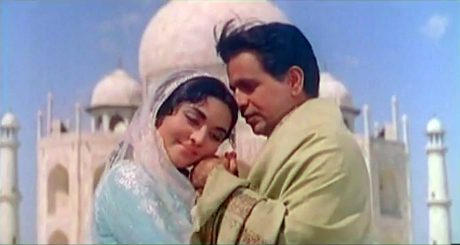
Here, therefore, are ten songs, all from pre-1970s Hindi cinema, that feature, at least in part, a Mughal site as the backdrop for a song. Not necessarily that the entire song is picturized at the site in question, but it’s there, recognizably, for at least some time. One restriction (besides the usual one, that I should have watched the film in question) that I have imposed on myself is that each song should be filmed at a different site. No site is repeated here.
Without further ado, therefore; the songs. These are not in any particular order, though my favourite songs tend to be towards the top of the post.
1. Phir woh bhooli si yaad aayi hai (Begaana, 1963): Taj Mahal, Agra. Given that songs picturized at the Taj Mahal were what inspired this post in the first place, it seems appropriate to begin with a song at the Taj (this one, though, was not in the list by Mad Mughal Memes). Sailesh Kumar’s character in Begaana is the unfortunate lover who has returned from the past to discover that his girlfriend is now married to another (little does he realize at this stage that she is also the mother of his child). The place he chooses to cry out his sorrows is the quintessential ‘monument to love’ of Indian cinema, the Taj.
After Mumtaz Mahal’s death in 1631, Shahjahan planned her mausoleum in Agra and work on it (supervised by the architect Ustad Ahmed Lahori) began the following year. The entire complex, including gardens and subsidiary buildings, was completed somewhere around 1653. Not very much of the complex can be seen in the course of this song; Sailesh Kumar’s character basically flops around in front of the rauza (the mausoleum itself); but some part of the gate, the gardens and water channel can be seen as Dharmendra’s character, visiting the Taj with a guide, approaches the tomb.
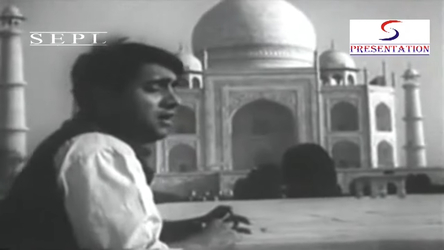
2. Dil beqaraar sa hai (Ishaara, 1964): Humayun’s Tomb, Delhi. A good song, and a lovely setting for most part of the song. The characters of Vyjyantimala and Joy Mukherjee serenade each other in the grounds of Humayun’s Tomb in Delhi (before, midway through the song, moving on to Lutyen’s Delhi, around Vijay Chowk and then the water channels around the India Gate lawns). The two lovers spend most of their time in front of the vast platform on which Humayun’s Tomb stands, but later can be seen atop the platform itself, admiring the tomb from up close. There is also a brief glimpse of the paths through the gardens below.
Humayun died in 1556 after a fatal fall from his library in Purana Qila. It took many years for his son and successor Akbar to consolidate his rule, and it wasn’t until 1569 that Humayun’s widow Hamida Banu Begum was able to begin work on constructing this tomb (which is generally believed to be a precursor to the Taj).
Informed insider’s opinion: This is a place worth visiting if you’re interested in Mughal history. And while you’re at it, do please visit the newly opened (in summer of 2024) Humayun Museum next door, which is one of the best museums I’ve been to.
3. Teri aankh ke aansoo pee jaaoon (Jahanara, 1964): Agra Fort. Period films set in the Mughal era—Noorjehan, Adl-e-Jahangir, Humayun, Babar, Mughal-e-Azam, Nadir Shah, Taj Mahal, Laal Qila, et al—might be expected to have plenty of songs picturized against Mughal monuments. Not so, however: partly, I suppose, because getting permission to film inside several of these monuments would be difficult. And more so, I guess, because a lot of these monuments show the ravages of time, at least on the inside. If you’re trying to showcase the glory of the Mughals, bare sandstone, no matter how brilliantly carved, might pale into insignificance when compared to the Sheesh Mahal set of Pyaar kiya toh darna kya.
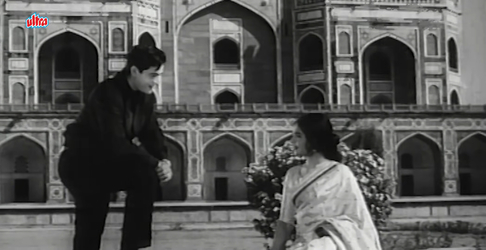
Teri aankh ke aansoon pee jaaoon is similar: the ‘Agra Fort’ interior where Mala Sinha’s character is shown, looking all distressed, is a set. But where her lover, Mirza Changezi (Bharat Bhushan) wanders about, singing his song of misery, is definitely outside the Agra Fort.
The Fort is an old one, pre-dating the arrival of the Mughals in India. However, in its present condition, it includes structures built by three successive Mughal emperors: Akbar (whose palace complex is a confection of exquisitely carved sandstone), Jahangir (also contiguous with Akbar’s palace, with some striking structures added) and Shahjahan, who added several palaces similar to what he went on to make at Delhi as well.
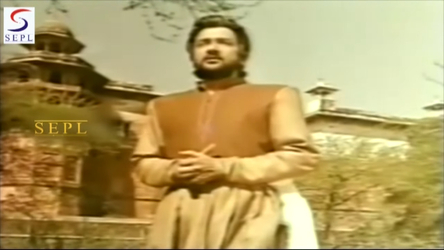
4. Hum hain raahi pyaar ke (Nau Do Gyaarah, 1957): Fatehpur Sikri. Compared to the previous songs on this list, this is one where the monument in question appears only briefly in the course of the song. Dev Anand’s character, a man driving from Delhi to Mumbai to take charge of a property he’s inherited, sings as he drives. The song’s music begins in Delhi (though we don’t see any of Delhi’s Mughal monuments: what we see is the heart of Lutyen’s Delhi, India Gate and around). The singing actually begins much later, when our hero drives into the countryside; by the time he reaches the towering edifice of the Buland Darwaza at Fatehpur Sikri, he’s well into the song. He’s shown only briefly at Fatehpur Sikri before he goes off to Agra and the Taj Mahal.
The palace complex and surrounding areas of Fatehpur Sikri were built by Akbar as a capital starting in about 1569. Akbar believed that the Sufi saint Salim Chishti’s blessings had resulted in the birth of Akbar’s son Salim (later Jahangir; he was named after the saint). Salim Chishti’s hermitage, at the village of Sikri near Agra, seemed auspicious enough for Akbar to shift his capital there. Although it’s commonly believed that Akbar eventually abandoned Fatehpur Sikri in 1586 because of shortages of water, some scholars question that and say that Lahore had become strategically more viable as a base by that time.
A (much later) song which is a lovely showcase of Fatehpur Sikri is Do dil mil rahe hain, but for me the film which really shows off the palace complex in all its glory is the 2006 Hollywood film The Fall: very, very beautiful.
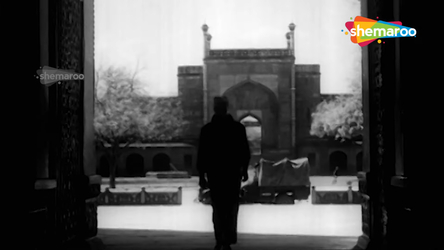
5. Kashmir ki kali hoon main mujhse na rootho (Junglee, 1961): Shalimar Bagh, Srinagar. The Mughals drew a lot of inspiration from Persia, and the Persian influence showed in a lot of their aesthetics: in, for example, the design of gardens. The classic Persian charbagh (or chaharbagh) design, modelled on the description of Paradise in the Quran, with water channels intersecting in a four-sided garden, became the template for countless gardens scattered across the places the Mughals either inhabited or visited frequently: Kashmir, for one.
Kashmir and its gardens were, of course, hugely popular as settings for Hindi film songs through the 50s and well into the 80s, before unrest in the state made it off-limits for film crews. In the 60s, especially, with colour becoming the standard, gardens in full bloom became all the rage. Here, in her debut film Junglee, Saira Banu’s hellion character makes a nuisance of herself, teasing Shammi Kapoor through the length and breadth of Shalimar. The gardens are lovely, all ablaze with summer flowers.
Shalimar Bagh was laid out by Jahangir in 1619, as a terraced garden on the north-eastern shore of the Dal Lake, with the original, formal approach to the garden being along a canal connecting Shalimar to the lake.
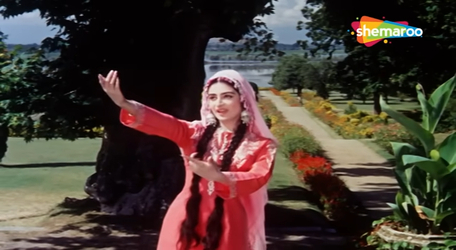
6. Jaaye jahaan meri nazar (Kalpana, 1960): Nishat Bagh, Srinagar. And where Shalimar Bagh is mentioned, can Nishat be far behind? The second largest (and second in significance, to Shalimar) of the Mughal Gardens in the Kashmir Valley, Nishat appears very recognizably in several well-known songs. In Laakhon hain nigaah mein, for instance, and in Maine ek khwaab sa dekha hai. While those two songs score because they’re in colour, Jaaye jahaan meri nazar is what I’d like to list here, simply because it shows so much of the gardens. You see the terraces, the chute (‘chaadar’) of water rippling down from one terrace to another; you see the fountains in the water channel.
Most importantly, at about 2:21 (and sporadically beyond) you see a structure that no longer exists. This was a baradari, a pavilion that functioned rather like a boathouse, with shikaras drawing up to deposit visitors who would have approached the garden through the Dal Lake (which is why it’s perfectly plausible here for Ashok Kumar’s character to be watching Padmini as she dances and sings in a shikara on the lake). Sometime in the 1970s, this pavilion was demolished as a result of an assertion that it had not been originally part of the gardens as they had been laid out.
Jahangir’s brother-in-law, Noorjehan’s brother Asaf Khan, had commissioned Nishat. It is smaller than Shalimar, but has many more terraces: a whopping twelve compared to Shalimar’s three.
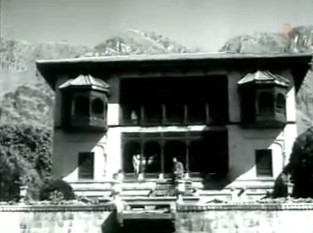
7. Din saara guzaara tore angana (Junglee, 1961): Verinag Bagh, Kashmir. And, before we move off from the Mughal gardens in Kashmir, here’s another one. This song begged to be included, not just because it’s a lovely song and because it’s from one of my favourite films, but also because its setting is unusual.
In a world of love songs shot against a backdrop of Shalimar, Nishat, and (to some extent) Chashm-e-Shahi, Din saara guzaara tore angna is shot partly at the gardens in Verinag. The octagonal brick structure, with a tank full of fish at its centre, that becomes the focus of the song from around the 2:30 mark in this video is the most prominent building at the Verinag gardens. It is also a very unusual structure: I don’t think I’ve ever come across anything like it elsewhere at Mughal sites.
Jahangir was the one responsible for the laying out of this garden. He commissioned it in 1607, modelled on the Persian chaharbagh design, with a water channel flowing down the middle and culminating in the octagonal pool you see in this song. The pool was stocked with carp, each of which had a gold ring etched with Noorjehan’s inscription (her name and title? I’m not sure) threaded through its gills. Interestingly, Jahangir had wished to be buried here in the garden after his death, but though he died in Kashmir, his family and courtiers buried him in Lahore.
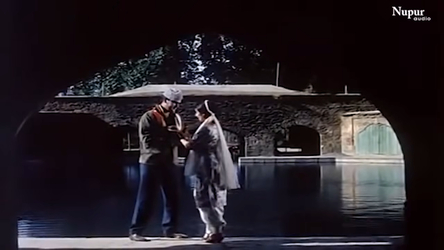
8. Tere paas aake mera waqt guzar jaata hai (Neela Akash, 1965): Bagh at Pinjore, Haryana. And, before we go on to other monuments, one last garden. Of all the gardens on this list, this is the only one that’s outside Kashmir. Neela Akash, while otherwise a fairly forgettable film, had one thing good about it: two songs picturized in historic gardens. Aapko pyaar chhupaane ki buri aadat is shot in Delhi’s Lodhi gardens (which predates the Mughals by a good bit) and Tere paas aake mera waqt guzar jaata hai, filmed at what is now officially known as Yadavindra Gardens at Pinjore, in Haryana’s Panchkula district. The song is actually a fairly good showcase of the gardens: you can see not just the water channel along the middle and the wide flights of stairs leading from one terrace to the other, but also most of the pavilions as well as the orchards.
The fruit trees, incidentally, are what make these gardens special, because that was what Mughal gardens were initially like: densely covered with fruit trees, from which the harvest would usually be sold to finance the maintenance of the garden.
This garden was laid out in the foothills on the border of Haryana and Himachal by a certain Fidai Khan, a nobleman of Aurangzeb’s court. The garden spreads out across a length of seven terraces, with a water channel flowing down the middle of it, straddled by pavilions or other structures on most of the terraces.

9. Tum kitni khoobsoorat ho (Wahan ke Log, 1967): Purana Qila, Delhi. NA Ansari’s rather awful Wahan ke Log was unusual in that it had an element of (supposed) alien life. Also, it was unusual for being set in Delhi. One song (Aawaaz meri sunkar, repeated) had Tanuja’s character singing spookily at night in the ruins of the Delhi Sultanate era Tughlaqabad Fort; and there was this, a song picturized partly against the backdrop of Purana Qila. While Tanuja and Pradeep Kumar also visit Lutyen’s Delhi (and go boating on the water channel at India Gate) and the Qutb Minar complex, they begin their song outside Purana Qila, with the fort ramparts looming unmistakably behind them.
Initially named Din Panah (‘refuge of faith’), this citadel was built by Humayun, but was taken over by Sher Shah Suri after he ousted Humayun and became the ruler. Two of the most prominent existing structures at the fort owe themselves to Sher Shah Suri: the Qila-e-Kohna Masjid, and Sher Mandal (the library from which Humayun had a fatal fall). Neither of these can be seen in this song, though, since all that can be seen are parts of the walls, and some sections of the Talaaqi Darwaaza (one of the main gates of the fort) with its domed chhatris.
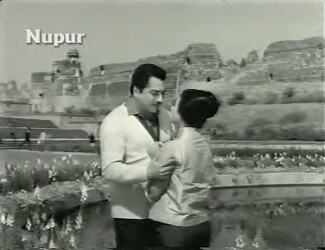
10. Achha toh hum chalte hain (Aan Milo Sajna, 1970): Char Chinar, Srinagar. I would have loved to end this list with—say—something like the Laal Qila at Delhi, one of the most prominent of Mughal monuments anywhere. But though the Laal Qila appears briefly in the backdrop as Sajid Khan’s character sings Nanha-munna raahi hoon, it’s not a common monument for filming songs. Even Lal Qila (1960), which you’d have expected to have at least one song highlighting the fort, mostly only had sets masquerading as the palaces, with some footage showing the fort.
Thus, this. Not a very picturesque example of Mughal architecture, but still: the Char Chinari/Char Chinar at Srinagar. Asha Parekh’s and Rajesh Khanna’s characters begin this song in one of the larger gardens of Srinagar, but then move to Char Chinari for the bulk of the song (the scene shifts midway but then returns to the island). You can see the chinars in all their glory, but the constructed stuff—the lamp posts, the benches, parapets/railings, etc—are all very prosaic, very 20th century.
Also known locally as Ropa Lank, this artificial island was constructed in Dal Lake by Murad Baksh, brother of Aurangzeb. The four chinar (Oriental plane) trees he had planted here suffered the ravages of time, with two collapsing outright and the third tottering on the edge of collapse. In 2022, however, two large chinar trees were transplanted here to replace the fallen trees.

That, then, is my list. Which songs would you add to them? (And yes, please don’t restrict yourself to pre-70s songs, or even to songs from Hindi cinema).
 Dustedoff
What a delightful post, Madhu!
LikeLiked by 1 person
Thank you so much, Praba! I’m glad you enjoyed this.
LikeLike
Highly informative.
LikeLiked by 1 person
I’m glad you found it so. Thank you!
LikeLike
Wasn’t there a song from Jab Jab Phool Khire shot at char chinar? I’d do some research but I’m babysitting my granddaughter right now. There was a song from some shashi\ nanda movie shot at Pinjore as well. Towards the end of the season, Pinjore hosts a Mango Mela. I’ve never visited but would like to.
LikeLiked by 1 person
I couldn’t find a song from Jab Jab Phool Khile picturised at Chaar Chinar (and I couldn’t remember any, though I must admit it’s been ages since I watched the film, so I may be mistaken) – and my search just now has been a little rudimentary.
I had forgotten about the other song, though as soon as you mentioned it, I remembered which film that was from. From Neend Hamaari Khwaab Tumhaare, Koi shikva bhi nahin, koi shikaayat bhi nahin. I wish I had remembered this song!
https://www.youtube.com/watch?v=6Q1_-xZItkM
LikeLike
Sashi and Nanda go to char chinaar after hood winking Pran. I thought maybe they sing there, maybe not. My memory also plays tricks.
LikeLike
You may well be right. It’s been donkey’s years since I watched it, so I have only a vague recollection of the whole story. And I had only done a cursory search. It may be not a very popular sort of song, so it may not show up immediately in YouTube search results. Par meri himmat nahin hoti hai to watch the film again! – I find it very irritating, somehow.
LikeLiked by 1 person
It is an irritating film.
LikeLiked by 1 person
TBH, of all the Shashi Kapoor-Nanda films I’ve seen so far, none are really worth watching. They may have nice music (not all of them do) but as films, they’re pretty forgettable.
LikeLike
Just shared your post to Substack. You should try it out
LikeLiked by 1 person
Thank you, Ava! I will have a look at Substack. :-)
LikeLiked by 1 person
What a supremely delicious post, Madhu! And so informative, too. I’m ashamed to confess that many of the details you mentioned were unknown to me. But (perking up), that means I have learnt something new. :)
There’s a rather obscure song Ye waadi-e-Kasmir hai jannat ka nazaara from a film called Aabroo (1968) that might fit this theme. It’s picturised in the Mughal gardens at Achabal.
And from Delhi-6, a song partly picturised at (?) the Jama Masjid – Maula maula meri maula.
Of course, the song from which you have posted a screenshot – Ek shahenshah ne banwaake haseen Taj Mahal from Leader.
LikeLiked by 2 people
I’m ashamed to confess that many of the details you mentioned were unknown to me.
Many of the details here were unknown to me too before I did the research for this post, so you’re in good company! ;-)
Thank you for these songs. The Aabroo song I have seen before, but had totally forgotten about, so that’s especially welcome. I am not absolutely sure, but I think Maula maula mere maula is filmed in Lucknow – the Rumi Darwaza is visible near the beginning, when he’s sitting down and sketching her; then, at 2:32, I think they’re at one of the imambaras (not sure of this, though). Finally, around 3:15, they’re at the Residency.
LikeLike
Delicious post, thoroughly enjoyed reading it.
LikeLike
Thank you so much, Prerna!
LikeLike
These songs below are probably shot in Mughal Gardens of Kashmir:
LikeLiked by 1 person
It seems Aabroo had several songs filmed in Kashmir, Anu also linked to one. I am not sure exactly which gardens these are, but I think there are probably shots here of Nishat and Achabal.
LikeLike
Great post, Madhu – informative as well as entertaining. History should be taught this way. :-) If only our history text books could be peppered with songs, it would make them so easy to read and remember.
LikeLiked by 1 person
Thank you, Soumya! I’m glad you enjoyed this. And I agree completely – history taught through entertainment (whether cinema, or anecdotes, or – obviously, books – and songs) has a much better chance of being remembered than the generally dull, dreary, date-heavy stuff schools in India tend to dish out.
LikeLike
Madhuji, this is such a lovely post! Movies shot extensively in Kashmir I am sure would have such songs. Aabroo(1968) was a movie whose first part at least was shot in Kashmir. This song of Rafi’s – Aap Se Pyaar Hua seems to have been shot in one of the Mughal gardens – not sure which one. https://www.youtube.com/watch?v=rynp0FUOosU
Lal Patthar was another movie which refers to Fatehpur Sikri and has many shots there but I don’t think a song is shot in any of the monuments there. Even the title of the film refers to the red sandstone used for these monuments.
Anita
LikeLiked by 1 person
Thank you, Anitaji, I’m glad you enjoyed this post! Yes, Aabroo does seem to have quite a few songs that are picturized against a backdrop of Mughal gardens – other readers too have posted links to some of these songs.
It’s been many, many years since I watched Laal Patthar, so I have no recollection of it or the references to Fatehour Sikri. Thanks for telling me about that.
And, since nobody has mentioned this one, here’s another song with a Srinagar Mughal garden in it. From Aandhi, Tere bina zindagi se shikva begins at the Martand Sun Temple but goes on to Shalimar Bagh:
https://www.youtube.com/watch?v=FuDw_HYYd-Y
LikeLike
Thank you for the interesting and informative post, dear Madhu!
I don’t have much knowledge of Mughal monuments, but I remember a song, which starts at location in Taj Mahal and then suddenly the song continues at Bibi ka Maqbara in Aurangabad. The song begins in fact with a reference to Taj Mahal but it looks like they didn’t get a permit to shoot there so they might have moved to Aurangabad, which might have been a cheaper destination.
The song is payal bajati chali ho kahan from Badi Didi.
And I wouldn’t call the song as my favourite though.
LikeLiked by 1 person
Payal bajati chali ho kahan
here is the link
LikeLike
Thank you for this one, Harvey! I haven’t watched (as far as I remember) Badi Didi, and don’t recall having seen this song either. Even though the Taj is only briefly seen here, I still liked the song’s picturisation because I got to see Bibi ka Maqbara. It reminded me that I really should visit Aurangabad someday!
LikeLike