
When I create song lists, I always include only songs form films that I’ve watched. This is a rule I’ve imposed on myself, and it’s something that’s drawn questions, sometimes even accusatory. Why would I do that? I am asked.
Besides the fact that this is my blog (and so I get to govern it!), I have usually responded to that question by saying that some songs are best known in context.
Some songs. In fact, not very many. Most Hindi film songs—whether romantic, or depressed, or philosophical (or whatever other emotion)—are almost invariably neatly stitched together with the picturization. What’s happening onscreen is what’s echoed in the song.
Not always, though. There are a few songs where the song’s lyrics, or the picturization, are deceptive. If you don’t know the context, you may well end up interpreting the song as something very different from how it appears in the film.
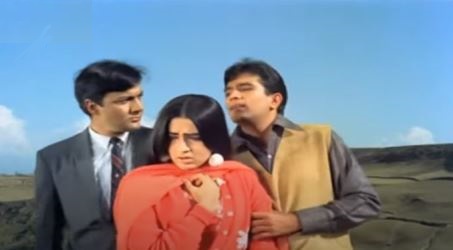
Without further ado, then, ten songs, all from pre-70s films. Needless to say, from films that I’ve seen.
These are in no particular order.
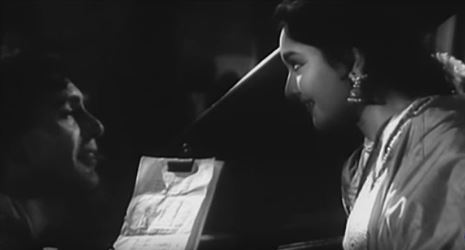
1. Manzil wohi hai pyaar ki raahi badal gaye (Kathputli, 1957): This is the song that first came to my mind as an example of the deceptive nature of its picturization. The lyrics are romantic all through, and the picturization—all the way from Balraj Sahni’s impassioned pounding at the piano keys at the start of the song, to Vyjyanthimala clasping her hands in seeming ecstasy at the end of the song—suggests a deep romance between these two people. The melting way in which they look at each other, the joy in her prancing about: yes, these people are in love.
But no, not all. Vyjyanthimala’s character in Kathputli is paired not with Balraj Sahni, but with Jawahar Kaul. She is an actress/dancer, Balraj Sahni is a theatre owner/manager who takes her under his wing and mentors her: there is no romance between them at all, at any stage in the film. You do get indications of their profession in this song: the song lyrics (at which they glance now and then), lying against the piano, show that this is a song being rehearsed; and the two people who pass by bearing props are testament to that. Even if you notice those details, however, you’d still be forgiven for thinking these two people are deeply in love.
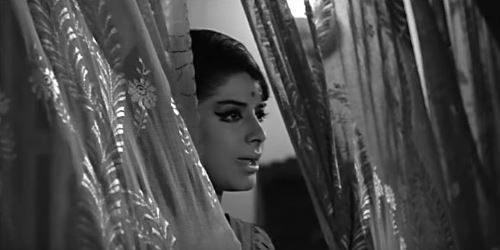
2. Mahalon ka raja mila (Anokhi Raat, 1968): Some years back, my husband and I were invited to a family event: an aunt and uncle were celebrating their 50th wedding anniversary. The children and grandchildren of the couple had selected old songs to be played at the party, and somebody had obviously taken great pains to pick songs that pertained to weddings and marriages.
Not sufficient pains, though, because this song—Mahalon ka raja mila, ke rani beti raj karegi (A king of many palaces has been found, the queen-daughter will reign)—may sound full of blessings and goodwill for a happy bride, but it’s nothing of the sort. Zahida’s character is about to be married off to a much older man (played by Tarun Bose), who only wants her for her body and the wealth she brings. There is not a jot of love in this wedding; she must marry him in order to save all she holds dear (he has the power, and the will, to reduce her grandfather to destitution). There is no way out. So, when she sings this song, it is not as a way of looking forward to a life of bliss; it’s a song of despair, of sarcasm, of knowing that the man she is marrying will never make her happy.
3. Husn ke laakhon rang (Johnny Mera Naam, 1970): Several years back, I was listening to a countdown programme on radio: top 100 romantic songs from old Hindi films (it’s another matter that I don’t think songs from the 90s should count as ‘old’, but that’s just me). At #21 was Husn ke laakhon rang—and I couldn’t help but burst out laughing. Husn ke laakhon rang, and romantic? That’s a serious misconception.
When you first hear this song’s lyrics, you may well say that this is not so much a romantic song as a come-hither one. Bold, seductive lyrics, and a picturization, with Padma Khanna dancing suggestively as she peels off one garment after another, which upholds the tone of the lyrics. But look closely, and you see the truth. The man she dances for (played by Premnath) is the villain who has imprisoned her lover; he has promised her that if she dances for him (and, by extension, lets him rape her), he will free her lover. In desperation, because she knows that there is no other way out for them, the girl dances—and ends up with her lover killed in front of her very eyes.
No, not a romantic song at all.

4. Door ke o chanda (Ek Dil Sau Afsaane, 1963): If you only listen—and not too carefully, thus missing out that reference to the singer’s ‘mamta’ (maternal love), you may well slot this as a romantic song, a woman beckoning to her love. If, instead of just listening to the song, you watched it, you’d know that this isn’t a love song at all; it’s a song of a mother playing with her baby, telling her baby how much she loves her child… and you’d still be wrong. Because Waheeda Rehman, playing Raj Kapoor’s wife in Ek Dil Sau Afsaane, is not the mother of this baby at all. Her mother-in-law (Lalita Pawar), who lives apart from the couple, has been getting increasingly annoyed that there is no grandchild on the horizon, so to mollify her, these two take a crazy step: borrow a baby from a neighbour and pass it off as their own when the saas comes visiting.
If you pay close attention to the lyrics and you watch Waheeda Rehman closely—the way she looks up yearningly, away from the baby and into space—you can tell. But not without those clues.

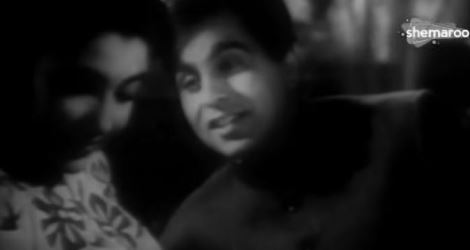
5. Yeh hawa yeh raat yeh chaandni (Sangdil, 1952): This I count among one of Dilip Kumar’s finest love songs—and how romantic it is! His character is willing to give all that is beautiful, the breeze, the night, the moonlight, all for one adaa of the woman he is singing to. She is the most beautiful in all of God’s creation; her gaze itself can either send him into ecstasy or down in the depths of despair. Why should he not pursue her and wish that she be his? Because to yearn for her is in itself bliss… wonderfully romantic lyrics (Rajendra Krishna’s), sublime music (Sajjad Hussain’s) and beautifully sung by Talat. Plus, Dilip Kumar’s serenading of Shammi does look so dreamy—until you look somewhat closely and see the mocking cynicism in his eyes. Because this man does not love this woman one bit. He knows, too, that her supposed love for him is all a farce; she wants him only for his wealth. Her love is a sham, his love is equally non-existent, and so this song itself is a farce.
6. Saba se yeh keh do (Bank Manager, 1959): I have loved this song, the gentle way it oozes romance, for most of my life. Even after I managed to watch the video (on Doordarshan, way back when I was a pre-teen), that love was shaken only a little bit: how could a woman sing such high praise for someone as forgettable as Shekhar? How could Shekhar, walking into a mehfil, cause the fiza to become fragrant and the nazaare to smile? That would have merited at least a youthful Dev Anand or Shammi Kapoor, I thought.
It wasn’t until I watched Bank Manager that I realized why this is so. Because Meenu Mumtaz’s character here is a fraud. Shekhar plays the gullible bank manager whom Meenu Mumtaz and her accomplice—both confidence tricksters—have pinpointed as a target. To get him to believe she has fallen for him (even though he’s a married man) is all part of the plot—and she accomplishes it with this song.
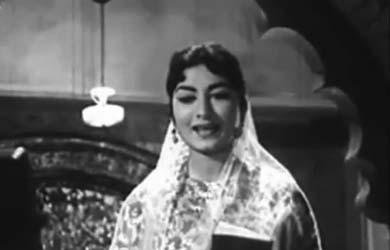
7. Do ghadi woh jo paas aa baithe (Gateway of India, 1957): Like Manzil wohi hai pyaar ki, Do ghadi woh jo paas aa baithe gives the impression that these two people—Madhubala’s and Bharat Bhushan’s characters—are deeply in love. They smile at each other, they sing a duet, he looks lovingly over her shoulder as she writes, and she is demure, shy, oh so obviously in love.
But no. Not at all. She is a runaway heiress, being pursued by some goons; he is an impoverished poet in whose rundown little home she takes shelter, by using shaayari as an excuse. It is a flimsy excuse, since her singing draws the attention of the very people she’s been trying to shake off, but that’s it. This is not really a romantic song, and these two are not in love. Or at least not yet.
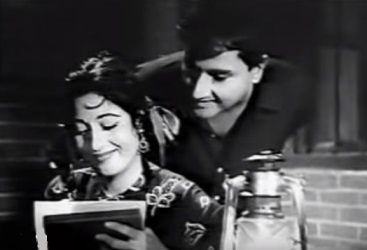
8. Do chamakti aankhon mein kal khwaab sunehra thha jitna (Detective, 1958): This lovely Geeta Dutt song, picturized on a weepy Mala Sinha, was a song I fell in love with well before I watched Detective. I must have been about thirteen years old or so, and by then I’d watched enough old Hindi cinema to gauge the situation: fate (or, more likely, evildoers) had conspired to separate this woman from the man she loved. What dreams they had dreamed together! What a golden future they had imagined! How they had laughed, how they had enjoyed themselves!—and now the world laughs at them, their dreams lie shattered, etc etc. Common trope.
But no. Mala Sinha’s character, Ma Shin, is Singaporean, and had arrived in Calcutta along with her father, an officer in Singapore Police. He was here on duty; she tagged along because what would she do back home without her dad? And now her father has been killed, right in front of Ma Shin’s eyes, and she is inconsolable. This is a song for a dead father, not a lost lover.
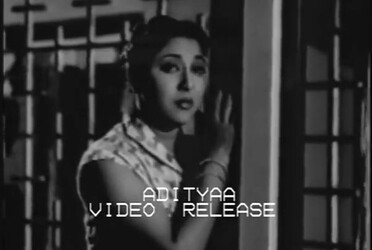
9. Nani teri morni ko mor le gaye (Maasoom, 1960): Who would have imagined this cute little song would be something mistaken for something else? I have watched Nani teri morni lots of times, and was always charmed by the adorable little Honey Irani, singing and dancing cutely to a rapt audience. A woman who looks too young to be her nani, but who is perhaps her mother? And some others, watching this little poppet strut her stuff?
But the truth is a little disturbing. Because, unknown to both the little girl and the woman, this song is somewhat in the nature of an audition: the girl, who is orphaned, has been brought here by her elder brother. He hopes that this woman, who is known to have a nasty temper but whose husband, a doctor, is very fond of this little girl, will adopt her. The brother encourages the little girl to sing and dance, hoping that the woman will be charmed enough to adopt the child. There’s something sad about it, but also a little unsettling.
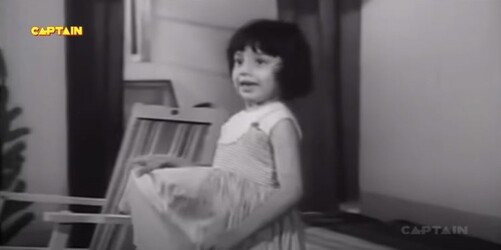
10. Na tel aur na baati (Ek ke Baad Ek, 1960): Unlike most of the songs on this list, this one is not anything that can be mistaken for romantic. Instead, if you’re only listening to the song (not watching it), you might think it very odd indeed. While most ‘inspirational songs’ tend to encourage people to go on striving. Even if the odds are all against one, one must persevere, and surely all will come right. In Na tel aur na baati, the lyrics (Kaifi Azmi’s) seem to be all wonky: Na tel aur na baati/Na qaaboo hawa par/Diye kyon jalaaye chala jaa raha hai (You have neither oil nor wick/Nor control on the wind/Why, then, do you go on lighting lamps?)
Even if you watch the video of this song, all on its own and without watching the rest of the film, you may not be able to figure out the context. The truth is, Ek ke Baad Ek (as the name of the film itself suggests) is about parents who believe that children are ‘the gift of God’, and so one must not practice any form of family planning: the ‘more the merrier’, even when it means that there is nothing to feed, clothe, or educate the children. If you listen to those lyrics in that context, you can see what that means.
Which songs would you add to this list? Please share!
 Dustedoff
Never thought it could be such an interesting idea for a post. Thoroughly enjoyed reading it. And the context makes the stories intriguing.
‘Husn ke lakhon rang…’ and romantic? That’s really funny. ‘Mahalon ka raja mila’ is a surprise. Although a very popular song, I didn’t know the context.
Perhaps not suitable for this list, but one song that comes to my mind is ‘O mere raja…’ Sounds like a fun, romantic song, but it’s not. But, yes it’s very evident from their expressions.
LikeLiked by 3 people
Excellent suggestion. I adore the ‘story’ of this.
LikeLiked by 1 person
Of this song.
LikeLiked by 1 person
Yes, I think Husn ke laakhon rang doesn’t sound romantic at all – seductive, yes; but only if you’re listening to it. If you’re watching it, you realize that there is nothing either seductive (or romantic about it). :-) And someone who’s doing radio shows should at least do that much homework!
O mere raja is a fabulous fit. Thank you for that. Before I watched the movie, I always used to wonder ke kya ho raha hai. These two are cootchie-cooing and the cops are on their heels but pretending not to be!
LikeLiked by 1 person
I thought you’d mention ‘Ehsaan mere dil pe tumhara hai Doston’.
LikeLike
I haven’t watched Gaban (I have been meaning to, but I want to read the novel before I see the film), so I don’t know the context. I always assumed it was a dosti-waala song. What is the truth, Ava?
LikeLike
Apparently, Sunil is trying to dodge his friends bc he borrowed money or something. I haven’t seen the movie either but it was told to me as an anecdote by someone. So I’m not 100 pc sure.
LikeLiked by 1 person
Ah. Interesting! It does make sense, because then the song seems to be a way of buttering them up.
LikeLiked by 1 person
‘Deewanon se ye mat poocho’ sounds like a saddie song but is actually sung at the engagement party of Asha Parekh and Manoj Kumar. Trust Manoj to treat his own engagement party as a weep feet.
LikeLiked by 2 people
Trust Manoj to treat his own engagement party as a weep fest.
LoL!
I had forgotten the context of that. Good addition!
LikeLiked by 1 person
Madhu, when I read the title, I had no idea where you were going with this. Then, I read the intro and the first song that popped into my head was Ye hawa ye raat ye chandni, followed by Do ghadi woh jo paas aa baithe. What a truly innovative theme, and you have done full justice to it.
Would this fit, do you think?
Tum agar mujhko na chaaho from Dil Hi To Hai – the lyrics are:
Tum agar mujhko na chaaho to koi baat nahin/ Tum kisi aur ko chaahogi to mushkil hogi…
Even if you watch the sequence, you’re bound to think that Raj Kapoor is a rejected lover, doing the usual ‘aurat is bewafa if she doesn’t love him in return’ act. But, in truth, both Nutan and Raj are already in love and are conspiring against Pran, who wants to marry Nutan.
And what about Main zindagi ka saath nibhaata chala gaya? If you only listen to the song, you could be forgiven for thinking it’s a man who’s philosophising about heartbreak.
Barbaadiyon ka shok manana fizool tha/Barbaadiyon ka jashn manaata chala gaya
Even watching just the song doesn’t alter that impression. Until you actually see the before and after scenes and realise that he’s philosophising alright, but he’s certainly not heartbroken. Not yet, at any rate.
Dev Anand again – in Yahi to hai woh from Solva Saal. It sounds like he’s claiming she’s his girlfriend, and if you watch the picturisation, it even seems so. But at this point, he’s not yet in love with her, nor she with him, though there’s a definite attraction. She’s eloped with her boyfriend who has duped her and stolen her mother’s necklace, and he’s helping her so he can get a story out of it. She’s very irritated at his behaviour; rightfully so.
And poor Pran again, at the receiving end of the hero’s and heroine’s pranks! Only here, it’s the heroine pretending to be in love with him and egging him on to sing: Dil ki umangein hai jawan from Munimji.
You can tell me whether these songs fit your criteria. :) But I had a blast reading your post.
LikeLiked by 1 person
Anu, I’m so glad you enjoyed this post, and I agree with all your suggestions (in fact, given that I’m familiar with all those songs – and have seen the respective films, so do know their contexts – I should have thought of these myself!)
LikeLike
The photo of Rajesh Khanna, Babita & Prem Chopra from the movie Doli, which has the song Sajna Saath Nibhaana, stumped me at first
Great compilation
LikeLiked by 1 person
Thank you, I’m glad you enjoyed this. I had initially got Sajna saath nibhaana on the list, but then I rewatched Detective and realized Do chamakti aankhon mein is actually a great fit for this post – so that became part of the post and I relegated the Doli song to a screenshot introducing the post.
LikeLiked by 1 person
dost dost na raha pyaar pyaar na raha.. sangam
dil Mera ek aas ka panchhi… aas ka panchhi
jahaan teri ye nazar hai, meri jaan mujhe Khabar hai… kaalia
ye to mohobbat hai, hai unka ye kaam… Kati patang
behena ne bhai ki kalaai mein… resham ki dori
LikeLike
I am familiar with all these songs, and am also familiar with the films (except for Kaalia – I think I’ve seen it, but I’m not sure), but I’m unable to really understand how these songs would depend on context. Could you please explain?
LikeLike
they are contextual and hence in tandem with the storyline.
LikeLike
Okay, I will admit to being obtuse in this matter, because I still don’t understand. These songs, if you watch (or listen to) them without knowing what is happening in the film, you will still get the correct impression. For instance, in Dost dost na raha, you can guess (even if you haven’t seen Sangam) that the singer is feeling betrayed and bitter about a lost love and a lost friend… which is exactly what the film is about. Similarly with the other songs you’ve suggested.
The post is about songs which appear totally different from what they really are. They have to be seen/listened to in context, otherwise you get the wrong impression of the song.
LikeLiked by 1 person
Madhu, a slight correction: Dost dost na raha actually fits your theme. Because, in the film, RK actually has no clue that Rajendra Kumar and Vyjayanthimala are in love with each other. This song occurs just after he’s returned from the front (after he was ‘missing, presumed dead’, I mean) and he thanks RK(2) for taking care of the woman he loves. “You’re a true friend,” he says; because, while he was in the army, another officer had returned home to discover that his best friend had married his fiancée. And this song, “Dost dost na raha” is the song that that man sings (and from where Raj Kapoor learnt it).
RK is not singing about RK(2) and Vyju at all. Nor is he bitter about them – he’s just reminiscing about his friend and what he went through. The other two, of course, feel guilty (though they have no reason to be). So, if you watch the song without having watched the movie, then you may mistakenly assume that RK is singing about his betrayal (by friend and girlfriend).
LikeLiked by 1 person
Ahhh. It’s been so long since I watched the film (and, I have to admit, I found it pretty painful to sit through that one time, too) that I had completely forgotten. Thank you for the explanation, Anu. If you have the time and the inclination, do you know what might be the ‘hidden contexts’ of the other songs Stuti has suggested? Because she doesn’t seem to want to explain, even though I’ve admitted I don’t know.
LikeLike
Can’t see any hidden context in any of the others, though, to be fair, I only remember the context of the songs from Aas ka Panchhi and Kaalia.
I do wish people would explain what they mean instead of leaving obtuse comments.
LikeLiked by 1 person
Whew! I thought I was the only one unable to see the context in those other songs. I do wish she’d explained what she meant.
LikeLike
A very innovative and novel theme. Really got me thinking. Thanks!
LikeLiked by 1 person
I am so glad you enjoyed this. Thank you for reading!
LikeLike
A great theme indeed!
Never thought it could be such an interesting post. Enjoyed the songs on the list.
And I couldn’t think of any befitting song, perhaps Apni to har aah ek tufaan hai fits! It doesn’t have a very contrasting scenario. But still …
He refers to Waheeda Rehman, while she herself and her family believe, it’s God.
:-)
LikeLiked by 1 person
I am glad you enjoyed this, Anupji. Thank you!
As for Apni toh har aah ek toofan hai, yes – it would work, but I personally think songs like that (or Ik baala jogi) deserve a separate post where the supposed addressee is different from the actual one. :-)
LikeLike
Thank you! Your blog is always informative but this time you’ve solved a long-standing “mystery” for me.
Years ago (1982 !) I first became acquainted with Indian films when a local access tv channel was airing them on Saturday afternoons. I’ve always remembered a film about a couple, who, unable to have children, borrowed a baby to fool the mother in law, but I never knew the title. It was ‘Ek Dil Sau Afsaane”. Looked for it on youtube, and yes, that was the film!
LikeLiked by 1 person
Ah! :-) I am so glad you found the answer to that question. Serendipity.
LikeLike
Interesting post Madhu.
My interpretation of the song in Gateway of India is that the fall in the love in course of the song, since it describes there meeting. So i would say it fits quite well. But as I see, it can also be interpreted differently.
I hadn’t known the context of the last three songs. They do sound “amazing”.
Although the topic is very interesting, I can’t recall any song, which would fit the bill here, though I faintly recall one or two songs, which on the sound of it, one may think that they are romantic songs, but are in fact of filial or parental love.
One would be aa jaa mere pyar aa jaa from Heeralal Pannalal (1978). Particularly the Asha Bhosle version sounds like a person calling out for her lover even in the video is watched, since only in context of the film, does one realise that Premnath is Zeenat’s father. Premnath gets to move his lips to the Hemant Kumar’s version of the song, where when watches the video that it is indeed a father’s love for his daughter.
LikeLiked by 1 person
Thank you for reading, Harvey. I’m glad you found this interesting!
I have to admit I don’t think I’ve seen Heeralal Pannalal – and even if I have, it was probably so long back that I’ve forgotten all about it, and I had no recollection whatsoever of this song. It is a great fit for the post, because unless you know the relation between Premnath’s and Zeenat’s characters, you’d never guess.
https://www.youtube.com/watch?v=IreytmfE7Do
LikeLike
cham cham ghungroo bolein.. meri chaal nasheelee dole
phagun 1958 movie
LikeLike
Great idea for a post! Your anecdote about Husn ke lakhon rang reminded me of a friend who, having never watched Kaajal and only listened to the song, was praising Chhoo lene do nazuk hothon ko as a super-romantic song!
I think you’ve already mentioned most songs I could think of. Maybe Chhalkayein jaam, aaiye aapki ankhon ke naam… would also fit? It sounds like a romantic/flirty/seductive song but actually the entire scene is meant to disgust the female lead with over-the-top drunken revelry.
LikeLiked by 1 person
I’m so glad you enjoyed this post, Snigdha! Thank you – and for both the songs. Yes, Chhalkaaye jaam absolutely fits, but so does Chhoo lene do naazuk honton ko: if I hadn’t seen that one (the picturisation makes it obvious that she is very uncomfortable) I might have thought it was a romantic song too, I can totally empathise with your friend. :-)
LikeLike
Ha fair point! A comment on a different blog made me think about some other songs like Laaga chunari mein daag and Ajhun na aaye balma, where the picturisation is very different (almost comic) compared to the more serious essence of the song. Not sure if they fit in this post or maybe another list of classical songs with not-so-classical picturisations!
LikeLiked by 1 person
No, they wouldn’t fit this post, but I think there might be scope there for another post (Phool gendwa na maaro also fits that theme) where the picturisation and the song are totally at odds. Thank you for the suggestion – someday, hopefully, I will get around to doing that post. :-)
LikeLike
An outstanding post ! No words can be enough to admire it.
LikeLiked by 1 person
You’re very kind, Jitendraji. Thank you.
LikeLiked by 1 person
Madhuji,
I was reminded of my post Canorous eyesores where I had listed songs best heard and not seen. Your post has a somewhat similar flavour!
Here is aaj socha to ansoo bhar aaye from Hanste Zakhm which you would never think of as being a club song. Here, she remembers the good times with Navin Nischal as she sings.
LikeLiked by 1 person
I tend to disagree about this one. The setting may be a club song, but the lyrics and her expression make it obvious that she is remembering a lost love and weeping over that loss (is that it? It’s been ages since I watched Hansta Zakhm, so I’ve forgotten the exact details) – in which case, the context is there, and clear enough. The list is about songs where, if you haven’t seen the film and don’t know the context, you might end up with a very mistaken impression about what the song is all about.
LikeLike
Interesting post though no thanks for destroying ‘Ye Hawa ye raat ye chandni’ for me 😄
‘Ruk ja O jaane wali ruk ja’ from Kanhaiya may seem as if the hero is asking the heroine to stop walking away from him but actually Raj is singing to his whisky bottle which is rolling away.
LikeLiked by 1 person
I am glad you liked this post, even if it spoiled Yeh hawa yeh raat yeh chaandni, Neeru! :-) Thank you.
I am torn about Ruk jaa o jaanewaali – it does sound one thing, but as soon as you see it, you can tell that the context is something quite different. Perhaps it should fit a different post, where you expect something totally different when you just hear the song, from what it actually is in the picturisation. :-)
LikeLike
Interesting post! This is indeed an innovative theme!
I was wondering Dil ki girah khol do from Raat Aur Din.
The song alone does not give any idea about the storyline or the situation preceding to the song.
Just watching the song makes you feel that soon there could be a romance brewing between the two and the reality is something else
LikeLiked by 1 person
That’s a great suggestion, fits perfectly. Thank you for adding it to the list.
LikeLike
This is an interesting topic. You would have to watch the movie to understand the context for the song.
This is the song that came to my mind, though I’m not sure if it’s the right match
LikeLiked by 1 person
Yes, one does need to have seen the film to be able to see that there’s a disconnect between the film and the song. Humko toh yaara teri yaari is an excellent fit! If you haven’t seen the film, you would think these two are in love, though in reality that isn’t the case at all.
LikeLike
:-)
LikeLiked by 1 person
totally agree that some songs have be enjoyed or understood in context. I recently heard an interview of a lyricist of the song “Rabba Mere Rabba from the movie “Mujhe Kucch Kehna Hai”. There is a filler in the song, rab rab. The choreographer understood it as rub rub. So while picturising, when rab rab came, the hero was rubbing soap on hands of the heroine. Luckily the lyricist was on the sets and had it corrected. Else don’t know what that song choreo would have turned into. 😉😉
LikeLiked by 1 person
Oh my God, that is seriously off-context! Totally. :D Though frankly this sounds to me as if the choreographer, hero and heroine were all rather illiterate. ;-) Itna toh sabko pata hai ke ‘rab’ means god.
LikeLike