
By which I mean writing that doesn’t make an editor wince. Let me provide the context to this. Every now and then, I am approached by a wannabe writer who wants me to have a look at their manuscript and … Continue reading

By which I mean writing that doesn’t make an editor wince. Let me provide the context to this. Every now and then, I am approached by a wannabe writer who wants me to have a look at their manuscript and … Continue reading

Blog regulars will probably know that I am the creator of a series of historical detective fiction books. Featuring Muzaffar Jang, a 17th century nobleman who lives in Shahjahanabad during the tumultuous last years of Shahjahan’s reign, the series now … Continue reading
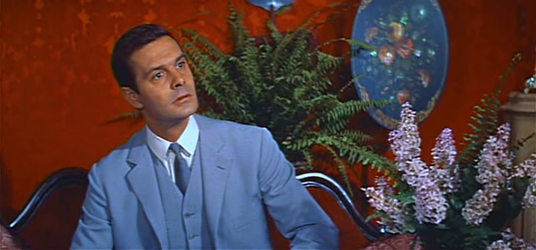
I have firmly believed, for the past few years, that Hollywood would have been a lot poorer had it not been for its Europeans. All the way from writers and composers to directors—and, of course, the most visible, actors. Charles Boyer, Ingrid Bergman, Hedy Lamarr, Rossano Brazzi, Greta Garbo, Cary Grant, Michael Caine, Curt Jurgens… and, one of my absolute favourites, the very handsome Louis Jourdan. I remember, as a young teenager, being completely bowled over by him in Decameron Nights, Three Coins in the Fountain, and The Swan. And this film, the quintessential Louis Jourdan one, about a wealthy young man who finds love in an unlikely place.

One of my favourite places to eat—irrespective of cuisine—in Delhi is the fabulous Yum Yum Tree. My husband and I discovered it the day after it opened, when we happened to be in New Friends Colony Community Centre. We ate … Continue reading
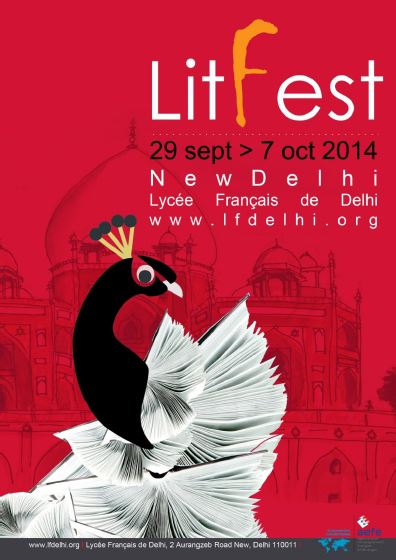
Last year, when I was attending the Bangalore Literary Festival, I heard an interesting fact at one of the sessions (about literary festivals): at last count—in autumn 2013—India boasted of 63 literary festivals. That’s quite a whopper of a figure, isn’t it? I have only been to the literary festivals in Bangalore, Pune, and Delhi (no, as unbelievable as it may sound, I actually haven’t ventured till Jaipur yet). And, earlier this week, I participated in another lit fest—a rather different one from the type I’ve frequented so far. This was a lit fest organized and hosted by a school, the Lycée Français de Delhi, for its students. 2014 was the second year the school organized the lit fest, and this year’s schedule featured workshops and lectures by various writers: Anupam Arunachalam (Comics on Delhi, followed by workshops on comics); Priya Kuriyan (Illustrations on Delhi); Nilanjana Roy (Delhi, A City of Inspiration); and Rana Dasgupta (21st Century Delhi).
Every now and then, when I’ve reviewed a Hindi film (Mamta, Sahib Bibi aur Ghulam, Kabuliwaalah, Khamoshi) or even mentioned one (Devdas, Chori Chori), someone or the other has popped up and either informed me (or reminded me) that this film was originally made in Bengali.
It was a little different with Sagarika. This film nobody told me about. I happened to be trawling IMDB checking out the synopses of all of Suchitra Sen and Uttam Kumar’s films, and realized—even as I read the plot of Sagarika—that this was exactly the same story as one of my favourite Hindi films, Bimal Roy’s lovely Prem Patra. Could I resist the temptation to watch it? No.
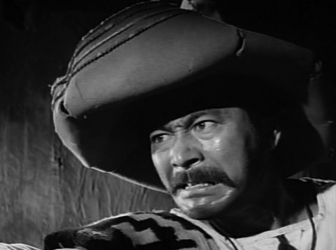
In a scene in Ánimas Trujano, the protagonist—the eponymous Ánimas, an inveterate gambler, drunk, and believer in every charm or superstition floating around—has just lost a lot of money on a cockfight. Ánimas, before the fight, had been certain he would win, because a fortune teller’s little bird had ‘told’ Ánimas’s fortune by picking out a card on which were written words to the effect that Ánimas’s luck would shine on this day.
But the bird has proved wrong, and Ánimas has lost all his money. In a fit of anger, he goes back to the fortune teller, takes the bird from him, and goes off into a deserted ruin by himself, where he raves and rants at the bird, clutching it in his fist and cursing it for not predicting his fortune correctly.
What is a country to do if its economy suddenly takes a nosedive? What if the country’s sole source of income is a product that’s suddenly no more in demand? Are economic reforms in order? Or a smart political move?
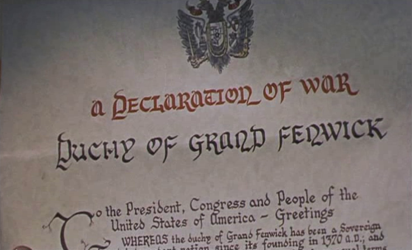
No; I’m not talking a 1950s tale of courage and enterprise in the face of economic disaster (not in the way one would’ve expected, at any rate). Not when you know that the star of this film—in a triple role, too, one of which is a woman—is the inimitable Peter Sellers. And not when you know that it revolves around a fictitious country, supposedly the smallest in the world, which decides that what its economy needs for a turnaround is to declare war on the United States of America.
Or, if you want the complete, expanded name, Ugetsu Monogatari (Tales of Moonlight and Rain), named for the collection of supernatural stories by 18th century Japanese writer, Ueda Akinari. Two of the stories from this book—Asaji ga Yado (House amid the Thickets) and Jasei no In (Lust of the White Serpent) were adapted, and directed by Kenji Mizoguchi in what was to become one of the most highly acclaimed Japanese films of all time: Ugetsu went on to win the Silver Lion at the Venice Film Festival; has been listed as one of the best films made in Sound and Sight magazine’s top ten critics poll; and has appeared in countless other ‘best movies’ lists.
Without wasting more time on listing its achievements, though, something about what the story is all about.
We begin with a brief introduction to the time and place. This is 18th century Japan; a civil war is raging; and in a small rural community, the villagers are trying hard to keep body and soul together despite the violence that surrounds them. When we get into the story proper, it’s to find a potter, Genjûrô (Mayasuki Mori), loading a consignment of his pottery onto a cart to take to market.
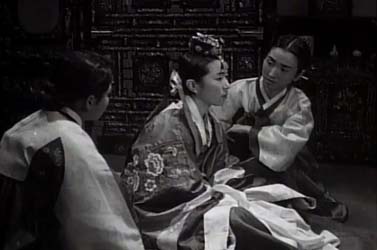
In English, The Wedding Day. Also known (ironically, as it turns out) as A Happy Event in the Maeng Family.
I’ve been watching a lot of (relatively new) Korean films—most of them frothy romances and romcoms—over the past several weeks. They reminded me that I’d never reviewed a Korean film on this blog, and they also reminded me that the first Korean film I ever saw was a romantic one; or what I could remember of it was romantic. The film was shown on Doordarshan, India’s sole television channel back in the early 80s. Doordarshan, back then, showed an interesting mix of foreign cinema: all the way from films like Red Sorghum (which my parents should probably not have let an impressionable 12-year old watch) to Fedora, which bored me to tears. And a Korean historical about a wedding in a family.


 Dustedoff