Subarnarekha (1965)

Today is the 100th birth anniversary of one of India’s greatest film directors, Ritwik Ghatak: he was born in Dhaka on November 4, 1925.
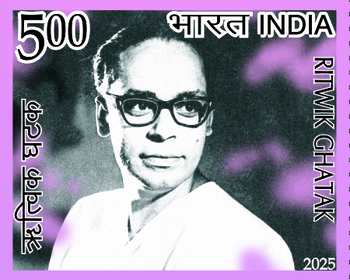
I have to confess I’ve not seen very much of Ghatak’s work, mostly from an innate tendency to shrink from ‘sad movies’. I did watch Meghe Dhaka Taara some years back (and admired it, though it was, as expected, tragic). For his birth centenary, I wanted to review another of his films, and this one popped up in the searches. It immediately drew my attention, for several reasons. For one, it stars Madhabi Mukherjee, one of my favourite actresses. For another, it also starred Abhi Bhattacharya, a familiar face from Hindi cinema, and one I’ve always liked. At least, I reasoned, if I had to watch a sad film (at a time when I’m so busy and stressed, I’d rather watch mindless fluff)… at least there would be people onscreen I enjoy watching.

Continue reading
Shaarey Chuattar (1953)

Bengali cinema is one of the few regional language cinema industries for which it’s relatively easy to find subtitled copies. Even when the film in question is an old one.

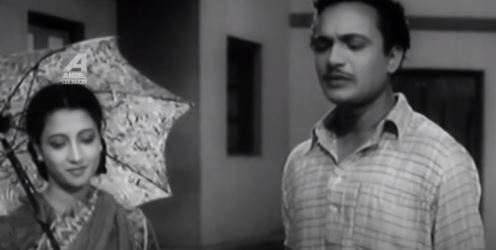
Over the years, several Bengali readers have recommended Shaarey Chuattar to me. I had been under the impression that I should watch this film for the Uttam Kumar-Suchitra Sen pairing (it was the their first film together, the first of many films in which they were co-stars). But, now that I’ve seen it, I can safely say that this is a film you should watch not for these two, but for the film itself. True, Suchitra Sen and Uttam Kumar provide some eye candy and are a likable romantic couple, but the romance in Shaarey Chuattar is not the main thing.

Continue reading

Meghe Dhaka Tara (1960)

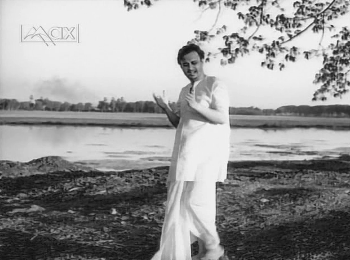
There was a point, when I was watching Meghe Dhaka Tara, that I was reminded of another much-acclaimed Indian classic, Pyaasa. A man, an artiste (a singer, not a poet, as in Pyaasa) wanders along on a grassy patch of land, singing. Far beyond is the railway track; around him are shady trees, a path, solitude. Here is a man practising his art, being one with nature, without a care for the world around him.

Shankar does his riyaaz

Continue reading