Hindi film characters with books, Part 2

Just last month, on the occasion of World Book Day (in Britain and some other parts of the world), I published a post on characters in English-language cinema who are readers. This post had been inspired by a much earlier post, from some years back, where I had listed characters from Hindi cinema who are shown with books. This time, for the English books post, a blog reader suggested I do a sequel to the post on books in Hindi cinema.

And why not, I thought. After all, books aren’t all that uncommon in Hindi films. True, Life magazine or newspapers do seem to rule the roost when it comes to people reading, but there are books to be seen now and then.

Today, April 23, is the day designated by UNESCO as World Book Day. And here is the sequel to that long-ago post on characters in Hindi cinema with books: another instalment of screenshots of Hindi film characters with books; and not just characters with books in the background, such as this:
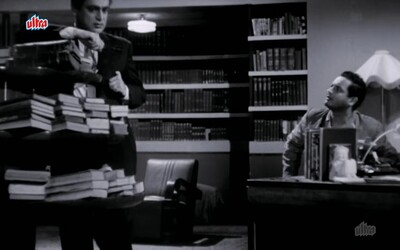
Continue reading

Jhansi ki Rani (1953)

Given my penchant for history, it’s hardly surprising that I would, sooner or later, end up watching this film. It’s been on my radar for a while, though it was only last month that I was reminded of Jhansi ki Rani, because it showed up in my list of YouTube’s suggested videos. Oddly enough, what YouTube suggested wasn’t exactly this film but its English-language counterpart, The Tiger and the Flame, which was released in 1956. Sohrab Modi, who produced and directed (besides acting in) both versions of the film, went all out on creating a spectacular production, bringing in technicians and other crew from Hollywood, including Oscar-winning cinematographer Ernest Haller, who was responsible for the cinematography of Gone with the Wind.

This film was not just made in two languages, but with other differences between them too. The Tiger and the Flame is in Technicolor (the first India-made film in Technicolor) while Jhansi ki Rani is in black and white. Jhansi ki Rani has songs (composed by Vasant Desai with lyrics by Pandit Radheshyam), The Tiger and the Flame is minus the songs. Other than that, though, the films were much the same: the same cast, the same script.

Continue reading