Mohabbat Zindagi Hai (1966)

Considering ‘arranged marriages’ were—and still are—so common in India, the fact that old Hindi cinema tended to focus mostly on ‘love marriages’ seems rather odd to me. It’s more romantic, I suppose, to imagine that one will fall in love and end up, after various trials and tribulations and having encountered sundry obstacles, married to one’s sweetheart.

There were exceptions, though, the occasional film about people getting married first, and falling in love later. There was Ghoonghat, Saanjh aur Savera, Blackmail, or those examples of child marriages, Chhoti si Mulaqat and Ji Chaahta Hai. Most of them about people who are forced—because of their own submissiveness, and because they can’t pluck up the courage to say no to bossy elders—into getting married to near or complete strangers.

Unlike this one. Mohabbat Zindagi Hai is one of the few examples (Mr & Mrs 55 was another) of someone getting married for a very mercenary reason. And, as in Mr & Mrs 55, the heroine here is an heiress who needs to get married in a hurry in order to inherit. No husband, no money. But, unlike Mr & Mrs 55, the heroine here doesn’t marry because she thinks she can easily divorce her unwanted husband soon after; she marries him because he’s on death row. He won’t be alive three days after their wedding.

Dharmendra and Rajshree in Mohabba Zindagi Hai Continue reading

Kashmir ki Kali (1964)

This particular Shammi Kapoor film has a very special place in my heart – because Yeh chaand sa roshan chehra was one of the first Hindi film songs I ever learnt to sing. I must’ve been about eight years old. I’d never seen the film; television was yet to make its way into our lives (it was just round the corner, though I didn’t get to see the song till much later). But I used to hear it now and then on radio, and sometimes on an LP my parents owned. I always did wonder who the heroine was, the woman who was praised for the fact that her ‘zulfon ka rang’ was sunehra, and who had jheel si neeli aankhein. Could she have been an Indian actress, I wondered? She sounded firang.

Continue reading

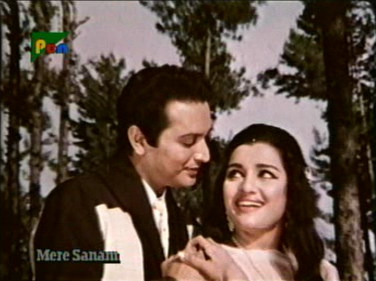
Mere Sanam (1965)

Nasir Hussain may have made his Tumsa Nahin Dekha story into four separate – and equally successful – films, but did that induce others to be original? On the contrary. Narinder Bedi, at least, probably seemed to think that what worked for Nasir Hussain might well work for him. Therefore, Mere Sanam, which has a storyline similar in many ways to Tumsa Nahin Dekha. (Both films also have fantastic music by OP Nayyar, by the way).

Continue reading

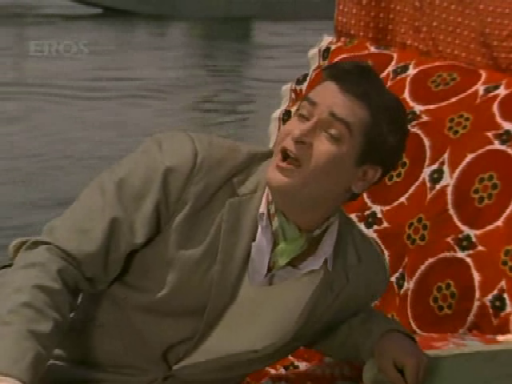
Tumsa Nahin Dekha (1957)

If Rajkumar is the trademark ‘Shammi Kapoor at his peak’ film, then Tumsa Nahin Dekha is an equally – if not more – important film, because this is the one that made Shammi Kapoor into the icon he was by the mid-60s. Till Nasir Hussain got Shammi Kapoor to shave off his moustache and act as the devil-may-care hero of this film, Shammi was (as my father puts it), “Just another actor with a thin moustache and the usual roles. Nothing exceptional.” Tumsa Nahin Dekha gave him the opportunity to transform from the half-hearted, unexceptional sort-of-hero into a Shammi Kapoor who became almost an institution in himself.

Continue reading