Aasmaan Mahal (1965)

Blog reader Raunakjoy, commenting on Himalaya ki God Mein (which won the Filmfare Award for Best Film, outdoing films like Waqt and Haqeeqat), remarked that there were, besides these contenders for the award, also lesser-known but equally—if not more—meritorious films, like Aasmaan Mahal.

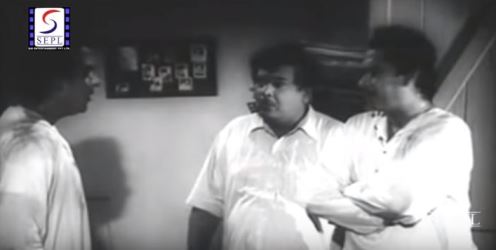
I had to admit I had never even heard of Aasmaan Mahal before, let alone watched it. Directed by Khwaja Ahmed Abbas, this film—as I discovered from a cursory look at Google search results—appears in the Limca Book of Records as one of the first Hindi films to not use sets for shooting. Also, the film won Prithviraj Kapoor an honourable mention at Karlovy Vary for his portrayal of an ageing and impoverished nawab trying desperately to hold on to the tatters of his family’s once-substantial prestige.

Continue reading

Do Dooni Chaar (1968)

Mention Shakespeare and Hindi cinema, and most eyes light up. Vishal Bhardwaj’s tragedy trilogy—Omkara, Maqbool, and Haider—come immediately to mind for those who cannot think back further than the 1990s, if that. Those who belong to a certain generation (my own) will probably remember fondly the delightful comedy, Angoor, based on A Comedy of Errors.

Fewer, perhaps, will know that Hindi cinema’s tryst with Shakespeare is much older than Angoor. In 1928, a Hamlet adaptation called Khoon-e-Nahak was released; the same play was adapted for screen again in 1935, this time as Khoon ka Khoon, starring Sohrab Modi in the title role opposite Naseem Banu as Ophelia. In 1941, The Merchant of Venice was adapted as a film named Zaalim Saudagar. And in 1954, Kishore Sahu produced, directed and acted in Hamlet, an interesting and unusual film for Hindi audiences since it was a fairly faithful enactment of the play—down to the costumes, the names, etc.

Along with Hamlet (which seems to win hands down when it comes to popularity among Hindi film makers), another popular play for adaptation seems to be A Comedy of Errors. In 1969, it had been made (though with many departures from the original plot, and with no twin servants) as Gustakhi Maaf, with Tanuja in the double role, opposite Sanjeev Kumar. It’s interesting to note that while Sanjeev Kumar would go on to act in another adaptation of the play (Angoor), Tanuja had already acted in yet another version. Do Dooni Chaar, released in 1968 and quite clearly the inspiration for Angoor.

Continue reading