(Part 1 of this travelogue, Historic Ahmedabad, can be read here).
Our sojourn in Ahmedabad stretched across most of four days: a day and a half after we landed in Ahmedabad from Delhi, and another just-over-two days before we left again for home. In between, we did a memorable trip to the Little Rann of Kutch (about which I’ll be posting in next week’s blog post, the last of these travelogues).
Ahmedabad is a city of extremes. On the hand, there are parts of it which, frankly, looked far more upscale and posh than even Delhi: wide boulevards, stylish malls and boutiques, fancy restaurants serving global cuisines.
A couple of years ago, my husband and I took our daughter (whom I refer to as the ‘LO’: the ‘Little One’, though given that she’s now ten and no longer little, she suggests that that now be ‘Loved One’) to Corbett National Park. The LO had been on wildlife safari before, but this one was special: she was deep in the jungle, she was old enough to appreciate it all and to retain memories of it. We decided we had to notch up more wildlife adventures. ‘Visit one Indian wildlife sanctuary or national park every year,’: that was a goal we set for ourselves.
This time, I decided to do something different: not a jungle, not a place we might see a tiger. Instead, I suggested we visit the Little Rann of Kutch. And since all of us are very interested in history, we figured it would be good to combine that with a stopover at Ahmedabad: the historic walled city of Ahmedabad is on the UNESCO’s list of World Heritage Cities, and its list of stunning old monuments seemed too good to pass up.
Our flight from Delhi to Ahmedabad arrived early enough for us to be able to get to our hotel (the Taj Skyline) by noon. Since this was just a week after Christmas, the lobby was still all decked up for Christmas, with a tree, a gingerbread house, and more. The LO was in seventh heaven.
When I was doing the Helen tributes last month, I was reminded of Mera naam Chin Chin Choo all over again—and remembered, too, that I had never reviewed Howrah Bridge on this blog. It has also been many years since I last watched the film (before I launched Dusted Off), so I decided it was high time I revisited this.
Howrah Bridge begins very far from the bridge, and in fact from Kolkata: in Rangoon, where Prem Kumar (Ashok Kumar) finds his father (Brahm Bhardwaj) in a flap. Daddy is distraught because Prem’s elder brother Madan (Chaman Puri, in a cameo role) has run off from home, taking with him an invaluable family heirloom, a dragon which has been in the family for generations. We later discover that the dragon was crafted in China many centuries ago, and from there came to be owned by the king of Burma, after which it passed into the possession of Prem’s family.
This little-known British film was recommended to me by YouTube, and given that I am a fan of train films (The Lady Vanishes is a favourite, as are Murder on the Orient Express and North-West Frontier), I decided I had to watch.
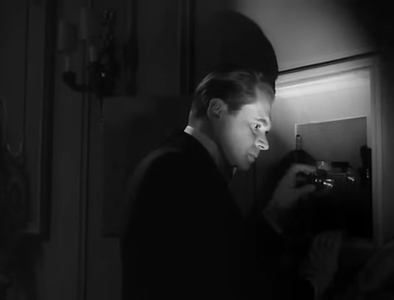
The story starts off with a bang (actually, almost literally: there’s a fatal gunshot in the very first scene). In an unnamed embassy in Paris, a party is in progress, when one of the guests, a Captain Zurta (Albert Lieven) slips out of the ballroom, makes his way to one of the more secluded rooms in the embassy, and having broken into a safe there, purloins a diary. He is caught red-handed by a footman who enters just then.


 Dustedoff