
This song list had its genesis in an earlier song list, my ten favourite title songs. In my introduction to that list, I had listed the criteria I had set for that post, and one of them was that I wouldn’t include songs for which the lyrics gave rise to film titles for a completely different film. As examples, I mentioned Yeh raat phir na aayegi (Mahal, 1949) and Dekh tere sansaar ki haalat (Nastik, 1954), both of which led to films with those lyrics as title.
That attracted the attention of several blog readers, and Harvey even suggested that it might be an interesting idea to try doing a list of such songs: songs which had lyrics that were turned into film titles. Harvey suggested a couple of songs that would fit, and so did a couple of other blog readers as well.
So here we are. Ten songs, from pre-70s Hindi films that I’ve seen, which had lyrics that became the title for a completely different film. I know that plenty of films from the 90s onward (Jab Pyaar Kisise Hota Hai, Ae Dil Hai Mushkil, Pyaar Kiya Toh Darna Kya, Ab Tumhaare Havaale Watan Saathiyon, etc) have had their titles based on songs from the 50s and 60s… but that would be far too easy. So, to make it a wee bit more challenging for myself, I imposed one more rule: that the film which drew its title from the song should also be a pre-70s film. And (yes, I like making life difficult for myself) it should be a film I’ve seen.
Here we go, then. For each song, I’ve given the name of the lyricist too, since the lyricist really deserves credit for writing a phrase that was catchy enough for such an accolade.
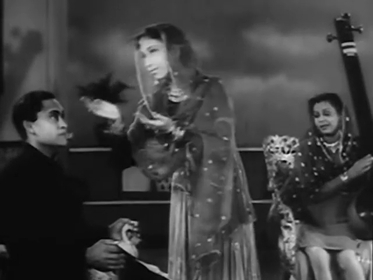
1. Yeh raat phir na aayegi (Mahal, 1949): Lyricist: Nakshab. I may as well begin this list with the songs that started it all off. Sung by Zohrabai Ambalewaali and Rajkumari, Yeh raat phir na aayegi was eclipsed by Lata’s brilliant Aayega aanewala, but it’s a fine song nevertheless. This is a performance: a nautch girl and a singer, tawaifs entertaining a young client, bringing home to him the idea of ephemerality. Life is fleeting, therefore carpe diem.
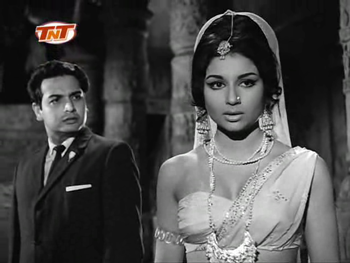
Interestingly, on its own, that phrase—yeh raat phir na aayegi, this night will not return—is fairly innocuous, open to various interpretations, of which the romantic one (“one night to love”) might be the most obvious, especially given Hindi cinema’s preoccupation with romantic love. Yet, perhaps coincidentally but perhaps not, the film that drew its title from this song—the Biswajeet-Sharmila Tagore starrer, Yeh Raat Phir Na Aayegi, 1966—shared a similarity of plot with Mahal: a young man falls in love with a woman who might be a spectre, a beautiful ghost who talks of eternal love, while driving him closer and closer to the edge of insanity all the while.
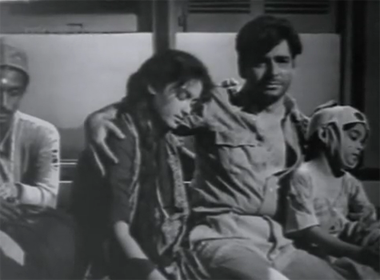
2. Dekh tere sansaar ki haalat (Naastik, 1954): Lyricist: Kavi Pradeep. Dekh tere sansaar ki haalat kya ho gayi bhagwaan, kitna badal gaya insaan. Written and sung by Kavi Pradeep (to music composed by C Ramachandra), this song of cynicism played out against a backdrop of the hatred and violence brought on by Partition. Ajit’s character, travelling on a train with his younger siblings, mourns the inhumanity that has become so prevalent—not aware, all the while, that for him and his family, this is just the start: things are going to get much, much worse before there will be a turnaround. Naastik was a grim film, and Ajit did justice to that grimness.
Three years later, Ajit starred in a film that drew its name from a line of Pradeep’s famous song. Kitna Badal Gaya Insaan, which starred him opposite Nalini Jaywant (who had been his co-star in Naastik) could not have been more unlike Naastik: this was a farce, an entertaining story of a country bumpkin (Ajit), eldest brother to six brothers who are as boorish and loud as him. The eldest brother marries a feisty woman who takes it upon herself to get her husband and brothers-in-law into shape: to be clean, reliable, well-mannered gentlemen, so to say. It was an (uncredited) adaptation of Seven Brides for Seven Brothers, and an interesting twist on the ‘kitna badal gaya insaan’ (‘how man has changed’) phrase.
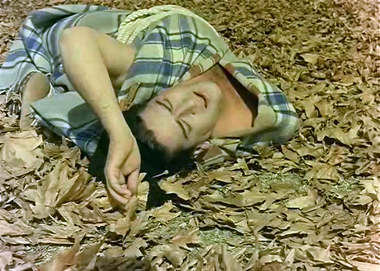
3. Tumse achha kaun hai dil-o-jigar lo dekh lo (Jaanwar, 1965): Lyricist: Hasrat Jaipuri. Shammi Kapoor, known for his madcap moves, was at his looniest in this song from Jaanwar, where—clad in a blanket and rolling about in the dry leaves under the chinars—he serenades Rajshree’s character. The lyrics of the song are all centred about her, but the picturization, really, is all about him.
And, like Ajit in Naastik and then Tumse Achha Kaun Hai, so Shammi Kapoor: a song in Jaanwar, and then in a film inspired by that song. In 1969, Shammi starred opposite Babita in Tumse Achha Kaun Hai, about a man who is hired by a wealthy old lady to ‘reform’ her spoiled granddaughters—especially the Babita character, who is close to irredeemable, given that she’s a tomboy and totally against love and marriage.
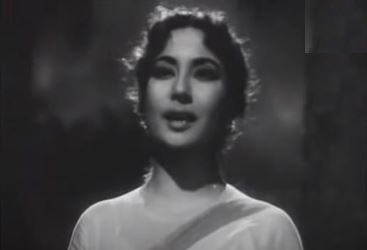
4. Kabhi toh milegi, kahin toh milegi (Aarti, 1962): Lyricist: Majrooh Sultanpuri. A convoluted story with Ashok Kumar in an uncharacteristically villainous role, Aarti featured a love triangle that had been the focus of several other films (including Bheegi Raat and Bahu Begum): Meena Kumari as the love interest of both Ashok Kumar and Pradeep Kumar. One of the best elements of an otherwise somewhat so-so film was its lovely music, by Roshan. The wonderfully melodious Kabhi toh milegi, kahin toh milegi, bahaaron ki manzil is my favourite song from Aarti.
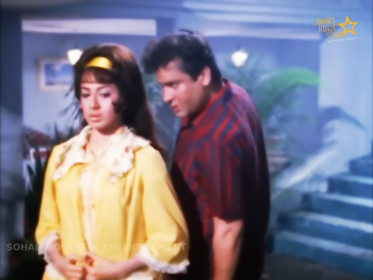
… a phrase which was used as the title of another Meena Kumari film, six years down the line. A film very different from Aarti, Bahaaron ki Manzil is a suspense thriller about a woman who one day wakes up to find that she is in a strange house; the man she knew as her brother-in-law is now calling himself her husband, and she has a daughter too. Sixteen years of her life seem to have been swallowed up. I must admit that this is one film where I see little (no?) relation between the plot and the title.
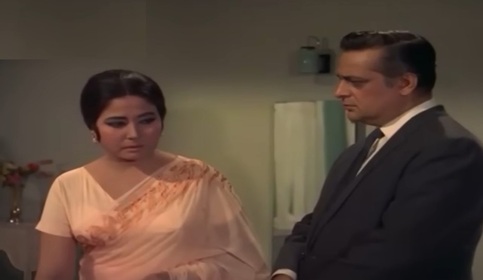
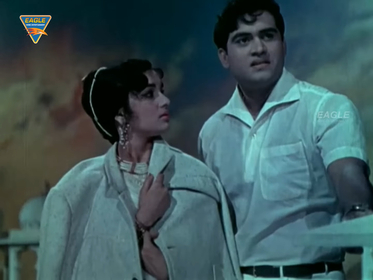
5. Phir tere shahar mein lutne ko chala aaya hoon (Ek Musaafir Ek Haseena, 1962): Lyricist: Raja Mehdi Ali Khan. Many thanks to blog reader rupahlabadal, who mentioned this song and remarked that it has a phrase, in the mukhda, that became the title for another film. In Ek Musaafir Ek Haseena, Joy Mukherjee’s character—an army officer who loses his memory after being injured during a skirmish in Kashmir—falls in love with a local girl, who is forced to leave him and return to the family and the fiancé she had escaped from. The hero goes in search of his beloved, singing this plaintive song to her. Phir tere shahar mein lutne ko chala aaya hoon/phir wahi jaan wahi dil laaya hoon.
A song, too, that gave the title for another romantic-adventurous-masala Joy Mukherjee-in-Kashmir film. Phir Wohi Dil Laaya Hoon paired him with Asha Parekh, and like Ek Musaafir Ek Haseena, had a delightfully escapist, entertaining storyline and superb music.
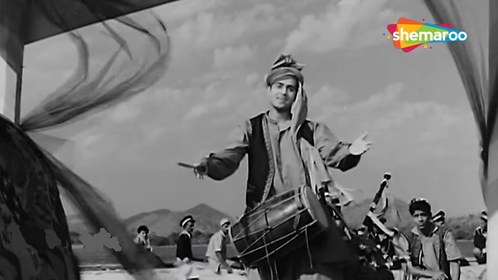
6. Mud-mud ke na dekh mud-mud ke (Shree 420, 1955): Lyricist: Shailendra. One of the most famous songs on this list is a nightclub extravaganza that revolves around the theme of ambition, of looking to the stars, of aiming upwards no matter what. Nadira (in a sheath dress that was purportedly so form-fitting that she couldn’t sit in it) scintillates, and the chorus girls dancing with her include Sadhana (who I’m afraid I’ve never been able to identify). In a film about the tussle between conscience and greed, ambition and simplicity, Mud-mud ke na dekh was a song that tried to silence conscience.
And, it gave its name to an unusual film, released in 1960: a comedy that starred Bharat Bhushan as a bumbling, rather slapdash character. Mud-Mud Ke Na Dekh was a light-hearted, fairly entertaining film that might have benefited from having a more interesting male lead. It did, however, mark the screen debut of Prem Chopra.

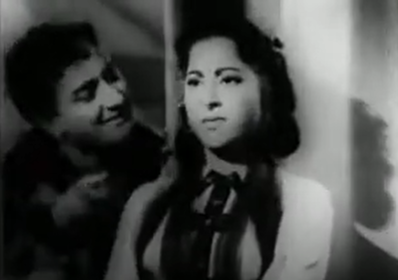
7. Pyaar kiya toh darna kya (Mughal-e-Azam, 1960): Lyricist: Shakeel Badayuni. There had to be a film with a title based on one of the most iconic ‘romance rules’ songs, hadn’t there? Because Madhubala, playing Anarkali and defying Prithviraj’s Akbar while dancing in the glittering Sheesh Mahal, in front of the entire court, is probably one of the most well-remembered song-and-dance sequences of 1960s. With Hindi cinema’s penchant for romantic love that transcends time and space; that sees no barriers of rank or wealth or creed; that defies all and sundry—it was hardly surprising that Shakeel Badayuni’s immortal lyrics would get picked up later.
Not just once, but twice: in 1998, yes; but also in a fairly forgettable 1963 film that starred Shammi Kapoor and B Saroja Devi. Coincidentally enough (or not coincidentally?), Prithviraj Kapoor acted in this film too as the disapproving and very wealthy father of a son who defies him by falling in love with a much poorer woman.

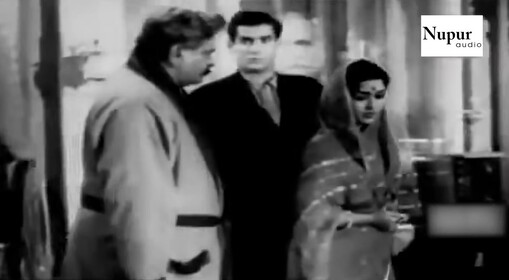
8. Chandan ka palna resham ki dori (Shabaab, 1954): Lyricist: Shakeel Badayuni. Another song by Shakeel Badayuni, a beautifully melodious, gentle lullaby. Nutan’s insomniac princess finally meets the singer who can put her to sleep—no, seriously; everybody else, all the greatest vocalists of the realm, have proved too raucous and loud, and it’s only Bharat Bhushan (singing in the ‘voice of God’, Hemant) who is soothing and calming enough to finally lull her into sleep.
A lovely song, but the film it inspired was simply abysmal. Chandan ka Palna (1967) was a frightfully regressive, stupid film starring Meena Kumari and Dharmendra—easily their worst pairing—about a woman who, when she discovers she’s infertile, convinces her husband that she’s a ‘bad woman’ so that he divorces her, remarries, becomes a father… and then the second wife conveniently dies so these two can get together again and be the happy family with the child. Do yourself a favour and never watch this one.
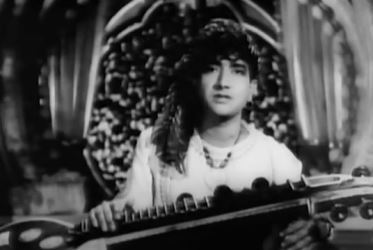
9. Dharti kahe pukaarke (Do Bigha Zameen, 1953): Lyricist: Shailendra. A raw, rich song of love for the soil, Dharti kahe pukaarke embodied the core message of Do Bigha Zameen beautifully. This was a story of the desperation with which a poor, deeply-in-debt farmer (played by Balraj Sahni) tries to hold on to the tiny parcel of land that he has had to mortgage to the local moneylender—a situation that becomes so dire, he ends up having to go to the city (Calcutta), where he becomes a rickshaw-puller in a bid to try and earn some money.
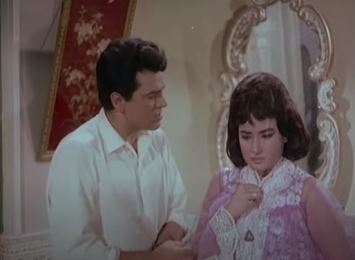
More than fifteen years after Do Bigha Zameen was released, Dulal Guha directed Dharti Kahe Pukaarke, which has the same basic theme: an indebted farmer (played by Kanhaiyalal, in one of his most sympathetic roles) who has to give his land as surety to the local moneylender to educate his younger brother (played by Sanjeev Kumar). There were other similarities too, for one the fact that the youngest brother (Jeetendra) goes to Calcutta to earn money, and becomes a taxi driver. But this film was far more commercial, far less gritty than Do Bigha Zameen.
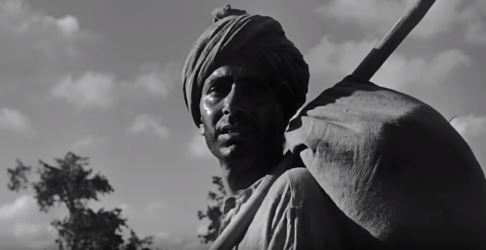
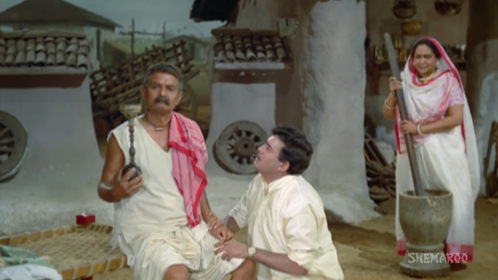
10. Gumnaam hai koi badnaam hai koi (Gumnaam, 1965): Lyricist: Hasrat Jaipuri. A suspenseful, spooky song that forms the refrain through a film that I regard as one of Hindi cinema’s most entertaining suspense thrillers. Gumnaam was based on (though not credited as such) Agatha Christie’s And Then There Were None, with a group of strangers finding themselves stranded on a mysterious island where, one by one, they begin to get murdered.
The phrase ‘anjaan hai koi’ appears in the second line of the song but is enough to identify this film, made four years later and directed by Babubhai Mistry, as paying homage to Hasrat’s lyrics from Gumnaam. As if to underline the fact, at one point in Anjaan Hai Koi, a character played by Mohan Choti actually sings (to its original tune) the first two lines of Gumnaam hai koi, but with some other words substituted here and there: Anjaan hai koi, naadaan hai koi. These words, incidentally, form the title song of this film, composed by Usha Khanna.
A note of caution: do not watch Anjaan Hai Koi. It masquerades as a suspense thriller, but a more garbled, confused hot mess of a film I’ve rarely seen.
So that’s my list. Which songs and which film titles derived from them would you add to this?
 Dustedoff
Nice post.
JUNGLEE…. KASHMIR KI KALI hoon .
SANGAM. Main ka karoon Ram mujhe BUDDA MIL GAYA.
LikeLiked by 1 person
Thank you! And I’m wondering how I forgot Kashmir ki kali hoon main… that should have struck me very early on.
LikeLike
A very interesting choice of subject matter for a post! Bravo!!
I also enjoyed the self- imposed restrictions that you put yourself through here. It makes reading the post all the more enjoyable.
A film that immediately comes to my mind in this context is “Kashmir Ki Kali”, which derived its title from the song “Kashmir Ki Kali Hun Main Mujhse Na Roothu Babuji” from Junglee. Both starred Shammi Kapoor, and thus it probably isn’t surprising at all that the makers (and most likely Shammi himself) wanted to cash on the popularity of Junglee and build upon the goodwill generated out of the connect between the two Shammi starrers in the minds of the public.
Talking about Shammi films, both his Janwar and Tumse ache kaun hai, while being directed by different directors, had the same scriptwriter- the inimitable Sachin Bhowmick, which reminds me that the initial title for Shakti Samanta’s Aradhana was Subah Pyar Ki- derived from Shaktida’s immortal number “Raat Ke Humsafar…hai Subah Pyar Ki” from his previous “An Evening in Paris”. Again, both of these films were scripted by Sachin Bhowmick.
It seems like Shaktida had a penchant for using film titles out of the songs of his previous films, as his “Sawan Ki Ghata” too, took its title from the lyrics of “Deewana Hua Badal” – a song from his immediately previous picture in Kashmir Ki Kali.
Another film that comes to mind in this context is Aa gale Lag Jaa, which took its title from the song of the same name from the film April Fool. Tere Mere Sapne is another example where director Vijay Anand reused his own song title from one of his previous films as a title for his new film. I know both Tere Mere Sapne (1971) and Aa Gale Lag Jaa (1973) are post 1970. But both the films are very much 60s in essence and style, which is why I mentioned both here.
One of the earliest examples of a song title returning back as a film title later on, might be of the mid- 1950’s film “Duniya Rang Rangili”, which took its title from the cult Pankaj Mullick song ” Duniya Rang Rangili Baba” from Nitin Bose’s trendsetting film “Dhartimata”. Nitin Babu’s “Baba Mann Ki Ankhen khol” from “Dhupchhaon”, too turned up as “Mann ki Ankhen” (1970). S. Mukerji’ mega blockbuster Kismet’s song “Duur Hato Aye Duniyawalon, Hindustan Hamara Hai”, too left its imprint as “Hindustan Hamara” (1950). There can be- and certainly will be, more examples of the same.
LikeLiked by 1 person
Thank you for those suggestions, and for the very interesting insights! It hadn’t struck me that Shakti Samanta did a lot of this.
I am especially glad to see you mention Duniya rang-rangeeli, because that was on my shortlist for this post. I like the song a lot, but because I hadn’t seen either Dhartimata or Duniya Rang-Rangeeli, I dropped it.
LikeLike
Your always welcome, Madhudi. And yes Duniya Rang Rangili is an epic song- quite easily among the 100 greatest Indian songs ever made.
As an aside, Dulal Guha was an unabashed admirer of Bimal Roy, and hence decided to name his film after a song from Bimalda’s seminal movie ‘Do Bigha Zameen’. A similar tribute, but in a different way, was paid by Sameer Ganguly- Subodh Mukherjee in their superhit Shagird, where they named the forest where Saira Banu and her guardian Ak Hangal dwelled as Madhumati. Bimal Roy, anyways, deserves as many tributes as possible, as no other director in Hindi cinema till date cracked the code of delivering almost every film as an international/national award winning film, which was also commercially among the top 10 hits of the year. No one before, or after him, has been able to do this with the kind of alarming consistency that he did it with.
LikeLike
Lovely post! And thanks for the recommendations to **not see** some films :-) much appreciated.
LikeLiked by 1 person
You’re welcome, Meena! And yes, as much as recommendations for films one should watch, I think it’s important to get warnings too. A lifetime is too short to fritter away on watching ghastly stuff like Chandan ka Palna or Anjaan Hai Koi.
LikeLike
An interesting post. The song that came to my mind immediately was Dilwale dulhaniya le jayenge from Chor Machaye Shor.
Le jayenge le jayenge dilwale dulhaniya…
LikeLiked by 1 person
Yes, that’s a good one for the list!
LikeLike
I’ve been waiting for this post since you mentioned the theme (or Harvey did) in your previous post.
Actually, the Chandan ka palna resham ki dori song gave rise to two films – Chandan ka Palna and Resham ki Dori, a 1974 film that starred Dharmendra and Saira Banu.
For other examples: Main Bambai ka babu naam mera anjaana from Naya Daur in 1957 to the Dev Anand-starrer Bambai ka Babu in 1960.
The phrase Aplam chaplam from the song of the same name in Azaad (1955) became the title of a forgettable movie by the same name in 1961.
Hum matwaale naujawan from Shararat (1958) became the title of a film starring Shekhar and Saeeda Khan in 1961.
Of course, as you pointed out there are many ‘modern’ films that have taken their titles from old Hindi songs. The ones that come to mind (apart from those you have listed) are:
Phir Bhi Dil Hai Hindustani (2000) which takes inspiration from Awara‘s Mera jootha hai japani.
Baar Baar Dekho (2016), which takes its title from the China Town song.
The SRK-Rani Mukherjee starrer Chalte Chalte (2003) took its name from Chalte chalte yunhi koi (or perhaps from the newer Chalte chalte mere ye geet yaad rakhna – this song also gave rise to the title of Karan Johar’s film, Kabhi Alvida Na Kehna.)
Uthe sab ki kadam tara rum pum pum from Baaton Baaton Mein gave rise to Tara Rum Pum , a very forgettable Saif-Rani starrer.
Hum hai raahi pyaar ke from Nau Do Gyaarah became the title of the 1993 Aamir-Juhi starrer.
Hrishikesh Mukherjee directed a film called Jhooth Bole Kauwa Kaate, which is a song from Raj Kapoor’s Bobby.
LikeLiked by 1 person
Oh, wow! That’s a huge number of songs, a huge number of films. Why do they do it? Because a song has lasting value? Or because the words spun by a proper poet – a lyricist – are perhaps more catchy than a title dreamed up by someone not a poet?
LikeLike
l’m not sure, really. My educated guess would be that some of the songs were so popular that the producers hoped to ride that wave. Today, I think, it is because of a decline in creativity. Think of all those beautiful songs from the golden period that are ‘remixed’ to sound nothing like the original (in a bad way). This is merely an extension of that. When you don’t have the talent to create something original, then you fall back on picking someone else’s creative juices and mashing it up to make a khichdi. And a not very palatable one, at that!
LikeLiked by 1 person
Yes, that newer trend is something I agree with you about. I think this mostly can be traced back to the 80s, and going into the 90s (when it got really bad – so bad that if you search on YouTube for an old song, chances are the first result will instead be a 90s film that has the same words as a title. :-( Hindi cinema was really at its nadir back then. As was Hindi film music.
LikeLike
Coming to new movies, a very average AA AB LAUT CHALEN from the beautiful JOS DESH MEIN GANGA BEHTI HAI.
RK banner both. Father and son associated with them.
Ye dil deewana hai…ISHQ PAR ZOR NAHIN…….DIL DEEWANA.
KASME VAADE pyar Wafa sab…. UPKAR.
There are plenty.
LikeLiked by 1 person
Yes, indeed. I had thought of Ishq Par Zor Nahin, but there’s no way of saying whether whoever named it drew inspiration from Sahir’s (was it?) qawwali, or from Ghalib’s original sher. I think, anyway, that the inspiration should be credited to Ghalib, since even the qawwali was inspired from his poetry.
LikeLike
SHREE 420. Mera jhootha hai Japani.. PHIR BHI DIL HAI HINDUSTANI.
LikeLiked by 1 person
Yes, Anu’s mentioned it in her comment.
LikeLike
No, I wasn’t actually talking about IPZN. I was pointing at DIL DEEWANA… from the IPZN song.
There are quite a few other songs like Tu kahan ye bataa… having the words.
LikeLiked by 1 person
Dear Madhu,
How nice of you to fulfil the wish. Thank you. It was a joy to read through the list. Many of the films, which you’ve mentioned I hardly knew. So the post was also a post of discovery for me.
Now that I’ve read so many such examples, I can’t remember any new ones. Tere mere sapne the song in Guide and the later Dev starrer Tere mere Sapne both movies directed by Vijay Anand is the only one which comes in my mind, but I told you about that last time itself or did you mention it?
In such moments my brain tends to go off tangentially and now remembers Guru Dutt’s Kaagaz Ke Phool and the song from Bhanwar rang le aayenge roop le aayenge kaagaz ke phool. That would be though title to song instead of song to title.
LikeLiked by 1 person
I am glad you enjoyed this, Harvey! Thank you for suggesting the theme for this list, I had a good time working on it. :-)
Talking of Kaagaz ke Phool: I just rewatched it last week, and that too on the big screen. It’s been re-released for its 65th anniversary, so for one week, PVR Inox had screenings. This is I think the third pre-70s Hindi film I have ever watched on the big screen, so I was very excited.
LikeLike
Oh, lucky you!
You could watch Kaagaz Ke Phool on the big screen.
Many years ago, I saw Sahib Bibi aur Ghulam in Graz. That was a treat.
Then there was a screening of Patther Panchali at the Viennese Museum of Film. That was a treat too. Abhi pata nahin kab aise mauka milega.
Which were your other two?
LikeLike
The other two were CID and Hum Dono. CID I watched when I was about 9 years old, so I remember next to nothing of that, except a handful of frames. :-) Hum Dono I watched a few years ago, when a colourised version was released. The colourisation was really bad, so it wasn’t a very good experience!
I envy you, getting to see Sahib Bibi aur Ghulam and Pather Panchali on the big screen. That must have been really wonderful.
LikeLike
Watching old movies with brilliant photography is indeed an experience to watch on big screen. So I think watching Kaagaz Ke Phool and that also in a good print must have made you appreciate it more. I would love to watch all Guru Dutt and Vijay Anand’s movies on big screen and maybe even Aan. Mughal-E-Azam for all of its pomp and grandeur is still a studio film and basically an intimate story.
It was pure luck to have got to watch Patther Panchali at the Viennese Film Museum. The tickets were sold out. I went to the ticket counter and said I come from Graz and would so love to see it and the lady at the counter gave me a ticket. It was in the first row, but nevertheless it was a wonderful experience. God bless that lady.
LikeLiked by 1 person
I agree with all the movies you’ve listed as ones you’d like to see full screen. To that, I’d also add – for myself – Mera Saaya and perhaps Kaanoon, two very different films but both favourites of mine.
It was in the first row, but nevertheless it was a wonderful experience. God bless that lady.
What a good Samaritan! Bless her, indeed.
LikeLike
A Little bit of “research” did reveal a few more better examples
O babu tel malish kara lo boot polish was song from Baarat (1960). In 1961 the movie Tel Maalish Boot Polish was released. But I don’t know if any intention was behind it or it was just a coincidence. But that is the case in nearly all of them
Dil hi to hai tadap gayaa from Aadhi Raat (1950) could have inspired the title Dil Hi To Hai (1963).
Jab se tumhe dekha hai aankhon mein tum hi tum ho (Gharana) from 1961 sounds like a sure Inspiration for the Pradeep Kumar-Geeta Bali starrer Jab Se Tumhe Dekha Hai (1963).
Panghat pe dekho aayi milan ki belaa from Naujawaan (1950) could have become he title Aayi Milan Ki Bela (1964)
Pooja ke phool chadhaa kar kehta hai insaan from Ham Panchhi Ek Daal Ke sounds like the Inspiration behind the title Pooja Ke Phool (1964).
Well, that is all from me for now.
BTW, it does seem that a few titles also have inspired Songs. for e.g., Chandi Ki Deewar (1964) and the Songs chandi ki dewaar na todi from Vishwas (1969). Maybe it inspires to write a list on that theme as well.
LikeLiked by 1 person
Arre wah! That is indeed some heavy-duty research. I am very impressed, Harvey. I hadn’t heard of a lot of these films (or of the songs). Some – like the Jab Se Tumhe Dekha Hai inspiration – I had heard, but had forgotten about. :-)
BTW, it does seem that a few titles also have inspired Songs. for e.g., Chandi Ki Deewar (1964) and the Songs chandi ki dewaar na todi from Vishwas (1969). Maybe it inspires to write a list on that theme as well.
Hmmm. Sochna padega. :-) Offhand, though, I can’t think of any…
LikeLike
If you’d like, I can send some suggestions next week.
LikeLike
Nahin, give me some time to wrack my own brains a bit!
LikeLike
Some more “research” on otherwise lonesome train ride revealed some more “title(-inspiring) songs”
The song jab jab phool khile tujhe yaad kiya from Shikast (1953) seems to have inspire Jab jab phool khile (1965)
Nargis’ bahaarein phir bhi aayengi from Lahore (1949) went on to inspire Guru Dutt’s swan song Baharein phir bhi aayengi (1966). It is said that some of his directed songs and/or scenes seem to have found their way into the last cut. vo hanske mile hamse is often cited as an example.
I wonder if the song dil ne phir yaad kiya bewafa laut bhi aa from Mahal (1949) became the title Dil Ne Phir Yaad Kiya (1966)
This is the earliest song that I found. neend hamari khwaab tumhare from Nayi Kahaani (1943) which seems to have inspired the title of the Shashi-Nada film Neend Hamaari Khwab Tumhare (1966)
Sanwle salone aaye din bahar ke from the Meena Kumari starrer Ek Hi Rasta from the year 1956 most probably inspired the much more fluffier Aaye Din Bahar Ke (1966)
The song deewana hua badal sawan ki ghata chhayi (Kashmir Ki Kali) from 1964 title Sawan ki Ghata 1966
Ye do deewaane dil ke chale hain dekho mil ke chale hain sasuraal from Johar Mahmood in Goa (1965) seemed to have inspired Bhagwan’s Chale Hain Sasural (1966).
The song aa jaa sanam madhur chandani me ham from Chori Chori (1956) does have the words “aa jaa sanam”, which is the title of the film Aa Jaa Sanam (1968), but most probably there are many songs which have the same words.
So now this was the last comment. I won’t hog the place more.
LikeLiked by 1 person
I won’t hog the place more.
I am more than happy to have you hog the place, Harvey! The person who suggested a good theme merits that much. :-)
And many of the songs you’ve listed here I should have remembered… especially the first few, which I am mostly familiar with!
LikeLike
Very enjoyable indeed!
And that reminded me of my one of my very old posts that was titled ‘Guess my theme’. And it was actually based on the same thing. If you remember, it was you who answered it correctly.
:-)
Songs I could thought of are
Neend hamari khwab tumhare from Nayi kahani
Dil Bhi tera hum bhi tere from Tanksaal
shola jo bhadke from Albela
hum hai rahi pyar ke from Nau do gyarah
Ae Dil Hai Mushkil by Rafi and Geeta Dutt
Jab se tumhein dekha hai from Gharana etc etc
:-)
LikeLiked by 1 person
I don’t know how I had forgotten that you had done a similar post, Anupji! Completely slipped my memory. Thank you for reminding me, and for the songs/films you’ve listed – I am familiar with most of them. :-)
LikeLike
Wonderful theme. Having a famous song as the title of the movie certainly generates some interest in new movies.
Here are some famous songs which became movie titles later on.
Meri Umr ke Naujawano to Om Shanti Om
Bachna Ae Haseeno
Yeh Jawani Hai Deewani
‘Phir teri kahani yaad aayee’ from same song in Dil diya dard liya
And Badtameez kaho ya Jaanwar morphed into Jaanwar
Guzarish from Ghajini
LikeLiked by 1 person
Thank you! Those are very good examples. :-) Budtameez kaho ya kaho jaanwar was from Budtameez (1966), which came a year after Jaanwar (1965), so I don’t think that applies – but it’s an interesting reference to an earlier film of Shammi Kapoor’s.
LikeLike
Madhuji,
This is something that even I have observed of how certain lyrics of songs are the origin of subsequent movie titles. Here is my contribution.
Dekh Li Teri Ada Aji Bas Shukriya (Qaidi, 1957) It is interesting to note that the phrase Aji Bas Shukriya became the title of a movie that was released just a year later. The producer-director team of Md. Hussain and F.C.Mehra made both Qaidi (1957) and Aji Bas Shukriya (1958).
Manek Premchand makes an interesting point in his book ‘The Hindi Music Jukebox‘ on this aspect saying that if the cast and crew (or some of them) are the same in two films then there is a fair chance that they become the ‘pollinating agent’. Here is the bitly link.
https://bit.ly/46hrzeU
LikeLiked by 1 person
Thank you, especially, for that link to Manek Premchand’s book – that ‘pollinating agent’ theory makes a lot of sense.
LikeLike
Sanam Teri Kasam was title of the movie, titular song as well as title of another movie released decades after the original.
LikeLiked by 1 person
The phrase obviously has high recall value! :-)
LikeLike
I am surprised you didn’t include “YEH RAASTE HAI PYAR KE” and ” HUM hai raahi pyar ke “
LikeLiked by 1 person
Oh, were there movies called Yeh Raaste Hain Pyaar Ke (not the Sunil Dutt-Leela Naidu starrer) and Hum Hain Raahi Pyaar Ke before the 1970s? I didn’t know that.
LikeLike
Quite an enjoyable post on an interesting subject.
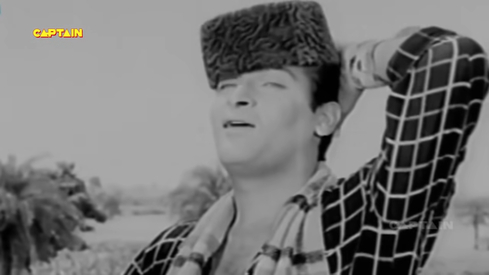
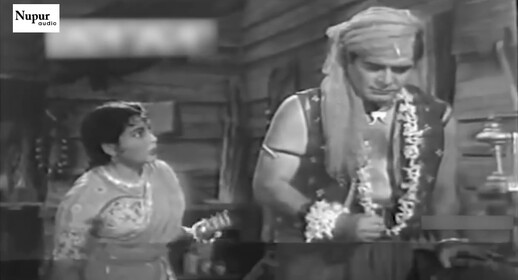
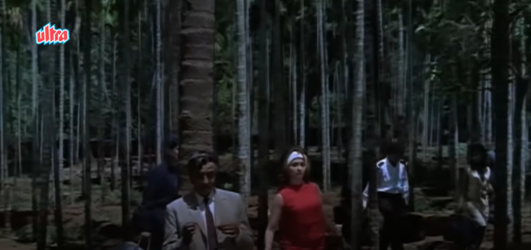
The screenshot at the beginning is of Sar par topi lal haath mein from Tumsa Nahin Dekha, leading to the title of the film O Tera Kya Kehna 1959
Some more instances:
Akeli mat jaiyo radhe jamuna ke teer (Baiju Bawra) – Akeli Mat Jaiyo 1963
Tu pyar ka sagar hai (Seema) – Pyar Ka Sagar 1961
Insaaf ka mandir hai ye (Amar) – Insaaf Ka Mandir 1969
Dekho rootha na karo (Tere Ghar Ke Samne) – Rootha Na Karo 1970
Wo din yaad karo (Hamrahi) – Wo DIn Yaad Karo 1971
Baar baar tohe kya samjhaye payal ki jhankar (Aarti) – Payal Ki Jhankar 1968, 1980
Ankhon ankhon mein hum tum (Mahal) – Ankhon Ankhon mein 1972
LikeLiked by 1 person
Oh, very nice suggestions! (And thank you for correctly identifying the reference in the screenshot – nobody pointed that out). I had also had Insaaf ka mandir in my shortlist, but it didn’t make the cut, so I’m especially glad to see you list it.
LikeLike
One from the 40s: The song Chal chal re naujawan from Bandhan (1940) lead to film titled Chal Chal Re Naujawan (1944), both starring Ashok Kumar.
The iconic Aayega Aanewala song from Mahal led to the hardly known Aayega Aanewala film of 1967
Three Aradhana songs provided titles to films post-70s: Roop Tera Mastana 1972, Kora Kagaz 1974, Mere Sapnon Ki Rani 1997
LikeLiked by 1 person
Thank you for those! That bit about the songs of Aradhana is very interesting indeed.
LikeLike
I think there was a 1992 movie Qaid mein hai bulbul, starring Bhagyashree, title base on 1959 pretty famous song, from the movie Bedard zamana kya jane.
LikeLiked by 1 person
That’s a good find! Thank you for it.
LikeLike
A new way of looking at those songs of the Golden Era (1950s and 1969s) and an unique and original compilation. Thanks for the research and the enjoyable blogpost.
LikeLike
I am glad you enjoyed this. Thank you for the appreciation!
LikeLike
Dil To Bachcha Hai Jee from Ishqiya became movie title.
LikeLiked by 1 person
Dekh li teri ada.. aji bas shukriya was a superhit song by Shamshad begum from Qaidi 1957. But this song was forgotten by time. The next year eagle film used that phrase for their next movie which was Aji bas shukriya 1958
LikeLiked by 1 person