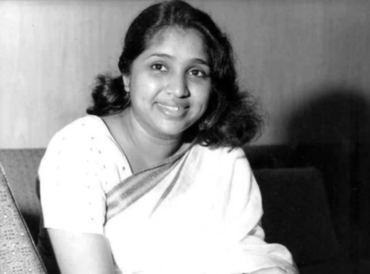
Asha Bhonsle: Ten Duets, Ten Co-Singers: Part 2

When I posted this list  of ten Asha duets last week, the plan had not been to post a follow-up list as well. But then, blog readers began commenting on the post, and several of them posted songs that I really like, with playback singers I hadn’t mentioned. After all, when you’re doing a list of just ten songs, the tendency—and I admit I succumbed to this temptation—is to include your favourite songs. All the duets with Rafi, Kishore, Mukesh, et al, featured there. And those songs with these singers that didn’t actually get listed, I at least made it a point to mention.

Even when I’d posted that list, I was ruing the fact that I had still not got around to writing about Asha’s songs with, say, her sister Usha Mangeshkar. There were, in addition, a few rare songs with relatively little-known singers, too, that I had had in mind, but hadn’t written about.

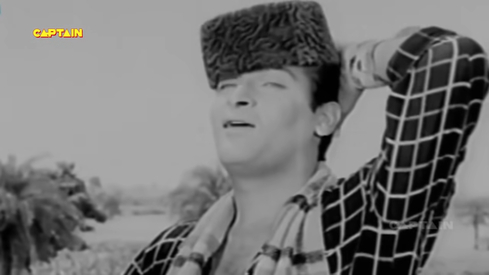
So many good songs on the back burner. I decided a Part 2 was in order. So here it is. Ten duets sung by Asha Bhonsle with a fellow singer who wasn’t listed in the earlier post. As always, these songs are all from pre-1970s Hindi films that I’ve seen. These are in no particular order.
Continue reading

Ten of my favourite songs that became film titles

This song list had its genesis in an earlier song list, my ten favourite title songs. In my introduction to that list, I had listed the criteria I had set for that post, and one of them was that I wouldn’t include songs for which the lyrics gave rise to film titles for a completely different film. As examples, I mentioned Yeh raat phir na aayegi (Mahal, 1949) and Dekh tere sansaar ki haalat (Nastik, 1954), both of which led to films with those lyrics as title.

That attracted the attention of several blog readers, and Harvey even suggested that it might be an interesting idea to try doing a list of such songs: songs which had lyrics that were turned into film titles. Harvey suggested a couple of songs that would fit, and so did a couple of other blog readers as well.

Continue reading

Ten of my favourite spooky songs

Some days back, I watched A Shamshir’s Woh Koi Aur Hoga (1967), starring Mumtaz, Feroz Khan, and Sohrab Modi. It turned out to be one of the most incoherent and illogical films I’d ever seen: Sohrab Modi’s character, a professor, is drugged (by Asit Sen in yellowface, a Chinese villain pretending to be the professor’s Indian servant) and made to do the dirty work of the Chinese: that is, inject hapless victims with something that will drain the blood from their bodies. The corpses are then covered with wax and sold off as mannequins to the wealthy gullible who want realistic-looking statues in their homes (and are possibly not averse to the frightful stench).

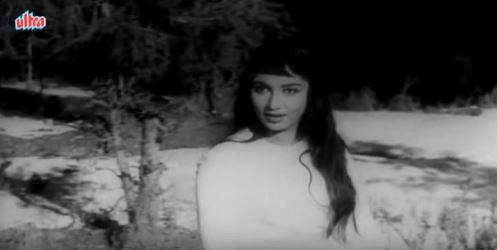
But, digressions aside: there was also, in the film, Mumtaz. Wearing a shimmery white dress and roaming about the hills at night, singing a sad song. Repeatedly.

Watching Ae raat ke andhere mujhko gale lagaa le, I was reminded of many other songs with a similar premise: a ghostly figure (invariably female), wandering about in the night and singing a signature spooky song. There is often an echo, sometimes other props, something else perhaps to suggest darkness, mystery, ghosts.

Continue reading

Yeh Raat Phir Na Aayegi (1966)

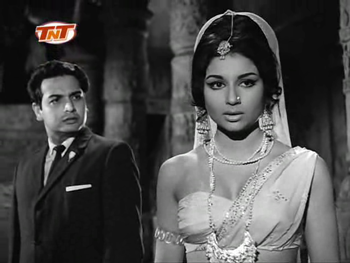
Poor Biswajeet must have gotten thoroughly sick of romancing spooky women in the ‘60s. True, in this one, the spookiness is rather more pronounced (Waheeda Rehman was pretty sunny and un-mysterious in Bees Saal Baad; everything else seemed steeped in mystery). But there is the inexplicability of everything around, dozens of very loud and pointed hints of someone haunting an area, and a song that’s sung again and again like a broken record.

Continue reading

Ten of my favourite O P Nayyar songs

My sister gave me Ganesh Anantharaman’s Bollywood Melodies: A History of the Hindi Film Song for Christmas. Yes, I know, my sister’s a gem: I adore her. I also adore a lot of the people Anantharaman writes about in his book. He admits he’s biased towards classical music, but then he does go on to acknowledge the worth of people like O P Nayyar, who’s a classic example of unclassical.
Omkar Prasad Nayyar was born on January 16, 1926 (now you know why this post today, of all days). He grew up in Lahore, and was composing music for All India Radio Lahore by the time he was fifteen (makes me feel utterly worthless. All these child prodigies do). When India was partitioned in 1947, Nayyar left Lahore and came to Bombay. Thank heavens. The rest, clichéd though it may sound, is history.

O P Nayyar

Continue reading