
Blog reader Raunakjoy, commenting on Himalaya ki God Mein (which won the Filmfare Award for Best Film, outdoing films like Waqt and Haqeeqat), remarked that there were, besides these contenders for the award, also lesser-known but equally—if not more—meritorious films, like Aasmaan Mahal.
I had to admit I had never even heard of Aasmaan Mahal before, let alone watched it. Directed by Khwaja Ahmed Abbas, this film—as I discovered from a cursory look at Google search results—appears in the Limca Book of Records as one of the first Hindi films to not use sets for shooting. Also, the film won Prithviraj Kapoor an honourable mention at Karlovy Vary for his portrayal of an ageing and impoverished nawab trying desperately to hold on to the tatters of his family’s once-substantial prestige.

Nawab Mir Akram Ali Khan, whose (inherited) title is Aasmaan-ud-Daula—which translates as ‘sky of the state’—is the owner of the sprawling Aasmaan Mahal, a huge mansion in Hyderabad. He lives here with his quiet and long-suffering begum (Mridula Rani) and their son Salim (Dilip Raj, son of P Jairaj). Salim, who is a college student and very fond of poetry, is also quite the epitome of the spoiled young scion. He drinks, he frequents kothas, he has surreptitiously been pawning off what remains of his mother’s jewellery…
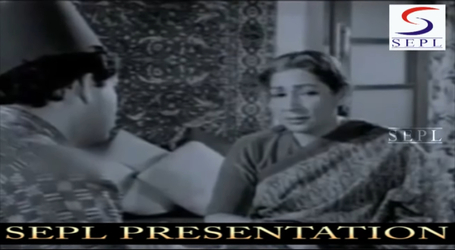
… which is not much. Aasmaan Mahal, its carpets threadbare, its plaster peeling and only one servant, Qasim (Yunus Parvez) in attendance, is long past its glory days. Nawab Sahib spends much of his time sitting and leafing through an old album containing the portraits of his ancestors, reliving the days when this haveli was the epitome of pomp and grandeur.
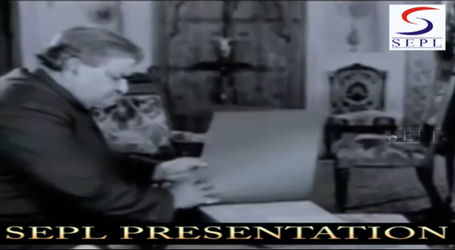
When the film opens, it is to the arrival of a visitor (Rashid Khan) to Aasmaan Mahal. This man has come with a proposition: offering Nawab Sahib up to ten lakhs for the haveli, which will then be turned into a hotel. (I find KA Abbas being pretty prescient here: in recent years, there have been umpteen instances of old havelis and palaces being turned into heritage hotels). The man offers increasing amounts of money to Nawab Sahib, but an incensed Nawab Sahib isn’t listening. He throws the man out.
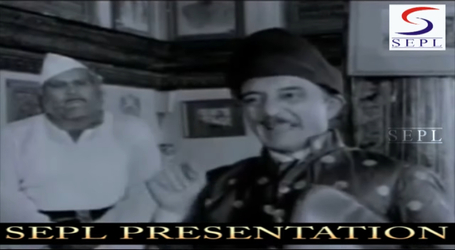
There is a faint hope—a ghost of a hope, no more—that something may yet come to their aid. Nawab Sahib has heard family rumours of an ancestor having buried a treasure here at Aasmaan Mahal; if he could only find that… But no matter how much Nawab Sahib goes pottering about the place, tapping with his walking stick at the walls, trying to find a hollow space, it is all in vain.
Everything is gone. The wealth, and with it the trappings of wealth. The cars, which a child Salim used to tinker about with while playing. The horses, the stables, the fine carriage. Nawab Sahib’s old coachvaan Ghulam Rasool (Nana Palsikar) now pedals a rickshaw to earn his living and provide for his daughter Salma (Surekha).

It is while he is pedalling his rickshaw one night that Ghulam Rasool comes across a thoroughly intoxicated Salim. The young man is so tipsy that Ghulam Rasool, realizing he cannot be taken back to Aasmaan Mahal—Nawab Sahib would throw a fit on seeing his son in such a state—decides to take Salim to his own home.
Here, a sozzled Salim regains enough consciousness to make passes at Salma, who is put off so much that the next day, when a sober Salim comes to apologize and to convince her of his genuine esteem and love for her, she refuses to give him the time of day.


Salim, however, perseveres: as debauched as he had been till just recently, just as drastically does he now go in the opposite direction, leaving behind all that drinking and debauchery. Salma (who is a school teacher), is eventually convinced of his love and reciprocates.

This is one match, though, that is completely outside the pale. When Salma’s father Ghulam Rasool comes to know of it, he refuses to accept that Salim could have changed so much (Unsurprisingly. The last time Ghulam Rasool saw Salim was when he loaded the drunk young man into his rickshaw and brought him him. On a previous occasion, Salim—having overheard his father the Nawab bestowing a coin on Ghulam Rasool—had cornered Ghulam Rasool before he left the haveli, and had snatched the coin from him). Ghulam Rasool has a poor opinion of Salim.
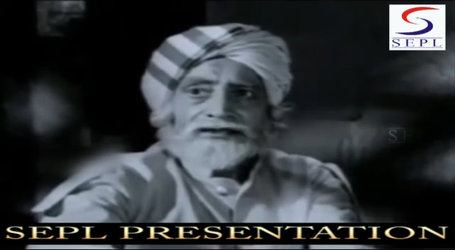
And anyway, would Nawab Sahib ever agree to having his only son and heir marry the daughter of his former syce? Never. Nawab Sahib has in mind, as Salim’s bride, a young woman named Suraiya (?) who is the daughter of Nawab Sahib’s old friend, Niaz Jang. Suraiya has known Salim since they were children, and there’s an easy camaraderie between them.

Also, there’s the fact that even mentioning the idea of a match with Salma could be fatal to Nawab Sahib. Another old friend, also the family doctor, is Raja Sukhram (David), who has been keeping tabs on Nawab Sahib’s health and is of the opinion that the old man’s heart is in a fragile condition: he should take care…

When I first read the synopsis of Aasmaan Mahal, Satyajit Ray’s Jalsaghar came to mind: the protagonists of both films are in a somewhat similar situation, ageing men who try desperately to hold on to a glorious past. A heritage they cannot afford any more, and of which the vestiges that are left are pathetic. The more one sees the threadbare drapes, the peeling plaster, the few precious items being pawned off, the more one realizes that there is really no hope.
But that is where the resemblance between the two films ends. KA Abbas’s film has the romance that is so integral to much commercial Hindi cinema, and Prithviraj Kapoor’s Nawab is not quite the utterly lonely man that Chhabi Biswas’s Bishwambhar Roy is. This man has a wife, he has a son, and Sukhram proves himself a better friend than one initially expects him to be. And yet, there is something about the Nawab, tip-tapping along the walls, searching for hollow spaces, that is immensely moving.
What I liked about this film:
The overall story, the characters, the reflection on the riches-to-rags story that was so common once the zamindari system collapsed. Inder Raj Anand’s story and KA Abbas’s direction are sensitive, and one gets a sense of the dilemma people like the Nawab found themselves in. Brought up to believe in their right to rule their realms; to have people at their beck and call; to never be obliged to work for a living (even, in fact, to consider any sort of work as demeaning). And then, in one fell swoop, to discover that all that is left is the illusion of power and wealth. Should one be practical and agree to trade honour for enough money to live on? Or does honour remain paramount? Does one’s honour really suffer in a situation such as this? (There is an added dimension here, in that the protagonist is a Muslim; as he is told at one point in the film, he can go to Pakistan, where he will be welcomed with open arms).
It’s a poignant story, and Nawab Sahib, especially, is beautifully etched—and just as brilliantly portrayed by Prithviraj Kapoor. Pained, torn two ways, a sympathetic character even when he’s being impossibly obstinate.

And two more, seemingly minor, elements, but both impactful. Scenes, too, which shows the subtlety KA Abbas could bring to his film-making.
For one, the scene where Salim goes to meet Suraiya to tell her he can’t marry her. On previous occasions, when Suraiya has gauged that Salim might have feelings for her, she has let her guard down and been informal with him. In her case, this consists not just of joking with Salim, but also referring to herself in the masculine (“Main yahin baitha rahoonga”, for example). She keeps speaking in this manner until Salim tells her that he doesn’t love her, that his beloved is someone else. And Suraiya, though she’s sensible and does not either weep or berate him, now refers to herself in the feminine, as a woman normally would. A subtle way of showing that she has erected the barrier she had let down for a brief while.
And, two: the end. That was the perfect ending for the film, so stunningly ironic.
How could I end without a word about the music, though? Aasmaan Mahal had a score composed by JP Kaushik, with lyrics by Ali Sardar Jaafri—and a (credited) ghazal by Majaaz Lucknawi. The songs are nice, not especially memorable for me; but what stood out here was the number of songs which actually have fairly minimal instrumentation. Not surprising, given that both Salma and Salim are lovers of poetry, which is why several of the songs are actually recitations, rather than the usual type of song common in Hindi cinema. The tandem songs of Itni aasaan nahin ae dist mohabbat meri and Khoobsoorat hai teri tarah shiqaayat teri stand out in this respect.
What I didn’t like:
The sudden turn-around in Salim’s character and behaviour, and how Salma falls in love with him too. This was just too unreal to stomach. Actually, in the average Hindi film, I would not have batted an eyelid at the suddenness of this romance as well as the suddenness of Salim’s about-turn; but Aasmaan Mahal has a realism to it with which these just didn’t fit.
Despite that, though: a very good, thought-provoking film, memorable, and so different from the average Hindi film. I wonder what its fate might have been had it had more well-known faces as the romantic leads. Would the fact of its unconventional, non-commercial storyline have then not mattered?
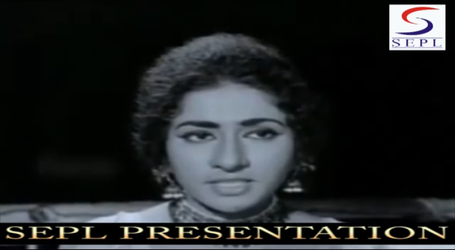
Who knows. Do watch this one; it’s on YouTube, though SEPL (as you can see) has really ruined the print by pasting their logo across most of the screen. Also (I assume) by chopping some of the scenes, though not so badly that it makes a huge difference, I think.
 Dustedoff
I saw this movie as a kid on Doordarshan. Dont remember the story much.
I am from Hyderabad and I remember the elders referring this to the Asman Garh Palace in Hyderabad. Not sure if this is biographical. May be more knowledgeable readers of the blog can comment.
LikeLiked by 1 person
Not sure if this is biographical.
I was wondering, too. But even if it isn’t strictly biographical, I suppose this was not too uncommon an experience among those who had suddenly lost their privy purses.
Thank you for identifying the Asman Garh Palace – I did some searching to try and find out where this was filmed, but couldn’t discover anything. Looking at photos of the palace, I can see that this was it.
LikeLiked by 1 person
Time to watch this once again. After all I am from Hyderabad !!
Agree, lot of the so called Royal Families frittered away the wealth. Very few people may have invested their assets wisely.
LikeLiked by 1 person
I watched this a long time ago, in a ramshackle theatre in Bangalore. Because my father was a huge Raj Kapoor fan, it followed that we watched movies starring his father, his brothers, his son… :)
I was too young to appreciate the movie then. Your synopsis makes me want to rewatch this sometime soon. Thanks for the recommendation, Madhu.
LikeLiked by 1 person
You’re welcome, Anu. I think this is definitely the sort of film that requires maturity to appreciate, especially since supporting elements like the music aren’t terribly memorable. ;-)
LikeLike
What a poignant movie . Thanks for the recommendation DO.
Leaves one with mixed feelings…empathy for the ageing aristocracy and yet an intuitive support for the end of the feudal system, sadness for the old Nawab but also exasperation at his futile obstinacy.
Glad you mentioned Jalsaghar, which is a sister movie to this ( in spirit at least ) .
But yes the print was awful . But do we really conserve our cinematic heritage in this country ? I am afraid not . Read an excellent piece on this in the Mint Lounge ( I think) a couple of weeks back … pretty dismal state of affairs including the lackadaisical attitude to something as simple as unnecessary editing and aspect ratio distortion just to fit the newer-age platforms and tech .
LikeLiked by 1 person
Anubha,
Thank you for reading and for the comment. Especially, thank you for voicing something I too feel deeply about – the horribly cavalier treatment meted out to cinematic heritage in India. :-( It is simply awful. When I first started this blog, I remember being very pleased to see that so many old films were readily available on YouTube etc. Later, when I actually began watching them, I realized what a frightful condition most of them were in. Not just bad prints, but – as you point out – random editing and distortion just to make them fit the confines of tech. It’s appalling.
And, don’t even get me started on the fact that so few even big hits from regional cinema (including major award-winners) can’t be found with subs.
LikeLike