
Many years back, I’d begun doing a series of posts on multiple version songs in old Hindi cinema. Songs that seem to have struck their composers/film directors as so impactful that they needed to be repeated, in different scenarios, sometimes in different moods and even with different singers, singing differing lyrics. I did two of those posts, then something cropped up (I don’t remember what) and the project got abandoned.
But I’ve got back to this now, and here’s a third post on multiple version songs. My earlier posts focused on solos: two-version songs sung by a male singer and a female singer; and the same song, sung by the same singer but in two versions.
This time, I’m focusing on songs that appear at least twice in a film, but at least once in the form of a solo and the other time as a duet (or more: one of the songs in this list has three singers).
As in all my song lists, these songs are all from Hindi films from before the 1970s (with one exception, which is on the cusp), which I’ve seen. And, as in my other ‘multiple version’ song lists:
1. The song must appear as a full-fledged song in both its avatars. A single verse or just the refrain does not qualify as a complete song for me.
2. The tone of the songs doesn’t matter. One version could be happy and the other sad, or both could convey the same mood. What qualifies a song for this list is the number of people singing it. In one case it should be a solo, in the other, sung by two or more singers.
3. The solo should be a solo in its true sense, without any other playback singer being part of it. (This is why the Asha Bhonsle solo version of Leke pehla-pehla pyaar doesn’t feature here—it begins with Rafi’s voice singing the original song; and the Asha Bhonsle version of Abhi na jaao chhodkar—Dukh aur sukh ke raaste—too doesn’t qualify, for the same reason: it begins with Rafi).
Here, then, is my list. In no particular order, though (again, as always) I tend to put my favourite songs at the top.
1. Itna na mujhse tu pyaar badhaa (Chhaaya, 1961): As was apparent in the list of male/female solo versions of the same song, most such songs follow a common pattern: one character sings the song in happier times, the other repeats it in sadness (though there are exceptions to that, too). When it comes to duets and solos too, a similar pattern emerges. The duet is often a romantic one, sung by two lovers when in the first flush of their new-found love. When the inevitable obstacles arise and things go awry, one of the lovers remembers that old tune, and sings it but in a gloomy mood.
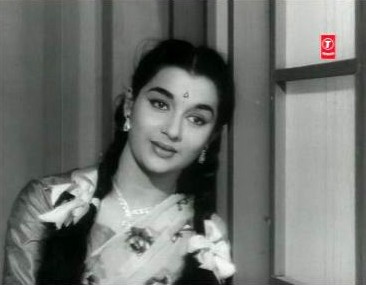
As here. Sunil Dutt and Asha Parekh’s characters (lip-syncing to the voices of Talat Mahmood and Lata Mangeshkar) pledge their love to each other, she even though she has never seen what her beloved looks like. In much later times, he sings the same song to her. This time the poignancy and loneliness of the words come through more decidedly: his voice is sad; it lacks the optimism that characterized it in earlier days. And his words are not of warning her away, but of reminding her, and himself, that he is doomed. I love the way Talat manages to infuse the relevant emotions in the two versions of this song.

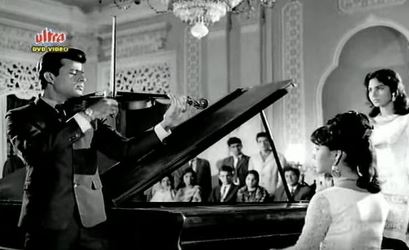
2. Sun sun sun sun zaalima/Jaa jaa jaa jaa bewafa (Aar Paar, 1954): Another of those songs where the duet is set in happy times. Guru Dutt and Shyama (lip-syncing to the voices of Mohammad Rafi and Geeta Dutt respectively) sing a playful, teasing duet as they waltz about a garage. She keeps calling him bewafa (unfaithful), he calls her zaalima (cruel), but it’s all part of the game: their expressions, and the lyrics of the stanzas themselves, show that these two are more sure of each other’s love (and their own) than they’re letting on.
But her teasing assertion that he’s unfaithful sadly comes true—or she thinks so. In a later, sadder time, all alone, she sings the song again, but this time the accusation is all real. He has broken her heart, he has left her. He has proven himself unfaithful.


3. Raahi matwaale (Waaris, 1954): Nitin Bose, who directed Waaris, and Anil Biswas, who composed the music for the film, probably realized the winner they were on to when Anil Biswas remixed Rabindranath Tagore’s Ore grihobashi and came up with Raahi matwaale. They used the song in three versions in the film: one major duet, one sort-of duet (more about this later), and one solo.
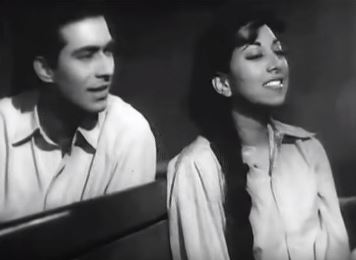
The first time Raahi matwaale appears is when the leading characters, played by Talat Mahmood and Suraiya (both, naturally, singing playback for themselves), meet in the train where she’s stowed away. He begins the song, a fast-paced, cheerful rendition, and she eventually joins in.
Much later, after a lot has transpired (they’ve got married, he’s joined the army and gone off to fight, and has been reported dead), she is missing him so much, she sings that song again. A woeful rendition, begging him to return. This is a short one, and though it’s primarily sung by Suraiya, Talat’s voice echoes, like a memory of the past, at the beginning.
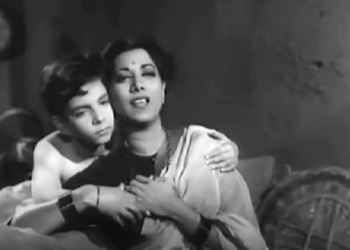
The third rendition is the Suraiya solo (the child does sing the first line, but I don’t really count that as part of the song; I don’t think there’s a playback singer there, is there?). Years after the first Raahi matwaale was sung, she and her son are sitting by themselves when they’re overcome by sorrow. She, again missing her husband, sings the song she had sung with him—but like the previous version, a sad song.
All of these versions are superb, and I love the way Anil Biswas changes the tune in keeping with the mood: the use of the train whistle and rhythm in the first version, the distinctly Bengali folk tunes in the other two.
4. Hum intezaar karenge tera qayaamat tak (Bahu Begum, 1967): Yet another of those songs where the duet occurs in happy times and the solo is relegated to when one of the lovers is alone and depressed. Here, Meena Kumari and Pradeep Kumar (lip-syncing to Asha Bhonsle’s and Mohammad Rafi’s voices respectively) sing a duet: she begins while waiting (along with her saheli) for him to come for their rendezvous. When he arrives, the saheli beats a hasty retreat and he has his girlfriend all to himself…
Sadly, not forever. In a bizarre twist of fate, she ends up married (sort of) to another man, and—feeling sorry for him and his predicament—agrees to stay with him long enough to maintain the façade he must preserve to uphold the family honour. Her former lover is shocked, of course, at the perceived infidelity of his lady love, but on being convinced of her loyalty, vows that he will wait for her. No matter how long it takes.

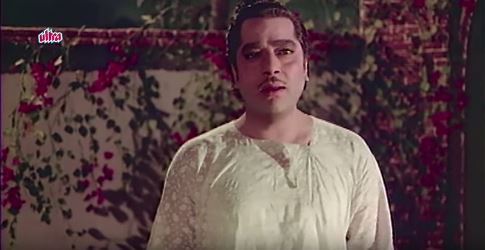
5. Jab-jab bahaar aayi aur phool muskuraaye (Taqdeer, 1967): Rather like Raahi matwaale, Jab-jab bahaar aayi aur phool muskuraaye seems to have been a song that its composer and director recognized as being solid gold: they used it again and again. Interestingly enough, the three times this song appears in Taqdeer, it appears in three different versions as far as singer(s) are concerned. The words remain the same, but the singers change.
Jab-jab bahaar aayi, in the film, is the signature song of Bharat Bhushan’s character, who plays an impoverished music teacher in small-town Goa. They may have little, but this man and his family are full of love for each other. As part of this expression of familial love, the father (lip-syncing to the voice of Rafi) sings the song to his wife and children.
Years later, the now-amnesiac father (now in Africa, where he washed up after being shipwrecked) hears a young woman sing the same song (in the voice of Lata Mangeshkar) and the song jolts his memory back into place.
And then, finally, the third time: he returns home to Goa to see his children, now all grown-up and living in the grand home that is theirs thanks to their wealthy stepfather. The heartbroken long-lost father is convinced his offspring have forgotten him until they break into song: Jab-jab bahaar aayi aur phool muskuraaye. This version is sung by Usha Mangeshkar, Usha Timothy, and Mahendra Kapoor.
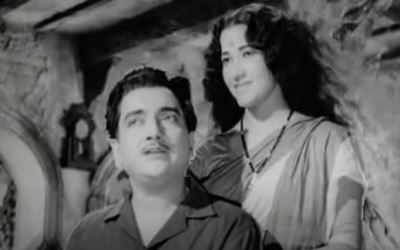

6. Jhilmil sitaaron ka aangan hoga (Jeevan Mrityu, 1970): As is pretty much usual, a duet which occurs in happy times, followed by a solo when everything has fallen apart, separating the singers of that duet. Dharmendra and Rakhee (lip-syncing to the voices of Mohammad Rafi and Lata Mangeshkar) play two young lovers who plan their future together: the home they will make under a sky glittering with stars, the happy, filled-with-love life they will spend together.
Their joy is short-lived: he, a bank employee, is framed and accused of theft, and after being jailed, ends up being mistaken for dead. When he finally returns, out to clear his name and have his revenge, it is to find that the woman he loved so much now calls herself a widow. He assumes she has betrayed him, but perhaps the very fact that she sings their song, imbuing it with so much sadness, should convince him that she still loves him.
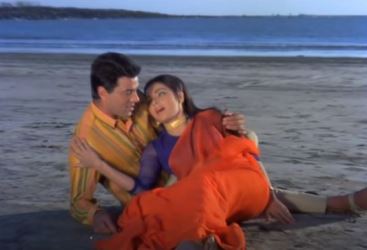
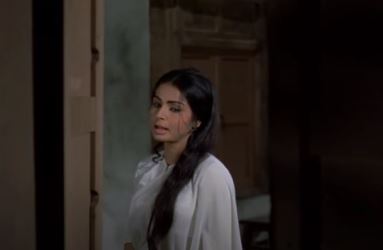
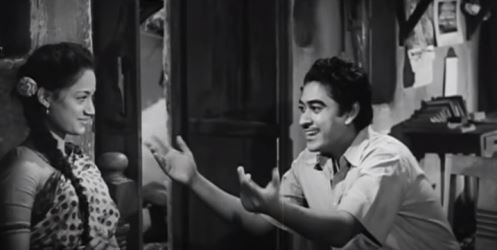
7. Chhota sa ghar hoga (Naukri, 1954): Another song about two people dreaming of the home they will have. However, unlike Jhilmil sitaaron ka aangan hoga (or most of the other songs in this list, with lovers dreaming of future happiness), these are not lovers, but siblings. Kishore Kumar and Noor play a loving brother and his consumptive sister: he tries to keep her spirits up by promising her a small and wonderful little home. Once he’s got a job, he will be able to afford a good home for them. What joy will be theirs. Kishore Kumar sings playback for himself, and Shaila Belle joins in right at the end, singing playback for Noor.
But, as always, things fall apart. Despite all his best efforts and his qualifications, the young man isn’t able to get a job. His sister dies, his life becomes a constant race to keep body and soul together. Deep in despair, this song comes to his mind, a painful reminder of the dreams that have remained only a dream. Unusually, the solo version of the song is not in the voices of either of the singers from the duet; instead, Hemant sings it as a background song.

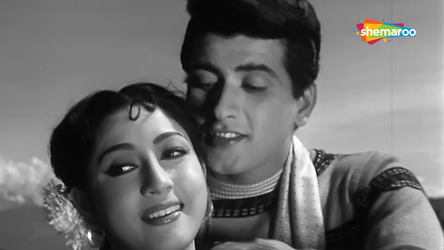
8. Bol meri taqdeer mein kya hai (Hariyali aur Raasta, 1962): The same old situation. Two lovers, played by Manoj Kumar and Mala Sinha (lip-syncing to the voices of Mukesh and Lata Mangeshkar) celebrate their love amidst the beautiful surroundings of Darjeeling. As they prance along the ‘hariyali aur raasta’ (the ‘greenery and the path’), they sing of the love that will help them weather every storm that comes their way.
But the storms, when they come, are ferocious, tearing the two lovers apart brutally. She ends up taken for dead while he, convinced the love of his life is no more, allows himself to be bullied into marrying a woman he doesn’t love. But fate can be cruel, and their paths cross again, in the hospital where she now works and where he’s brought, ill and teetering on the edge between life and death. When she sings that old song again, all he can do is mouth the words.
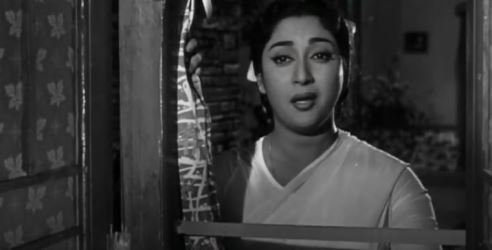
9. Bachpan ke din bhula na dena (Deedaar, 1951): A duet and solo set of songs with a difference. Here, the two people who sing the duet aren’t lovers—they are children (the actors are Parikshit Sahni and Tabassum) who are just very good friends. The song is an affirmation of that friendship: they go out horse-riding one day, and sing (in the voices of Lata Mangeshkar and Shamshad Begum) about always remembering this friendship.
As is typical in Hindi films which club children of opposite sexes in the initial scenes, those children grow up. In Deedaar, though, with a difference: here, the man Parikshit Sahni’s character grows up to be (played by Dilip Kumar) receives a bad shock when he realizes that the girl he considered his childhood sweetheart (played by Nargis in the adult avatar) is in love with another man. He tries to woo her back by singing the old song again (in Rafi’s voice), but no, that doesn’t quite work…

10. Dheere se aaja ri akhiyan mein (Albela, 1951): And, to end the list, one of the finest lullabies in Hindi film music. And, an unusual double-version song in that the two people singing this aren’t estranged lovers. Instead, Bhagwaan and Bimla Kumari play brother and sister. The first version of Dheere se aaja ri akhiyan mein comes near the start of Albela, when the little sister puts her brother to sleep by singing (in Lata’s voice) this song to him (I find it a bit juvenile that an adult should need to be patted to sleep like an infant, but perhaps that’s just me).
After many twists and turns in the plot, it’s time for the second version of the song. This time it’s a duet. The brother is driving down a road in a car with his colleague/sweetheart. She’s sleepy, and he, on an affectionate impulse, sings (in Chitalkar’s voice) the same lullaby his sister used to sing. Far away, his now destitute and miserable sister sings the same song (though with lyrics reflecting the misery and hopelessness of her situation).
What other songs of this type do you like? Please share!
 Dustedoff
There are so many songs in this category. One of my favorites in this ilk is from a film in the 70s – Gharonda. The duet version is by Runa Laila and Bhupinder – “Tumhe ho na ho mujhko to”. The solo by Runa Laila is a sad version with slightly different lyrics – “Mujhe Pyaar tum se nahi hai nahi hai magar maine yeh raaz ab tak na Jaana”. Others come to mind, but I will just start with this one.
LikeLiked by 1 person
That’s a gorgeous song! Thank you – an old favourite of mine. :-) And do post others, too, unless they’ve already been posted by other readers.
LikeLiked by 1 person
You already picked a lovely list – the only new one for me was the one from Taqdeer where I did not know the triplet version. All your songs are superb choices – Deedar, Waaris, Bahu Begum, Albela (I agree that Dheere se jaana ri akhiyan me is a beautiful song, though Aaja ri aa nindiya tu aa gives it stiff competition for being the most beautiful lullaby in Hindi cinema)
Some other songs that can be on this list:
The beautiful “Na tum hame jaano” which has a duet version with Hemant and Suman, and a solo version by Suman.
Film: Baat Ek Raat Ki
Music: S D Burman
And the outstanding “Woh subah kabhi to aayegi”, the duet version hauntingly sung by Asha and Mukesh, and the solo by Mukesh – brilliant lyrics by Sahir
Film: Phir Subah Hogi
Music: Khayyam.
“Mai khushnaseeb hooN mujhko kisi ka pyaar Mila” – duet version by Lata/Mukesh, solo by Mukesh
Film: Tower House
Music: Ravi
In the obscure category is the song “Ae dil tu kahiN le chal” – solo by Hemant Kumar, and the duet by the rare combination of Shamshad Begum and Hemant Kumar
Film: Shole
Music: Dhaniram, Naresh Bhattacharya
There is another personal favorite of mine “LehroN pe lehar ulfat hai jawaaN” based on the Dean Martin classic “The man who plays the mandolino”, solo by Hemant Kumar and duet by Hemant and the actress Nutan
Film: Chhabili
Music: Snehal Bhatkar
There is also “Poocho na kaise maine rain bitaayi”, the classic well known solo by Manna Dey, but there is also a version by Manna with S D Batish and a female voice – it is identified as Asha in places, but I am not sure that it is her voice.
Film: Meri Soorat Teri AaNkheN
Music: S D Burman
Last in my list today is “Aaj ki raat baDi shokh baDi naTkhaT hai”, stirring solo by Rafi and the duet by Asha and Rafi.
Film: Nai Umar ki Nai Fasal
Music: Roshan
LikeLiked by 1 person
Oh, lots of fabulous songs there! (And I’m slapping myself for not having remembered some of those – songs like Poochho na kaise maine rain bitaayi and Na tum humein jaano are among my all-time favourites. Those should have occurred to me when I was compiling this list).
LikeLiked by 1 person
Okay I lied, I cannot stop without adding these songs which are all just so lovely. I guess when a composer chooses to have 2 versions of a song, the tune is often really good to begin with.
There is “Dil ki tamanna thhi masti me” – duet by Asha and Rafi, solo by Rafi
Film: Gyaarah Hazaar LaDkiyaaN
Music: N Dutta
Another song where I adore both versions – the happy duet is by Lata and Mukesh – “Hum chal rahe ho” and the sad solo with a subtly different tune is by Mukesh – “Hum chal rahe thhe”
Film: Duniya Na Maane
Music: Madan Mohan
“Yeh raat yeh chaaNdni phir kahaaN” – solo by Hemant, and a slightly different tune for the duet by Lata/Hemant
Film: Jaal
Music: S D Burman
“Ae dil kahaaN teri manzil” has a duet by Dwijen Mukherjee with Lata – though she does not actually sing any words, and the ethereal solo by Lata
Film: Maaya
Music: Salil Chowdhury
LikeLiked by 1 person
Also very lovely songs. Ae dil kahaan teri manzil was in my male/female solos list, because Lata’s part in the Dwijen Mukherjee song seemed too minor to let it be considered a duet. Of course, technically it is a duet, so it could certainly work here.
LikeLiked by 1 person
An enjoyable post with all nice combos of songs;
Here are some that I could recollect:
Zindagi bahr nahin bhulegi wo barsaat ki raat – Barsaat ki Raat
Solo by Rafi and duet by Rafi-Lata
https://www.youtube.com/watch?v=nD0FiXpERoI
LikeLiked by 1 person
Beautiful. This one was on my shortlist, so especially glad to see you post it.
LikeLiked by 1 person
Rahe ra rahe hum – Mamta
Solo by Lata. Duet by Rafi-Suman
LikeLiked by 1 person
Yes. This one was on my shortlist too. :-) Lovely song(s).
LikeLiked by 1 person
Many such songs in the 70s and beyond
Mere Mitwa mere meet re – Geet – Rafi / Rafi-Lata
Yadon ki barat niklo hai aaj – Yadon Ki Baraat – Lata / Kishore-Rafi
Dil dhoondta hai phir wahi – Mausam – Lata-Bhupender / Bhupender
Tum bhi chalo hum bhi chale – Zameer – Kishore-Asha / Kishore
Madhuban khushboo deta hai – Saajn Bina Suhagan – Yesudas / Yesudas – Anuradha
Yaad aa rahi hai – Love Story – Lata-Amit / Amit
Tere sang pyar main nahin todna – Lata / Lata-Mahendra K
Tu mujhe kabool main tujhe kabool – Khuda Gawah – Lata / Kavita-Mohd Aziz
LikeLiked by 1 person
That is indeed a long list! I knew that the 70s had plenty of songs of this type, but I wouldn’t have been able to name too many offhand. Some of these were new to me – the last few.
LikeLike
Some lovely songs in this list. Wanted to point out that there is also a solo version of Madhuban khushboo deta hai by composer Usha Khanna – I only discovered that version recently.
And in my favorites are the songs from Mausam and Zameer and of course YaadoN ki Baraat.
LikeLiked by 1 person
Ooh, what a lovely addition to your earlier posts! (I do love your song posts – well, I love all your posts, but especially the song lists because I love how you describe them.)
There are so many such songs, aren’t there? The first one that came to mind when I read your explanation of the theme was from Bheegi Raat – Dil jo na keh saka.
The female version is picturized on Meena Kumari and Pradeep Kumar as they seek shelter from a storm. For a change, the woman is not loath to express her desire. The male version, by Mohammed Rafi, is one of those ‘excoriating the beloved on the day of her engagement’ scenes.
Similarly, Aji roothkar ab kahaan jaayiega from Aarzoo fits your theme, I think. The first version is Sadha singing happily at a party. The second version is also a happy one – this time, Rajendra Kumar is serenading Sadhana as they float down a lake on two separate houseboats. The lyrics change to Aji humse bachkar kahaan jaayiega.
Both of these, however, are solos in both versions. You want one solo, one duet/trio.
What about Zindagi bhar nahin bhoolegi woh barsaat ki raat? The first is a solo version by Mohammed Rafi, singing for Bharat Bhushan after he’s encountered Madhubala for the first time. The second version is a Rafi-Lata duet.
Phoolon ka taaron ka sab ka kehna hai from Hare Rama Hare Krishna. The first is a duet sung by the brother to his sister (as children) and their father – Lata singing playback for the brother, and RD Burman singing playback for Kishore Sahu. The second version is a Kishore Kumar solo, picturized on Dev Anand singing to his lost-and-found sibling, Zeenat Aman.
One of my favourite songs, ever: Rahe na rahe hum from Mamta. The first version – a Lata solo – is picturized on Suchitra Sen and Ashok Kumar. The second – a Rafi-Suman Kalyanpur duet is picturized on Suchitra Sen (as the daughter) and Dharmendra.
LikeLiked by 1 person
I’m so glad you enjoyed this, Anu! And thank you for the long and very enjoyable comment. :-) Incidentally, both Dil jo na keh saka and Aji roothkar ab kahaan jaaiyega are on my list of male/female solo multiple version songs:
https://madhulikaliddle.com/2020/05/16/ten-of-my-favourite-multiple-version-songs-male-female-solo-versions/
Rahein na rahein hum and Zindagi bhar nahin bhoolegi were both on my shortlist, so I’m especially happy to see you mention them. And as for Phoolon ka taaron ka – I’d forgotten that one, so very happy to see a mention of it.
LikeLiked by 1 person
Amen to your comments about the posts in this blog and the songs in your list. Mamta is a long-time favorite, though the Suman/Rafi duet is a very short one if I recall right.
LikeLiked by 1 person
Wow, this is wonderful. I really like ‘Dheere se aaja re ankhiyon mein…’
Can’t think of any such songs at this moment, but I’m going to think about it. :))
LikeLiked by 1 person
but I’m going to think about it. :))
There are lots from the 70s! :-)
LikeLiked by 1 person
I’m sure there are. I used to know a lot about films and songs, but now I’m really bad. I almost typed ‘Tere mere milan ki ye raina.’ but then I checked to be sure only to realize that it’s a duet and doesn’t appear in the film as a solo song. It’s strange that I can’t think of one song in this category. :((
LikeLiked by 1 person
Correct me if I’m wrong. I never knew there is a duet version of Tumhe ho na ho! There are happy and sad versions by Runa Laila.
Was there a confusion with Do deewane shahar mein?
Does this fit the bill? A duet and a solo ( with different lyrics and tune. )
LikeLike
You are absolutely right. Both versions of that song are solos by Runa Laila. And what I had in mind was indeed “Do deewane shaher me” and “Ek akela is shahar me” which are somehow paired songs but with different tunes. I am not sure if that pair of songs would fit the bill for this theme. I posted a pair from “Duniya na maane” that are in this ilk as well.
Thanks for catching my mistake.
LikeLiked by 1 person
oh!
I have almost finished the same subject.
Version songs with different combos. It took me a loooonnngggg time to collect songs for all the lists. Now that I too have finished the task (almost) I’ll be publishing it soon.
Though the subject is the same, our choices would differ. At least I guess so from this list which have very few overlapping songs.
Let me see when would I start it.
:-)
LikeLike
Oh, that’s a coincidence! I’m looking forward to seeing your posts, Anupji. And yes, it also took me a very long time to collect all the songs for my posts. :-)
LikeLike
ghazal film of 1964 had three different renditions with different lyrics but the essence and rhythm was more or less same, I wonder if you just skipped it : Rang aur noor ki baraat
also, daera of 1953 had 3 different versions of the same song: devta tum ho mera Sahara
those are mine favouruuties
fab post!!
LikeLike
I’m glad you enjoyed this post. As for the trio of songs from Ghazal, as far as I know these are the songs which have the same tune and rhyme scheme:
Naghma-o-sher ki saugaat kise pesh karoon – solo by Lata
Ishq ki garmie-jazbaat kise pesh karoon – solo by Rafi
And, Rang aur noor ki baaraat kise pesh karoon – solo by Rafi
I haven’t had the time to actually sit and listen to them all, but is any one of these actually a duet? (Since that’s the crux of the post: the same song as solo and as duet).
LikeLike
Great list as always! I don’t believe it has been mentioned yet, and is slightly outside your time period, but the iconic title track for Kabhie Kabhie also had solo (Mukesh) and duet (Mukesh and Lata) versions.
LikeLiked by 1 person
Thank you – both for the appreciation, and for adding a wonderful song to the list. While it is outside my time line, I’m more than happy to have readers add stuff from after the 70s, or even stuff that isn’t from Hindi cinema. :-)
LikeLike
A much later day edition but a fun song , especially the lyrics by Gulzaar Saab and a great cameo by Mr. Bachchan .
Jhoom barabar jhoom ( title song of the movie of the same name )
LikeLike
A much later day but a fun song , especially the lyrics by Gulzaar Saab and a great cameo by Mr. Bachchan .
Jhoom Barabar Jhoom from the movie Jhoom Barbar Jhoom .
Two versions , solo and a multi-singer one( not just a duet )
LikeLiked by 1 person
I had only heard the name of this film, never watched it. Thank you for this, Anubha!
LikeLike
And ofcourse there is this classic RD song , a solo by Kishore Kumar and a duet by Lata Mangeshkar and a very early career Udit Narayan
From the 1983 movie Bade Dilwala ..
PS : also this comment (of mine) might have gotten posted multiple times so please delete repeats :(
LikeLike
I am so happy to see Hum hain bade dilwaale! I like this one a lot, and was hoping someone would post it. Thank you, Anubha. :-)
LikeLiked by 1 person
There are also these two versions of Aati raheingi bahaarein from Kasme Vaade 1977
LikeLiked by 1 person
Also, Goron ki na Kaalon ki from Disco Dancer : a Suresh Wadkar and UshaMangeshkar version and a Suresh Wadkar solo .
LikeLiked by 1 person
Oh, nice! I especially like Aati rahengi bahaarein very much. :-)
LikeLike
Madhuji,
Here is a pair from Aaj aur kal – Mujhe gale se laga lo bahut udaas hun main, once sung as a solo by Asha Bhosle (for Nanda) and again as a duet by Rafi and Asha for Sunil Dutt and Nanda respectively.
LikeLike
Nice, Anitaji! I am very familiar with the solo version, but had forgotten that there was a duet as well. Thank you for this.
LikeLike
I would like to post a couple of old Pakistani songs on a similar theme as below:
https://www.youtube.com/watch?v=3j9iQJl87TA
https://www.youtube.com/watch?v=6C4pUZGfh_Q
https://www.youtube.com/watch?v=3qBTqax_Zpw
https://www.youtube.com/watch?v=dxOCpmQA-84
LikeLiked by 1 person
Thank you for these songs, Sal. I was unaware of Kiya hai jo pyaar toh padega nibhaana or Tumhi ho mehboob mere – either version. I liked the latter better – nice! (though this doesn’t really fit the theme – the two versions of Tum hi ho mehboob mere are solos).
LikeLike
Here’s a song from Jeene Ki Raah. “Chanda Ko dhoondne”. There is a short version by Rafi and another by Usha M, Hemalatha and Asha Bhosle.
LikeLike
A Kannada song “Nee thanda kanike” from Hrudaya Sangama movie.
P.B.Srinivas and S.Janaki
S. Janaki
LikeLike
Beautiful, such a melodious tune. Thank you.
LikeLike
I had forgotten about this song, though I’ve seen the film. Thanks for this!
LikeLike
I never knew one of my favourite songs came in no less than three different flavours! Ay mere dil kahin aur chal from Dagh (1952).
Version 01: Philosophical, bittersweet (actually pretty far gone drunk) – Talat Mehmood:
Version 02: Joyous, upbeat – Talat once again:
Version 03: Weepy, lachrymose, maudlin, whatever you choose to call it – Lata
I think this song meets your stringent criteria, does it not?
LikeLiked by 1 person
“songs that appear at least twice in a film, but at least once in the form of a solo and the other time as a duet”
So, no. ;-) Wonderful song, but it only appears in solo versions. It would fit perfectly in this list, though:
https://madhulikaliddle.com/2020/05/16/ten-of-my-favourite-multiple-version-songs-male-female-solo-versions/
LikeLike
Whoops! My bad. I had confused the two lists. Didn’t notice this one was restricted to only solos and duets, not multiple solos. You’re right, the other list was the on at the back of my mind, that’s where I ought to have posted it.
LikeLiked by 1 person
I love version songs and loved your previous two posts and am delighted to see this twist on the theme. You and others have compiled a wonderful list of songs. Here is one more that I think hasn’t been mentioned before.
Aaj kal mein dhal gaya – Beti Bete – Lata solo
And the duet version with Rafi joining Lata.
LikeLiked by 1 person
I’m so glad you added this pair, Shalini. Lovely song!
LikeLike
Mere Dholna from Bhool Bhulaiyya 3.
Shreya has sung for both Madhuri and Vidya in this dance off. So it cannot really be called as solo.
And then this magnificent solo by Sonu Nigam.
Bhool Bhulaiyaa 1 & 2 have their own versions of Mere Dholna.
LikeLiked by 1 person
Yes, if Shreya Ghoshal has sung for both, then it cannot count as a duet…
LikeLike