
In the 17 years this blog has been in existence, I’ve created song lists for a large number of music directors: OP Nayyar, Madan Mohan, Naushad, Ravi, SD Burman… but somehow, I had never got around to creating a Salil Chowdhury song list. I realized this lacuna some years back, but then, realizing that Salil’s birth centenary was in 2025, I told myself I’d plan a list to mark that. I could not ignore Salil, who has long been one of my favourite music directors.
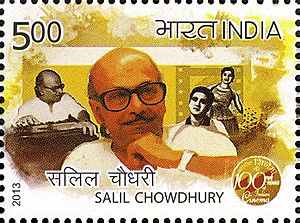
And then, I got so swamped with work, I completely forgot. Also, around the same time (Salil’s birth anniversary was on November 19th), there was a slew of deaths: Madhumati, Kamini Kaushal, and then Dharmendra (also, though I didn’t post tributes to them, Sandhya and Kumari Kamala). In the flurry of hastily-cobbled-together tributes, plus my usual work, my as yet unplanned Salil tribute slipped through the cracks.
But it’s still his birth centenary year, so why not. Der aaye durust aaye, as they say. I will not waste time giving you all of Salil’s biography—it’s out there, on the official website, for all to read. Suffice to say, this multifaceted personality was nothing short of a genius: a man who composed music (not just for Hindi and Bengali cinema, but also quite prominently for Malayalam cinema—besides a huge corpus of non-cinema compositions); who wrote lyrics, who wrote stories, and even directed a film (the Meena Kumari-Balraj Sahni starrer, Pinjre ke Panchhi).
Since my level of familiarity with Salil’s Bengali and Malayalam songs is rudimentary, I will focus my attention on his Hindi songs in this list. Ten of my favourite songs, all from pre-70s Hindi films that I’ve seen. These are in particular order, though my special favourites do tend to be towards the top of the list. Also, no two songs on this list are from the same film.
1. Zindagi khwaab hai (Jaagte Raho, 1956): Lyricist: Shailendra; Singer: Mukesh. Salil Chowdhury is not the music director (Shankar-Jaikishan are) one normally associates with Raj Kapoor’s films. And Jaagte Raho, though not directed by RK, was produced by him. The Bengali version of the film, in fact, had Salil not just as composer, but also as songwriter.
I find the score of Jaagte Raho fascinating. There aren’t too many songs here, but how very different from each other they are. The hopeful, almost devotional in its intensity Jaago Mohan pyaare. The drunken revelry of Loshe vai-vai (Maine jo li angdaayi); the gently desperate virtue of Thandi-thandi saawan ki phuhaar; the earthy cynicism of Te ki main jooth boleya.
And this, the first song of the film. Shailendra’s lyrics are hard-hitting, Mukesh’s rendition superb—and Salil’s music is outstanding. The way Mukesh’s voice comes in, without any instruments, and then the instruments join in, one after the other, into one liltingly infectious whole. See the way the music echoes the man’s drunken tottering. The little twirls and twists in the tune, the deceptively light-hearted melody for what is actually a fairly profound philosophy, the way the instruments alternate with the voice: brilliant.
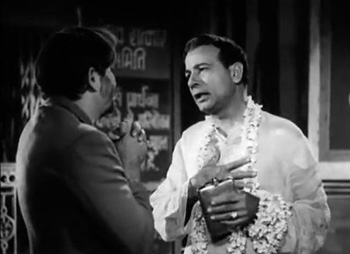
2. Dharti kahe pukaar ke (Do Bigha Zameen, 1953): Lyricist: Shailendra; Singers: Manna Dey, Lata Mangeshkar and chorus. Not only did Salil Chowdhury compose the music for Bimal Roy’s classic tale of an impoverished farmer coming to the big city in search of a livelihood, he was also the one who contributed the original story on which Do Bigha Zameen was based.
There are several songs in this film that I like, but this one, in my opinion, is the best. There is something very folksy about the music, and Manna Dey’s voice does justice to the tied-to-the-land ethos of it. The chorus is used well: both on its own and as a counterpoint to the main voices (I love the way, at the end, Manna Dey is singing Bhai re bhai re while the chorus continues to sing Mausam beeta jaaye mausam beeta jaaye: a good example of singing in parts. I wonder if this was a result of the Western influences on Salil’s music?)
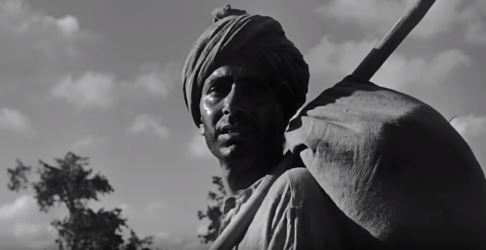
3. Ae mere pyaare watan (Kabuliwala, 1961): Lyricist: Prem Dhawan; Singer: Manna Dey. Also from a film starring Balraj Sahni (though not lip-synced by him; the actor on whom Ae mere pyaare watan is picturized is WM Khan) comes this immortal song of patriotism. Prem Dhawan’s lyrics are stirring, his patriotism a gentle love for country, not the sort of jingoistic bombast that now seems to pass for the sentiment. Manna Dey’s voice is full of emotion, and Salil’s music (with the rabab playing an important part) is very evocative of the Afghan highlands from where the eponymous Kabuliwala hails. What an exquisitely poignant song this is.

4. Aaja re main toh kab se khadi is paar (Madhumati, 1958): Lyricist: Shailendra; Singer: Lata Mangeshkar. Madhumati was a smash success as far as Salil Chowdhury’s music was concerned: it had not one song that wasn’t a hit. I like all the songs, from the echoing beauty of Suhaana safar aur yeh mausam haseen to the trillingly romantic Dil tadap-tadapke keh raha hai to the delightfully tipsy Jangal mein mor naacha—but there is a certain virtuosity to Aaja re main toh kabse khadi is paar that I especially love. The way the music seems to echo the rippling stream, the way we get a brief (instrumental only) preview of Ghadi-ghadi mora dil dhadke, the beautiful use of the flute… lovely.

5. Mere mann ke diye (Parakh, 1960): Lyricist: Shailendra; Singer: Lata Mangeshkar. The most famous song from this low-key, gentle film by Bimal Roy was probably O sajna barkha bahaar aayi, based on a Bengali song (Na jeo na), written and composed by Salil. Parakh, however, also had some other good songs. This one, relatively little-known, is a special favourite of mine. It’s a soft, sadly introspective song of trying to keep going in the face of gathering despair. I love the way Salil keeps the musical instrumentation to the minimum, letting Lata’s voice shine. I also love the use of the choir and of occasional pauses here: both serve to enhance the poignancy of the song.

6. Aha rimjhim ke yeh pyaare-pyaare geet liye (Usne Kaha Tha, 1960): Lyricist: Shailendra; Singers: Talat Mehmood, Lata Mangeshkar. In the same year that Salil composed the music for Parakh, he also composed the score for another film that, like Parakh, was a little off-beat. Usne Kaha Tha was about a carefree (and even rather irresponsible) young man who goes off to war, having had to give up the girl he loves—only to find that the man he reports to is the husband of his former lover. It’s a tragic story, and Salil composed the poignant Jaanewaale sipahi se poochho as one of the most impactful anti-war songs from Hindi cinema. But also in this film, in happier days when the two lovers are celebrating their love, there’s this sweet, peppy song. I love the pace of it, the way the music changes pace and tune every now and then, the way Talat’s and Lata’s voices meld, then go their separate ways, and meld again. The effervescence and joy in the music needs no words, really, to convey the emotion of the song.
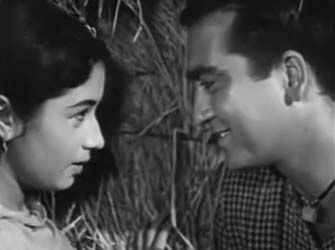
7. Aankhon mein tum dil mein tum ho (Half Ticket, 1962): Lyricist: Shailendra; Singers: Geeta Dutt, Kishore Kumar. Before someone leaps at my throat and accuses me of favouring Shailendra all through this list, let me clarify: I didn’t know, for even one of these songs, who the lyricist was until I actually began writing up the shortlisted songs.
… and how versatile both Shailendra and Salil were. On the one hand, they came together to create poignant, gentle songs like O sajna barkha bahaar aayi and Toote hue khwaabon ne; on the other hand, they produced the sort of whacky stuff that Half Ticket was peppered with. From Cheel-cheel chillaake kajri sunaaye to Aake seedhi lagi dil pe, the songs of this loony film are a good showcase of how Shailendra could write funny, nutty lyrics, and how Salil could compose something equally nutty—and yet, good music. The pep and rhythm of this song are so infectious.
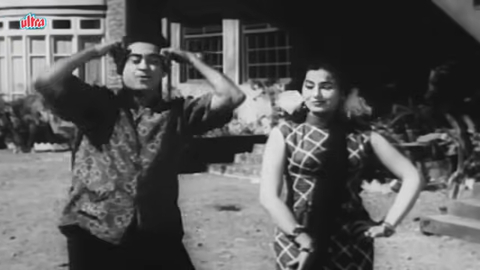
8. Beta bow-wow-wow mere kaan mat khaao (Mem-Didi, 1961): Lyricist: Shailendra; Singer: Lata Mangeshkar (and a dog!). Another Shailendra-Salil collaboration, and one that I’ve always had a soft spot for—especially since my daughter, as a toddler, fell in love with it (and always sang, “… sone ki katori mein chalke door bhaag jaao”). Very loosely inspired by Eydie Gorme’s Mama teach me to dance, this one is a fine example of a Hindi film song that takes its cue from a Western tune but amps it up substantially. What a fun song Beta bow-wow-wow is, Shailendra’s delightful lyrics and Lata’s spirited rendition combining with Salil’s chirpy music. And this, surely, is one of those few songs (the only one?) in Hindi cinema that has an animal ‘singing’ along!
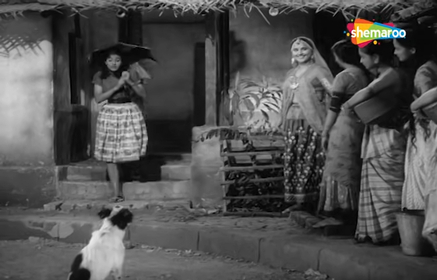
9. Baag mein kali khili bagiya mehki (Chand aur Suraj, 1965): Lyricist: Shailendra; Singer: Asha Bhonsle. Tanuja, so girlish and fresh-faced in Mem-Didi, also starred four years later in another Shailendra-Salil Choudhary film, the rather more predictable social drama Chand aur Suraj. Baag mein kali khili is a bit of a landmark song in the film: Tanuja’s character is swimming, lounging around and singing of the lover she hopes will turn up—and he does, right at the end of the song, a suddenly embarrassed Dharmendra who hadn’t expected to run into a bathing beauty here. I love the playful, upbeat tune of this song; a tune, by the way, which Salil had earlier used in a very different context: in the Malayalam film Chemmeen, the fisherfolk’s song Puthan valakkare has a similar tune. The resemblance is easily discernible at about the 1:40 mark in this clip.

10. Saawan ki raaton mein (Prem Patra, 1962): Lyricist: Gulzar; Singers: Lata Mangeshkar, Talat Mehmood. Prem Patra happens to be one of my favourite ‘guilty pleasure’ films. It’s not perfect, at times it comes across as illogical or even somewhat regressive (I will admit the regressiveness didn’t strike me until I read Anu’s review of the film)—but I still love it. Sadhana and Shashi Kapoor are a treat to watch, and their chemistry is fabulous. The romance is well-depicted, the film dwelling fully on the growing love between these two… and there is the beauty of this song. Salil weaves the sounds of the lightning and the thunder so skilfully into the music of Saawan ki raaton mein, it seems believable that they’re actually standing out there on the balcony, watching the storm as they sing.

Which are your favourite Salil songs? Please share!
 Dustedoff
Salil Chaudhary is one of my favourite composer too. It is so hard to find a score of his, which is not to my taste.
My favourite song would be o sajana from Parakh (1960), and this song would rank as one of my favourite from Hindi cinema.
Then I love his score (I am leaving out the films, which you’ve already mentioned) of Maya (1961). The prelude to jaa re du jaa re panchhi is one of my favourites. I love tasveer teri dil me though as a song too.
Then there is this song, which I discovered a few weeks ago, o re mann gungun from Agni Pariksha (1981). I will leave space here for other comments and other songs too.
Thanks Madhu for the hommage to Salil Chaudhary, it made me visit many of his good compositions.
LikeLiked by 2 people
I am so glad you enjoyed this, Harvey – yes, I don’t think there is a single score by Salil that I don’t like. Actually, I forced myself to stop at 1970, otherwise there was another great score right after: Anand, which is one lovely song after the other.
Thank you for the songs you’ve mentioned. Yes, Maya was fabulous too. I especially love Jaa re jaa re ud jaa re panchhi. And also Ae dil kahaan teri manzil.
LikeLiked by 1 person
It is hard to disagree with any of your selections cause a) it is Salil which means you are already starting with a great selection of songs and b) it is your selection of favorite Salil songs – so what’s to quibble about.
For me, several songs would match your list – particularly the ethereal “Mere man ke diye”, the beautiful “Saawan ki raatoN me aisa bhi hota hai” and of course the outstanding “Zindagi khaab ha”.
Where I would choose differently is with Madhumati – my favorite songs in that film are “Zulmi sang aaNkh laDi” and superbly sung “ChhaD gayo re paapi bichhua”. Though there are moods when either “Suhaana safar” or “TooTe hue khaaboN ne” take the lead. So hard to choose.
Two songs that are high in my Salil favorites are from the film “Awaaz” both Lata solos
धितांग धितांग बोले | Aawaz | Lata Mangeshkar Songs | Nalini Jaywant
Lata Mangeshkar – Aawaaz (1956) – ‘jhun jhunjhuna
The Hemant version of “Dhitang dhitang bole” in Bengali is also lovely.
A couple of other lesser known songs that I am fond of
Manna Dey solo from the film “Sapan Suhaane” – another lovely soundtrack
Manna Dey – Sapan Suhane (1960) – ‘dil kehta hai’
and this beautiful solo by Sabita Chowdhury in the same film
Sabita Chowdhury – Sapan Suhane (1960) – ‘chaand kabhi tha’
Every song in Anand Mahal (1977) is lovely, but this is the best known and just a fantastic song
K J Yesudas – Anand Mahal (1977) – ‘ni sa ga ma pa ni’
And my final selection (cause I could keep going on and on) is this duet from “Sangat”
Manna Dey & Lata Mangeshkar – Sangat (1975) – ‘kanha bole naa’
LikeLiked by 2 people
So hard to choose.
Very true! There were several scores in his filmography (Madhumati was one, Jaagte Raho another) which made me dither for a very long time before I threw in the towel and decided I would pick this one. Another film which had one great Salil song after another was Anand.
Thank you for the songs you’ve mentioned, several of which I was unfamiliar with. And for reminding me of Dhitang dhitang bole – I love that version. Hemant’s voice is a class apart.
LikeLiked by 1 person
Very first thought after finishing reading was .. MAYA and CHHAYA, 1961 deserved to be in the list. Both had several beautiful songs.
MAYA is mentioned ( Tasveer tere dil mein is as good as Jaa re jaa re ud jaare… And, Ae dil kahan teri manzil… Dwijen Mukherjee ‘s only song for SC? is good. It has a Lata version, too ).
CHHAYA had 3 very good Talat songs:
1, 2. Itna na mujhse tu pyar badha… Duet with Lata and Solo version.
Aansoo samajh ke kyon mujhe…
LikeLiked by 2 people
Yes, both Maya and Chhaya had very good songs. Thank you for mentioning these ones.
Dwijen Mukherjee also sang Tan jale mann jalta rahe for Salil, in Madhumati. The song was eventually removed from the film.
LikeLiked by 1 person
Oh! Yes. I remember now. I always wondered how I never saw this in MADHUMATI.
Hum haal e dil sunayenge…was picturised?
LikeLiked by 2 people
Only the first stanza of Hum haal-e-dil sunaayenge appears in the film. A tawaif is dancing in front of Pran when Dilip Kumar comes storming in, cutting her song short.
LikeLiked by 1 person
For being the only song ever by the Thespian Dilip Kumar, I would like to mention
Laagi nahin choote Rama… MUSAFIR.
He was fairly good in the duet with Lata Mangeshkar.
LikeLiked by 2 people
Yes, it’s a good song. And Dilip Kumar sings it well.
LikeLiked by 1 person
Madhuji,
Salil Chowdhury’s music was unique. The use of the piccolo, the lilting tunes, the chorus as the interlude…. his improvisations were many. While all his melodies are dear to me, his score in Annadata (1972) was mesmerising, especially the song Raaton ke saaye ghane!
Anita
LikeLiked by 2 people
I had never heard Raaton ke saaye ghane. Thank you for introducing me to this song, Anitaji.
LikeLiked by 1 person
Madhu, Madhu, Madhu, you said the same thing to me when I wrote a post on ‘raat’ songs, many years ago. :)
https://anuradhawarrier.blogspot.com/2011/09/word-play-raat.html
LikeLiked by 2 people
Heehehe! Just goes to show: this song, for some odd reason, refuses to make an impression on me. ;-)
LikeLike
Madhu, you made my day! I hadn’t been able to write a post for Salil’s centenary either, and it made me very sad. I was hoping to write a post on his Malayalam duets and even made Sadu sit and choose the songs with me. Unfortunately, I couldn’t write the post. :( You know why.
I’m hoping I’ll be able to write one before the year ends. Fingers crossed.
Love the songs you listed; as someone commented on my Salilda post, we could all make a list of our favourite Salilda songs and there would be songs left over that we would still like. That period had such beautiful songs, didn’t it? We are so spoilt for choice when we make our lists; the difficulty is not in what to choose but in what to leave out.
Thank you for this list. I’ve been listening to each and everyone of them.
LikeLiked by 1 person
You’re so right, Anu. I think in the 50s at least (and probably through much of the 60s too) there were no bad songs in Hindi cinema. Some might not have been as memorable as others, but none plumbed the depths the way some songs from later decades – especially the 80s and 90s – managed to do. And Salil was right up there among the greats.
Even if you don’t manage a Salil Malayalam songs list (which I would love to read and listen to!) by year-end, you still have most of an entire year left. After all, birth centenary celebrations go on typically for the whole 365 days after the birth anniversary.
LikeLike
What a lovely post…
It is almost impossible not to like Salilda’s compositions… Love the songs posted so far.. My additions:
AWAAZ – Dil Deewana Dil Mastaana Maane Na – Lata-Talat
ANOKHA DAAN (1972, though) – Madbhari Ye Hawaayein – Lata
CHAAR DIWARI – Kaise Manaaun Piyawa Gun Mere – Mukesh
CHHAYA – All songs are beautiful
EK GAON KI KAHAANI – Raat Ne Kya Kya Khwaab Dikhaaye & Jhhome Re Neela Ambar Jhoome Re – Both by Talat
HALF TICKET – Wo Ek Nigah Kya Mili – Kishore-Lata
HONEYMOON – Mere Khwaabon Mein Khayaalon Mein – Mukesh-Lata
POONAM KI RAAT – Sapnon Mein Mere Koi AAye Jaaye – Lata-Mukesh
LikeLiked by 2 people
The last song Sapnon Mein Mere – has also Usha Mangeshkar as one of the singers.
LikeLiked by 1 person
Thank you – some really lovely songs there. I especially like the songs from the last five films you’ve mentioned. Mere khwaabon mein khayaalon mein is so beautiful!
LikeLike
p.s. I know Chemmeen was released nearly a fortnight after Chand aur Suraj, but Puthan valakkaare was composed before Baagh mein kali khili.
LikeLiked by 2 people
Ah! Thank you for telling me – I’ll correct that.
LikeLiked by 1 person
Hi Dusted Off,
A bit short on time tonight, but I just can’t resist commenting on some of Salil Da’s songs.
As a Bengali, I am familiar with many of his Bengali aadhunik compositions.
He is one of my favorite composers.
Unfortunately, he is under-rated when compared to more prolific composers such as S.D. Burman, Madan Mohan, Naushad Ali, etc.
His music is diverse, and represents a great blend of Indian folk and Western influences.
I would rate him at par with Naushad Ali when it comes to leveraging Indian folk music and blending it with Western music.
As you are probably aware, he was a progressive individual, inspired by socialist and proletariat ideologies of his time.
And his music reflects those inspirations.
Based on that, a couple of comments on the songs you have chosen, which I wholeheartedly love.
Regarding # 2 song Dharti kahe pukaar ke, you wondered whether the music had any western influence.
Well, the opening sequence was derived from the Soviet Red Army marching tune.
Salil Da’s socialist inspiration is quite apparent here.
His Western inspirations are also apparent in the song Dil tarap tarap ke keh raha hai from Madhumati – this is an “adaptation” (LOL) of a Hungarian folk song.
I don’t have any link to the Hungarian song handy, but I recall listening to the original folk songs many years ago.
Another unique thing about Salil Da was that he often blended the tunes of his songs, which you have mentioned in your comments.
Within one song, you can hear the opening notes or interludes of another song composed by him.
As you mentioned, within Aaja re main toh kab se khadi is paar , you can the interlude of Ghadi Ghadi Mora Dil Dharke.
Similarly, within Saathi Re Tujh Bin Jiya Udas Re (Poonam), you can hear Baag Mein Kali Khili (Chand Aur Suraj).
Another music director that used to do this was the duo of Shankar Jaikishan, but Salil da was the master of this technique.
BTW, Saathi Re is one of my favorite Salil Da songs, along with Raat ne kya kya khwab (Ek Gaon Ki Kahani)
And I must mention this one – Jhir Jhir Badarava Barse (Parivaar).
The full list of my other favorite Salil Da songs is way too long, LOL.
The only, only minor gripe I have is the alleged aversion Salil Da had towards Mohd. Rafi.
He clearly had a self-confessed preference for Talat Mahmood and Mukesh.
He seldom used Mohd. Rafi other than for Dev Anand movies such as Maya.
Leaving that aside, Salil Da’s music is heavenly and truly inspiring.
IMHO, he was deserving of the Dadasaheb Phalke award, but alas it is too late.
LikeLiked by 1 person
Thank you for that very interesting comment, and for some excellent songs.
Just two observations:
When discussing Dharti kahe pukaarke, I hadn’t implied that it was based on a Western tune (though I am not surprised that it is). My thought was that the very good singing-in-parts is possibly an indication of a Western influence. I have to admit to not knowing Hindustani classical music or folk music well enough to know whether or not we too have this tradition of singing in parts.
Re: Dil tadap-tadapke keh raha hai, I was given to understand that it was a Polish folk song, Szla dzieweczka do laseczka. Many years ago, I had done a post on songs inspired by Western tunes, and this was one of the songs I had mentioned there.
https://madhulikaliddle.com/2010/02/06/ten-of-my-favourite-inspired-songs/
LikeLike
Ah, it was a Polish folk song – not Hungarian – I got them mixed up.
Thanks for the correction.
One more Salil da song I should have mentioned last time is from Naukri.
This is a unique song that combines a trio of voices of Kishore Kumar, Shankar Dasgupta and Shyamal Mitra.
Ek choti si Naukri ka talabgar
Beautiful composition with light, humorous lyrics.
So true and relatable even to this day !
Young Iftekar’s playback is Shyamal Mitra and the 3rd character (I do not know the name of this actor) playback is Shankar Dasgupta.
Lots of other timeless melodies of Salil da already mentioned by other posters…thanks for the trip down memory lane.
-Pratick
LikeLiked by 1 person
Yes, Ek chhoti si naukri ka talabghar is a good song. It’s also one of those very rare songs (the only one, as far as I can remember) which has Iftekhar lip-syncing to part of the song.
LikeLike
would add two songs to the very carefully curated original list and the lively discussn thereon:
: Ya Qurban O Saba Kehna MereDildar Ko (Kabuiliwala, 1961 – Mohamamd Rafi – Lyrics: Prem Dhawan)
and
Thandi Thadi Swan Ki Puhar (Jagte Raho, 1956- Asha Bhosle – Lyrics: Shailendra
LikeLike
Both beautiful songs, thank you. I especially love Thandi-thandi saawan ki phuhaar.
LikeLike
I am sharing some of the songs below which are not listed in this blog:
Main Janti Hoon
https://www.youtube.com/watch?v=6V8TYXYNdYs&list=RD6V8TYXYNdYs&start_radio=1
Sajna Mera Dil Tera Dil
https://www.youtube.com/watch?v=WdxM6gmLhM4&list=RDWdxM6gmLhM4&start_radio=1
Gul Khile Yaa Naa Khile
https://www.youtube.com/watch?v=BsIYXvv-5M0&list=RDBsIYXvv-5M0&start_radio=1
I believe Gul Khile Yaa Naa Khile is probably the last duet of Rafi & Geeta Dutt and also probably the last collaboration between Salil Da & Rafi Saheb
LikeLike
Sorry for the very delayed response to this comment – I was travelling and have only just got back.
I was familiar with the first two songs you posted, but not Gul khile ya na khile – that was new to me. Thank you for these songs, all of them are nice.
LikeLike
One of my favorite composers!!! What a delightful list…I’d like to add ‘Ye tanhai haye re haye’ from Usne Kaha Tha also to my absolute loves apart from the Aha Rimjhim ke ye…that you’ve already mentioned.
Also, I had no idea Baag mein kali khili had a Malayalam ‘version’ too! That was so nice of you to research and share the Chemmeen clip along with the helpful time stamp. Little (but oh-so-useful) tips like these that you take pains to share are what make me come back again and again to your blog!!!
Thank you!
LikeLiked by 1 person
Thank you so much for your kind words, Rajani! I am so glad you enjoyed this post. :-) Salil was in a class by himself – so very good a composer.
BTW: I am a little puzzled. Yeh tanhai hai re hai is from Tere Ghar ke Saamne; I even went and looked up my notes from Usne Kaha Tha, but couldn’t find any song which has the same lyrics. Which one do you mean?
LikeLike
What a lovely tribute to a great composer!!
I absolutely love ‘Tute Hue Khwabone’ as it was probably the first song I heard my father singing.
O Sajna/Na Jeo Na & Ja Re Ja Re Udd Ja Re Panchhi are favorites as well.
Salil Chowdhury’s composition could be very urbane when required especialy in 70s.
I find Kai Baar Yoon Hi Dekha Hai & Na Jane Kyon were ahead of times.
The lyrics were shorn of any pretense, laid bare the thoughts of the character. And music complimented them beautifully.
Haalchal thikthak hai is again very contemporary song.
LikeLiked by 1 person
I was hoping that – though I stop short of the 70s in my blog – someone would post Salil’s songs from the 70s! I actually remember hearing Salil’s name as composer for the first time – for Kai baar yoon hi dekha hai, on radio. Also in the 70s, there’s Anand: another fabulous score.
LikeLike
Salil Chowdhury also composed for marathi film ‘Sunbai’. I could only find ‘Tuza Sahwas‘ sung by Lataji.
LikeLiked by 1 person
Thank you for this song. Very Salil! It seemed, when it started, somehow very familiar, though I couldn’t place which Hindi song he might have reused here (or the other way around – based a Hindi song on this?).
LikeLike
I read somewhere that it is based on Bengali song but I know very few Bengali songs so cannot place it.
LikeLike
While this song was recorded in 1962, there was a Bengali non-film song with the same tune recorded in 1961, sung by Madhuri Chattopadyay. Here is a link to the song:
Ebar Aamar Somoy Holo Madhuri Chatterjee sings for Salil Chowdhury – YouTube
LikeLike