
I know I am late. Asha Bhonsle passed away, at the age of 92, on April 12. Within a couple of hours of the news of her death, there were tributes cropping up all across the net. Song lists, essays, memories, some misplaced attempts to jump on the bandwagon even if one wasn’t too sure what the fuss was about.
I am late, yes. I have to admit I was a little benumbed—Asha has always been one of my very favourite singers (dare I be an iconoclast and admit that I liked her more than Lata?). But more than that, she symbolized for me an older, sweeter time: an era of kinder films, gentler films, of sublime music and innocence. Asha was the last of the stalwarts, the last one standing of those who had created the magic of the 50s and 60s.
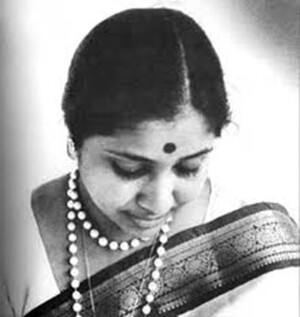
How do I pay tribute to this icon? I had already done, many years ago, a song list—Asha in Ten Moods. And that, rather than a ‘ten favourite songs’ because I freely admit that it would be impossible for me to list my ten favourite Asha songs. To choose ten favourite solos would be difficult, as difficult as selecting ten favourite duets. I had to find other criteria. And that is what I’ve done this time, too. Ten solos by Asha, by ten different composers. Ten songs that showcase the phenomenon that she was, the virtuoso with a voice of liquid gold. Scintillating, sexy, ethereal… Asha’s voice was all of these, and more.
As always, these songs are all (with one exception, on the cusp) from pre-1970s Hindi films that I’ve seen. These are in no particular order.
1. Aao huzoor tumko sitaaron mein le chaloon (Kismat, 1968): With OP Nayyar. The OP Nayyar-Asha collaboration was one of the greatest between a music director and a singer, a partnership that bridged the professional and the personal in a way that brought out the best in Asha’s voice. Nayyar gave her some of her very best songs: Aaiye meherbaan, Aankhon se jo utri hai dil mein, Jaaiye aap kahaan jaayenge, Yeh hai reshmi zulfon ka andhera… and this, one of the best daaru songs there is. Though I’ve never come across any drunk singing so perfectly in tune! There is, despite the occasional (literal) hiccup, a gay abandon to the song that I like very much.
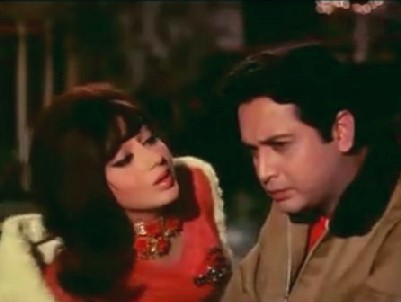
2. Ab jo mile hain toh (Caravan, 1971): With RD Burman. A song from the cusp of the decades. While Caravan was released in 1971, it has a late 60s vibe that fits in my blog’s timeline.
If OP Nayyar was synonymous with Asha through the late 1950s and into the mid-1960s, it was the RD Burman-Asha Bhonsle partnership that churned out one great hit after the other in the 70s and 80s. By the time they got married in 1980, Asha had already sung songs like Dum maaro dum, Yeh ladka hai Allah, Bechaara dil kya kare, and Do lafzon ki hai dil ki kahaani, for Pancham.
Caravan is probably best-remembered for the cabaret classic Piya tu ab toh aaja, but I prefer two of Asha’s other solos to this Helen number. One is the high-energy, madcap Daiyya yeh main kahaan aa phansi (which Asha said was the most difficult song she ever sang); the other is Ab jo mile hain, where she sings both for Aruna Irani as well as Asha Parekh. As Aruna Irani’s voice, Asha is sultry and sizzling; as Asha Parekh’s voice, she is sweeter, but still steely: both the ‘good girl’ and the banjara are women who know their minds, and are not afraid to speak them.
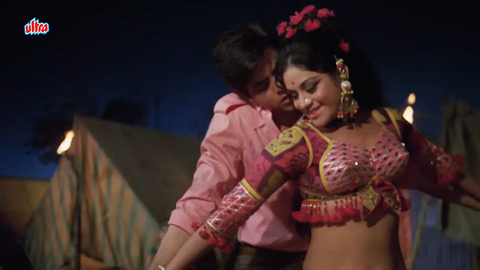
3. Tum jiyo hazaaron saal (Sujata, 1959): With SD Burman. Well before RD Burman began to compose music in his own right (and not just as assistant to his father), Asha had been singing for SD Burman. From the teasingly flirtatious Najar laagi raja tore bangle par to the (equally teasing) Dekhne mein bhola hai; from the powerful vocals of Raat akeli hai bujh gaye diye to the aching poignancy of O panchhi pyaare: Burman Da gave her a range of songs that showcased Asha’s ability to sing just about any emotion, not just the more peppy songs she came to be often associated with.
That said, this is a peppy song. Vibrant, infectiously upbeat, and absolutely the best birthday song there is. Interestingly enough, Tum jiyo hazaaron saal was recorded twice: by Geeta Dutt and by Asha, but it’s the Asha version that was retained in the film.

4. Tera dil kahaan hai (Chandni Chowk, 1954): With Roshan. This is a song, a tune, I’ve written about before. It stemmed from SD Burman’s Thandi hawaaein lehraake aayein, but Roshan took that base tune and turned it into something quite different—a song that he then went on to reuse with Lata’s voice, in Rahein na rahein hum. RD Burman was to use the tune in Humein raaston ki zaroorat nahin hai, as well as in Saagar kinaare dil yeh pukaare.
But the (most recognizable) precursor of these later songs was this gorgeous song, its music dominated by gentle strumming, Asha’s voice breathily gentle and seductive. The restraint and control that she exhibits here is a far cry from the full-throated, high-octane power of several of her other popular songs.

5. Shokh nazar ki bijliyaan (Woh Kaun Thi?, 1964): With Madan Mohan. Madan Mohan—Lata Mangeshkar’s ‘moonh-bola bhai’—famously created some of his best songs for Lata. But now and then, there was a Madan Mohan gem that Asha sang. Saba se yeh keh do; Thodi der ke liye mere ho jaao; Jhumka gira re… And, in Woh Kaun Thi?, which had some heavyweight Lata songs (including the iconic Lag jaa gale ke phir yeh), there was this song.
Picturized on Praveen Chaudhury, Shokh nazar ki bijliyaan is a come-hither song which eschews the seductiveness of (say) something like Raat akeli hai or Yeh hai reshmi zulfon ka andhera. This woman isn’t absolutely sure of the man she’s serenading; in fact, she pretty much knows that he still loves his now-dead wife. But she sings to him, anyway, a song of utter surrender.
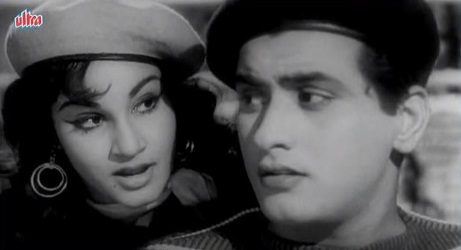
6. Aa dil se dil mila le (Navrang, 1959): With C Ramachandra. Halfway through this song list, let me shake up things by posting a song that is relatively obscure (though Navrang itself had some other well-known songs, including the Asha-Mahendra Kapoor duet Aadha hai chandrama raat aadhi); and not just obscure, but also, according to several aficionados of old Hindi film songs, not a good showcase of Asha’s singing. But this is my blog and my list of my favourites, so I exercise the right to include it in this post.
C Ramachandra’s music is wonderful, and I personally think Asha’s navigation of those varying notes and varying tempos is very good. I agree that her voice sounds somewhat odd—not typical Asha, whose voice was never so nasally ‘thin’. On the other hand, I think this is where Aa dil se dil mila le scores: it is one of those rare examples of a song in which the singer modulates her voice to exactly mirror the speaking voice of the actor. Vandana Sawant, the actress who played the tawaif Manjari, has the same voice, the same somewhat affected way of speaking. This style of Asha’s is the most appropriate voice for this character.

7. Saaqiya aaj mujhe neend nahin aayegi (Sahib Bibi aur Ghulam, 1962): With Hemant. Asha had an unexpected connection to Hemant, a reflection of her esteem for him: she admired his voice so much, she named her son (aviation pilot-turned-composer Hemant Bhonsle) after him.
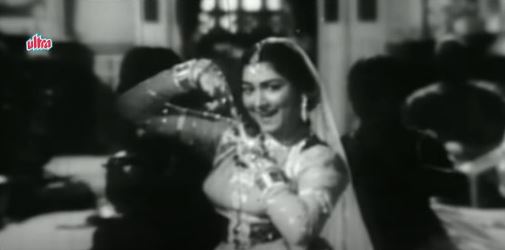
While Hemant’s most-preferred female voices tended to be Lata and Geeta Dutt, there were songs which he gave to Asha, and to which Asha did full justice. In Sahib Bibi aur Ghulam, while Geeta Dutt sang for Meena Kumari, it was Asha who was the voice of Waheeda Rehman in Bhanwra bada naadaan hai and Meri baat rahi mere mann mein—as also the singer of the mujra Saaqiya aaj mujhe neend nahin aayegi. Flirtatious, bold, uninhibited: she voices perfectly all that Minoo Mumtaz’s expressions and gestures convey.
8. Aage bhi jaane na tu (Waqt, 1965): With Ravi. I had been in two minds about including this song. I had, after all, included it in my other Asha Bhonsle post, and (especially when the same person is the focus of two posts), I try not to repeat songs. Also, it’s not as if Aage bhi jaane na tu is the only good song Ravi composed for Asha; she had other good Ravi songs to her name, including duets like Zindagi ittefaq hai, Yeh raatein yeh mausam nadi ka kinaara, and Hum jab simatke aapki baahon mein aa gaye.
In Waqt itself, Asha got other good solos, including Chehre pe khushi chha jaati hai and Kaun aaya ke nigaahon mein—but Aage bhi jaane na tu is in a class by itself. To me, this is one of the greatest songs in Hindi cinema. Everything from the picturization (it’s that rare song where a lot of action happens, with breaks for dialogue even, during the song) to music, arrangement, lyrics (Sahir, magical as ever)—is just right. And Asha is sublime, her voice soaring effortlessly across the octaves.

9. Thandi-thandi saawan ki phuhaar (Jaagte Raho, 1956): With Salil Chowdhury. Like Madan Mohan and C Ramachandra, Salil Chowdhury too was one of those music directors who had a soft spot for Lata’s voice: some of his best songs were composed for her, and she sang for him even in Bengali. But Asha too forged a Bengali connection (partly, of course, through RD Burman), and in the later part of her career came to sing a number of songs for poojo.
Salil composed several wonderful songs for Asha: Baagh mein kali khili, for instance; and this little-known but exquisite song, so very different from the vivacious, flirty, vibrant songs that comprise much of this list. This is the versatility of Asha: her ability to be the voice of the brash vamp as believably as that of the longsuffering, Sati Savitri wife. A sadly yearning, beautiful song, and sung with so much emotion.
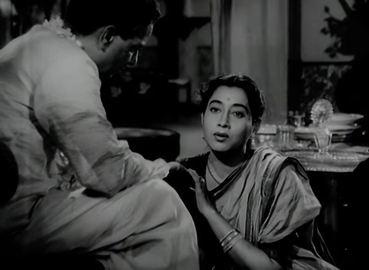
10. Dukh aur sukh ke raaste (Hum Dono, 1961): With Jaidev. I am always a little baffled by how someone as talented as Jaidev ended up composing for largely B-grade, obscure films. One would have thought that someone who had composed the scores of films like Hum Dono and Mujhe Jeene Do—both chockfull of songs that were not just good, but popular (not always the same thing), might have had more producers lining up at his doorstep than he’d have been able to handle.
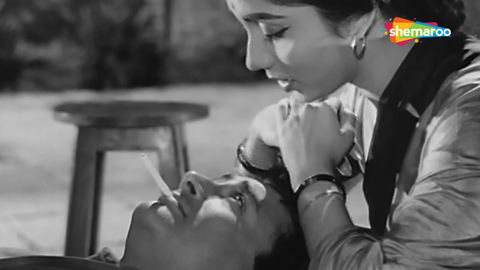
Anyhow. From Hum Dono, a film that had one of the loveliest Asha-Rafi duets, Abhi na jaao chhodkar, is this solo version of that duet. Where Abhi na jaao chhodkar is a romantic and light-hearted love song, Dukh aur sukh ke raaste is a song of comfort. It uses the same tune but is slower, gentler, kinder. Jaidev reduces the musical instrumentation to the bare minimum, allowing Asha’s voice to shine.
Goodbye, Asha. You may have gone, but your voice will never leave us.


I have been refreshing your blog’s home page off and on, wondering when you would post your tribute to Asha, Madhu. I knew you would come up with a lovely post that celebrates her versatility. I’ve been soaking in Asha’s voice in all its variety – from your list, Aage bhi jaane na tu, Aao huzuur tumko, Thandi thandi sawan ki phuhaar are all perennial favourites.
Let me add a few from the songs I’ve been listening to over these past days:
Do boondein saawan ki from Phir Subah Hogi MD Khayyam
Saawan saanwri akhiyaan choomke from Musafir MD RD
Pyaar ki nishaaniyaan sunaaye ye kahaaniyan from Jailor, MD Madan Mohan
Asha was the last of the ‘great’ voices from the golden age… an era has ended, but as long as we have the music, they will never be forgotten.
LikeLiked by 1 person
an era has ended, but as long as we have the music, they will never be forgotten.
That’s it. With her passing, an era has finally ended; she was the last one. Of course, there are a few actors still remaining (may they live long!) but from the world of music, Asha was the last one.
Thank you for these songs, Anu. I have to admit that I was familiar only with the first one (which I love), and may have heard the Jailor song, though I’m not sure…
LikeLike
Hi dustedoff & Anu,
Not to jinx anything, but we still have with us two great singers of the golden era – Sudha Malhotra and Suman Kalyanpur.
It could be argued that they are not in the same class as Lata Mangeshkar, Asha Bhonsle, Mohd. Rafi, etc., however, they are definitely tier 2 and represent the golden years of Hindi film music.
Sudha Malhotra started playback singing in 1950, and Suman Hemmadi a couple of years later.
They did not get due recognition due to the sheer domination of Lata & Asha, however, some of their songs are top quality and memorable to this day.
Let’s knock on wood, and pray for their long life and good health.
-Pratick
LikeLiked by 1 person
Yes, indeed. May they both live long and healthy.
LikeLike
Madhuji,
What a wonderful tribute! No better way to celebrate her versatility than to see how she could fit into the musicological (is that a word?) world of ten different composers, each with their own unique signature, and dare I say their own unique idiosyncrasies and temperaments. It’s no mean feat to be able to produce memorable songs with as diverse a group as this, ranging from Madan Mohan to Salil Choudhary to OP Nayyar to Jaidev to RD Burman.
Here are a few songs that I can think of to add to this list –
That last song is a testament to Asha’s timeless magic (she was 85 when she sang this song). Liquid gold, as you say.
It shows that we haven’t lost the ability to make great music. Sardar Malik’s son occasionally surprises me!
Regards,
Uday
LikeLiked by 1 person
Thank you for the songs you’ve posted, Udayji. I had heard the one from Dil Ne Phir Yaad Kiya – but not the other two. And I was pleasantly surprised to hear Prem mein tohre: yes, indeed, Anu Malik was capable of showing that he was a chip off the old block. And Asha at 85! Uff. The control and the tunefulness, even at that age.
LikeLiked by 1 person
Madhuji,
Much as I loved “Prem Mein Tohre” for Asha’s rendition, I must admit that what made this song a classic for me was Kausar Munir’s poetry –
“प्रेम में तोहरे ऐसी पड़ी मैं
पुराना ज़माना नया हो गया
ये क्या हो गया!
कब साँस थामी, कब साँस छोड़ी
हर दर्द मेरा बयाँ हो गया
ये क्या हो गया”
I know that like me, lyrics carry a lot of weight for you. I have included this song (in fact, began the list with this song) in my new post Tomorrow, Tomorrow, I Love You Tomorrow – An Ode to the New Generation – Frames of Reference
Please take a look at it when you get a chance.
Regards,
Uday
LikeLiked by 1 person
I had a quick look at your blog post, Udayji, and decided this merited a longer and more leisurely read! I am always open to new songs that sound good (and skimming through your post, I realized that barring the first one, all are new to me, as far as I can tell).
Thank you for this, will definitely read.
LikeLiked by 1 person
Thanks, Madhuji.
Would appreciate if you could provide some feedback on my post.
Regards,
Uday
LikeLiked by 1 person
She had the pitch & range to match her sister & variety to excel her sister, though she virtually remained in the shadow of her sister despite the number of popular songs she sang
Like all good things coming to an end, this has also, though she didn’t seem to have physically suffered as much as her more illustrious sister
LikeLiked by 1 person
True, I think a lot of people tend to compare Asha unfavourably with Lata. While I really love Lata, I do love Asha just a bit more – I think she was far more versatile.
And yes, I too agree that she doesn’t seem to have suffered as much in her last days. Thank goodness for that.
LikeLiked by 1 person
All beautiful songs .,….another very poignantly rendered S D Burman composition is Abke baras bhej bhaiya ko babul…from Bandini
LikeLiked by 1 person
Yes, a beautiful song.
LikeLike
lovely tribute. asha ji’s death hits harder than lataji’s because not only was the last remaining empress from the world of golden era music but an active one too, she was still releasing songs at the age of 92 and concerts as well, the last one being in dubai at the age of 90. So yes her absence will be felt far more deeply. With her passing, we also probably lost the chance to hear so many first hand stories and anecdotes of our other favourite legends from the era. She was a living legend and now it hurts to realise that we cant add living word for her anymore. Ahh, it hurts, truly and deeply.
LikeLiked by 1 person
Yes, I think from the world of Hindi film music, at least (not counting the actors, some of who, thankfully, are still with us) – she was the last. An era has really ended. As someone (much younger than I) was mentioning to me today, Asha has always been around, always staying relevant, never seeming outdated… her passing has really hit me hard, too.
LikeLike
Your tribute to the woman I consider THE BEST singer in Hindi Film Music is superb. There is no other singer like her in my opinion. The beauty with which her voice navigated high notes, without ever hurting the ear, the warmth in her voice in the lower notes, and the warmth of emotion in her voice in every song – all unmatched.
I am always a fan of your blog so was waiting to see which songs you would pick – what delighted me thoroughly was your inclusion of “Sukh aur dukh ke raaste” from “Hum Dono” – most people are in love with the duet, but the true gem for me is this solo version (the fact that Sadhana looks stunning in this scene only elevates the song for me).
I would add songs to this list, but my additions would be never-ending. So I will simply say that your list was wonderful and a great tribute to a wonderful artist.
LikeLiked by 1 person
The beauty with which her voice navigated high notes, without ever hurting the ear, the warmth in her voice in the lower notes, and the warmth of emotion in her voice in every song – all unmatched.
You have put it so well. Yes, exactly, that is the reason why I like her so much. Honestly, while I really love Lata in her earlier years (and she has some stupendous songs to her name), in later years she started sounding quite raucous. Not Asha: there’s something about her voice that is timeless. Someone posted a 2017 song of hers, in one of the earlier comments, and it’s stunning.
Thank you so much for your kind words: I am so glad you enjoyed this list.
LikeLike
Your list is fantastic. Shokh Nazar Ki Bijliyan is my favorite song. Aage Bhi Jaane Na Tu is such an iconic song that it’s pretty difficult to resist the urge to include it in any such list. I like Daiyya Yeh Main Kahan Aa Phansi very much and would have included it in any such list prepared by me. You have chosen both the highly popular as well as the long forgotten songs. Great tribute to the legendary singer who was unique and inimitable.
LikeLiked by 1 person
Thank you so much, Jitendraji. I’m glad you enjoyed this list. I agree, Daiyya yeh main kahaan aa phansi is a spectacular song – the way she manages to go all through those notes, the energy she brings to the song, is fantastic.
LikeLiked by 1 person
A lovely list Madhuji.
It was indeed difficult as to choose a theme for tribute. Your take is wonderful.
Has anyone mentioned Parde mein rehne do by Shankar Jaikishan? A popular and rhythmic song.
Another would be Naushad who didn’t offer her many songs. But Jaadugar qatil from Kohinoor, Tora man bada papi sanwariya re will always be remembered for her rendition.
Before Lata Mangeshkar sang for chitragupt, Asha Bhosle was his leading female playback singer and she sang quite a good number of songs for him.
Are you going to publish a follow up post with other composers? I think she sang for almost each and every composer of Hindi cinema till the 80s. N Datta, khayyam, Husnalal Bhagatram, Ghulam Mohammad, and many more ..
Asha’s versatility, her dedication and hard work, were unparalleled.
:-)
LikeLiked by 1 person
Thank you so much, Anupji. I’m glad you enjoyed this post. Thank you, also for mentioning Parde mein rehne do – that was on my shortlist.
Yes, she did sing with pretty much most of the music directors of the 50s and 60s (Usha Khanna is another name I will add to your list), but I actually like the duets she sang for them more than the solos… so I think instead of doing a follow-up post with more solos and more composers, perhaps I will do a post of duets. :-)
LikeLiked by 1 person
Madhuji,
Wonderful idea to write about Asha’s duets. IMHO, Asha’s unique qualities come out much better in duets, as her forte is uninhibited expression of emotions, and that stands out when she is expressing love or is teasing someone.
Looking forward to that post!
Regards,
Uday
LikeLiked by 1 person
Thank you! I am in the process of shortlisting the songs for that post, and (as expected), it is proving an uphill task – she sang so many absolutely fabulous duets.
LikeLiked by 1 person
Looking forward to your post, Madhuji.
I agree that we have an embarrassment of riches when it comes to Asha’s duets. She has memorable duets with every leading male playback singer of her time, including Talat Mehmood, Hemant Kumar, Mukesh, Kishore, and of course Rafi.
Regards,
Uday
LikeLiked by 1 person
Coincidentally enough, just today I started writing my post of Asha’s duets, and while writing about her songs with Rafi, I used the same phrase you’ve used – ‘an embarrassment of riches’. :-) Truly, so many fabulous songs!
LikeLiked by 1 person
A fitting tribute to the most versatile singer of the Hindi film industry, dear Madhu. I spent most of my life listening to her and often preferred her over her elder sister. But a few years ago, I stopped being partial to any one singer and began to enjoy everyone for what they offer—except for a few.
Although Lata moved me with her tone and subtle singing, Asha bowls me over every time with her versatility and ornamentation. Through her singing, she could portray the exuberance and effervescence of a devil-may-care spirit, as well as the sadness and utter despondency of having lost everything. Other singers could sing the right notes; she gave each note the right expression and color, doing justice to both. At the same time, her flexibility in moving up and down the scales was phenomenal.
That she had to go is understandable—after all, she had reached the ripe age of 92. I simply feel grateful that I was fortunate enough to listen to her voice, her songs, and her brilliance. She always made me wish the song she sang had one more verse.
Thank you, dear Asha, for making my life richer with your art. May your journey ahead be peaceful.
LikeLiked by 1 person
Yes, indeed: we should be grateful that she gave us such a treasury of wonderful songs. And, as somebody else pointed out in an earlier comment, she seems not to have suffered a lot at the end, which is also something to be thankful for.
I agree, I too do not think of any singers (or actors, music directors, etc) as ‘favourites’ or not: each of them, I think, had their moments, good and bad. Human. But I have a special place in my heart for Asha. :-)
LikeLike
Benumbed is the perfect word when one realizes that a legend who used to walk amongst us is no more. As always the songs you have chosen are lovely but I have a special place for ‘Sukh aur Dukh ke raastein’. Asha’s voice oozes such tenderness here. It is perfect for the situation and perfect for delicate Sadhana (my another favorite).
Here are my favorite songs of Ashaji
Beete Na Beete Na Raina – Rudaali – Bhupen Hazarika
And some lovely marathi songs.
‘Ka Re Durava Ka Re Abola‘ is from movie Mumbaicha Javai which inspired Piya Ka Ghar. Composed by Sudhir Phadke is perfect ‘Manana’ song with hinting at missing intimacy without getting cheap.
‘Bhogle Je Dukh‘ written by eminent marathi poet Suresh Bhat and composed by Shridhar Phadke. Asha embodies moot acceptance of grief encompassing whole life.
For Maharashtrians, Asha would have been immortal even if she sang just one song and that is ‘Tarun Ahe Ratra Ajuni‘ Composed by Hridaynath Mangeshkar.
A song for all those ugly ducklings written by famous poet Ga Di Madgulkar & composed by immensely talented Shrinivas Khale.
Sharad Sundar Rati is penned by eminent poetess Shanta Shelke composed by Hemant Bhosle (her son).
Ruperi Valut is another romantic number written by lyricist Shantaram Nandgaonkar & composed by Anil (Mohile) & Arun (Paudwal). Her pronunciation of ‘Haay’ is to die for.
And nobody did dance numbers like Asha Bhosle. Reshamachya Reghani is lavani from movie Maratha Tituka Melvava composed by Lata Mangeshkar (pen name Anandghan)
LikeLiked by 1 person
Thank you so much for these Marathi songs. I am sitting and listening to them while I go about doing my other work. Beautiful. Listening to Tarun aahe ratra literally gave me gooseflesh, I couldn’t understand a word but her voice… wow.
LikeLike
I was hoping you’d mention the Marathi songs, AS, thus I abstained from it. I love all the Marathi songs you’ve mentioned.
The two songs, which I would’ve included would be, have the common factor in Krishna. One moves me always to tears and the other keeps my mouth open in astonishment at the way she changes nuances, emotions and feelings in the song and still keep it as a whole. The two songs are totally in contrast to each other but that goes to show Asha’s range.
1. bhar zaricha pitambar from Shyamchi Aai (1953)
2. ain dupari yamuna tiri from Padchhaya (1965)
LikeLiked by 1 person
Thank you for these songs, Harvey. So different from each other, and so good to listen to! (Of course I didn’t understand anything, but anyhow).
LikeLike
Just in case if you are interested here is a playlist of Asha Bhosle’s Marathi songs which I like and have been listening to in the past few days. My knowledge of her Marathi songs is highly limited, but I like what I like.
God bless Asha for all the joy she still spreads.
LikeLiked by 1 person
Thank you so much, dear Harvey! This is very sweet of you. Will listen later today, if I can.
LikeLike
Thank you Harvey.
I love both the songs you shared. It’s just difficult to choose from her repertoire, isn’t it?
LikeLiked by 1 person
Here are some lavani numbers by Ashaji.
Bugadi Mazi Sandli Ga – Bugdi was famous predecessor of ‘Zumka Gira Re’.
Patang Udvit Hote – Love the way she pronunciates Patang.
Bhar Tarunyacha Mala – A duet with Ravindra Sathe.
LikeLiked by 1 person
I enjoyed these a lot (and I see what you mean by her pronunciation of ‘patang‘ – delightful).
LikeLike
Just like for Lata, I presume this post is merely the beginning of a series of posts; at least, I hope so. That is why I will not make a list of music directors whom I miss here (for this first list, in fact, I don’t miss anybody). The list is simply perfect. I will just mention a few songs (solos), one per music director from your list, that I also like and that may be lesser known or not.
Poochon Na Hamein Hum Unke Liye from Mitti Mein Sona (1960) is one of my favourite songs of the OP–Asha combination, and it might be just a step ahead of or behind (depending on my mood that day) Woh Hanske Mile Humse from Baharen Phir Bhi Aayengi (1966).
Achha Sanam Karle Sitam from Teesra Kaun (1965): Asha once wrote that this was her first song for Pancham, and that she had difficulty with the beats; she had to keep counting in parallel, or something to that effect. Though my favourite Pancham–Asha song from the 1960s would be Maar Dalega Dard-e-Jigar, again picturised on Shashikala, from Pati Patni (1966).
Asha sang many seductive numbers under S. D. Burman’s baton, so I have selected a sad song: Abke Baras Bhej Bhaiyya Ko Baabul from Bandini (1963). I remember Asha narrating on a TV show that she was still living with her first husband at the time, was cut off from her siblings, and couldn’t meet her brother. She would often cry remembering this while recording the song.
Roshan: Nigahein Milane Ko Jee Chahta Hai wins hands down in this category for me. Though of course there is Ham Intezaar Karenge from Bahu Begum.
Madan Mohan: Hai Unki Woh Nigahein from Aakhri Dao (1958) is a clear winner for me at the moment. Madan Mohan, who is more famous for his sad songs, composes a light number, and not only that, but also gives it to Asha. Saba Se Yeh Keh Do from Bank Manager, however, is more in line with my taste.
C. Ramchandra: I agree that Navrang was the height of the Asha–C. Ramchandra collaboration. Other songs where Asha sang for him don’t really resonate with me. Phoolon Ke Mele from Devta is an exception.
Sahib Bibi Aur Ghulam is the first film that comes to my mind when I think of the Asha–Hemant Kumar collaboration, and I love all the songs from that film. The second would be Anupama (1966), especially the song Kyun Mujhe Itni Khushi De Di.
Ravi gave Asha many beautiful songs, and I am at a loss to pick just one. So I will choose the one that first comes to mind: Mat Jaiyo Naukariya Chhod Ke from Do Badan.
I know only a few songs by Asha for Salil Chowdhury, but my favourite must be Meri Wafayen Tumhari Jafayen from Amanat (1954), which, though sad in lyrics, has a surprisingly light, almost cheerful tune.
My favourite Jaidev–Asha album might be Ankahee (1984), but keeping within your rules, my favourite song would be Nadi Naare Na Jao Shyam.
Thank you for the list, dear Madhu. It helped me say goodbye to Asha. Hope (Asha) was one of the things she always gave her audience, even when she sang a sad song.
LikeLiked by 1 person
Harvey, what a wonderful list you’ve made. I have to admit that only two of these songs were in my shortlist – Hum intezaar karenge and Abke baras bhej bhaiyya (thank you, by the way, for that touching little anecdote regarding that song). Am going to listen to all the others over the course of the day while I go about doing my work!
I have to admit most of the Asha solos I really like are from the directors I’ve mentioned in this post. I do know that she sang solos for a lot of other directors too, but somehow what stays with me in other cases (like Shankar-Jaikishan, for example, or Usha Khanna) vis-a-vis Asha, are the duets rather than the solos. So perhaps my follow-up post will be one of Asha’s duets. :-)
LikeLike
Whatever you offer, I am looking forward to it.
LikeLiked by 1 person
Thank you, Harvey, for the encouragement!
LikeLike
The remarkable quality of Asha’s voice is it only became more versatile and “pur kashish” with age. The ache and beauty of her songs in Umrao Jaan is absolutely alluring and stays with you. Her singing in this movie adds another dimension to Rekha’s performance. Khayyam asked her to sing at lower note than her normal pitch – and this added gravitas to her voice and brought out the pain of the nazms in the movie. Abida Parveen said ““Asha-ji ne sikhaya ke aurat ki awaaz mein sharm nahi, shaan hoti hai” – which is so true.
LikeLiked by 2 people
I had never come across that Abida Parveen quote before. So well said!
LikeLiked by 1 person
Ramlal.
Tere khayalon mein hum…. GEET GAYA PATHARON NE.
Ganesh.
Hum tere bin jee na sakenge Sanam … Thakur Jarnail Singh , 1966.
Hridaynath Mangeshkar.
Jhoote naina bole… ( With Satyasheel Deshpande ) LEKIN.
Usha Khanna.
Aao yaron gao Aao yaron nacho… ( Less heard. Nice ). HAWAS.
Bappi Lahiri.
Raat baaki baat baaki …. NAMAK HALAL.
Kalyanji Anandji. Ye mera dil Yaar ka deewana…
DON.
G K Venkatesh.
Sawalu haaki solisi ellara.. ( With PBS, Moti ). Usha Chauhan dancing with Rajkumar. DOORADA BETTA. ದೂರದ ಬೆಟ್ಟ.( Kannada ).
Has sung for 3 Kannada movies. Interestingly, Lata, Asha n Usha have all sung for the Kannada movie KRANTIVEERA SANGOLLI RAYSNNA. ಕ್ರಾಂತಿವೀರ ಸಂಗೊಳ್ಳಿ ರಾಯಣ್ಣ. Manna Dey has also sung for the movie.
LikeLiked by 1 person
Yes, lots of wonderful songs! I hadn’t known she’d sung for Kannada cinema too, but I’m not surprised. She did sing for a lot of regional cinema.
LikeLike
Hi madhu ji ! You have given a touching tribute to asha ji. I was waiting for your post. My tribute is – there are many emotions n expressions of life. Some of good, some of sorrow.
asha ji voice was full of all good expressions in life such as happiness, vitality, hope, excitement and love.
Among all the songs you have mentioned I love aagey bhi jaaney na tu n shokh naza ki bijliya.
I like both songs as one can enjoy pure voice of asha ji not having much nakhras. ( Like kajra mohabbat vala). Om shanti asha ji. 🙏
LikeLiked by 1 person
Thank you, I’m glad you liked this post.
LikeLiked by 1 person
Pingback: The Magic of Asha Bhonsle: Guest Post by Dustedoff | ashokbhatia
Nice tribute, Madhuji! I wrote a post in Hindi featuring Asha’s co-singers.
Anita
LikeLiked by 1 person
Yes, I noticed that post, but have deliberately not read it now, because I am in the middle of writing a post on the same theme. I don’t want to get influenced even inadvertently! Will come and read your list once I have published mine. :-)
LikeLike
Wonderful tribute Madhu!! You have selected some wonderful songs. That must have been difficult task.
Here’s couple of songs that I like.
with OPN
Main shayad tumhare.. from Yeh Raat Phir Na Aayegi
This is my absolute favorite song. What a song!!
Chain se humko kabhi from Pran jaye par vachan na jaye
With CR
Dil lagakar hum yeh samjhe from Zindagi Aur Maut.
LikeLiked by 1 person
Beautiful songs, Usha, each one of them! Thank you. :-)
LikeLike
Do you know I’ve been refreshing your blog almost daily this week waiting for your next post? – she asked plaintively…
LikeLiked by 1 person
I will write to you later today, Anu. A lot has been happening!
LikeLike
These are a good collection of Asha Bhosle songs. Let me share some rare foot-tapping songs of Asha by various composers:
C. Ramachandra
Teri Nazron Kaa Ishara https://www.youtube.com/watch?v=ZSHE2SIa1p0&list=RDZSHE2SIa1p0&start_radio=1
OP Nayyar
Chaho To Jaan Le Lo https://www.youtube.com/watch?v=BgrR3y1SD0A&list=RDBgrR3y1SD0A&start_radio=1
S Mohinder
Aanchal Ko Udne Do https://www.youtube.com/watch?v=aL5svEZALm8&list=RDaL5svEZALm8&start_radio=1
Jimmy
Madhur Taar Kaa Pyar https://www.youtube.com/watch?v=xi7bVPn1Vpc&list=PLbw3K0jZ1IWOlM1k-rVjsr_GZj6RTdT99&index=9
And the last one is my favorite again by OP Nayyar
Dil Tera Deewana https://www.youtube.com/watch?v=r93gN4TNk1U&list=RDr93gN4TNk1U&start_radio=1
LikeLike
What lovely songs (though this post was specifically about Asha solos) – but a special thank you for Dil tera deewaana. I don’t think I’ve ever heard this one before! Such a delight. :-)
LikeLike
A fitting tribute to the legendary singer, the last pillar of the golden era of music has left!! This is a n excellent collection of songs, many of my favourite ones are here.
I was specially glad to see Aa dil se dil milale. I heard it after a long time. I have always found this song bit unusual and interesting, the way Asha has sung it. As you have mentioned, she did a great job of voice modulation that you feel as if the actress is singing in her own voice.
Adding couple of osngs by N. Datta:
Main jab bhi akeli hoti hoon – Dharamputra
Tang aa chuke hain kashma kashe – Light House
LikeLike
Thank you for reading, and for liking my inclusion of Aa dil se dil milaa le – that is a song I have derided by several people, though I have always found it a very good example of a singer adapting their voice to suit an actor. Asha’s voice and her somewhat affected way of intoning the words sounds uncannily like Vandana’s.
Thank you, also, for the two songs you suggested. I had wanted to include Main jab bhi akeli hoti hoon in my list, but since I’d included it in my earlier Asha post, I decided to omit it from this one.
LikeLike
Another All Time Favorite marathi solo by Ashaji is ‘Fulale Re Kshan‘ composed by Shridhar Phadke.
Then there is lovely ‘Sajna Hai Mujhe‘ composed by Ravindra Jain.
LikeLiked by 1 person
Hi dusted off,
I have been meaning to respond to your post for several weeks, but unfortunately due to work-related travel, I haven’t been able to.
I was on the road when the news of Asha Ji’s passing hit.
You have composed an incredible post in her honor – thank you !
I agree that Asha comes across as more versatile than Lata Mangeshkar – in fact, probably the most versatile among female singers.
Part of the reasons are her large collection of seductive, mujra, cabaret & club songs from the 50s & 60s.
Lata would flatly refuse to sing these types of songs and these would get assigned to Asha, and she did full justice to these.
That, combined with her long association with OPN and Ravi, made her the phenomenon that she was.
I wanted to post some of my favorites, however, many of them have already been mentioned by others, such as “Main jab bhi akeli“.
I also really like “Aa dil se dil mila le“.
I would like to mention some of my personal favorites that have not been mentioned yet.
The song “Baithe Hai Rae Guzar Par” from the movie “Chalis Din” composed by Babul is probably among my top 5 favorites of Asha Bhonsle.
There is something about this song that always gives me goosebumps.
I have this song saved locally on my phone and often listen to it.
I know Babul does not always come to mind when thinking of great composers, but he has composed some very good songs, and this is one of them.
Another favorite of mine is “Yehi Woh Jagah Hai” from Yeh Raat Phir Na Aayegi. This is OPN composition.
I am sure it was hard for you to pick an Asha-OPN song.
This would be my favorite.
Another song that gives me goosebumps is “Kis Jagah Jaye Kisko Dikhlaye” from Lighthouse. Composition by N. Dutta.
Beautiful lyrics by Sahir, as usual.
The next song I’d like to list is “Koi Aaya Dhadkan Ke Tire” from Lajwanti.
I watched this movie many years ago, and from what I vaguely recall, all the songs picturized on Nargis in this movie were sung by Asha, and each one is a gem (another being Ga mere man ga).
Perhaps this is from the years when SD Burman and Lata had a disagreement and SD stopped using Lata’s voice for a few years…no matter – Asha did full justice to these compositions.
One more goosebumps song – “Hum to ho gaye badnaam sanwariya” from Bijlee. Composition by Khemchand Prakash.
Oh wait…this one is a duet with Mukesh, but nevertheless.
I should probably stop here, LOL.
I see that you have composed another post about duets – I will have much more to say over there.
-Pratick
LikeLiked by 1 person
Thank you for listing your favourites, Pratick. Some absolutely beautiful songs. I had forgotten all about Baithe hain rehguzar par – such a lovely song.
Both Main jab bhi akeli hoti hoon as well as Yehi woh jagah hai (the latter one of my all-time favourites, because my mother sang it to me as a lullaby when I was a baby!) were actually listed on my very first post of Asha’s songs, several years ago. The link to that post is at the top of this post.
LikeLike