
In May, I posted a tribute to Asha Bhonsle, and Anu remarked that ‘with her passing, an era has ended’. A comment I agreed with, but to which blog reader Pratick Mukherjee replied by saying that we still have Suman Kalyanpur and Sudha Malhotra.
And sadly, we do not have Suman Kalyanpur any more: she passed away on May 31, 2026, at the age of 89. An immensely talented singer, and one who proved her worth in one song after the other, but who remains underrated, often unfairly compared to Lata Mangeshkar. Even though their voices, I think, were very similar—but Lata was a colossus no-one could really beat.
That, however, is a debate for elsewhere, and for another time. For now, I want to focus on Suman Kalyanpur, and to celebrate her work in ten songs. I had dithered over whether I should focus on ten duets or ten solos, and then decided to not restrict myself, because my favourite Suman Kalyanpur songs include both duets as well as solos.
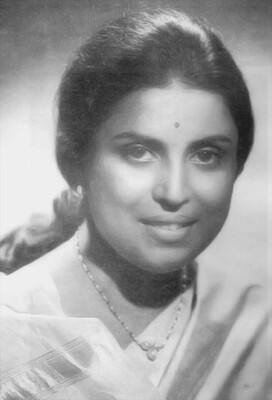
As always, these are all from pre-1970s Hindi films that I’ve seen. This list is in no particular order, though my favourites cluster at the top of the list.
1. Garjat barsat saawan aayo re (Barsaat ki Raat, 1960): With Kamal Barot. One of my favourite duets, irrespective of year, genre, singers, whatever. Composed by Roshan and with lyrics by Sahir, this stunning paean to the monsoon has the voices of Suman Kalyanpur and Kamal Barot harmonizing perfectly through much of the song. Their voices are crystal-clear, exquisite; occasionally just one singer singing a line, the other singing the next one—before they come together again. This is one of those rare songs where I always wish the song was longer, it’s so beautiful.

2. Mere mehboob na jaa (Noor Mahal, 1965): A classic song, from a film that is deservedly forgotten. Noor Mahal was a terrible film, badly plotted, badly cast, and just so overall bad that it was hilarious. But the one thing that redeemed it—the only reason this film should be remembered—was Mere mehboob na jaa, sung by Suman Kalyanpur, composed by Jaani Babu Qawwal and with lyrics by Saba Afghani. The restraint in her voice, the control as she goes from quiet, slow and low to high, full of emotion—the desperation of a woman pleading with her beloved to stay—is impressive.
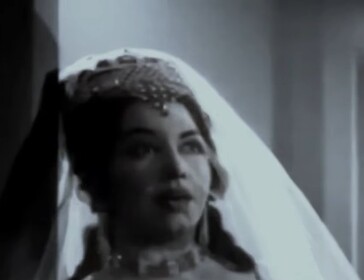
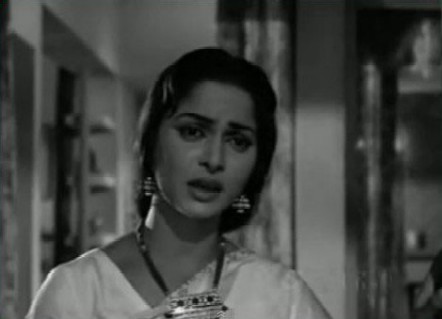
3. Bujha diye hain khud apne haathon (Shagoon, 1964): Most people tend to remember Shagoon for the poignant Tum apna ranj-o-gham, sung by Jagjit Kaur and lip-synced by Nivedita/Libi Rana. But Suman Kalyanpur sang two excellent songs for the film, both as playback for Waheeda Rehman, who played the lead female here.
In Parbaton ke pedon par, Suman’s co-singer was Mohammad Rafi: it’s a beautiful song exemplifying Sahir Ludhianvi’s ability to use nature as an effective backdrop for romance. But further on in the film, when the romance has fizzled out and the heroine is in utter despair, there comes this heartbreakingly tragic song of hopelessness. The emotion in Suman Kalyanpur’s voice is excellent: this is a woman who is on the verge of tears, but she is holding on, somehow stopping herself from breaking down.
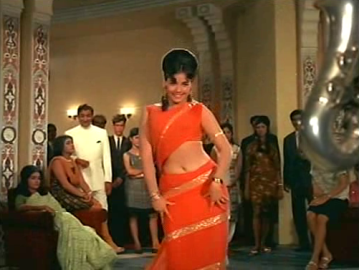
4. Aajkal tere-mere pyaar ke charche (Brahmachari, 1968): With Mohammad Rafi. Rafi was one of Suman Kalyanpur’s more frequent co-singers: they sang a number of wonderful songs together (including the all-too-brief duet version of Rahein na rahein hum). This one, with music by Shankar-Jaikishan and lyrics by Shailendra, is a particular favourite of mine: so much pep, so much verve—and Suman matches Rafi’s energy perfectly. She sounds a very good fit for Mumtaz, too.
5. Thehariye hosh mein aa loon (Mohabbat Isko Kehte Hain, 1965): With Mohammad Rafi. Another love song with Rafi, but this one couldn’t be more different from the high-octane, uninhibited expressiveness of Aajkal tere-mere pyaar ke charche. Khayyam and Majrooh Sultanpuri created some lovely songs for Mohabbat Isko Kehte Hain (another beautiful one is Jo humpe guzarti hai), and this one, sweetly flirtatious and soothing, is especially good. Rafi opens the song and for the first verse, Suman has no real singing to do; but when she joins the song, the shy demureness of her voice echoes Nanda’s acting very well.
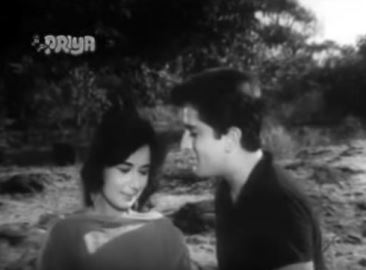
6. Na tum humein jaano (Baat ek Raat ki, 1962): The hauntingly beautiful (music by SD Burman, lyrics by Majrooh) duet version of this song has Hemant singing most of the song and Suman Kalyanpur joining in only towards the end when Waheeda Rehman’s traumatized character, jolted into the present, begins to sing. But in the flashback in this film, we see another version of Na tum humein jaano: where Waheeda’s character, deeply in love, waits for the arrival of her beloved and listens to a song that echoes her emotions. Beautifully sung.
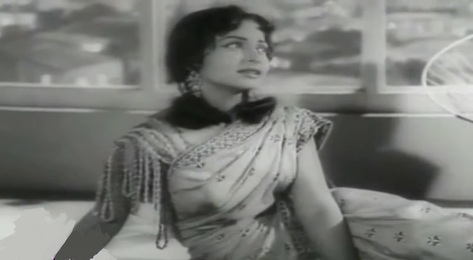
7. Yeh mausam rangeen sama (Modern Girl, 1961): With Mukesh. Composed by Ravi, and with lyrics by Gulshan Bawra, Yeh mausam rangeen sama is probably the one reason why people remember Modern Girl, otherwise a fairly lacklustre and forgettable film. Mukesh singing a frothy, light-hearted song is (for me) a big tick; and Suman Kalyanpur matches him in the playfulness of this sweet little love song.
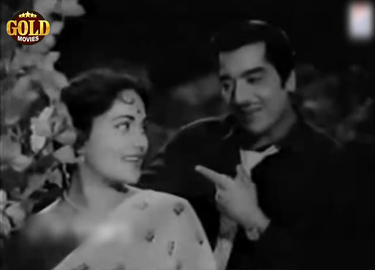
8. Na na na re na na haath na lagaana (Taj Mahal, 1962): With Minoo Purushottam. Suman Kalyanpur seems to have been given some of her best songs by Roshan, who also composed the music for Taj Mahal. In this dance, picturized on Helen and Madhumati, Suman Kalyanpur teams up with Minoo Purushottam to sing a two-women duet that uses the common performance scenario of a woman dressed as a man flirting with a woman. It’s fast, it’s energetic, and Sahir’s lyrics have a rustic earthiness to them that works very well for the situation imagined here.

9. Ajhun na aaye baalma saawan beeta jaaye (Saanjh aur Savera, 1964): With Mohammad Rafi. Yet another duet with Rafi, and—compare this to the other Rafi-Suman Kalyanpur duets on this list, Aajkal tere-mere pyaar ke charche and Thehariye hosh mein aa loon—a very different one. Composed by Shankar Jaikishan (with lyrics by Hasrat Jaipuri), Ajhun na aaye baalma is based on raag Madhuvanti. Suman Kalyanpur had trained in classical vocals under gurus like Abdul Rehman Khan and Pandit Keshavrao Bhole, and she matches Rafi’s virtuosity as they sing this song. Most people tend to regard this as Rafi’s song, and he is in the forefront, but Suman Kalyanpur is I think not to be sneezed at here.
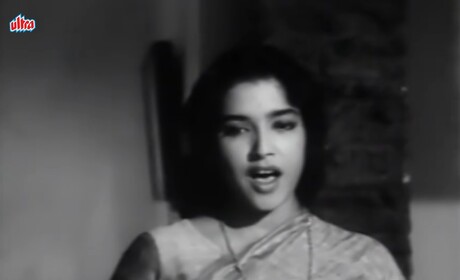
10. Sharaabi sharaabi yeh saawan ka mausam (Noorjehan, 1967): I began this list with a song that celebrates the monsoon, and I’ll end it with a similar song. Sharaabi sharaabi yeh saawan ka mausam has Suman Kalyanpur singing playback for Meena Kumari. As for Garjat barsat saawan aayo re, the music for Noorjehan too was composed by Roshan; the lyrics are by Shakeel Badayuni. Personally, I think the lyrics—so much imagery evoking the monsoon—hold centre stage here; Roshan keeps the music deliberately understated to allow Suman’s voice to shine.

RIP, Sumanji. May your voice live on.


Public psychology to compare two individuals can’t be curbed by laws or statute
Comparisons of two individuals in the same profession working in the same era are unavoidable, though both odious & invidious -in cricket , another passion with Indians,worse things happen when people of different eras compared & argued endlessly
Suman Kalyanpur left her indelible mark not only by her singing, but also by the quiet dignity with which she led her life till her end which was in stark contrast to what Lata Mangeshkar could not achieve with her needless tiff with Rafi & allegations against Mangeshkars of blocking other voices
Suman was the last of the old guard considering only the Hindi movie industry, though in the South we have highly gifted P.Sushila, S. Janaki & LR Eswari quite active though not singing
LikeLiked by 1 person
Yes, it is human nature, I suppose, to compare two individuals. What I really find very annoying is the common Indian tendency to pull down others while trying to keep one’s own idol up on a pedestal. As an example, just because (this is theoretical, not me at all) if I am a big fan of Rafi’s, I feel I must criticize all other male playback singers.
I always wonder why. I mean, personally speaking, I have favourite songs, not favourite singers. And I admit that even when there are a few singers whom I especially like (Rafi, Geeta Dutt, Asha), I am willing to admit that there are songs of theirs that I don’t like. And I am the first to say how many, many songs there are by singers other than these that I absolutely adore.
Suman Kalyanpur was indeed in a class by herself. That dignity you spoke of especially stands out.
LikeLiked by 4 people
Could not agree more with you
Every person has space everywhere so long as the person has the talent to fit there
Though a die-hard fan of Rafi, I like & admire Kishore not only for his singing/songs , but also the craze he became with fans & hosannas he attracted from aficionados
LikeLiked by 1 person
Exactly. I cannot understand this need to pull down others in order to prove one’s devotion to one person. Why not enjoy the talent and skill of everybody who gives us so much to enjoy?
LikeLiked by 2 people
Sun le Bapu ye paigam… BALAK, 1969.
LikeLiked by 1 person
This was new to me. Thank you.
LikeLike
a very beautiful list of songs.
So many of my favourites already there.
I’ll add a couple of songs from Cobra girl, both duets
Nazar Ko Sambhalo Yeh Kya
Nigaahon Se Dil Ka
Such beautiful melodies.
Then there’s Aayi Bad e baharen leke from Noorjahan. A song that’s completely sidetracked always.
and, there’s her debut song in Hindi films. From mangu (1954) composed by Mohd Shafi
:-)
LikeLiked by 1 person
Thank you for these songs, Anupji! I am especially glad to see the ones from Cobra Girl; that film was on my shortlist and I had still not made up my mind about which song (if any) I would choose from it when I ended up finalizing my list without it. :-) But it does have very good songs.
LikeLike
Hi Dusted Off,
Oh dear me, I jinxed it, didn’t it?
That was barely 1 month ago.
I am totally heartbroken – I really like Suman Kalyanpur’s songs.
It seems she was fairly active in recent years – not singing, but showing up in award ceremonies and singing shows.
May God rest her soul in peace.
I have so many songs that I like for various reasons – some remind me of the time I first heard it, others remind me of a particular phase of my life, etc.
I will mention a few of my favorites (both duets and solos).
One of her all time bests is this solo:
Yun Hi Dil Ne Chaha Tha Rona Rulana (Dil Hi to Hai)
This is another soulful combo of Suman Kalyanpur and Sahir’s lyrics, like Bujha diye hain.
I just love this song…every time this comes up on the radio or on the playlist on my phone, I stop doing whatever I was doing, and listen to every note, every word.
I just wish this song were longer – Sahir could easily have added another stanza or two, LOL.
Koi Pukare Dheere se Tujhe (Mangu)
One of her earliest songs (1954, I believe).
I have never seen a video of this song, but this audio is good quality.
Beautiful melody…I love every second of it.
Here is another beautiful melody from her early years:
Chale Hum To Mubarak Ho Zamane Ko (Darwaza)
Music by Shaukat Nashad.
One movie that deserves special mention is Shama (1961).
Suman Kalyanpur sang several songs in this movie as the voice of Nimmi.
I like all the songs, but my favorite would be:
Dil Ghum Se Jal Rahaa Hai
Lyrics by Kaifi Azmi.
As for duets, there is another beautiful Suman – Hemant Kumar duet that I really like:
Tumhi Mere Meet Ho (Pyaase Panchi)
What a lovely song !
And I love how beautiful Ameeta looks in this, her expressions and synchronizing dropping her eyelids with the words of the song.
Other than this one, I think you listed most of my favorite duets.
A quick mention of the immensely popular Na na karte pyar.
Once again, may God rest her soul in peace.
-Pratick
LikeLiked by 1 person
I wouldn’t say a jinx. It happens, sadly enough. And she did live to a fairly ripe old age.
Thank you so much for sharing your favourites. I was familiar with most of these songs, and like them a lot too. Amusingly enough, one of my cousins was a toddler when Jab-Jab Phool Khile was released, and was convinced that ‘Na-na karte pyaar‘ was actually Nana karte pyaar, solid evidence of the mutual affection between her and her maternal grandfather!
I will admit that while I have heard of Mangu (only in the context of its music, not the film itself), I have never heard its songs. This one was lovely.
LikeLike
Such a fitting tribute to Suman Kalyanpur, dear Madhu! With her, for me at least, the last singer of the golden era of Hindi film music has passed away. I love all the songs, which you have posted. The Noorjehan song was new for me, Noorjehan is one Roshan album, which I have highly neglected.
Some other Suman songs which I like are:
churaa le naa tumko ye mausam suhaanaa from Dil Hi To Hai (1963); love Sahir’s lyrics.
raat suhaani jaag rahi hai dhire-dhire chupke-chupke from Jigri Dost (1969)
maine ae jaan-e-vafaa from Bedaag (1965)
haal-e-dil unko sunaanaa thaa from Fariyad (1964)
juhi ki kali meri ladli from Dil Ek Mandir (1963)
ke jaan chali jaaye from Anjana (1969)
manmohan man me tumhi from Kaise Kahoon (1964), although Suman has less to sing here
ye kis ne geet chhedaa from Meri Soorat Teri Aankhen (1963)
apne piyaa ki main to from Kann Kann Me Bhagwan (1963)
Thank you, dear Suman, for your melodious legacy. Wish you a peaceful further journey.
LikeLiked by 1 person
That is such a sweet little comment, Harvey. And I like your selection – there were several songs there that were on my shortlist.
And some, too, that I had heard, but hadn’t ever paid attention to who sang them. Apni piya ki main toh bani re joganiya is a case in point: a lovely song, and one I like, but whose singer I had never paid attention to (I suppose I thought it was Lata). I guess that’s a sad reflection on how Sumanji got shortchanged again and again, being mistaken for Lata. :-(
LikeLike
Such lovely picks, Madhu. I love all these songs.
LikeLiked by 1 person
Thank you for reading, Ava. Glad you liked this!
LikeLiked by 1 person
oh BTW, speaking of Darwaza, I mentioned the solo, but I forgot to mention the absolutely mesmerizing duet with Talat Mahmood.
Ek Dil Do Hain Talabgar Badi Mushkil Hai
If you are not familiar with this song, please listen to the whole thing…absolutely lovelorn
Listen to this part:
dhundhti hai tujhe harsu meri pyasi aankhe
kaise ho ab tera didar badi mushkil hai
dil me jo kuch hai jaban par nahi laya jata
ghut ke dum tod na de pyar badi mushkil hai
Khumar Barabankwi’s lyrics
This movie had lots of Suman Kalyanpur songs, and they are all good…but these two are my favorite.
-Pratick
LikeLiked by 1 person
What a beautiful song this is. Thank you for introducing me to this one, it was new to me.
LikeLike
I like most of the listed songs. Na Tum Hamen Jaano is a song I myself love to sing. This post is a perfect tribute from you to the extraordinary singer. I feel, she did not get ample opportunities to showcase her talent in Bollywood. The songs she sang for Hindi movies are in hundreds only, not in thousands.
LikeLiked by 1 person
Yes, it’s a shame she got such few (relatively speaking) songs: she merited many more.
Thank you for your kind words, Jitendraji.
LikeLiked by 1 person
I really liked Suman Kalyanpur. Her was quite sweet.
Here’s a song from the movie gazal . Mujhe ye phool na de
LikeLiked by 1 person
I had forgotten Mujhe yeh phool na de – for me, at least, it tends to get overshadowed by the Rang aur noor/Naghma-o-sher tandem songs, but I will admit that’s unfair. This is a beautiful song.
https://www.youtube.com/watch?v=bD4v1_MmKBY
LikeLike
Suman Kalyanpur was a very good singer. Her tonal quality matched with Lata in her younger years and that led to unfair comparisons and talks about who outshined whom for brief period.
Her demise is really an end of golden era. Personally I feel her voice was like ‘Mandir Mein Lau Diye Ki’.
I love ‘Bujha Diye Hain’ & ‘Jo Hum pe Guzrati Hai’ songs. Never head of Garjat Barsat so I’ll make a point to listen to those.
To me her voice was like ‘Mandir Mein Lau Diye Ki’. She has sung some immortal songs in Marathi.
Ketakichya Bani composed by Ashok Patki could be easily on top among those.
Had she sung just one song she might have achieved the same level of fame. That song is Nimbonichya Zadamage Chandra This sweet lori is composed by N. Dutta.
Kashi Karu Swagata from ‘Mumbaicha Javai’ composed by Sudhir Phadke is sweet song of waiting.
Naavika Re Vara Vahe Re composed by Ashok Patki.
Urmila Mi Nirop Tuj Deta
Limblon utaru kashi composed by Sudhir Phadke is another sweet song.
Mrudul Karanni Chhedit Tara composed by Dashrath Pujari.
Jeevanat Hi Ghadi composed by Yashwant Dev.
Jithe Sagara Dharani Milate composed by Vasant Prabhu.
Tuzya Kantisam Rakta Pataka is Bhupali composed by Snehal Bhatkar.
LikeLiked by 1 person
Thank you for these! As you would expect, all of these were new to me. Have listened to a few already, and will check out the others over the course of the day.
LikeLike
Ohh and I forgot to mention lovely ‘Juhi Ki Kali‘ from Dil Ek Mandir.
LikeLiked by 2 people
Yes, such a sweet, affectionate little song.
LikeLike
Madhu ji,
Lovely tribute and a lovely collection. We have three songs in common between our lists.
I like all the songs in your list but I think “Ajahu na aaye baalama” from “Saanjh aur Sawera” deserves a special mention. Shanker Jaikishen composed a semi classical melody in the Madan Mohan mold.
Regards,
Uday
LikeLiked by 1 person
Thank you for reading, Udayji. I’m glad you enjoyed this list. And yes, Ajhun na aaye baalma is an especially good song – in a film about which perhaps the less said, the better!
LikeLiked by 1 person
Indeed, the movie itself was a disaster. Maybe we should do a playlist of great songs from mediocre movies. Probably half of Dev Anand movies will belong to that category 🙂.
LikeLiked by 1 person
There is no end to the number of frightful movies with great songs. :-) But I did do a list of movies that have one stand-out song:
https://madhulikaliddle.com/2018/07/29/ten-songs-from-one-song-wonder-films/
LikeLiked by 1 person
Not sure if it was Mark Twain who said this, but he it sure sounds like it – “ all my brilliant ideas have been stolen by the previous generations “😀.
LikeLiked by 1 person
:-D
Happens all the time to me too!
(But actually, I don’t think that really applies here. Another way of addressing this idea would be to make a list of ten films where the film itself isn’t great, but the music is exceptional. Lots of films like that. Saanjh aur Savera, of course; but also Aarzoo, Adalat, Main Chup Rahoongi… and that’s just off the cuff).
LikeLiked by 1 person
Here’s my list –
1. Ek Musafir Ek Haseena
2. Girlfriend (1960)
3. Hum Dono
4. Cha Cha Cha
Can we collaborate on the post😀?
LikeLiked by 1 person
I haven’t watched Girlfriend (the very fact that it stars Kishore puts me off – there are very few Kishore-as-lead films I like), but I agree about all the rest. Also, actually, Barsaat ki Raat. Exceptionally good music and lovely Madhubala (and Shyama), but a very ho-hum story otherwise.
LikeLiked by 1 person
Madhu,
A nice tribute and excellent songs. Similarity with Lata Mangeshkar’s voice was both her curse and boon. Curse, because when original was available, why go for a duplicate. Boon, because when Lata Mangeshkar because of her own hubris, had spats with several persons, Suman Kalyanpur got to sing many songs (solos and duets both) in the vacuum.
I can add only two songs to your list not yet mentioned by anyone: Jhoom ke piya ki gali, aaj mein khushi se chali (Jai Bhavani, S Mohinder); Chhodo chhodo mori bainya saanwre (Miyan Bibi Raazi, SD Burman)
AK
LikeLiked by 1 person
You’re very right, AK, about the similarity between their voices being both a boon and a curse for Suman Kalyanpur. Thank goodness Sumanji got a chance to at least sing some very good songs in the occasional space she got when the Lata juggernaut was either overbooked or in a huff.
Really liked the two songs you posted, especially Chhodo chhodo mori baiyaan. Beautiful.
LikeLike
Thank you for remembering Suman Kalyanpur. She was the last one of the golden era to go. Because of the similarity of her voice and even more her manner of singing, her name often gets overlooked. It is only when you read / hear the singer’s name that you realise that the somewhat more thin sounding voice was Suman and not Lata. I love Suman Kalyanpur’s songs. I give below links to three songs, 2 bhojpuri and one Hindi.
LikeLike
I think you forgot to add the links, Roma.
LikeLike
Sorry. I did not forget. For some reason I have been unable to add the links even after numerous attempts. So i thought that perhaps the comments section had been closed since it was over a week since your original post. The songs are Nigahen na phero chale jaayenge hum from the movie Black Prince, Banwari ho from the bhojpuri film Lagi nahi chhoote Rama and the song Dinwa ginat mori from the bhojpuri film Bidesiya.
LikeLike
WordPress behaves very oddly at times. :-( Sorry about that! But next time you face this issue, just write down the names of the songs and the films they’re from, and I’ll edit your comment to link them to the relevant videos/audios.
Lovely songs, by the way. I hadn’t heard the one from Black Prince, and I’m not sure I’d heard the Bhojpuri ones, though they sounded very familiar.
LikeLike
Perhaps the bhojpuri ones sound familiar because they are based on traditional tunes. Banwari ho is somewhat similar to “paan khaaye saiyan hamare” a nautanki song, though I prefer Banwari ho. Suman Kalyanpur’s bhojpuri diction as well as expressions are impeccable.
LikeLiked by 1 person
Madhu ji,
Here is a lovely duet from Dooj Ka Chand – Chand takta hai idhar – Roshan- Sahir. You may be reminded of Paon Chu Lene Do from Taj Mahal. The tune and music arrangement seem to have a lot in common.
Anita
LikeLiked by 1 person
I had forgotten this one, though I’ve seen the film. Thank you, Anitaji.
LikeLike
Hi madhu ji ! In Aasha bhosley tribute post. I thought of writing that asha ji has passed away. But suman ji , S Janaki ji , p susheela ji , Vani Jairam are still with us.
after suman ji , janki amma has also left for heavenly abode. Om shanti. 🙏
Suman ji lived life with grace and content. An artist lives for attaining excellence in his art and love of fans.
suman ji did not get much chances she deserved mainly due to identical voice with lata ji. But still she sang many songs while lata ji n rafi were not singing together. N i feel suman Kalyanpur ji was content in life overall.
Om shanti. 🙏🙏
LikeLiked by 1 person
RIP, Janaki Amma. :-( Another voice gone silent – but not in the songs she sang, there she will live on.
LikeLike
Gosh, so many posts of yours that I still haven’t read, Madhu! :( I just couldn’t bring myself to write a post on Suman Kalyanpur, though I think (!) I listed quite a few songs. (See, I’m not even sure about that.) I must rectify that at the earliest, but in the meantime, reading your blog and listening to the songs you posted must suffice.
LikeLiked by 1 person
Hugs, Anu. I hope things are better for you now. I was so relieved when I saw you had commented! (and, of course, that you had posted).
LikeLike