
(And some related emotions, not all dissent. Defiance, inspiration, perseverance, etc).
Dissent is the lifeblood of democracy. An elected government has to be held accountable. If it gets the bouquets for the good it does (which, by the way, is simply the result of it doing its job), it must also be ready to face the brickbats for when things aren’t done properly. When corruption, misuse of public funds, manipulation and other maleficence comes into the picture, a government that shrugs off responsibility, refuses to apologize or take effective measures to mitigate the impact of the problem—must be taken to task.
This is happening now. Begun by the CJP but now taken over by thousands of Gen-Z youngsters across India, a protest movement that is still largely about the government’s lackadaisical approach to the NEET exam paper leaks, has taken on other shades of dissent too. Because of police brutality that has severely injured young protestors, because of all the other reasons for public despair and anger, because it is no longer acceptable to stay quiet.
In tribute to the courage, the defiance, and the sheer wit of the student protestors right now at Jantar Mantar and elsewhere: a list. These are ten songs that embody the spirit of the times. Some are defiant, some are satirical. Some are about politics, but others stem from other situations. All, however, in some way or the other, reminded me of the images and videos I’ve been seeing the past several days.
As always, these are all from pre-1970s films that I’ve seen. They’re in no specific order.
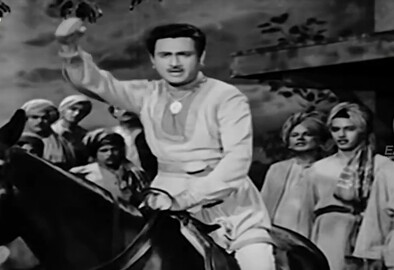
1. Andher nagri chaupat raja (Railway Platform, 1955): Lyricist: Sahir Ludhianvi. Sahir Ludhianvi is the poet who first comes to my mind when I think of songs of dissent—he wrote so many of them! This one, from Sunil Dutt’s very first film, is a relatively little-known one (compared, say, to the songs of Pyaasa), but so good. So sharply satirical, so hard-hitting: Inhein na koi fiqr na chinta/Yeh hain mahlonwaale/Inke raaj mein pad gaye humko/Apni jaan ke laale (They have no worries, no anxieties/These are those who dwell in palaces/In the reign of these people/We live in fear of our lives). The rest of the song too goes on in a similar vein, heaping scorn on all those who are corrupt, communal, greedy and selfish. When the ruler is an incompetent, of course there will be darkness throughout the realm.
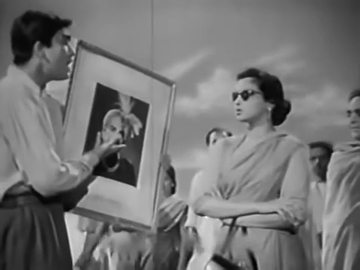
2. Sarfaroshi ki tamanna ab hamaare dil mein hai (Shaheed, 1965): Lyricist: Ram Prasad ‘Bismil’. In a very different mood from the biting sarcasm of Andher nagri chaupat raja is this classic poem from the revolutionary poet and freedom fighter Ram Prasad Bismil. Sarfaroshi ki tamanna ab hamaare dil mein hai has been used time and again, in several films including recent ones like The Legend of Bhagat Singh and Rang de Basanti—but my favourite is this one, sung by Manna Dey, Rafi and Rajendra Mehta.
This is staunchness, this is courage: the refusal to back down, no matter how powerful, how intimidating the enemy.
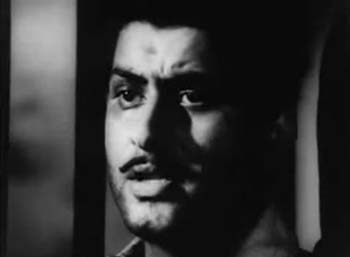
3. Humein un raahon par chalna hai (Maasoom, 1960): Lyricist: Raja Mehdi Ali Khan. Like Sarfaroshi ki tamanna, this is one of those slow, earnest songs. Here, Manmohan Krishna (who, by the way, was one of the singers—both onscreen and playback—of Andher nagri chaupat raja) plays a man whose wife dies, leaving him to look after their three children on his own. He sings this song (in the voice of Subir Sen) to comfort his children, so it’s not really a song of dissent. But it is a song of inspiration, of getting past one’s own grief and worries to be a beacon for others. Which, really, I think, is what a lot of these young people currently protesting are doing: hum hain woh diye auron ke liye jinhe toofaanon mein jalna hai (we are those lamps which must shine on through storms).
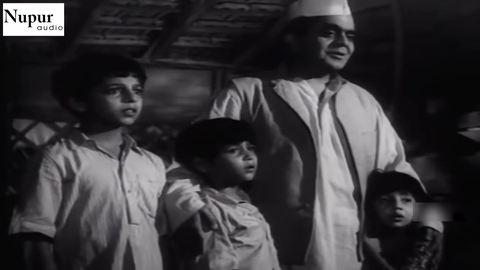
4. Takht na hoga taaj na hoga (Aaj aur Kal, 1963): Lyricist: Sahir Ludhianvi. Another song written by Sahir, and one which is actually set against a backdrop of politics being played out: a group of earnest young people (played by Sunil Dutt, Tanuja and Sudesh Kumar) lead an election campaign to oust the ruler (who, ironically enough, is the father of Tanuja’s character). Takht na hoga taaj na hoga is flamboyantly socialistic in its tone, and its refrain, of giving workers, farmers, the common people their due, is an underlining of the sort of sentiment that governed many films of the 50s and 60s.
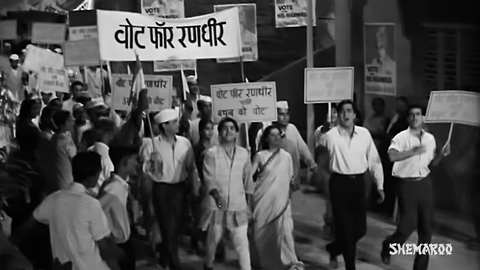
5. Nayi umar ke naye sitaaron (Nayi Umar ki Nayi Fasal, 1965): Lyricist: Neeraj. This is the film that first came to my mind when I began thinking of this post, because Nayi Umar ki Nayi Fasal was about college students, and that too students involved in politics. Not in the way of going up against the establishment the way protestors are doing across India now, but still. The film is bets-known for the unforgettable Swapn jhade phool se (kaarvaan guzar gaya ghubaar dekhte rahe), but it began with a credits song: Nayi umar ke naye sitaaron is addressed to the youth of the country, a song encouraging them to upturn the status quo, to usher in a new age…
6. Tum jo ho so ho (Biradari, 1966): Lyricist: Prem Dhawan. This is one of those songs on this list that are not outright about dissent, but which remind me of the sort of attitude I keep seeing among the many videos, placards and memes of the protestors these days. There’s a sense of not being cowed down by power or wealth; a self-confidence that allows them to call out the hypocrisy, the egoism, the arrogance and questionable moral values of those they are going up against. Irreverent, tongue-in-cheek, and oh so annoying for whoever is at the receiving end!
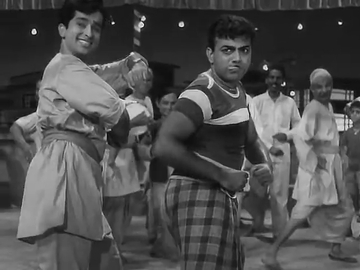
7. Kehne ki nahin baat magar ab zor se kehna hai (Pyaar Kiye Jaa, 1966): Lyricist: Rajinder Krishan. Shashi Kapoor again (and in a 1966 film which also starred Mehmood), and in a song that is very much in tone like Tum jo ho so ho: that same fearless attitude towards those who try to put one down. That ‘Behaya, sharam kar, sharam kar… tu chulloo-bhar paani mein dubki laga jaa (Shameless! Have some shame… go, take a dip in a cupped palm full of water)’ cracks me up, and one particular sequence from the song’s picturization reminds me very forcefully of what happened during the NEET protests in Bihar. When Shashi Kapoor’s character has bucketsful of water flung at him and continues to sing and dance, if anything with even more gay abandon—in a similar vein, during the protests in Patna, the police trained water cannons on protestors, who immediately turned the situation into a rain dance. So deliciously cheeky.
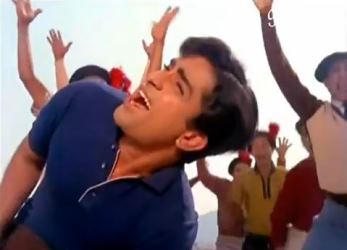
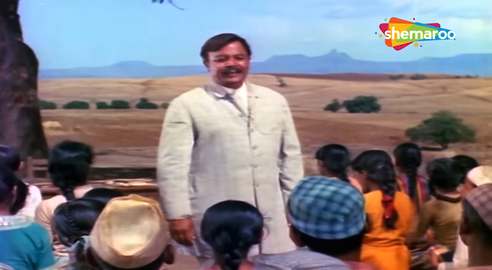
8. Insaaf ki dagar pe bachchon dikhaao chalke (Ganga Jamuna, 1961): Lyricist: Shakeel Badayuni. ‘Yeh desh hai tumhaara, neta tumhi ho kal ke’ (This country is yours, you are the leaders of tomorrow): what a profound truth, and one which I hope is finally settling into the psyche of not just the youth of India but of older generations too.
In this song, I don’t agree with the thing about uncomplainingly suffering all the torments the world may send one’s way, but everything else about the lyrics of this classic children’s song is very inspirational for both children as well as young adults. Dignity, goodwill towards one and all, justice for all: so much there to espouse.
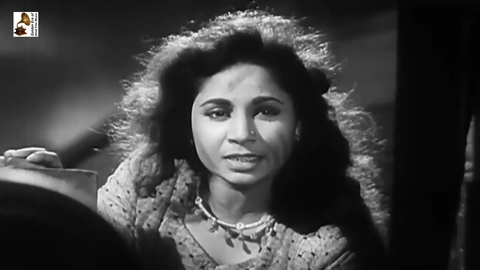
9. Ae watan ke naujawaan jaag (Baaz, 1953): Lyricist: Majrooh Sultanpuri. Geeta Bali’s fiery, feisty freedom fighter is going up against the tyrannical Portuguese colonisers in this song, but Majrooh Sultanpuri’s excellent lyrics are as relevant to the situation today as they are to the fictional one in Baaz. Saaf hai teri nazar, unke dil mein chor hai/Unmein bal hai teri bhi baazuon mein zor hai (Your gaze is clear and pure; in their hearts is evil/If they have might on their side, your arms too are powerful). So inspiring, and the combination of Geeta Dutt’s voice and OP Nayyar’s music make Ae watan ke naujawaan all that much more memorable.
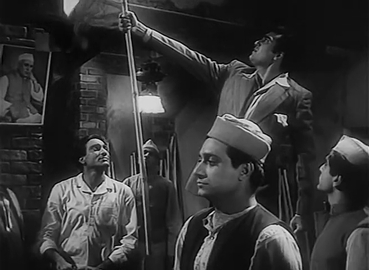
10. Naujawaanon bharat ki taqdeer (Kundan, 1955): Lyricist: Shakeel Badayuni. I began this list with a song featuring Sunil Dutt in the year he debuted; in that same year (1955) he also acted in Sohrab Modi’s adaptation of Les Miserables as an earnest young freedom-fighter. Even though it’s addressed to the young people of pre-independent India, exhorting them to take India’s future into their hands—the song is very relevant today in its emphasis on the importance of the youth in bringing about change, in freeing India from the fetters it finds itself in.
What songs would you suggest for this list? Please share!


INSANIYAT, INSAAN JAAG UTHA, ADMI AUR INSAAN SAMAJ KO BADAL DALO, MERE APNE, DHARMA PUTTA,SADHNA,PHIR SUBAH HOGI, AANDHI, HU TU TU, HAIDER, NASBANDI?, KISSA KURSI KA, ROTI KAPDA AUR MAKAAN ( Baaki kuch bacha toh mehngai maar gai and Aur nahin bas aur nahin are my favourite songs. ) , INQUILAB..
Many movies have fitting songs.
LikeLiked by 1 person
Yes, indeed. Lots of songs, lots of films.
LikeLike
Madhu, it is very nice to see you post a list in tribute to the “cockroach” protests. I’ve seen a little about these here in the U.S. (including an interview with Arundhati Roy in which she is positively ecstatic about them) and, as you may know, these sorts of uprisings are close to my own heart, too.
Unfortunately, to understand all the lyrics in the songs on your list, I still need subtitles. But I am glad for that reason that you also took the care to give English translations of some of the lyrics, in your descriptions.
I have seen Tom Daniel’s English-subtitled posting of Railway Platform (although for some reason, only his posting of the full film has subtitles, not of the songs posted separately) and I have seen Ganga Jamuna (including that song) on a subtitled DVD in the past… And speaking of a “classic children’s song” about children being the leaders of the future, etc…. There is a different classic children’s song (which, as you may know, I also linked to on Facebook) that mentions a similar idea, which is my favorite among songs that I think would fit this theme. (And as I guess you know, the lyrics this time are by Shailendra.) Actually, a friend on Facebook who is an Indian anarchist claimed that this song was anarchist, too. I would say that it is at least socialist in aspiration. Anyway, I really do love “Nanhe Mune Bache Teri” from Boot Polish!
https://www.youtube.com/watch?v=SmZPwpQao14
LikeLiked by 2 people
Richard, thank you for reading. I have been noticing that the New York Times (among, I’m sure, others) has been carrying articles on the protests, and of course the Arundhati Roy piece was a good one. We can only hope that this is only the beginning and that it will finally mean a turning of the tide…
And thank you for Nanhe-munne bachche! Such an appropriate song for this post. Perfect. :-)
LikeLiked by 2 people
You’re welcome! And, yes, hopefully, this is some indication of a turning tide. Tides might be turning globally, if we’re lucky. (We’re also seeing hints of a lot of turning in the electoral arena in the U.S. Strangely, some of this trend is being linked to a New York City mayor who is the son of Mira Nair.)
By the way, I wasn’t really thinking about Arundhati Roy’s article in the New York Times. I was thinking of an interview that she did with Amy Goodman on the longstanding Public Broadcasting show Democracy Now (also available on YouTube, where I watched it). Arundhati was positively giddy there. She seems to want to make the rounds to talk about this… I hope we hear more of her reporting about the protests, too. (For some reason, I was not all that interested in the recent memoir that she wrote, which simply struck me as her version of Mommy Dearest. It would be nice to see her get more into political journalism again.)
LikeLiked by 1 person
Oh, I missed the Arundhati Roy show. I haven’t read Mother Mary Comes to Me, either: I’ve been hearing very conflicting views about it. There are friends who’ve praised it to the skies, and there are friends (these, actually, seem to be in the majority) who say things like (I quote) “It’s navel-gazing in the extreme”. I am not particularly keen to read it anyway, because I honestly did much like The God of Small Things, but I’ve read some of her work on political topics, and completely agree with you that she should definitely do more of that.
LikeLike
I’m a little unclear about something in your last comment… Did you really much like The God of Small Things, or did you mean to type “did not much like…” I’m thinking, based on the rest of your sentence, that maybe you meant the latter?
Anyway, I actually did like The God of Small Things a lot when I read it, but that was almost 30 years ago, and I am not completely certain I would like it now – though I think I probably would, maybe just not as much.
I tried to read her second novel, The Ministry of Utmost Happiness, but I could not get very far into it. It seemed so crowded – both in terms of the long string of characters that I couldn’t keep track of and the wordy, rambling prose, which seemed to me to badly need some kind of structure (and definitely some editing down).
So, I went back to some of her political writings, which I like much more. She kind of hits people over the head with things sometimes, but I really appreciate many of her insights, and I do like reading her essays to the end.
But regarding Mother Mary Comes to Me, I think I would probably agree with the comment about “navel gazing in the extreme.” I saw a couple of interviews that she gave about that book, and it made me feel as though she was a little too caught up in talking about the effects that her mother had on her (a subject that maybe would interest some people, but certainly not everyone), and it seemed that her experience with her mother was not overall a very pleasant one, either (whatever intellectual gifts her mother may have given to her that she is grateful for and so on). That’s why I thought that it was kind of like her overintellectualized version of Mommy Dearest. :)
LikeLiked by 1 person
Yikes. :-( That was a typo, Richard. Sorry. Yes, I meant I didn’t like The God of Small Things. I suppose, too, that the book needs a reader to have some level of maturity before they can appreciate it – and I was pretty callow till well into my twenties! I wonder what I would think of it now… but I don’t have the time to go back to old books now, unless I really enjoyed them in the first place.
I guess it was because of my less-than-great experience with that first novel of hers that I never read The Ministry of Utmost Happiness either (and your mini-review in your comment doesn’t encourage me to try it either).
LikeLiked by 1 person
Just jumping in to say that The God of Small Things suffered from its hype. I like Arundhati Roy’s writing, but the same year that The God… came out, Pepita Seth published The Spirit Land, which I thought was a far superior work.
Mother Mary, again, is a mixed bag for me.
LikeLiked by 2 people
Hi, Anu. I admit that I never heard of Pepita Seth’s The Spirit Land before, but now I will have to look around for it (if one can still find it, and find it in the U.S.).
By the way, though, I looked it up briefly and noticed that it was published in 1994, while The God of Small Things was published in 1997 – so, not exactly the same year, though still around the same time, especially compared to now :)
LikeLike
I am curious, Anu: what did you think of Mother Mary? In what way is it a ‘mixed bag’? (I have heard very extreme reviews of it – I think the only person who had something balanced to say about it said that it was beautifully written – “such excellent prose” – but then “it’s all about her, not so much about her mother after all. Look at me!”
LikeLike
It is beautifully written. It does have excellent prose, but then, I would expect nothing less from Roy. Yet, it left me with a strange feeling of dissatisfaction. The book dragged in places; the expositions went on for far too long – ‘navel gazing’ is an apt phrase. After some time, it felt like misery was her constant companion growing up. I’m sure it was. Just that all that interiority got a tad bit tiring.
I would still read it… not for Roy’s political opinions, which are thinner than onion skin, but for getting how she came to be where and who she is.
LikeLiked by 1 person
Hi, Anu. Now you have said something that has made me curious… I don’t know why you would say that Arundhati Roy’s political opinions are “thinner than onion skin.” If you meant specifically her politics as expressed in this memoir, that’s something that I can’t comment on, but if you meant in general, I disagree. In fact, I feel that her political opinions are often the best reason to read her. (Not always perfect, but more often than not very insightful). I don’t think there is time (or room, in this format:) ) to engage in an extended discussion about this, so I guess I’ll stop there…
LikeLiked by 1 person
I will admit that – like Richard – I am not sure what you mean by her political opinions being thinner than onion skin, but – also like Richard – I will not pursue that here, because we could all go on and on! Maybe when we meet next. :-)
LikeLike
When I read about the news in the local newspaper here, I was happy too. I was also glad that Sonam Wangchuk could end his fast. Bless him. It is indeed a flicker of light in the darkness and I hope the dawn will be soon here. Thus, your list comes at the right time.
The songs in your list were not unknown to me, but all were not familiar. The first song that came to my mind, when I saw your list was dil ka hal sune dilwala from Shree 420 (1955). It surely is a nice song of social commentary, calling for free speech, commenting on police suppression and social divide.
The other song which comes to my mind is haal chaal thik thak hai from Mere Apne (1971)
Then there is this lesser known song of Mohd. Rafi from Chandrakanta (1956), main nahin manunga.
LikeLiked by 2 people
It is indeed a flicker of light in the darkness and I hope the dawn will be soon here.
Amen to that. Even if nothing solid happens, hopefully it will at least have made some diehard bhakts realize the truth…
I was hoping someone would post Haal-chaal theek-thaak hai! Classic song of embittered youth rising up to protest the situation. And, I had forgotten Dil ka haal sune dilwaala – yes, a very good fit for the theme.
The Chandrakanta song was new to me; thank you for that.
LikeLiked by 2 people
The first song that came to my mind when the PM’s first Instagram video surfaced, though outside your timeframe, was Salaam kijiye from Aandhi. It mentions Suchitra Sen’s character by name, but other than that, everything in the song applies to what the protesters feel: how those in authority remain deaf to the troubles of their populace until it’s time to collect votes or (as in case of the CJP protest) their position seems to be threatened. I believe the characters singing this were college students in the film – that, if correct, would make it even more apt for the situation.
Though not dissent, Humne suna tha ek hai Bharat captures the zeitgeist of the movement: a younger generation questioning why the India around them doesn’t look like the country of unity and glory they’ve been taught about. Quite a few of the newer comments on the video I’ve linked are from people visiting the song after CJP protests. If only there were more Sunil Dutts around to answer questions instead of pretending they didn’t exist. (:
LikeLiked by 2 people
I have seen Aandhi, but had completely forgotten Salaam kijiye. Thank you for this – it fits so perfectly! The sarcasm of the lyrics echo so well the tone of the Gen Z protests.
Sunil Dutt seems to have acted in several films where he acted the progressive, or the revolutionary (among others are Sadhana and Nartakee) – and Humne suna thha ek hai Bharat had also occurred to me when I was compiling this list, which is why I’m especially happy you mentioned it. Yes, indeed: if only there were more people asking questions, instead of simply shoving things under the carpet. :-(
LikeLiked by 2 people
What a timely post, Madhuji!
And not just about the student protests in India. The world is a crazy place to live in these days.
As Langston Hughes said, “Poetry is a weapon of protest”!
I am glad you started your post with Sahir Ludhianvi, because imho no one has written powerful songs of dissent like him (Jinhe naaz hai hind par, yeh mehalon, yeh takhton, yeh taajon ki duniya, cheen-o-arab hamara, meri mehboob kahin aur mila kar mujh se … so many gems!).
The other poet that comes to mind in Shailendra who literally wrote the manifesto of dissent for IPTA (tu zinda hai to zindagi ki jeet mein yakeen kar). This was recently sung by Sonu Nigam in the Bengali movie Padatik.
I also love Shakeel Badayuni’s Mohabbat Zinda Rahti Hai in Mughal-e-Azam.
Thanks for a wonderful post.
Regards,
Uday
LikeLiked by 2 people
Thank you for reading and for commenting, Udayji. I am glad you liked this post. And yes, it’s quite relevant for what’s happening around the world – democracy seems to be crumbling and falling apart everywhere. :-(
I completely agree with you: re Sahir Ludhianvi and Shailendra – definitely among the most impactful of progressive poets/lyricists in Hindi cinema. Coincidentally, I was thinking of Tu zinda hai toh zindagi ki jeet par yakeen kar just last week, when I posted this on social media:
https://www.instagram.com/p/DbFZ5ukggwL/
LikeLiked by 1 person
Wonderful! I learnt the song in my school too.
I wrote about this song (and translated a portion) here – https://framesofreference.blog/2026/05/27/optimistic-hindi-movie-songs/
Regards,
Uday
LikeLiked by 1 person
Oh, yes! I remembered you had published this post, but had forgotten that this song was part of it.
LikeLiked by 1 person
A very, very timely post. I plan to share it around as much as possible. Two suggestions:
1. Aaj Himalay Ki Choti Se (Kismet, 1943)
https://www.youtube.com/watch?v=-1JATDtdSdY
To my mind the epitome of dissent-related songs. Not least because including the song in the movie was itself an act of dissent. I’m sure you know its anti-colonial message was thinly disguised as a protest against German and Japanese aggression. For a while it even had the British colonial censors fooled. And when they realised they had been hoodwinked they set out to look for the lyricist Kavi Pradeep, who had to go underground for a while.
2. Kadam Kadam Se Dil Se Dil (Char Dil Char Rahen, 1959)
https://www.youtube.com/watch?v=hVv3Ixuj630
Clearly leftist in its orientation. Union leader Paidi Jairaj leads his comrades Raj Kapoor (Hindu), Ajit (Muslim), Shammi Kapoor (Christian), and others to construct a new road that will undermine the local capitalist baddies’ monopoly over transport in that area or some such thing (it’s been decades since I saw the movie on Doordarshan).
Bonus Fact #1: Both songs feature music by the strongly leftist Anil Biswas.
Bonus Fact #2: Did I ever tell you Anil Biswas and my maternal grandfather were really close friends? They traced their roots to the same province (Barisal, now in Bangladesh), were colleagues in AIR, and were both obsessed with music. I have memories of him sitting me on his lap and goading me into singing.
LikeLiked by 2 people
I am really glad you posted Aaj Himalaya ki choti se – I love the sass of that song, and knew some of the background there (though I hadn’t known that Kavi Pradeep actually had to go underground as a result). That takes some guts.
I hadn’t known about your family links with Anil Biswas. My goodness, Abhik, you were hobnobbing with Bollywood aristocracy as a child!
LikeLike
Such a timely post, Madhu! I’m so proud of Gen-Z and all the cockroaches who dared stand up for their rights. As Harvey says, a small ray of light, a tiny chink in the 56″ armour… keeping fingers crossed for the real ‘achhe din‘ not just in India, but here, as well.
And, of course, Sahir is the poet to go to for dissent. The two songs that came to mind were both posted by Harvey – Dil ka haal sune dilwaala and Haal chaal theek thaak hai. In recent years, Azaadi (by MC Altaf, riffing on the original by rapper Divine) from Gully Boy is a perfect protest anthem.
Saathi re, bhai re, qadam qadam se dil se dil mila rahe hain hum from Char Dil Char Raahein, talks about how being united can help them fight corruption, create a world without exploitation, etc. Sahir, of course.
Would Woh subah kabhi to aayegi from Phir Subah Hogi fit? Or even Aaj Himaalay ki choti se from Kismet? I see Apni aazaadi ko hum hargiz mita sakte nahin as a protest anthem too. What do you think?
And let me end with Cheeno-Arab hamaara, also from Phir Subah Hogi, (Sahir, once more) – such a satirical take on the state of our nation, but which ends with extolling our youth:
Patla hai haal yeh apna lekin lahu yeh jaada
Faulad se bana hai har naujawan hamara
Mil jhulke is watan ko aisa sajaayenge hum
Hairat se munh takega saara jahaan hamara
LikeLiked by 3 people
Such wonderful songs, Anu, each one of them! I came online just now and discovered that both yours and Abhik’s comments had gone into moderation, and both of you had mentioned not just Aaj Himalaya ki choti se but also the song from Chaar Dil Chaar Raahein! Both immensely appropriate songs. :-)
I believe Azaadi has been playing quite a bit during the protests. Quite the anthem, I heard, though since I don’t watch reels etc, I am not sure.
Oh, yes – Cheen-o-Arab hamaara! So totally fits the theme (I also thought of Jinhe naaz hai Hind pe, but I think that has a narrower focus. Metaphorically, though (I suppose), one could say that it can be extended to other aspects of life in a country so full of despair…
LikeLike
It’s a different kind of post from your pen but highly admirable. You have very skilfully linked the songs to the recent happenings in India. Kudos to you Madhulikaji.Very insightful post indeed.
LikeLiked by 2 people
Thank you, Jitendraji. I have – several years ago, during the time of the Shaheen Bagh protests and the Delhi riots – done similar song lists.
LikeLiked by 2 people
Recent happenings in India is akin to a glimpse of faint light in a deep dark tunnel. By the way, let me share below a song on dissent theme:
Samaj Ko Badal Dalo: https://www.youtube.com/watch?v=5cs9Oh6znjw
I don’t know whether the song below qualifies this topic:
Vande Mataram: https://www.youtube.com/watch?v=xj1Iy4nRMkc
LikeLiked by 1 person
Amen to that – I do hope this faint light at the end of a very dark tunnel grows! Thank you for Samaj ko badal daalo; fits perfectly. As for Vande mataram: I am conflicted about that. Beautiful song, fabulously sung, and yes, it is about dissent. My only problem is with the source novel of Anand Math: so frightfully communal, the very thought of it makes me cringe.
LikeLiked by 1 person
I am in absolute agreement with you on this.
LikeLiked by 2 people
A timely post. A song that came to my mind was from a Marathi film, धुमधडाका, which was a remake of Pyar Kiye Ja.
It’s on the same situation as Kehne hi nahin baat,
I couldn’t get the video on YouTube.
I think, from Samaj ko badal daalo
This fits the theme?
and
Suno re bhaiya from paigham
:-)
LikeLiked by 1 person
Dharti maa ka maan hamaara was a new song for me! Yes, very appropriate for this post. As is Suno re bhaiya – also fits perfectly (and I should have remembered that, given that I’ve seen Paigham, and not too long back).
LikeLike
nice topic Madulika. I know you are not too fond of Raj Kapoor, but he has few songs that may qualify in this list.
hothon pe sacchai rehti hai, jahan dil mein safai rehti hai
aa ab laut chalein.
LikeLiked by 1 person
I may not be very fond of Raj Kapoor, but I generally like the songs in his films. All the ones you’ve suggested are very good, and there are others too, which I like a lot, and which some other readers have mentioned in their comments above: Cheen-o-Arab hamaara, Aasmaan pe hai khuda aur zameen pe hum, Woh subaah kabhi toh aayegi, and Dil ka haal sune dilwaala among them.
LikeLiked by 2 people