
After a long, long time, a review of an Alfred Hitchcock film. Hitch has been one of my favourite directors ever since I (then aged twelve) first watched The Lady Vanishes. In the first few years of blogging, I ended up reviewing most of my favourite Hitch films from before 1970: The Thirty-Nine Steps, Rear Window, The Trouble With Harry, The Man Who Knew Too Much, Spellbound, Lifeboat… and others. But it’s been a while, and this film has been lying among the bookmarks on my browser, waiting to be watched, for quite a while now.
The aptly-named Stage Fright is set in the world of theatre, where Eve Gill (a very young Jane Wyman) is an aspiring actress. She has still not quite managed to make it into any productions, really, but she is hopeful. When the story begins, though, Eve is not acting or rehearsing: she’s busy helping a friend of hers who’s in trouble. Jonathan Cooper (Richard Todd) is likely to get implicated in a murder, and Eve is driving him to (hopefully) safety.
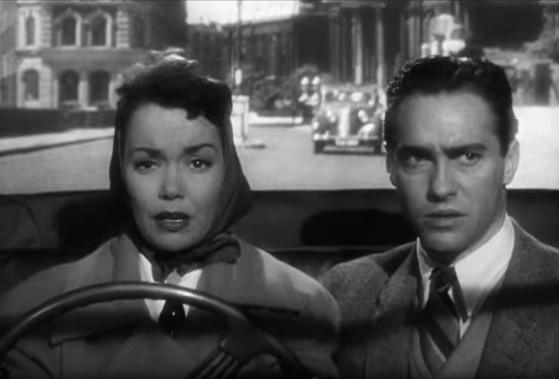
Jonathan tells Eve everything that had happened. He has been having an affair with the hugely popular, immensely successful—and much-married—Charlotte Inwood (Marlene Dietrich), and earlier today, she came hurrying to his flat, frazzled because in a fit of anger, following on the heels of an argument, she had murdered her husband.
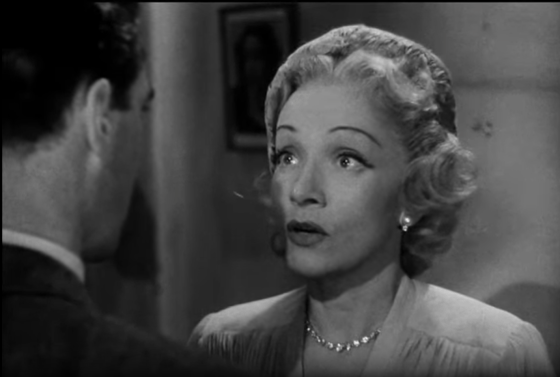
She was in a tizzy. Jonathan tried to calm her down, but Charlotte—taking off her coat—showed him the reason she was so terrified: there was blood splashed all across the skirt. This is the sartorial equivalent of being caught red-handed; Charlotte was obviously distressed.
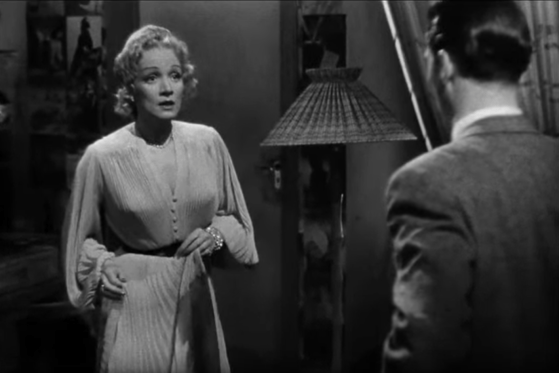
She had one idea, though: Jonathan could go to her home, and fetch her a dress from her wardrobe. When he voiced concerns about him being seen sneaking about the Inwood home, Charlotte assured him that none of the servants were at home. Nobody saw her, nobody would see him.
Jonathan went, therefore, taking the key Charlotte gave him. He entered the house, smashed a window, messed up the desk—all of it, of course, to make it appear as if the body lying at one end of the room was the result of an intrusion/burglary gone wrong. He picked out a dress.
And then, a woman screamed. Charlotte’s maid Nellie Goode (Kay Walsh) had unexpectedly come home, and she’d seen Jonathan. He ran, hoping she hadn’t seen his face well enough.
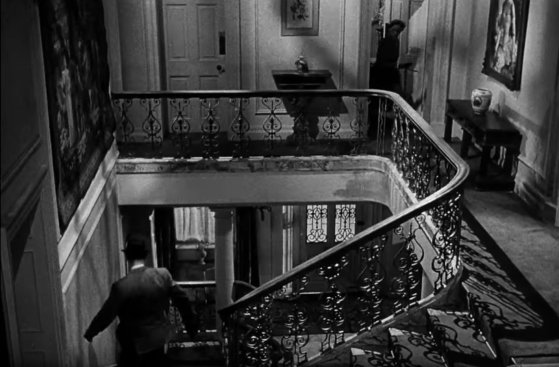
Jonathan went back to his home and gave the dress to Charlotte, who quickly changed and left for the theatre (because ‘the show must go on’). Jonathan took her bloodied dress, balled it up and was about to leave when the cops arrived. Jonathan managed to give them the slip and actually [so audacious] steal their car and drive away in it—but the game is up.
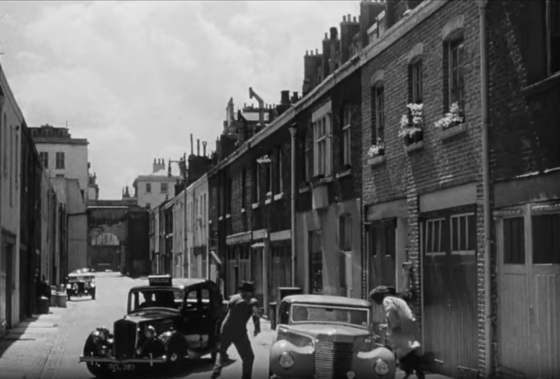
The police know who he is, and they suspect him. Even though he’s managed to make his way to his dear friend Eve (who is actually in love with Jonathan, very deeply so), he needs help. [He has come to Eve, I suspect, because he knows she loves him and will do anything to help him out of the jam he’s got himself into].
Eve takes Jonathan to her father, Commodore Gill (Alastair Sim), who has a place by the seaside and who seems to spend part of his retired life indulging in the occasional bit of smuggling. Eve hopes that her father will hide Jonathan for a few days and might also—given his familiarity with the Channel and the French coast—take Jonathan across and out of harm’s way.
Commodore Gill is sceptical of it all, and has a chat with Eve while Jonathan dozes, rather deeply, on the settee. It is while he’s sleeping that Mr Gill, taking a closer look at the bloodstained dress, tells Eve the bald truth: the blood didn’t splash onto the dress, it was deliberately left there. Charlotte Inwood is having Jonathan on, framing him for the crime she committed.
But Jonathan, when Eve wakes him and confronts him with this fact, refuses to believe it. In fact, he gets so angry, he yanks the dress away from Commodore Gill and pitches it into the fireplace, where of course it immediately catches fire. He makes it amply clear that he will not have Eve or her father maligning Charlotte.
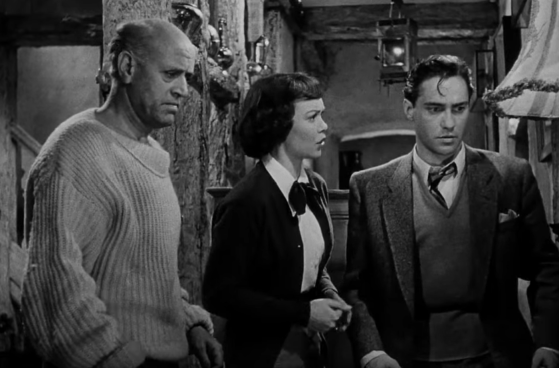
Jonathan goes up to the room he’s going to be sleeping in, and Eve and her father have a hushed but heated (at least on Eve’s part) conversation about how Charlotte has probably framed poor Jonathan. Eve is all for going and confronting the woman, but her father dissuades her. With the evidence—the dress—destroyed, Eve has nothing to back up her accusation with. Charlotte will simply phone the police and hand Eve over to them.
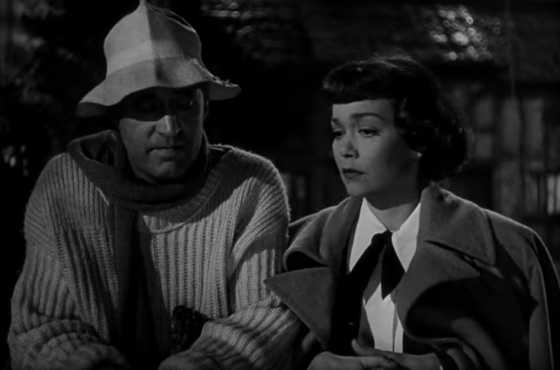
Eve, however, is too much in love with Jonathan to let matters lie. The next morning, while her father and Jonathan are still asleep, Eve slips out and goes off to London, and to Charlotte Inwood’s house. She is stopped even before she can try entering: the police have cordoned off the whole place, and aren’t letting anyone in.
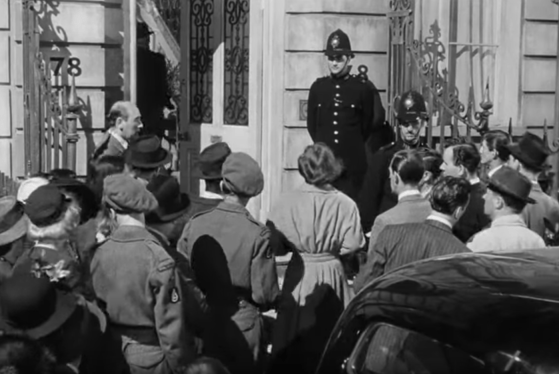
Eve watches, and when she sees the investigating officer (Michael Wilding) emerge and talk to one of his men before setting off down the road on foot—she follows him, to a pub where he sits down for a quick lunch. Eve manages to get talking to him; the man introduces himself as Wilfred Smith. He’s a very pleasant sort, and Eve, perhaps to her own surprise, warms to him, enough to smile, to chuckle, even to let him drive her home. Enough, too, to agree to meet him again the next day.


But while at the pub, Eve and Smith had seen someone connected to the Inwood murder case: Charlotte’s maid, Nellie Goode, who is a regular at the pub and spends her time regaling the barmaid and whoever else cares to listen with all that happened, how she is a star witness, and so on.
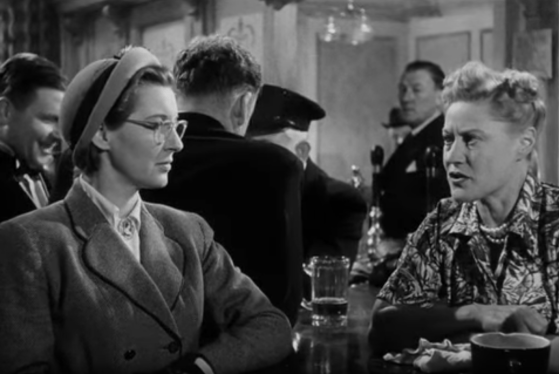
That has given Eve an idea, and she now goes to Nellie Goode, posing as a journalist out for a story. She bribes Nellie, who agrees to let Eve pretend to be her cousin, Doris. Doris, who’s had to come in because Nellie has fallen ill. Nellie, though greedy enough to snap up a bribe for something like this, is also suspicious.
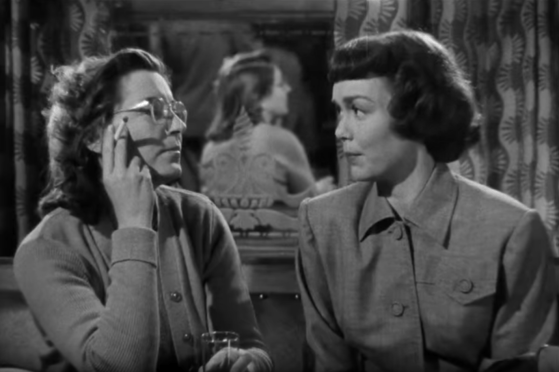
Anyway, ‘Doris’, shabbily but sensibly dressed, minus make-up and with a Cockney accent, turns up at Charlotte’s. Charlotte has already been told about her, but at the moment has little to say to Eve/Doris. She’s busy chatting with a lover (Eve is aghast and affronted on Jonathan’s behalf: this woman has been cheating on him!), and this man, Freddie Williams (Hector MacGregor) is Charlotte’s confidant as she tells him that they can now be together…
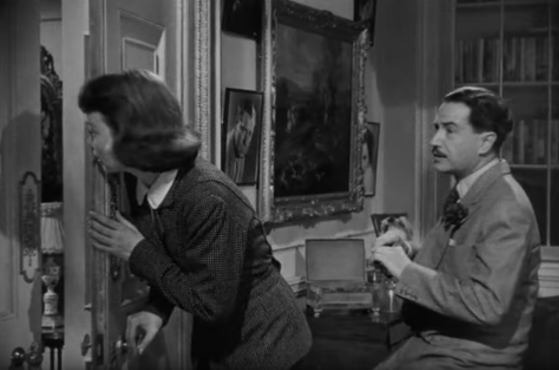
Both Freddie as well as Eve beat a hasty retreat when Smith arrives: Freddie because Charlotte’s reputation should remain untainted, Eve because she’d rather not have Smith see her as Doris. Both of them listen from behind an ajar door as Charlotte fobs off the police.
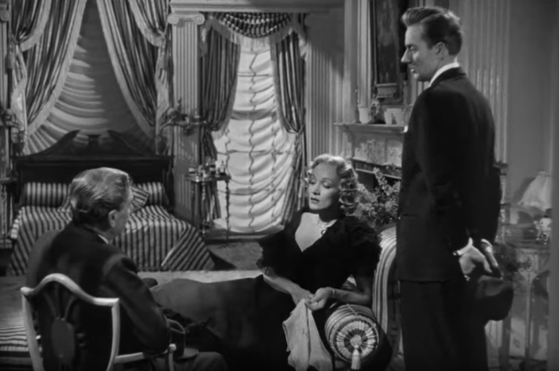
And thus the stage (pun intended) is set. Eve is masquerading as maid (and dresser) for Charlotte. The bloodstained dress is gone forever. But will Eve be able to unearth any other evidence that can help save Jonathan from the gallows? And what of Eve’s growing friendship with Smith: what happens when he realizes that Eve is Charlotte Inwood’s maid/dresser? What happens when Eve realizes that she doesn’t actually love Jonathan any more, because she’s fallen in love with someone else?
What I liked about this film:
Actually, everything. The story and its treatment are classic Hitchcock: taut, fast-paced, thoroughly engrossing. There’s the suspense: how will Eve and Commodore Gill (who comes down to London and plays an important part in much that subsequently happens) manage to alert the police to the fact that it’s Charlotte, not Jonathan, who is the real murderer. And of course the (slightly Hindi film-like?) suspense of the assumed identity being hidden from the beloved: the tension between Eve and Smith, because though they fall in love, she cannot tell him what she’s up to.
Then, the cast. Each of the main characters is excellent. Jane Wyman and Michael Wilding as Eve and Smith make for an adorable (yes, not a phrase I use lightly, but so apt in this case!) pair, whom I was rooting for from the first time they meet in the pub. There’s a sweet wholesomeness to the two characters that these two actors really manage to nail.
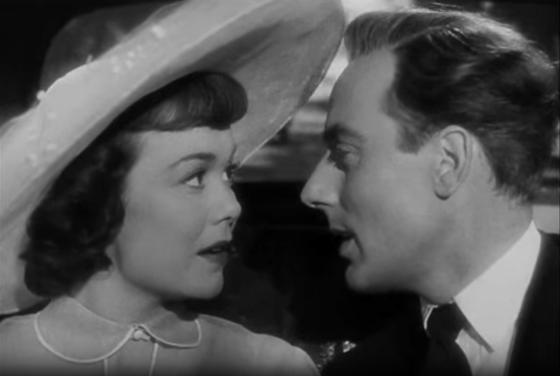
Richard Todd, though he has a relatively smaller role (he more or less vanishes from the film for the major chunk of it, only returning to the scene near the climax), is very good in it—especially near the end, where his acting is superb.
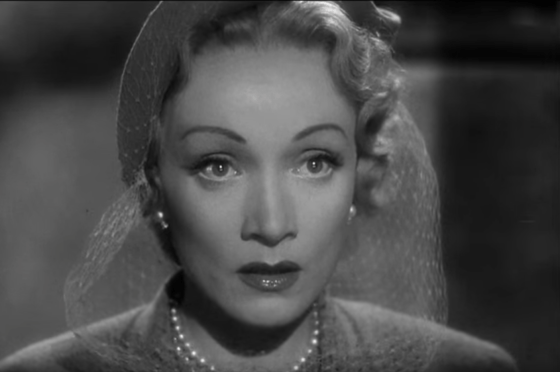
And Marlene Dietrich. Wow. Charlotte Inwood’s superciliousness, calm self-confidence—and yet, that vulnerability, that insecurity which surfaces now and then: she succeeds in portraying it all so well, and mostly just through her expressions. What she says isn’t always as important as what her eyes say.
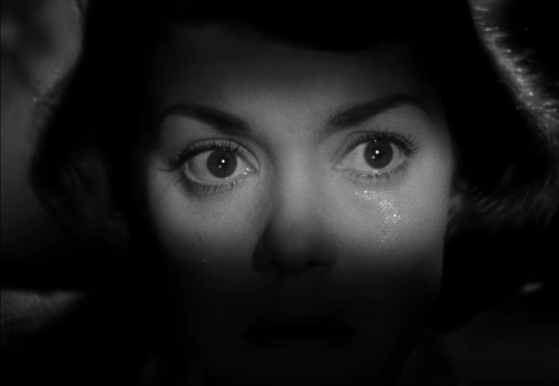
That, by the way, would probably describe a good bit of Jane Wyman’s acting, too, and Hitchcock’s use of tight close-ups in the climax to heighten the tension also lays emphasis on that. The eyes say it all.
Plus, the twist at the end, which I really hadn’t seen coming. Brilliant.
If you like Hitchcock’s work and haven’t seen Stage Fright yet, do watch. There’s a version here.


This is one of my favourite Hitchcock films, and I can’t think why I hadn’t reviewed it. Your brilliant review brought every scene back to mind. Time for a rewatch, I think.
LikeLike
I would love to read your review of this one, Anu! *hint, hint*.
LikeLike
:)
LikeLiked by 1 person
When the movie began, my first thought was, “Ah, a classic Hitchcock.” I kept waiting for the inevitable twist, because all the familiar ingredients were there.
Man on the run? Check.
Pretty woman trying to save him? Check.
Femme fatale? Check.
Bespectacled intelligent woman? Check.
A dramatic confrontation with the villain? Check.
Watching it also reminded me how, in his later films, Hitchcock often merged the femme fatale and the virtuous heroine into a single, more complex character.
When Eve fell in love with Smith, I thought, “Oh, that leaves Jonathan free for another role”. The only thing that disappointed me was what I think was an unfair use of a flashback to deliver the twist. It felt like Hitchcock was holding back information from the audience rather than simply misdirecting us, which struck me as cheating a little. Even so, I enjoyed the film.
LikeLiked by 1 person
LoL! Yes, indeed, there were all those very common Hitchcock film tropes – not to mention Hitch himself appearing onscreen in a very brief cameo. :-) I didn’t really mind the twist, but I can see why some viewers might regard it as cheating.
LikeLike
Nice review, Madhuji.
Stage Fright is one of the Hitchcock movies that I have not seen. Its definitely on my watch list now.
Regards,
Uday
LikeLiked by 1 person
I hope you get to watch it soon, Udayji. I look forward to your take on it.
LikeLike
Great review
LikeLike
Thank you.
LikeLike