
My daughter, now nearing thirteen, has suddenly discovered the horror genre. She’s still too young to watch, but she’s been hearing about vampire movies and zombie movies and more. I have been asked which horror films frightened me the most (given that horror isn’t a genre I like watching much, I had little to say). And I have been asked whether I’ve seen this one, or that one. Have I seen, for instance, Dracula?
Which Dracula, I asked, since there are plenty of versions. She didn’t know, of course, of any of that: all she wanted to know was if she could watch Dracula.
So I set out to find out—by watching this version, which I had seen praised earlier on other blogs. Produced by the British cinema producer, Hammer Film Productions (who made horror their defining genre), Dracula—released in the US as Horror of Dracula—was the first of a series of nine films about the vampire count (played by Christopher Lee in seven of the films).
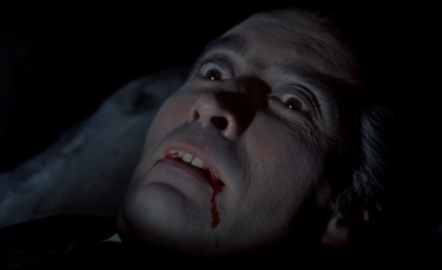
The story begins at Count Dracula’s castle near Klausenburg, where a man named Jonathan Harker (John Van Eyssen) has just arrived. The place is quite deserted, but Harker makes his way inside, to find a meal laid out for him at a long table. Beside the covered dishes is a note from Dracula, welcoming Harker (who has come as librarian, to organize the library at the castle) and apologizing for Dracula’s inability to welcome his guest personally. He will be there in the evening, and in the meantime, Harker should make himself comfortable.
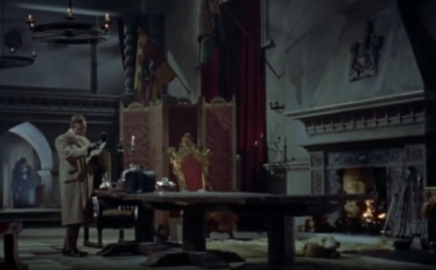
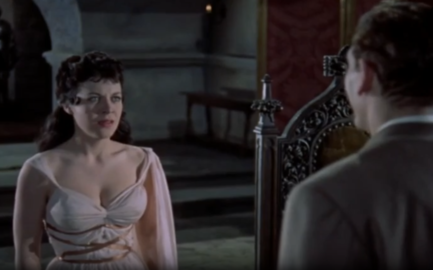
Harker has barely sat down at the table when he realizes he’s not alone. A woman (Valerie Gaunt, dressed in something that would’ve not been out of place in ancient Rome, I think) has come into the dining hall, and seems very distressed. She is only just about beginning to beg Harker for help when Dracula himself arrives, looking most sinister. The woman screams and races off, leaving Harker most bewildered.
Dracula greets Harker, shows him to his room, and (somewhat later) admires the photo Harker places on the desk, of Harker’s fiancée Lucy (Carol Marsh).
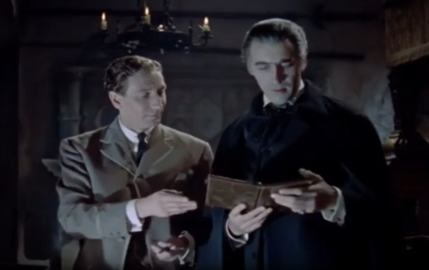
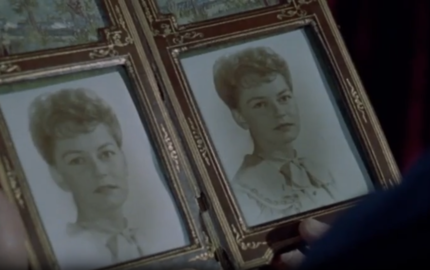
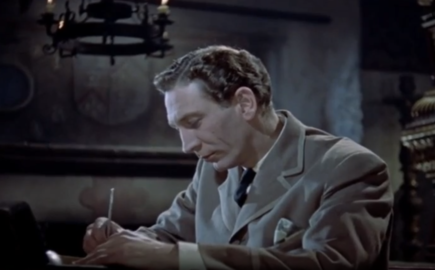
Once Dracula—polite and gentlemanly throughout—has finally left the room (and quietly locked Harker in), Harker opens his diary and starts writing in it. From this, we discover that Harker is no librarian at all; he is a vampire-hunter, and he has come to Dracula’s castle to put an end to Dracula’s evil reign of terror.
But before he can get down to destroying Dracula, Harker must deal with another problem. When he finally finds that the door to his room is open, Harker ventures out and goes downstairs. Here, he finds the mysterious woman again, and she begins weeping and begging him to rescue her, because Dracula has imprisoned her here, and she is so miserable, etc etc. Harker is suitably moved, and promises to help.
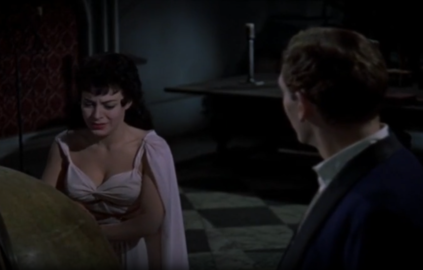
The woman is so affected, she clings to Harker… and then:
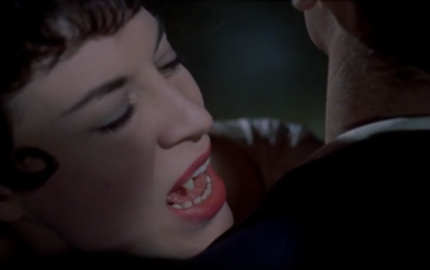
Before Harker can figure out what’s happening, Dracula has burst onto the scene and snatched the woman away from Harker. She’s already sunk her fangs into Harker’s neck, so Harker is actually now infected. However, because he is also a committed vampire-hunter, he decides to leave clues. Back in his room, he takes out his diary and recounts what has happened to him.
Which is just as well, because Harker’s (in any case doomed) existence soon ends. When he goes searching for the vampire woman, he finds her lying in an open coffin in part of the castle. Harker has come equipped with stakes and hammer; he drives a stake through her heart, she screeches and dies, leaving behind a withered old shell.
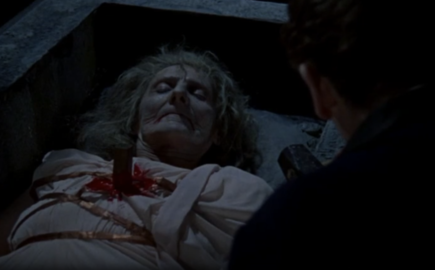
But her screech has woken up Dracula, who’s been dozing in another coffin nearby [very remiss of Harker not to have noticed]. And that, to put it bluntly, is that for Harker.
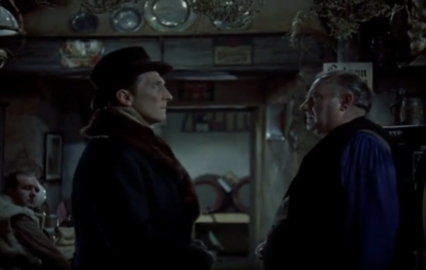
Some time later, the actual hero of this story, Dr Van Helsing (Peter Cushing) arrives in Klausenburg, on the heels of his missing assistant. At an inn, he sees bunches of garlic bulbs and garlic flowers hanging everywhere, but the inn-keeper (George Woodbridge?) refuses to accept that he, or anyone, in the vicinity is scared of anything. And no, they know nothing of Harker or what happened to him.
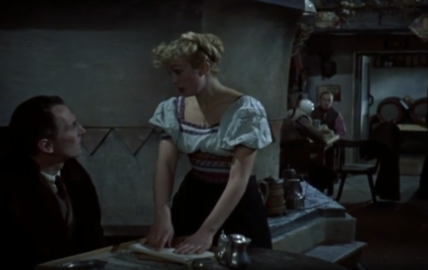
A waitress named Inga (Barbara Archer) whom Van Helsing asks (in the inn-keeper’s presence) denies any knowledge. But when she is out of sight and earshot of the inn-keeper, she slides Harker’s diary under Dr Helsing’s hand. She whispers that the diary had been found lying outside the castle.
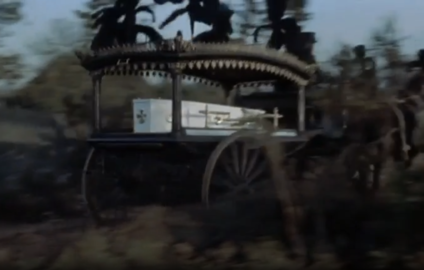
Helsing reads it, of course, and having read it, sets off for the castle—where he arrives just in time to see a coach thundering off, carrying a white coffin.
Helsing wanders about the castle, finds a now-fanged and ashen undead Harker lying in a coffin, and puts a stake through his heart.
He has also discovered the photo of Harker’s fiancée Lucy, now ripped. Helsing therefore goes to visit Lucy, to break the news of Harker’s death.
Lucy lives with her brother, Arthur Holmwood (Michael Gough) and his wife, Mina (Melissa Stribling). When Helsing comes to visit, they tell him that Lucy is unwell, and this dreadful news he’s brought (though he doesn’t tell them exactly how Harker has died) can be disastrous. They will break it to her in good time. As of now, both Arthur and Mina are a little abrupt with Helsing [I suppose I would be, too; he’s not being too forthcoming, and given that Harker died while on an assignment seemingly on Helsing’s behalf…].
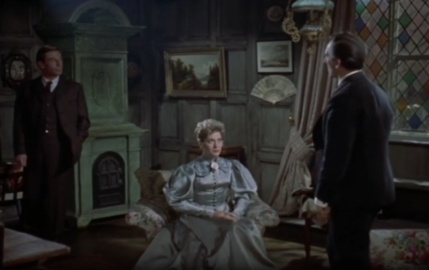
When Helsing’s taken his leave and gone, Arthur and Mina go to check on poor, frail Lucy, who’s been ailing all these past days, and who is simply waiting to hear news of her beloved Jonathan. They reassure her, kiss her goodnight, and leave her room.
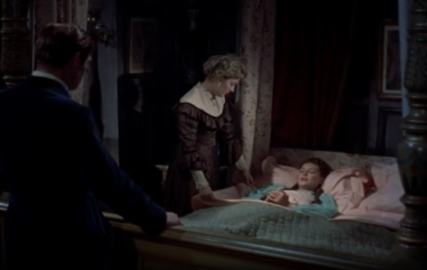
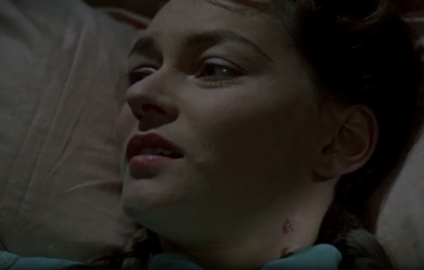
And as soon as they’re gone, Lucy leaps out of bed and checks that the door is closed and they’re well and truly gone. She then opens the French windows and, having taken off the crucifix that’s around her neck, resting on her night-dress, she lies down in bed. There’s an expectant look on her face as she waits. And there are two wounds, fang marks, on her neck…
What I liked about this film:
The general entertainment value of the film, which was directed by Terence Fisher. While Dracula won the ‘Best Horror Film’ award in The Guardian’s list of The Greatest Films of All Time in 2010, I have to admit I didn’t find this so very frightening; in fact, given how graphic (and even outright spooky) cinema would get within the next couple of decades, Dracula is downright tame. But it’s got an interesting enough story, it is creepy in places, and there are occasional surprises. Not ‘jump scares’, as my daughter demands, but yes, unexpected stuff.
And, Christopher Lee as Dracula. He says very little, but there is a menace in his expressions and his body language (that black cloak spreading like a crow’s wings behind him adds to the effect) that really defines the character. As also the sensuality: even as you see Lucy taking off her crucifix, opening the French windows, and lying down on her bed, you can’t help but see the similarity to a woman eagerly awaiting a lover—even her expression, full of anticipation, says it. And when Dracula comes to her, lowering his mouth to her neck, there is something creepily sensual about the whole thing. British journalist and historian Tim Stanley described it very well: “Lee’s sensuality was subversive in that it hinted that women might quite like having their neck chewed on by a stud”!
What I didn’t like (Spoilers ahead):
Occasional gaps. For instance, there’s a little girl named Tania (Janina Faye), daughter of the Holmwoods’ housekeeper, Gerda. Even after Van Helsing has realized that Lucy is now one of the undead and is roaming the grounds, he does not seem to find it important to tell everybody at the Holmwood household (especially a child!) to stay indoors, and not go traipsing about the grounds.
Then, in a similar lapse on the part of Van Helsing (who, given his long and intense study of vampires, their attributes and what they fear, should’ve known better): when Mina Holmwood has first been bitten and is lying in her room, Helsing and Arthur Holmwood roam the grounds, trying to make sure Dracula doesn’t come anywhere near. But Mina’s bedroom is left unprotected. Not a single string of garlic, no crucifix, nothing.
Spoilers end.
Comparisons, comparisons:
And, of course, as is the case when I watch a film for which I’ve read the source story, a comparison. In this instance, it’s going to be short, because the film actually draws only a brief inspiration from Bram Stoker’s original novel (which I recently reviewed, here). Yes, some of the character names are the same, but their relationships are different. In the novel, for example, Jonathan Harker (who doesn’t die, after all, but joins Van Helsing, along with several others, in ending the dark reign of Dracula) is engaged to marry Mina. Lucy is Mina’s best friend, and her (Lucy’s) fiancé is Arthur Holmwood.
Then, the novel is far more complex, with much more intricacy of plot and further threads (for instance, the novel completely leaves out the element of the lunatic asylum and how Dracula preys on Mina through the means of an inmate there).
Despite its lack of resemblance to the book, this was a fun watch. Not super-scary, but still good.

