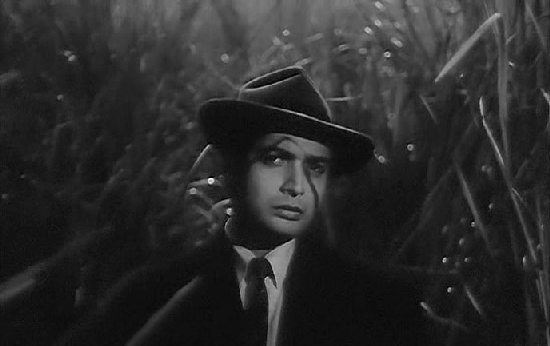
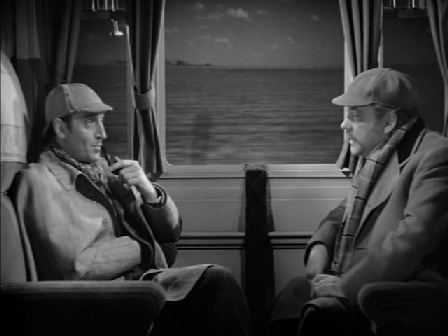
Der Tiger von Eschnapur (1959)

… and its sequel, Das Indische Grabmal, also 1959.

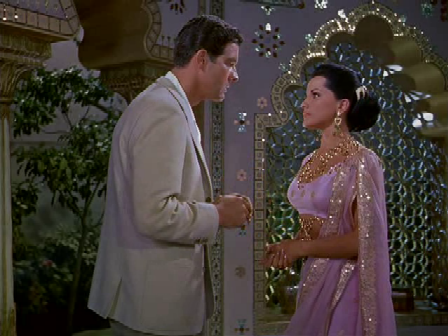
Fritz Lang made the visually stunning Metropolis in 1927. Over thirty years later, freed from the constraints of black and white and silence, he made two films, which are together known as ‘Fritz Lang’s Indian epic’. The second film was Das Indische Grabmal (‘The Indian Tomb’); the first was this one, Der Tiger von Eschnapur, or ‘The Tiger of Eschnapur’.

The story is basically the same as that of a film Lang had made even further back than Metropolis; in 1921, he had made Das Indische Grabmal, based on a book by his wife Thea von Harbou (who, as you’d recall, also wrote Metropolis). In the 1950s, Lang remade Das Indische Grabmal, this time cutting it into two parts. Both Der Tiger von Eschnapur and Das Indische Grabmal were released in 1959, and have been much acclaimed ever since.

Continue reading

Metropolis (1927)

As Samir pointed out in a comment on my last post, Pyaasa was one of the films (in fact, the only Hindi film) to find a place on Time Magazine’s all-time 100 best films list. That’s something Pyaasa shares in common with this film. Metropolis, a silent film made in Germany thirty years before Pyaasa, is also on the list. It was directed by Fritz Lang, who co-wrote the screenplay along with his wife Thea von Harbou. The result is a film like none other.

Continue reading

Some thoughts on the songs of Pyaasa

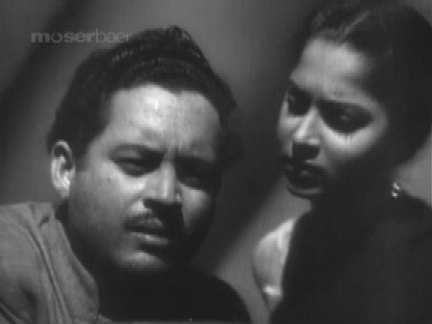
Why not begin, I thought, where I left off in my last post? The last song I listed in my post on my ten favourite Waheeda Rehman songs was Jaane kya tune kahi, from Pyaasa. Interestingly, this was also the first song in the film. It’s a film I’ve seen a few times – always with increasing appreciation, as I begin to see more nuances, more things to admire about it. But do I really have anything new to say about Pyaasa that hasn’t been said before?

Continue reading

Ten of my favourite Waheeda Rehman songs

What made Bees Saal Baad such a good watch was its music, its fairly good suspense – and its lovely heroine.
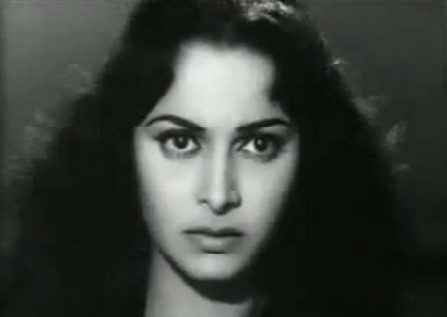
Waheeda Rehman had it all: an immense amount of talent, a rare beauty, a grace and dignity that few possess – and she was a superb dancer. What’s more, as I discovered in a TV interview a couple of years back, she’s also very modest. “When I was a girl, my siblings would call me the ‘ugly duckling’”, she said. A flash of that trademark smile, and she added, “The camera was very kind to me.” As fellow blogger Sabrina Mathew remarked when I recounted that on her post, “I want that camera!”

Continue reading

Short Story in the Brunch Quarterly

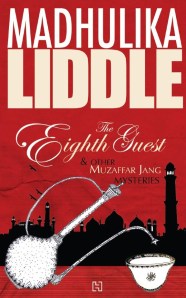
Although I have been busy (winding up the writing of the second Muzaffar Jang novel, finalising the cover and final text of the first set of Muzaffar Jang stories, and beginning work on the second set of Muzaffar Jang – as you can see, Muzaffar Jang more or less rules my life), I have also been doing other writing. An example of this has just been published, in the Hindustan Times Brunch Quarterly, July-September 2011 issue.

Though most people know me as the creator of Muzaffar Jang, the Mughal detective, here I’ve ventured into territory I’ve never traversed before. The editor at the Brunch Quarterly said, “Could you please write another historical detective story for us?”, but since the word limit was 3,000 – a little difficult to fit detection into, at least for me – I decided to make this a somewhat different story. No sleuthing. No Mughal India. But, yes; it’s still not contemporary – it’s set in the Calcutta of the very late 19th century, and it involves, if not a crime, at least something not very nice.

An excerpt from the story, which is named Mangoes and Indigo:

Oscar Leadbetter, after two months on board ship, followed by a cross-country journey from Bombay to Calcutta, was ushered into his cousin’s presence by a turbaned servant. The man, his white muslin jama swishing about pyjama-clad knees, bowed out. Oscar stood before the vast mango-wood desk behind which his cousin sat. Stephen’s drooping moustache and thinning hair were blond, his icy blue eyes the gift of some long-ago Nordic ancestor. He turned that frosty gaze on Oscar.

‘I have had to get rid of my last secretary to accommodate you,’ he said. There had been no invitation for Oscar to sit, no ‘Koi hai?!’ yelled to a servant for whisky.

Oscar murmured something about trying his best, and was treated to a cold stare before Stephen began listing his duties. They were many, and varied. Oscar would receive and segregate correspondence.  He would write suitable responses. He would keep the accounts for the house. He would be in charge of making large purchases – not the meat and vegetables, or the dhobi’s lye, but the substantial ones. Furniture, for instance, or mattresses.

‘Do you expect them to wear out every few months?’ Oscar asked.

Note: Although you can read Hindustan Times online, Brunch Quarterly is in the form of a magazine, available at most large newsstands. Pick up a copy and read for yourself!

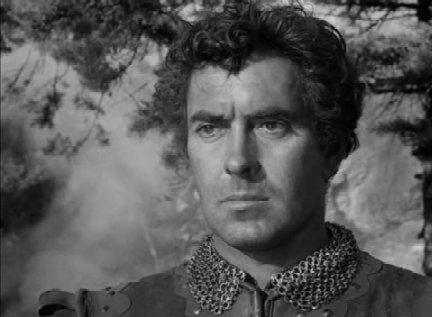
 

Bees Saal Baad (1962)

Several people who read my last post – which, as I’d mentioned, was an adaptation of a suspense novel, and in turn was remade in another language – guessed what this post would be all about. You were all kind enough to not let the cat out of the bag, but I guess you all got it right. The Hound of the Baskervilles, made in 1939 with Basil Rathbone as Sherlock Holmes, was remade in Hindi 23 years later, as Biswajit’s first Hindi film, Bees Saal Baad.

Continue reading

The Hound of the Baskervilles (1939)

My last two posts were related in a way common in cinema: the first was a review of a film based on a book, and that was followed by a review of a film that was a remake – in another language – of that film. So here’s the first of another duo of reviews, along the same lines. This film too was based on a book, and engendered in its turn a remake. And, to further keep up the link with the previous post, this one is suspense too.

Continue reading

Gumnaam (1965)

For anybody who’s been following my idea of ‘linked posts’ – each post connected to the one before, and to the one after – this probably comes as no surprise. And Then There Were None was based on Agatha Christie’s highly popular novel and play; Gumnaam is, in turn, an adaptation of And Then There Were None. Not a completely faithful adaptation, but a vastly entertaining one, as you’ll see if you scroll through the comments on my And Then There Were None post: most of my readers, even if they’ve not seen the Hollywood film, have had something to say about Gumnaam.

Continue reading

And Then There Were None (1945)

Since The Train was, all said and done (though I’m not convinced about it) a suspense film, I decided to stick to that genre for this post as well. And Then There Were None is a classic suspense film, based on Agatha Christie’s book of the same name. Christie’s book (originally titled Ten Little Niggers) is supposed to be the best-selling book of all time – 100 million copies sold to date, and with several cinematic adaptations as well.

Continue reading

The Train (1970)

While, in the world of Hindi films, songs are often sung on trains, alas – trains too are occasionally dangerous places to be in. And I’m not simply talking about a train in which a heartbroken and lonely hero or heroine is travelling [such trains invariably have frightful accidents in which the hero(ine) is about the only person left alive and whole, though he/she has lost his/her memory, leading to interesting complications].

Continue reading