Shaheed (1948)

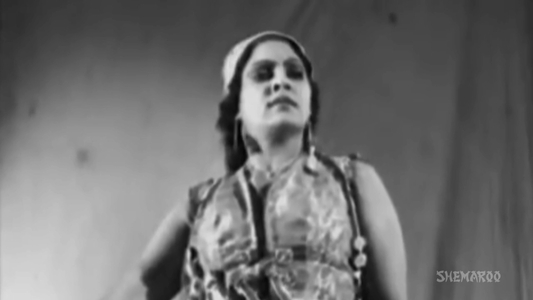
RIP, Kamini Kaushal. Ms Kaushal, probably the oldest of Hindi cinema stars still living, passed away at the age of 98 on November 14, 2025.

Over the years I’ve been blogging, I’ve seen one after the other of some of my favourite stars pass out of our lives: Shammi Kapoor, Sadhana, Dilip Kumar, Kumkum… but with Kamini Kaushal, I have to admit to a somewhat pronounced sense of loss. Not because she was a particular favourite of mine (though I admitted to being quite impressed with her acting when I watched Biraj Bahu some months back). But because with her passing, the door seems to have shut firmly on those who heralded the start of the Golden Age in Hindi cinema.

Anyhow, a tribute seemed in order. A tribute to Kamini Kaushal, and to a film that I’ve been meaning to watch for a while now.

Continue reading

Wahan (1937)

Aka Beyond the Horizon.

When I began this blog, it was with the intention of indulging in my love for old cinema. While that has remained the main objective of my writing here, I’ve added to it a desire to make this a means of documenting old cinema (especially Hindi cinema) too. Not all old cinema, since that would be too mammoth a task for one person to take up; but films that I think are worth documenting, in particular if they seem to be otherwise obscure now. Films that are landmarks in Hindi cinema history; films that were somewhat different, perhaps, from the usual.

Or, as in this case, films that allow us a glimpse of familiar faces that we know from another, later, period. Leela Chitnis, the perennially poverty-stricken and very distressed mother of 60s cinema, stars in Wahan as an Aryan princess, and Ulhas, the well-known character actor of the 50s and 60s, appears in his debut role as her fiancé.

Continue reading

Humayun (1945)

One of the main characters in Prince of Foxes was a man who actually existed in history: Cesare Borgia (1475 (?) – 1507 AD). This post is about a film that features one of Cesare Borgia’s contemporaries, a man born halfway across the world, seven or eight years after Cesare Borgia was born. A man as ambitious as Borgia, and a man who had as marked an impact on the history of India as Cesare Borgia did on Italy. This was Babur, the founder of the Mughal dynasty – without which we wouldn’t have had the Taj Mahal, Fatehpur Sikri, murgh musallam, and who knows how many Hindi films.

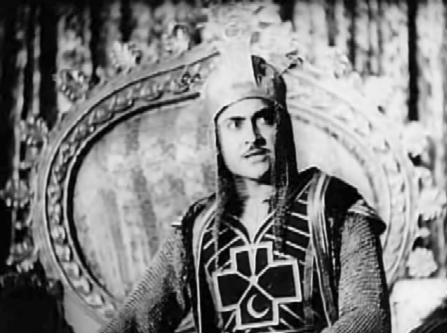
Humayun is (as the name suggests) more about Babur’s son and successor Humayun (who, coincidentally, was born almost exactly a year after Cesare Borgia died – Borgia died on March 12, 1507; Humayun was born on March 7, 1508). But the film begins with Babur (Shah Nawaz) invading India, so Babur does play quite an important role in the scheme of things.

Continue reading