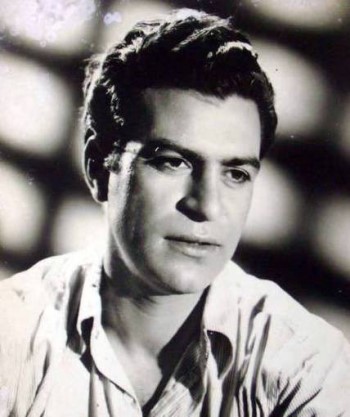
After many years of telling myself I should read Mirza Hadi ‘Ruswa’s Umrao Jaan Ada, I finally got around to reading a Hindi translation a couple of weeks back. This turned out to be an underwhelming experience (more details here, on my Goodreads review of the book), but it impelled me to read a synopsis of Umrao Jaan Ada. I ended up reading, too, about the screen adaptations of the book (which is regarded by many as the first Urdu novel), and was surprised to discover that, besides the Rekha-starrer and the (much later) Aishwarya Rai-starrer, there were two other films, both released in 1958, based on Umrao Jaan Ada. One was Mehendi; the other was Zindagi ya Toofaan. I haven’t got around to watching Mehendi yet, but the fact that one of my favourite actresses of the 50s, Nutan, starred in Zindagi ya Toofaan, made me eager to watch this one.
Tag Archives: film review
Hulchul (1951)
Today is the hundredth birthday of one of India’s greatest and most popular dancers of yesteryears. Sitara Devi was born in Calcutta on November 8, 1920, to a father who was a Sanskrit scholar and also both performed as well as taught Kathak. Her mother too came from a family with a long tradition in performing arts, so it was hardly a surprise that from a very young age, Sitara (her birth name was Dhanalakshmi) began to learn Kathak. By the time she was ten, Sitara was giving solo performances; two years later, at the age of twelve, she (having since moved to Bombay with her parents) performed onstage and so impressed film-maker/choreographer Niranjan Sharma that he recruited her to work in films.
Unlike several other skilled danseuses—Vyjyanthimala, the Travancore Sisters, Waheeda Rehman, etc—Sitara Devi did not let cinema take over her dance completely. She danced in a number of films, through the 40s and right up to Mother India (1957), which is believed to be her last onscreen appearance. She continued to give stage performances, even performing at New York’s Carnegie Hall and at the Royal Albert Hall in London.
Sitara Devi wasn’t merely a film actress; she was also a great dancer. I wanted to pay tribute to her through a review of one of her films, and decided I’d choose Hulchul, which I wanted to watch for other reasons as well (more on this later).
The Hill (1965)
I got to know of the passing away of Sean Connery through social media. I logged in to Facebook on the evening of October 31, and saw several people posting tributes to the ‘best Bond there ever was’. One person in my newsfeed posted a still from The Name of the Rose, but even she couldn’t resist the temptation to also talk of Connery being the best James Bond.
I suppose that is how Connery will go down in popular memory: Bond, after all, is a hugely popular character, and Connery, I will admit, made for a suave and very attractive Bond. But Connery could be so much more, as this poignant tribute from Anu discusses.
I liked the James Bond films when I was younger; I saw pretty much all of them. In recent years, though, I’ve begun to not enjoy them as much, mostly for their shallow portrayal of women. So, to pay tribute to Connery, I decided not to attempt a review of a Bond film: I knew, even without rewatching From Russia With Love, Goldfinger, or the other films Connery starred in as Bond (I had already reviewed Dr No, here)—I knew I would end up cringing at the sexism in the film.
Therefore, this film, which was made around the same time Connery was Bond. But oh, so different from Bond.
Light in the Piazza (1962)
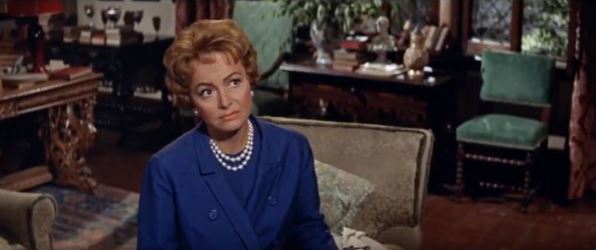
Earlier this year, when Olivia de Havilland passed away, someone I know was reminiscing about her films and mentioned Light in the Piazza as being a particular favourite. I had never even heard of Light in the Piazza, let alone anything else, so I decided to have a look. It did turn out to be a mostly enjoyable film, but I didn’t find it worthy of being a tribute to Olivia de Havilland (what I reviewed instead as a tribute was this).
But Light in the Piazza is worth talking about, because it’s an unusual film. Unusual in its subject matter, and unusual in the fact that its leading lady acts her age: Olivia de Havilland was in her mid-forties when she acted as Meg Johnson, and she brings to the role all her wealth of experience.
From Here to Eternity (1953)
1941.
Private Robert E. Lee Prewitt (Montgomery Clift) arrives at a military base in Hawaii and presents himself before the commanding officer, Captain Dana Holmes (Philip Ober). The captain is a boxing enthusiast, and he’s licking his lips at the thought of having added one of the army’s best boxers to his clutch: Prewitt is a famous middle-weight, isn’t he. No sir, Prewitt says. He was; he doesn’t fight now. Not after that incident—Holmes obviously knows what Prewitt’s alluding to, but we get to know only later, when Prewitt meets and falls in love with a prostitute named Lorene (Donna Reed).
Jaadoo (1951)
There are several reasons why I decided to review this film, even though it’s not a particularly impressive one. For one, it’s one of the rare Indian films set outside India and the Middle East (more on this later). For another, its music by Naushad, who (I would have thought) would not have been the most obvious choice to compose music for a film that’s distinctly Latin in tone. And, because this is a film I’ve long been wanting to see—ever since I first watched Lo pyaar ki ho gayi jeet on Chitrahaar as a pre-teen.
Continue readingJagriti (1954), Bedari (1956)
One review suffices for two films, really. Jagriti was an Indian film, Bedari a Pakistani one. Why I say one review suffices is because Bedari was a blatant copy of Jagriti: so blatant that when Pakistanis cottoned onto the fact that it was a copy, there was a furore which resulted in the Federal Board of Film Censor in Pakistan banning Bedari.
I’ll discuss the synopsis by looking at Jagriti, since Bedari used exactly the same plot, down to the scenes.
Jagriti begins by introducing us to the very wild teenager Ajay Mukherjee (Raj Kumar), who spends his after-school time gallivanting around the village with his gang of equally wild friends. They steal mangoes from an orchard and leave the irate gardener with a bump on his head; Ajay slips onto a ferry and deprives a banana-seller of an entire day’s worth of bananas.
By the time Ajay gets home, his uncle (Bipin Gupta) has been besieged by some very upset villagers. He’s had to soothe them, pay up their damages, and promise that the situation will be amended.
Born Free (1966)
Some of you may know about my six-year old daughter, the Little One (the ‘LO’), whom I’ve written about occasionally, in the context of our travels.
This time, the LO stars in one of my film reviews. Because Born Free happens to be the first film which fits my blog’s timeline and which the LO watched along with me. We’ve watched other films in theatres, and (over the course of the lockdown) at home, but all of them have been animated films or Harry Potter. But this last Saturday, reliving our trip to Kenya at the beginning of this year, I was reminded of Joy Adamson (whose paintings we saw at the Nairobi National Museum), and I decided we should watch Born Free.
Doli (1969)
The Hindi film industry has always been an upholder of patriarchy. Its male stars attract ridiculously high prices in comparison to their female colleagues, and have disproportionately longer careers than them (plus a much longer time as leads). Sexism is rampant, ranging all the way from sexual discrimination to violence. And, though more women directors, scriptwriters, lyricists etc are around now, it’s still pretty much a male-dominated industry.
Hardly surprising, then, that most of our films tend to look at things (at best) from a male point of view. At worst, they uphold patriarchy in its most virulent forms, reducing women to a cypher, expected to devote their lives to the service of men. Ever-forgiving Sati Savitris, wrapped in saris and simpering prettily every time their lord and master deigns to be kind. Or unkind, it doesn’t matter; he is still her devta.
Doli is one such film, steeped in patriarchy and regressive in the extreme.
It begins in a college, where Amar (Rajesh Khanna) and Prem (Prem Chopra) have just graduated. Amar is the star athlete, Prem the star pupil who has topped the college and won a scholarship for higher studies in America. Later, in their dorm, both Prem and Amar receive letters from home, informing them that their weddings have been fixed. On the same day, in the same town, Nasik. Neither of them is happy about this, but Prem, having known already that a match had been found for him, is rather more resigned.
Sharaarat (1959)
It might surprise some of you to know just how many films I watch. No, not new ones, but old films, in the hope that I will find something worth reviewing for this blog. Perhaps one in five of those films gets reviewed, and that because either it’s worth recommending, or conversely, it’s worth warning people off.
A lot of the Hindi films I watch, I watch because of the music. Occasionally (Duniya Jhukti Hai, Bank Manager, Chandni Chauk) there’s just one song that has prompted my viewing of the film, and the film itself turns out to be so ho-hum that I decide there’s not much point reviewing it. I assume, you see, that most people (unlike me) are sensible enough to not waste a couple of hours watching a film just because it has one good song.
Sometimes, though, a film has a bunch of good songs, and a cast I have great hopes of. Then, even if it ends up being a bit of a dud, I feel obliged to review the film. Because I want to tell you: steer clear; despite the cast and despite the songs, this is really not worth your while.
Also, in the case of Sharaarat, there was the fact that this film starred Meena Kumari. And, as I’ve seen from films like Miss Mary, Tamasha, Kohinoor, Azaad, etc, Meena Kumari was very good at comedy. Here, she was paired with Kishore Kumar. I settled down, hoping for some fun. Sharaarat, after all: that sounded promising.