The past year has been a rather tragic one when it comes to classic cinema: Jean Simmons died in January; Lena Horne passed on in May, and then, just a little over a month back, Tony Curtis died. And, about a week ago, I got an e-mail from blog reader and friend Bawa to say that Spanish director Luis García Berlanga had died. Berlanga, the audacious film maker about whom Franco is supposed to have said, “Berlanga is not a Communist; he is worse than a Communist, he is a bad Spaniard.” Berlanga, creator of the superb Bienvenido, Mister Marshall!, which Bawa gave to me and helped spark off an enthusiasm for the work of this immensely talented film maker. Berlanga, who with this film derided capital punishment and made himself so unpopular with the Spanish government that they tried to stop the screening of El Verdugo at the Venice Film Festival… RIP.
Monthly Archives: November 2010
Johnny Walker and Mehmood: An Uncelebrated Friendship
To bring Johnny Walker Week to a close, a post from his daughter Tasneem Khan, about a friendship whose depth few people were aware of. Over to Tasneem:
Ten Great Johnny Walker Roles
My major complaint against Hindi cinema has been that we’ve never given comedy the sort of status it’s received in the West. True, there has been the occasional classic comedy – Chalti ka Naam Gaadi, Dekh Kabira Roya, Dholak and Padosan, for example – but as a genre it seems to have been largely neglected. Which, in turn, has meant that comic actors have also often not been given due respect for their talents. Making people laugh is I think more difficult than making them cry: and Johnny Walker is one of the very few who’ve excelled at the art. Here, therefore, are some of his roles that I find the most memorable. All, of course, from films that I’ve seen.
Johnny Walker: The Family Man
After the post about Johnny Walker, the actor, the famous comedian’s grandson Nabil Khan brings us another post about his granddad. And with two lovely photos too, of which this one in particular made me go all mushy and “Oh-so-sweet!!!”-ing:
Enough gushing. Over to Nabil, now:
Chhoomantar (1956)
Unlike Madhumati and Aar Paar, where he was just a supporting actor (though, in my opinion, his contribution to both films far surpassed the actual screen time of the characters he played), in Chhoomantar Johhny Walker is not just the funny man, but also the hero. He gets to sing and dance (the latter even in drag!). He gets to woo a pretty heroine, be brother to another lovely lady, and he gets to kick some serious ass.
Johnny Walker: The Actor
Following Nabil Khan’s heartwarming post on his grandfather, legendary actor Johnny Walker, another post… this one is on Johnny Walker, the actor. Not just the loving family man, but the very accomplished thespian who still commands (as you can see by the popularity of these posts!) a fine fan following.
And, by the way, for those of you who understand Hindi, here’s part 1 of a wonderful interview that Johnny Walker gave to the London-based journalist Bhartendu Vimal. Here is part 2 of the interview.
Over to Nabil, now:
Madhumati (1958)
A Johnny Walker film, but one that’s known for a lot else besides.
I always associate Bimal Roy with the Do Bigha Zameen or Parakh sort of film: deeply rooted in reality, both harshly real and heart-warmingly real. Stories about people like us, people with problems and joys like ours. His films are socially relevant ones that discuss issues like untouchability and corruption, poverty, alcoholism and the plight of those who aren’t economically or socially powerful enough to stand up for themselves.
Madhumati is the glaring exception, the extremely surprising entry in Bimal Roy’s filmography: a film that’s chockfull of everything one doesn’t expect of Bimal Roy. Reincarnation, spooks, multiple roles, atmospheric storms: one could almost think Ramsay Brothers. Thankfully, no; because Madhumati, though in a completely different genre than Bimal Roy classics like Sujata, Bandini, Do Bigha Zameen or Devdas, still bears the mark of a master craftsman. And it’s good entertainment value.
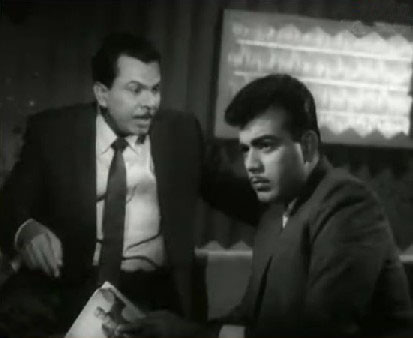
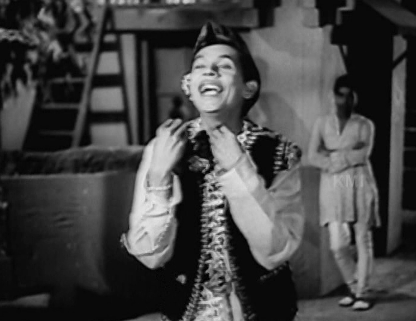
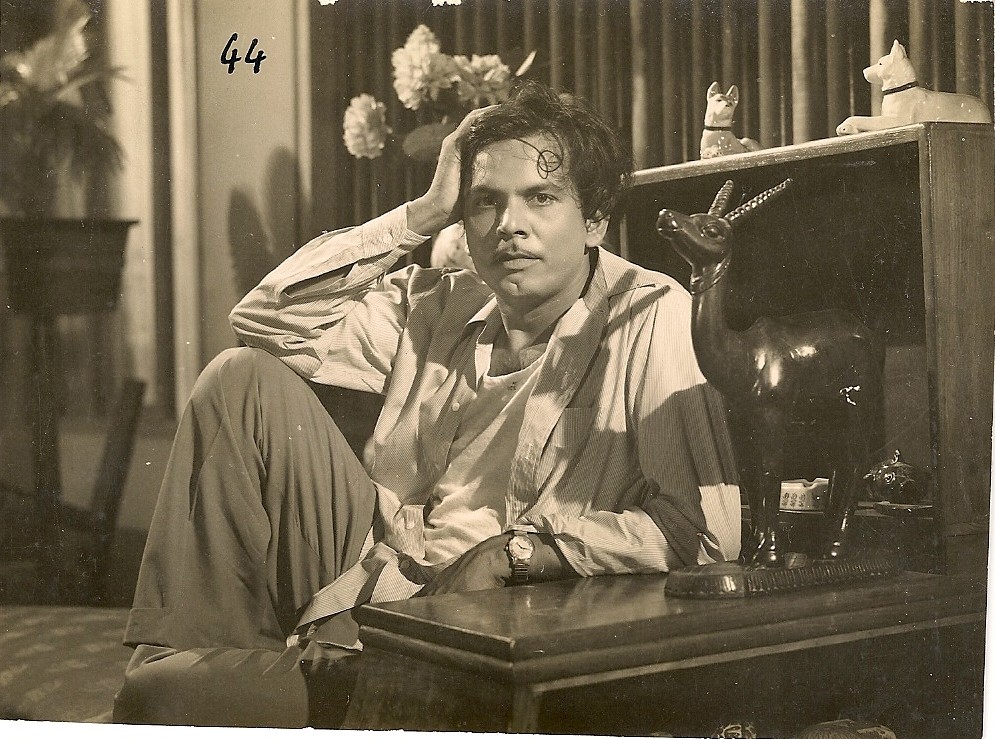
Beginning Johnny Walker Week
One day in 1950, Hindi film actor (and occasional script writer) Balraj Sahni was travelling in a BEST bus in Bombay when he noticed a bus conductor who didn’t just issue tickets or make sure people got on and off the bus safe and sound: he also entertained passengers. Balraj Sahni was in the middle of writing the script for the Dev Anand starrer Baazi, and thought the bus conductor would make a fine character in the film. So at his behest, Guru Dutt, the director, invited the conductor – a man named Badruddin Jamaluddin Kazi – for a screen test. The test required Kazi to act a drunk, and he (although a teetotaler) was such a success that Guru Dutt gave him the name by which he was to become famous: Johnny Walker, after the well-loved Scotch.