
Today is the birth centenary of the ‘King of the Ghazal’, the inimitable Talat Mahmood. Talat was born on February 24, 1924 in Lucknow, and it was in Lucknow itself that he obtained his initial training in music: at the Marris College of Music, where he learnt classical Hindustani music from Pandit SCR Bhatt. By the age of sixteen, Talat was singing the ghazals of Urdu’s foremost poets for All India Radio Lucknow, and was soon taken on by HMV as well. His first introduction to cinema came through the film industry in Calcutta, where he not only sang songs (under the name ‘Tapan Kumar’), but also acted in several films. In 1949, at the age of twenty-five, Talat moved to Bombay, and the rest, of course, is history: he went on to become one of Hindi cinema’s most distinctive voices, and his songs—romantic, filled with pathos, tender, soulful—still live on.

I have done a Talat Mahmood song list earlier as well: fourteen years ago, on the occasion of what would have been his 86th birthday. But a centenary is a different matter, and it wouldn’t do, I thought, to let this opportunity pass without a tribute to Talat. Therefore, this list, of ten solos that Talat sang for ten different composers. Besides my usual criteria (that the song should be from a pre-1970s Hindi film that I’ve seen), I imposed two more restrictions on myself:
1. No composer should be repeated in this list
2. The songs in this list should not overlap with the ones on my earlier Talat list
In no particular order, therefore:
1. Shaam-e-gham ki kasam (Footpath, 1953): With Khayyam. For me, one of the most exquisitely beautiful songs there is in Hindi cinema. The loneliness, the sense of waiting that shines through this song is not just embodied in the lyrics (Majrooh Sultanpuri’s, in collaboration with Ali Sardar Jafri), but equally in Khayyam’s music and in Talat’s voice. There is a controlled sort of impatience to his singing, a very good mirror of Dilip Kumar’s acting: a man aching for the woman he awaits, but trying to calm himself, trying to keep a hold on his emotions even though they slip through now and then in his words.
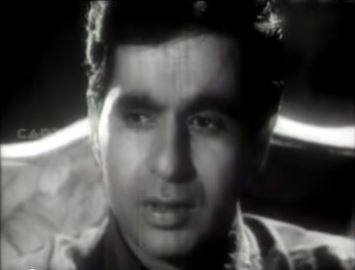
2. Main teri nazar ka suroor hoon (Jahanara, 1964): With Madan Mohan. If Talat was the singer most associated with the ghazal, Madan Mohan was the composer most associated with the genre (it is a different matter that the definition of a ghazal has nothing to do with its music, and is all about the lyrics and their rhyming pattern). Madan Mohan composed some memorable songs for Talat, a clutch of them in Jahanara, where Bharat Bhushan, as the doomed lover Mirza Changezi, got to lip-sync to gems like Phir wohi shaam, Main teri nazar ka suroor hoon, Teri aankh ke aansoo pee jaaoon, and Ae sanam aaj yeh kasam khaayein.
Talat’s voice fits Bharat Bhushan’s character and his situation very well indeed: the man who has dared to love where there is no hope. A lover proud of his love and as certain as he can be that his love is returned. That tremor in the voice which Talat was so known for is pronounced here, and perfect for the song.
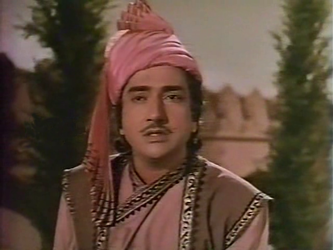
3. Yeh hawa yeh raat yeh chaandni (Sangdil, 1952): With Sajjad Hussain. The irascible Sajjad Hussain, though his career stretched over more than three decades, and who was undeniably talented (more so than many other contemporaries), ended up composing for very few films. He also was critical, to the point of being rude, of many whom he worked with, and bestowed epithets on them with gay abandon: poor Talat found himself dubbed ‘Galat’ Mahmood! Despite that, though, one of Talat’s finest songs was composed by Sajjad Hussain. A stunningly romantic song, a wooing of a woman who is utterly oblivious of the effect she has on her lovelorn admirer.
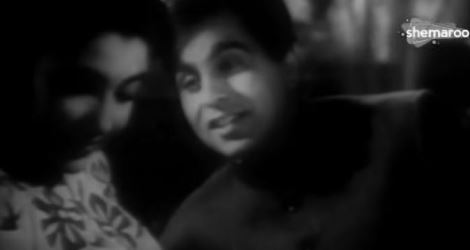
4. Koi nahin mera is duniya mein (Daag, 1952): With Shankar-Jaikishan. Talat’s voice was the perfect fit for Dilip Kumar, as can be seen from the songs on this list: all the way from pathos to romance to angst, Talat lent his voice to the actor in a way that came across as completely natural. Dilip Kumar’s speaking voice and Talat’s singing voice, especially when one considers Dilip’s controlled, level acting, match superbly. Daag, its songs composed by the prolific duo of Shankar-Jaikishan, gave Talat several immortal songs: Hum dard ke maaron ka itna sa fasaana hai, Ae mere dil kahin aur chal, and this sad, lonely song among them. The pain in Koi nahin mera is duniya mein is palpable, and yet both Talat and Dilip (who, by the way, were good friends) do not go over the top, never get melodramatic or hammy.
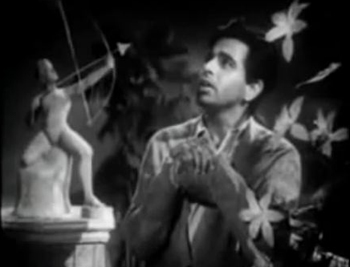
5. Aansoo samajhke kyon mujhe aankh se tumne (Chhaaya, 1961): With Salil Chowdhury. Was Salil Chowdhury’s straddling of Bengali and Hindi cinema, the ease with which he composed for both languages (and took tunes successfully across the border) a reason why Talat had a good equation with him? Talat, after all, had been ‘Tapan Kumar’ in Bengal, and had worked—not just sung, but also acted—in some successful Bengali films. Whatever the case may be, a shared love for and comfort with Bengali or not, the point is that they worked well together: for instance, with songs like Aha rim-jhim ke yeh pyaare-pyaare geet liye, Raat ne kya-kya khwaab dikhaaye, and Itna na mujhse tu pyaar badha, the last-named from Chhaaya. Also from Chhaaya was this beautiful song, which Talat sings for Sunil Dutt: gently pleading, dignified in the way he talks about being spurned.

6. Zindagi denewaale sun teri duniya se dil bhar gaya (Dil-e-Naadaan, 1953): With Ghulam Mohammad. Talat worked in several films in the Hindi film industry, but his success rate as an actor was none too good, even if the films themselves were entertaining (Lala Rukh) or at least fairly good (Sone ki Chidiya). One thing, however, marked most of the films Talat acted in: they also featured songs sung by him, and those included some very good songs: Pyaar pas bas toh nahin; Pyaas kuchh aur bhi bhadka di; Raahi matwaale; Raat ne kya-kya khwaab dikhaaye…. and this, a woeful, despairing cry to an Almighty who seems to have turned away.
I have to admit that after watching a certain episode of Jaspal Bhatti’s hilarious TV show Flop Show, which featured this song as the cry of a patient at a government hospital, I now cannot listen to Zindagi denewaale sun without grinning.
But yes, despite that: what a touching rendition of despair.
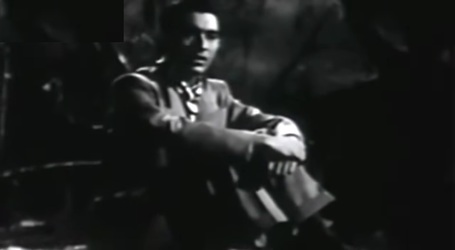
7. Tasveer banaata hoon tasveer nahin banti (Baradari, 1955): With Nashad. There is an apocryphal story going around on the net that Naushad (not Nashad, who is the composer of Tasveer banaata hoon) disapproved of Talat’s smoking, and therefore shifted his allegiance from Talat to Rafi. While it sounds sensational, the truth might have been that Rafi was far more versatile than Talat: as Naushad himself remarked in an interview, the gentle, dignified style of Talat was suited to a certain type of song; he couldn’t do the sort of singing that Rafi could manage for actors like (say) Shammi Kapoor. That boisterousness, the madcap uninhibited style of Rafi or Kishore was not Talat’s.
This was more like Talat: sombre, grave, romantic—emotions the highly underrated Nashad was able to depict beautifully in his music, and Talat was able to render perfectly. Tasveer banaata hoon tasveer nahin banti is one of those classic songs that is more heard than seen. A prince, smitten with a village girl he’s only briefly glimpsed, yearns for her, to the extent of giving up everything, from sleep to composure.
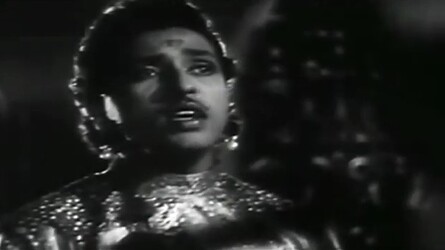
8. Bechain nazar betaab jigar (Yasmin, 1955): With C Ramachandra. I have a confession to make. Years ago, well before I began writing this blog and got to know something about Hindi cinema, one of my absolutely favourite Talat duets was a song composed by C Ramachandra: the wonderfully romantic Kitna haseen hai mausam, from Azaad. It wasn’t till much later that I discovered the truth (and even later before I was actually convinced): that wasn’t Talat singing that song, it was C Ramachandra himself.
If you go by that old adage about imitation being the sincerest of flattery, it’s likely that C Ramachandra admired Talat a good deal. Enough, at least, to compose some good songs for the singer. Bechain nazar betaab jigar, from Yasmin, is one I especially like: there’s a sort of joyfulness to it that is fairly rare in Talat’s songs.
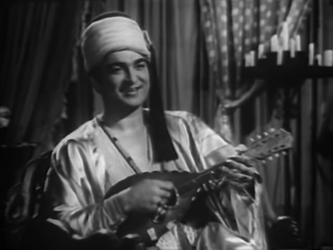
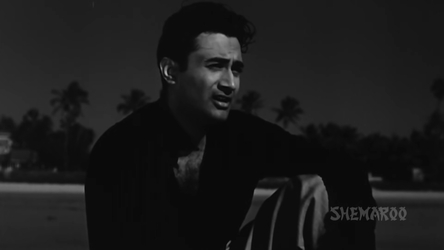
9. Jaayein toh jaayein kahaan (Taxi Driver, 1955): With SD Burman. I have always thought it a serious travesty of justice that SD Burman only won the Filmfare Award for Best Music Director twice in what was a long and exemplary career in Hindi cinema. With his talent, and with the brilliantly versatile, melodious compositions he created, Burman Da deserved many more wins.
However. At least he did win the award for this song. Jaayein toh jaayein kahaan, a hallmark song of woe and loneliness, was sung in two versions, by Lata Mangeshkar and by Talat Mahmood. Talat’s version, lip-synced by Dev Anand’s character as he sits by the seashore, grappling with all the worries that surround him, is the version that won SD Burman the Filmfare award. The silken softness of Talat’s voice really brings to life the emotion of the lyrics, the sense of being bereft and all alone.
10. Sab kuchh lutaake hosh mein aaye (Ek Saal, 1957): With Ravi. And, to end this list, a song that I like so much, it’s appeared in several lists on this blog over the years. Like Jaayein toh jaayein kahaan, Sab kuchh lutaake hosh mein aaye too appears in two versions in the film: a male version sung by Talat and a female version sung by Lata. Ashok Kumar’s character, a conman who has his eye on a terminally ill heiress (played by Madhubala), sets out to woo her with the objective of nabbing all her wealth—but ends up, willy-nilly, falling in love with her. Here, in Talat’s gloriously mellifluous voice—the voice of conscience, literally—he faces up to the truth, to the reprehensibility of what he’s done. A gorgeous song, and one that I think couldn’t have been sung better by any other singer.

And, because there were so many great songs that Talat sang for so many composers, a bonus song: Chal ud jaa re panchhi (Bhabhi, 1957): With Chitragupt. Through this song, I also wanted to draw attention to the fact that Talat sang a lot of non-film songs too; plenty of ghazals, for instance. Chal ud jaa re panchhi, is of course a film song; but in the film, the playback for this song was by Mohammad Rafi, not Talat.
Thank you for the music, Talat Sahib! May your voice never fade.
 Dustedoff
The list is pretty representative but a correction. Song at No 7 from film Baradari is by Nashad who was an altogether different music director than Naushad. He was a much lesser luminary than Naushad ( Actual name Shaukat Hussain ) who later migrated to Pakistan where also he was quite successful.
LikeLiked by 1 person
This is so embarrassing. :-( I cannot understand how that happened, since I do know that Nashad composed for Baradari, not Naushad. Ugh. My brain had gone on vacation, I think. Thank you for pointing that out; I’ve made the correction.
LikeLike
Nice choice of songs. And as always, very well written too.
That being said, there are a few points that I would rather like to make.
1.) Talat’s centenary celebrations and no songs from Anil Biswas!! Now that’s rather heartbreaking, for Anil da not only made Talat Mahmood into “The Talat Mahmood of Bollywood”, but he was also the one who actually convinced Talat to stay true to his own strengths and uniqueness (read: Talat’s distinct tremolo), and not lose out on either his originality or class. I checked your earlier Talat post too, and there too were no songs by Anil da, which is a tragedy given that the duo had such superlative numbers in films like Arzoo, Tarana, Aaram, Waris etc..
2.) The Nashad of Biradari fame is actually a very different and distinct person from Naushad. Barring Biradari and Jawab, I don’t think Nashad achieved much success in India, though later on he did make it big in Pakistan.
3.) Salil Choudhury not only composed in Hindi and Bangla, but he also composed with equal success down South too. Indeed, he and Bappi Lahiri are the only two real pan- Indian composers in the truest sense. Rest most of the others, either only worked in the North block or the South block, or at best both of the two blocks. But we need to remember, just the Hindustani- Punjabi and South blocks don’t make India. East and West parts of it too are part of it- and substantial ones at that!
4.) Talat’s wife was Bengali actress Latika Mullick. And he himself spoke terrific Bangla. Talat’s brother also lived in Dhaka, whom he used to visit often, even after partition. This was how he met the legendary Bangladeshi composer Robin Ghosh and came to sing the megahit song “Tomay Legeche Eto Je Bhalo” for the later. Talat, anyways sang many hit Bengali songs under the name of Tapan Kumar (as you have rightly mentioned in your article above) right from 1940s till much later. And to give him credit among all singers who have sang in Bangla, even though their native home-tongue wasn’t Bangla, he (with the exception of KL Saigal) had the best pronunciation of them all! Even the mighty Lata Ji has faltered in this regard multiple times in her career, though many Bongs( often out of sheer love for her vocal virtuosity) have tried to ignore this deficiency of hers outright.
5.) Yes, Talat did act in few Bengali and even some Hindi films made from Calcutta, before coming to Bombay in 1949-50. But none of these films were successful at the box- office, no matter how much otherwise the “websites” dedicated to him might claim today!
6.) SD Burman getting just two awards at the Filmfares is ofcourse a tragedy, showing how much of a joke Filmfare Awards really are. But honestly, Sachin da winning it for Jaye toh Jaye Kaha is little dicey, considering that its a Tagore adaptation and not really a completely original number. Otherwise also, the year 1954 had much better songs qualitatively- including from Sachin da himself. Of course, Jaye toh Jaye Kaha was incredibly popular. But then popularity should never be a criteria for being adjudged “the best”. Isn’t it so?
7.) Indeed, Talat Mahmood did sing multiple non- film songs, many of which were composed by Calcutta based or Bengali composers. The most prominent of these composers was the great Kamal Dasgupta- the man who almost single-handedly had placed Hindi NFS at par with Hindi film songs throughout the late 1930s till early 1950s. Kamal Dasgupta was also the composer who made the likes of Jagmohan, Juthika Roy, Hemant Kumar (and yes) Talat Mahmood achieve musical stardom from the Hindustani audiences throughout the sub-continent. And yet, today he hardly gets spoken about, even though by any criteria, he is among the twenty greatest composers that the entire Indian subcontinent has seen till date. I guess, being a Bengali, who spent most of his life in Calcutta, worked big-time against him…
LikeLiked by 1 person
wonderful summarisation!
In fact, Nashad gave music in 30 odd Indian films before migrating to Pakistan in 1965. Apart from Baradari and Jawab, his films like Naghma ( 53 ), Char Chand, Bada Bhai, Qatil, Pyar Ki Daastan and above all, Rooplekha had some beautiful songs.
LikeLike
Among Nashad’s films I’d also add Zindagi aur Toofan, based on Umrao Jaan Ada, which had some excellent songs.
LikeLike
Copy me on that, Madhudi. Zindagi aur Toofan indeed had some wonderful songs.
LikeLiked by 1 person
Thanks Thavraniji :)
Yes, I also love the songs of Naghma & Rooplekha. Unfortunately, they didn’t quite enjoy commercial success, I guess.
Also, a bigger thanks for introducing me to the songs of Chaar Chand. I hadn’t heard those before. :) :)
LikeLike
I don’t know how that Nashad slip-up happened, because I actually am very well aware that he was different from Naushad (and that he composed for just a handful of films before leaving for Pakistan). My brain went on vacation, I suppose.
As for Anil Biswas: yes, I definitely did have it in mind that I should include a song by him. But when it comes to Talat solos for Biswas, there weren’t any that really appealed to me. Don’t crucify me for not forcing myself to add a Biswas solo just because he had to be there!
And yes, I do know that Salil also composed for Malayalam cinema – I’ve reviewed one of those (Chemmeen) on this blog too, years ago…
I agree that Jaayein toh jaayein kahaan was certainly not the best of the songs in that year. While it’s a good song – I won’t deny that – there were other wonderful songs. 1954 saw the release of Mirza Ghalib, Aar Paar and Jagriti (among other films), and all of them had excellent music – Mirza Ghalib is a particular favourite of mine when it comes to the songs.
P.S. Speaking of people from Hindi cinema (not Bengali-speaking ones), I read yesterday that Dilip Kumar did several Bengali films even before Sagina Mahato. Have you seen any? Do you know if he was any good?
LikeLike
It’s Okay, Madhudi. I just mentioned about the omission of Anilda because of his unmatched contribution in Talat Mahmood’s career. And for the fact that his ” Aye Dil Mujhe Aisi Jagah Le Chal ” was not only a masterpiece composition, but also Talat’s first superhit in Bombay, which kind of established the definitive Talat Sound that was largely followed for the rest of his career by most of the other composers too. Only Salil Choudhury, C. Ramchandra and to an extent Ghulam Muhammad tinkered and experimented with Talat saab, and went beyond this established Talat template of Anilda. But I get it. Preferences, tastes, likes and dislikes are all very personal things, which must be respected at all costs. And I do respect that. So no issues at all.
Agreed about the brilliance of Mirza Ghalib’s soundtrack. It could quite possibly be the soundtrack of 1954 too, especially considering that HK’s Nagin was in the consideration for 1955, being a Nov-Dec 1954 release.
But, till 1954, Filmfare award was given for Best song, and not Best album. And there were many contenders for that- especially those songs which were great compositions but not great hits.
Some of those numbers include Badshah’s Aa Neele Gagan Tale & Rulakar Chal Diye (SJ), Raat Hai Armaan Bhari (Sangam- Ram Ganguly), Jalke Dil Khak Hua (Parichay-Sailesh) & Ae Saba Unse Keh Zara (Alibaba Aur 40 Chor- Chitragupt).
Bulo C. Rani’s Bilwamangal & Ram Ganguly’s Gawaiya had some extremely beautiful numbers. So were a couple of songs each from Mohd Shafi’s Bazooband & Arun Kumar’s Samaj. Titan Anil Biswas too delivered Maan & Naaz- both of which were choc-a-block with Lata beauties. Naushad had the sublime Shabab while Hemantda came up with the versatile soundtrack of Shart. CR too had some gems in Nastik, Pehli Jhalak, Kavi, Subah Ka Tara & Meenar. But by the musical standards of those days, and more so by his own exalted standards, 1954 was rather a downer for CR.
But the real heroes of 1954 musically, in my opinion, were the immortal NT trio of RC Boral, Pankaj Mullick and Timir Baran. Many of their songs in Shree Chaitanya Mahaprabhu (Boral, and a very close contender to Ghulam M’s Mirza Ghalib for the album of the year), Kasturi ( PM) and Baadbaan (Baran) are outstanding compositions. Infact, Timir Baran’s Kaise Koi Jiye- in both its versions by Geeta D & Hemant K-is the song of the year for me. It was very popular too.
As a soundtrack, I like OPN’s Aar Paar for its freshness. But it doesn’t quite score high on originality as atleast three of its numbers were inspired from English songs. Relative lack of originality was also the bane for Salil’s Naukari, Naushad’s Amar, HB’s Shama Parwana & Roshan’s Chandni Chowk, even though each of these albums had few very fine original numbers too. But, I can’t quite place these albums in the league of say Mirza Ghalib or Shree Chaitanya Mahaprabhu or some others mentioned above.
Dilip Kumar acted in only two bengali films- Paari (by the underrated director Jagannath Chatterjee) and Sagina Mahato ( by the great Tapan Sinha). He was superb in both. Indeed, his performance in Sagina Mahato, is one of his only two great performances, the other being in Nitin Bose’s Gunga Jamuna.
I guess, the writer who mentioned Dilip K acting in several Bengali movies, probably meant Dilip K acting in several Hindi movies helmed by Bengalis. Infact, about the 60 odd films that DK did, almost half of them were either written, directed or produced by Bengalis.
By his own admission, DK stated that whatever he learnt about acting in films came from his own personal experiences, habit of reading literature, and from his 5 mentors, who were- Nitin Bose, Devika Rani, Amiya Chakravarty, Ashok Kumar & Sashadhar Mukherjee. As one can see, all the five were Bengalis. So, the Bengali influence in his life was rather very strong.
LikeLiked by 1 person
I especially find your insights into the influences of Bengalis and Bengal on Dilip Kumar very interesting. Thank you for an enlightening and well-thought out comment.
LikeLike
Nice to see another Talat Mahmood list from you, Madhu (I actually had also seen the one that you had done 14 years ago). His singing voice was really nice, though I am not as familiar with him as I am with a number of other singers (most of them female). Most of the songs on this list are new to me, too, and after going through them briefly just now, I intend return to them.
You certainly came up with more composers for Talat than I could have, but I see that you missed Anil Biswas, who composed for Waris, where Talat Mahmood both sang and acted. Most of the songs in that film are duets with Suraiya, but this is a nice solo:
https://www.youtube.com/watch?v=5E_mjBT7I6k
And while I see that you did post a song by Talat Mahmood for C. Ramchandra (along with a fun intro), I wanted to point out an example of that combination that really stood out in my mind, when he sang for the blind character played by V. Shantaram in the 1952 film Parchhain. I really like this song:
https://www.youtube.com/watch?v=nmOgUYeSbJA
LikeLiked by 2 people
I think I am going to be apologizing a lot for this post! I have already apologized for mixing up Nashad with Naushad, and for omitting Anil Biswas. :-D Yes, Anil Biswas did give Talat some great songs, but while I adore Raahi matwaale, I had to – regretfully – of course skip that, since the only solo versions are by Suraiya. And, to be honest, there are other Talat solos (not composed by Anil Biswas) that I like much more than Kabhi hai gham kabhi khushiyaan.
Mohabbat hi na jo samjhe is exquisite, thank you so much for this. I have heard it before, but had completely forgotten about it.
Another Talat solo I absolutely love, from a film that seems to not exist any more (or at least not online?), is this one. From Thokar, Ae gham-e-dil kya karoon:
https://www.youtube.com/watch?v=FExxUm6Lges
LikeLiked by 2 people
OK, I think I should point out that when I posted my comment mentioning the absence of Anil Biswas on the list, I did not see any other comments mentioning the absence of Anil Biswas. When I post a comment, I try always to read all the comments that have been posted before, and there was only one comment visible at the time above the one that I was writing – that is, the first one regarding that Nashad/Naushad mistake.
I was wondering if the time stamps might give me a hint regarding why I could have missed the fact that the absence of Anil Biswas had already been pointed out kind of emphatically, and I did notice that Raunakjoy’s message was stamped only nine minutes before mine, so maybe it had been sent while I was already writing mine.
On the other hand, some of these time stamps don’t make any sense. For instance, Madhu, why was your reply to me stamped an hour and a half before my comment? Sometimes, these comments sections work in strange ways, so it is really impossible to tell what order the comments were first sent in. (There are also sometimes different kinds of approval queues, which can screw up the order of everything.)
Anyway, I am glad that you liked “Mohabbat Hi Na Jo Samjhe” a lot too.
Thank you also for suggesting “Ae Gham-e-dil Kya Karoon”… Yes, this is a nice one, too, and I noticed that the composer here was Sardar Malik, whom I don’t think anyone had mentioned yet. :)
LikeLiked by 1 person
I think it was one of the monarchs of England who said, about John Donne’s poetry, “Dr Donne’s poetry is like the peace of God; it passeth all understanding”. I could paraphrase that for WordPress. Where it gets its time stamps, I have no idea! This is so weird. Unless it’s putting on a time stamp for everybody depending upon what their local time is (I’m not sure that makes sense…). Anyway.
Ah, yes. Nobody mentioned Sardar Malik, and he was much more talented than most people give him credit for (if they give him credit; he mostly goes sadly ignored).
LikeLiked by 1 person
Thanks for a great selection of songs despite placing so many self-imposed constraints. Very apt that Talat Mahmood is being remembered at least on his birth anniversary. There is no doubt that Talat did get shabby treatment from the industry in the guise of changed musical taste of the audience. While Mohammed Rafi , the singer, was nonpareil, Talat had his own velvety pitch & distinctive timbre & should have been treated better. Many undistinguished singers came & disappeared without a trace even as Talat languished without the opportunities he so richly deserved after carving out a niche for himself even when Rafi was reigning supreme.
LikeLiked by 1 person
Very true. I agree so much with you; Talat really did get the short end of the stick; he deserved far better. At least he did seem to have a very dedicated fan following for years after, when he was touring and doing concerts.
LikeLike
I had been eagerly awaiting this extraordinary post meant for the special occasion. Talat was no Rafi or Mukesh or Kishore or Manna, yes. However he was in a league of his own. That’s why there could never be a singer who could be termed as his copycat. He was matchless. The songs chosen by you are all known and soul-soothing. Thanks and compliments.
LikeLiked by 1 person
I am glad you enjoyed this post, Jitendraji. You are so right, nobody could ever be termed a copycat for Talat – he was completely in a league by himself.
LikeLiked by 1 person
Madhuji, for a change, there is not one song that I don’t know in your list.😊 Talat’s velvety voice with it slight quiver is a class apart. Here’s one that he sang for N Datta – Ashkon Ne Jo Paya Hain from Chandi Ki Deewar. The lyrics of Sahir are lovely. https://www.youtube.com/watch?v=z9Oii-1au4A
Anita
LikeLiked by 2 people
It was not quiver though sounded like one, but a kind of voice” shadow”/ voice “reflection” which no singer in India has been known to possess either before or since & which made Talat very unique
LikeLike
Thank you so much for posting this one, Anitaji. Such a beautiful song. I had forgotten about it, but it’s a song I like a lot.
LikeLike
Dear Madhuji
Nice song selection for the unique occasion..
Talat Sahab excelled at sensitive songs.. And he was unmatched when it came to ghazals. He was in prime form till tragedy as a genre was firmly entrenched in Hindi filmdom.. However, his talent stood very little chance of survival after the advent of The Junglee genre. — A trendsetter of a movie.. It was almost all downhill for him from the early 1960s.. All the same he remains my favourite for the velvet in his voice..
And now a personal experience.. After the demise of Raj Kapoor, the irrepressible youngster in me wrote a letter to him..(those were the days of letters.. remember ?) And those were the days of no YOUtube as well.. Hence the ignorant me asked him how come he had not sung for the great RK ?
I respectfully report that HE chose to reply to my letter by his own hand And in subtle language, reminiscent of his style of rendition, remedied my meagre information.. He had indeed sung for RK in Ashiana Bewafa and Anhonee, he wrote.. However, Mukeshji voice suited RK better, he concluded..
HIS letter to me is a priceless treasure that sends goosebumps travelling all over me even when I read it today.. THANK YOU TALAT SAHAB !!!!
LikeLiked by 1 person
I am glad you enjoyed this post, and thank you so very much for sharing that very sweet personal anecdote! I can imagine how dear that letter must be to you. Wonderful. Just the thought of it gives me goosebumps.
LikeLike
Lovely selection of songs. I did not know Talat saab had sung such superb songs. Thank you for the memories. As you said, may his voice never fade!!!
Girish Vaidya
LikeLiked by 1 person
I am so glad you enjoyed this. Thank you, and amen to that: may his voice never fade.
LikeLike
Lovely post indeed! I was busy with my post, I haven’t finished it yet. So I missed the date and your post completely.
All of his favourites have been already mentioned by you or the readers. So I’ll have to think before adding a song!
now a days my schedule has got so hectic, I always miss other posts. Just not getting time!
:-(
LikeLiked by 1 person
I hope work eases up for you a bit, Anupji. Take care. Glad you enjoyed this post!
LikeLike
I can’t believe I didn’t resuscitate my blog in time to celebrate Talat’s 100! :( I have been suffering from such writer’s block you can’t imagine.
But I am so glad to have gone through your list (and your earlier one) – I have been soaking in the songs all day long. I don’t think there’s a Talat song that I dislike; I can’t say that about any other singer, not even my favourite Rafi.
LikeLiked by 1 person
I have been suffering from such writer’s block you can’t imagine.
As long as you’re feeling well, that’s all that matters! We readers of your blog can all be patient, no worries. :-)
I know what you mean. There are songs of Rafi’s that I don’t like either – I think that may be because the sheer volume of what he sang, even into the late 60s and the 70s, meant that not everything was good. There are some songs I find just too whiny or shrill for my liking. With Talat, no, never.
LikeLike
in indian print media, the tribune offered a decent tribute to talat mahmood.
my fav 5 songs:
sham e gham ki kasam( he sounds very different in this, voice is much polished than else ones, or I listened to a remastered version maybe)
Phir mujhe deeda e tar yaad aaya( and other mirza ghalib songs too, but this one is heaven, I must name “dil e nadan” also, but that’s not talat solo )
aansu to nahi hain ankhon mein( this is a rare heard song, from daera,1953 I loved it when it struck my teenage fantasies of crying at pitty things so u would sing it at slightest of my parent’s rebuke, and they would laugh it off)
meri yaad mein tum na aansu bahana( my friend recommended it when I was leaving my old school in 10th class, 2 years back, you can see from my anecdotes that I am quite a sentimental person, parents cal me eccentric):))
Main teri nazar ka surror hoon( jahan ara?, melancholy, tears and talat!!)
thankyou for the post
LikeLiked by 1 person
Those are some absolutely lovely songs! Thank you for sharing your favourites. :-)
LikeLike
Talat is always favorite and your post is very refreshing.
In both of your posts you have covered Talat’s best songs. So just giving links of his live performance. Hearing that famous quiver live is real joy.
Meri Yaad Mein’
Jalte Hai Jiske Liye
Like most of famous Hindi singers of the day, Talat has also sang for Marathi movies. Here is a solo composed by Vasant Prabhu
Yash he amrut zale
And though it won’t fit your criteria of solo, cannot help mention a duet by Talat and Asha picturized on Ramesh & Seema Deo.
Hasle aadhi kuni
The solo song was awarded by Maharashtra Government as the Marathi song of the year though I like the second song better.
LikeLiked by 1 person
Thank you so much for these! I hadn’t specifically known that Talat had sung for Marathi films, but I’m not surprised; I believe, what with Marathi cinema being so prominent (and there being proximity?), a lot of Hindi film singers, actors, technical crew etc flitted between the two industries. I loved these two songs, both were new to me.
LikeLike
Wonderful collection of songs of Talat Mehmood, Madhu. When my brother got married several years back he was gifted a Talat Mehmood LP by someone, and it had almost all the songs you’ve mentioned here and some from your previous Talat post. My own favourites of his were “Jalte hain jiske liye” and “Main dil hoon ek armaan bhara” which has a marvellous piano prelude by Roshan, but you covered that in your previous post. You’ ve mentioned “Ye hawa ye raat ye chandini ” which was released in 1952. The very next year Madan Mohan presented a Rafi song with exactly the same tune “Tujhe kyaa sunaaoo main dilruba, tere saamne mera haal hai ” ! Now who copied whom ? And then there was “Dekh li teri khudaai, bas mera dil bhar gaya” which I used to sing whenever the Nagar Nigam dug up roads to lay cables in my city ! Except that the word”Khudaai ” in both the cases is pronounced differently. Talat ji’s voice tremor increased with his age and S.D. Burman refused to take him by the early 1960’s saying “Uski awaaz mey thehraao nahi hai”. Meaning it had become unstable, and I felt that too. I always thought Talat Mehmood overrated in his later years, and as you mentioned he wasn’t a patch of the great Rafi Sahab where versatility and voice calisthenics were concerned. One example of this is in the terrible movie “Aadmi” (1968) which I didn’t see, but I’ve heard Rafi , Mahendra Kapoor and Talat’s versions of the song “Kaisi haseen aaj bahaaron ki raat hai” on You Tube . Manoj Kumar didn’t want Talat’s voice for himself, he wanted Mahendra Kapoor’s voice and rightfully so, Rafi was superb, Mahendra Kapoor good and Talat Mehmood terrible. He didn’t have the powerfulness of the other 2 singers by this time and he was eased out in the final version.
LikeLiked by 1 person
And then there was “Dekh li teri khudaai, bas mera dil bhar gaya” which I used to sing whenever the Nagar Nigam dug up roads to lay cables in my city !
:D That was hilarious!
You’re right about how Talat’s voice dimmed later, and he could not control that tremor that had originally made him so distinctive. Still, at least in his heyday, he gave some absolutely stunning songs.
Will you believe it, I have heard Tujhe kya sunaaoon main dilruba umpteen times, and it had never occurred to me that it was such an obvious copy of Yeh hawa yeh raat yeh chaandni. I am losing my mind.
LikeLike
SOS again !
LikeLike
WordPress has it in for you, I don’t know why. There are others who have written far longer comments than you (and you didn’t even have any links this time), but WordPress seems to be very suspicious of you!
LikeLike
<i>You’ ve mentioned “Ye hawa ye raat ye chandini ” which was released in 1952. The very next year Madan Mohan presented a Rafi song with exactly the same tune “Tujhe kyaa sunaaoo main dilruba, tere saamne mera haal hai ” ! Now who copied whom ? </i>
Madan Mohan copied Sajjad. :) When Sajjad accused him of ripping off his melody, MM is said to have humorously quipped that he only copied from the best.
LikeLiked by 1 person
I have a Best of Talat Mehmood Playlist that I curated myself and it overlaps with 6 songs on this list :p. The brilliant ‘Andhe Jahan ke Andhe Raste’ and ‘Ae Mere Dil Kahin Aur Chal’ [later also picturized on Dilip Kumar, I think] are favorites of mine.
LikeLike
I am also very fond of both the songs you’ve suggested – and yes, Ae mere dil kahin aur chal is Dilip Kumar. What a superb song.
LikeLike