
Today, November 11, 2026, marks the 100th birth anniversary of Hindi cinema’s legendary comedian, Johnny Walker. There have been others, both before him (Noor Mohammed Charlie) and after (Mehmood, Dhumal, Sunder, Mukri, Gope, Bhagwan, etc), but there has never been another Johnny Walker. He could provide (as he did in several of Guru Dutt’s otherwise sombre films) the much-needed note of ebullience that helped lighten the tone (in Pyaasa, for instance). He could be the perfect foil to the hero who must contend with all the many challenges life flung at him (think Madhumati, think Naya Daur). And, as films like Chhoomantar, Johnny Walker and Mr Qartoon MA proved, he could carry a film on his shoulders.

For someone compiling song lists, too, Johnny Walker was a boon. Offhand, I cannot think of a single film featuring Johnny Walker that didn’t have him lip-sync to a song. No matter what his role, directors liked to have him ‘sing’ a song, and he got a lot of very good songs to his credit, too. I listed these many years ago (and, separately, I did an entire Johnny Walker week on Dustedoff too). But this birth centenary celebration called for something more. Not a list of best songs, but a list of songs that showcase ten different nuances of the characters Johnny Walker played. Ten avatars, ten moods.
As always, these songs are all from pre-1970s Hindi films that I’ve seen, and are not in any particular order. The only other condition I’ve imposed on myself is that none of these songs should overlap with those in my ten favourite Johnny Walker songs list, here.
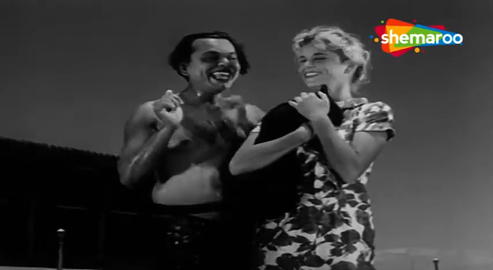
1. The Flirt. Tirchhi nazar se yoon na dekh (Ek Phool Chaar Kaante, 1960). Johnny Walker actually played the flirt in a lot of films, a lot of songs. And, the fun thing was, his character always got the girl. Whether it was the grumpy Miss Chatterjee of Bahaarein phir bhi aayengi or the pretty newspaper office colleague of Mr & Mrs 55, the lady, while she may not appear at first to welcome his flirting, invariably ended up smiling and obviously happy. It’s the same here: around the swimming pool, while Sunil Dutt and a troupe of extras dance and sway, Johnny Walker romances a young woman and her cat, and has her smiling sweetly at him from the word go.
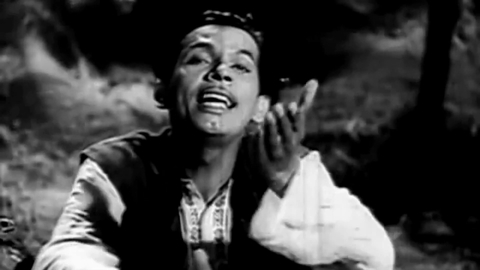
2. The Soulful Lover. Gareeb jaanke humko na tum (Chhoomantar, 1956). Johnny Walker probably holds some sort of record for the comic actor with the largest number of love songs picturized on him. Nearly all of them are playful, or flirty, or just generally light-hearted. This popular song from Chhoomantar (a film in which he played the lead) is an exception: a classic romantic number, in which the earnest young lover appeals to his lady love: she is the only one who can assuage his distress. She must take pity on him; since she is the one who causes this ache, she too must soothe it.
I had heard this song ever since I was a child, and had always imagined the onscreen singer to be one of the more standard ‘romantic heroes’ of Hindi cinema. That it was actually filmed on Johnny Walker came as quite a surprise!
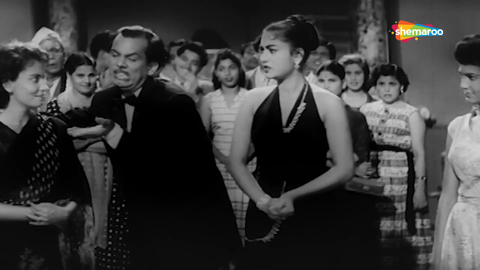
3. The Commitment-Phobe. O Peter… Hum-tum jise kehta hai shaadi (Kaagaz ke Phool, 1959). In what I always think of as Guru Dutt’s grimmest film, Johnny Walker—as always—was a much-needed ray of sunshine. As Sinha’s insouciant, happy-go-lucky brother-in-law, he was the rare sympathetic figure in a story crowded with people who didn’t understand, who didn’t care. In this song, though, he does put on a façade of not caring. Knowing full well of the feelings of the vet played by Minoo Mumtaz, he still sets out to roast her. In the club, he warns his male friends to beware of marriage: fall prey to your greed, he sings, and it’s all over for you. All this independence, all this freedom, will go for a toss. Minoo Mumtaz looks properly incensed, but I have a feeling he’s singing all this simply to get a rise out of her.
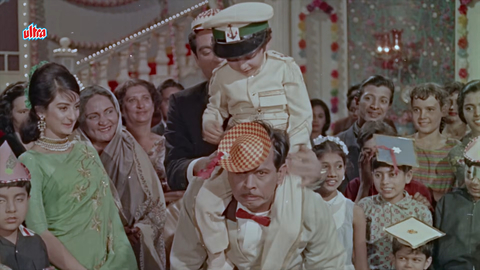
4. The Family Man. Hum bhi agar bachche hote (Door ki Aawaaz, 1965). Johnny Walker as a kiddie-loving family man may not be the most usual role in which he’s seen, but he did star in this classic birthday party song about what fun it is to be a child. Joy Mukherji’s and Saira Banu’s characters take up the song after him, but the focus of the song—and of all the things that are done along with the kids, like giving them rides, making faces, stuffing their faces with laddoos—is Johnny Walker. Incidentally, this adorable guest post from long ago highlights the man behind the actor, as actually being quite the family man.
5. The Drunk. Dekhta chala gaya main zindagi ki raah mein (Gateway of India, 1957). Much has been said in praise (and rightly so) of Mohammad Rafi’s ability to sing daaru songs: Rafi Sahib, a tee-totaller, could do effortless justice to all those many, many songs ‘sung’ by intoxicated characters.
But something must be said, too, about Johnny Walker. This man was another tee-totaller, and yet he could act the drunk really well. My favourite ‘tipsy Johnny Walker character’ song is the delightful Jangal mein mor naacha kisi ne na dekha, but another one I really like is this one. Johnny Walker and his brother Tony Walker play liquor smugglers here (the sign outside their establishment reads ‘Spiritualist’!), and when Madhubala’s character washes up at their doorstep, Johnny ends up singing and dancing with her. I love the energy and zing both Johnny Walker and Madhubala bring to this song: they make it look like they’re genuinely having so much fun!
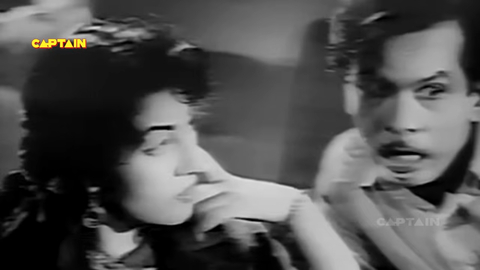
6. The Salesman. Laila ki ungliyaan bechoon Majnun ki pasliyaan bechoon (Ghar ki Laaj, 1960). While I was researching this post, and thinking which ‘avatar’ I would slot to which of my favourite Johnny Walker songs, it struck me that there are several songs in which his character is selling something, or offering a service. The most famous (and one of my favourite songs of his) is of course Sar jo tera chakraaye, where he extols his skill as a tel-maalishwaala, a champi. But then there’s also Zara ruk jaa, pyaare ruk jaa, where he tries to convince people (by fair means or foul) to avail of his services as a cycle repairman.
And this song, a fun number from an awful film. Johnny Walker selling kakdis, naming them (in the time-honoured way, common in North India) as Laila’s fingers and Majnun’s ribs, and insisting that his tender kakdis are the solution to all life’s woes (Shirin-Farhad couldn’t get married because they hadn’t eaten his kakdis!)… such fun.
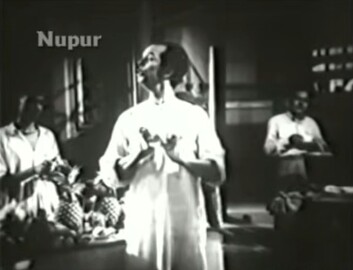
7. The Show-Off. Ghoomke aaya hoon main bandhu (Basant, 1960). In the train wreck that was Basant, bringing together It Happened One Night and Love Affair (and much else), Johnny Walker was a breath of fresh air in the second half when the rest of it all fell apart. Here, dancing and playing along with Kammo, this guy basically sings his own praises. The greatest baajewaala, the man to whose tune Raj Kapoor has sung along; who has been ustad to Burman, Shankar-Jaikishan, OP Nayyar, and Naushad: yeh sab shagird mere, he sings. And now, having toured Russia, China and England, he’s finally arrived in India, to the delight of all Indians. Egotistic, much?

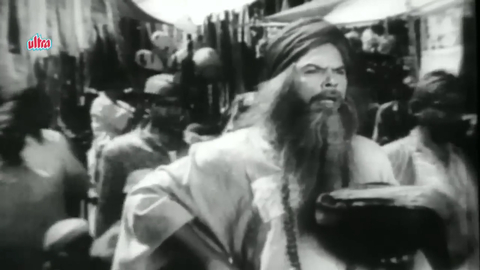
8. The Cynic. Yeh duniya gol hai (Chaudhvin ka Chaand, 1960). One of Johnny Walker’s most iconic songs—the classic paean to Bombay, Ae dil hai mushkil—often gets overlooked as a song of cynicism, but it is: a song deriding the heartlessness, the busy-ness, the ruthlessness of the big city. This song, from a Muslim social from Guru Dutt that (like Pyaasa or Kaagaz ke Phool) had Johnny as much-needed comic relief, had him going about in disguise as a fakir, singing another cynical song. This world is round, but everything in it is complicated, every person donning a mask. In the context of the story of Chaudhvin ka Chaand, which hinges on a marriage that happens because of mistaken identity and a woman in purdah, it’s a rather prescient song.
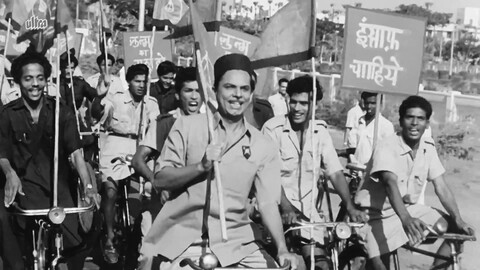
9. The Trade Unionist. Suno re bhaiya hum laaye hain (Paigham, 1959). In a lot of his films, Johnny Walker did play a comic character, but his character’s humorous, uninhibited nature also led to him being a maverick, an outspoken speaker of the truth. In Paigham, for instance, with its socialist theme, he is the voice of the oppressed: cycling through town, leading a troupe of other protestors, and making it clear to the mill owner (Motilal) that his days of high-handed and exploitative behaviour are about to end.
10. The Inspirer. Main Bambai ka babu naam mera anjaana (Naya Daur, 1957). I think of at least three songs in which Johnny Walker’s character boasts of how many countries he’s been to, in other words, what a go-getter he is, what a man of the world, how well-respected. One song, of course, is Ghoomke aaya hoon main bandhu; another is Main hoon Mr Johnny maine sab mulkon ka piya hai paani. Then there is this one, where—playing a journalist who’s come from Bombay to the countryside—he gives a pep talk (pep song?) to the villagers who, led by the characters of Dilip Kumar and Vyjyanthimala, are laying a road that will help them win against the evil of mechanized transport. A fun song, even though it tends to be pushed into the background when the more popular songs of the film are mentioned.
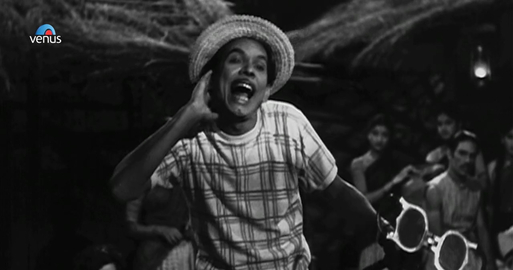
Happy 100 years, Qazi Sahib! May your magic never fade.


Friend:
Mera yaar bana hai dulha… CHAUDHAVI KA CHAND.
LikeLike