
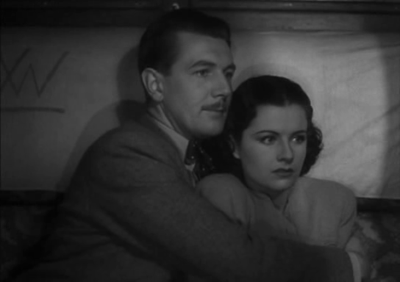
It’s been a long time since I reviewed a film by one of my favourite directors, so I decided this one merited a rewatch. Like The 39 Steps and Young and Innocent, The Lady Vanishes is one of Alfred Hitchcock’s early British suspense films. I saw it first when I was about 12 years old; but in the years since, I’ve never forgotten the story – I still remember almost every twist and turn of this film. And I still think that it’s one of the best train journey films ever made.
Category Archives: Uncategorized
Don Camillo (1952)
I am not a party animal. I do not drink. I have two left feet. Loud music makes my head throb. I find it difficult to keep awake after 11 PM. So when friends ask, “What’re you doing on New Year’s Eve?” I say, “Watching a movie at home.”
And what better way to say goodbye to a bad year with a film that you hope will be a sign of things to come? A movie that embodies all the joy you want for the dawning year?
Don Camillo (Le Petit Monde du Don Camillo in French – it was a Franco-Italian production) is the story of a little town in the Po Valley in Italy. Even though it is named for its lead character, the Catholic priest of the town, the film is not just about the hot-headed Don Camillo and his arch-enemy, the communist Mayor Peppone, but about the little town itself.

Tengoku to Jigoku (1963)
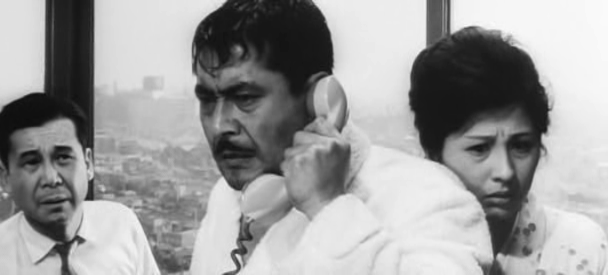
This blog’s been focussing on Hindi cinema for a while now, so I decided it was time to get back to being a bit more diverse. And this time with a film from one director whose work I admire a lot: Akira Kurosawa. If all you’ve seen of Kurosawa are his samurai films, I’d recommend Tengoku to Jigoku (High and Low) as a good way of getting introduced to the films he made in other genres. If you’ve never watched a Kurosawa, this is still one of his best films – and one of the best classic crime films I’ve seen.
Loosely based on King’s Ransom, a novel by American crime writer Ed McBain, Tengoku to Jigoku is about a kidnapping and its repercussions. The result is an unforgettable film that brilliantly combines the personal, the social, the psychological, the dramatic and the mundane, with the sheer sweat-and-drudgery of the police procedural.
Der Tiger von Eschnapur (1959)
… and its sequel, Das Indische Grabmal, also 1959.
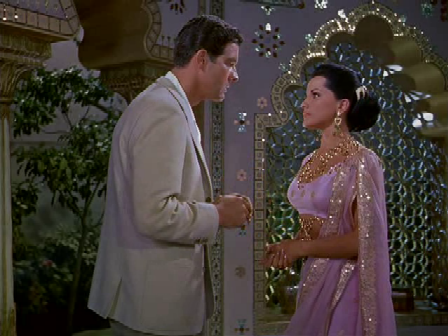
Fritz Lang made the visually stunning Metropolis in 1927. Over thirty years later, freed from the constraints of black and white and silence, he made two films, which are together known as ‘Fritz Lang’s Indian epic’. The second film was Das Indische Grabmal (‘The Indian Tomb’); the first was this one, Der Tiger von Eschnapur, or ‘The Tiger of Eschnapur’.
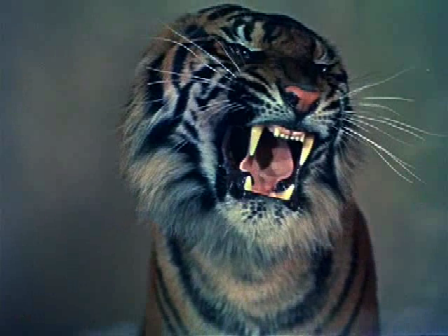
The story is basically the same as that of a film Lang had made even further back than Metropolis; in 1921, he had made Das Indische Grabmal, based on a book by his wife Thea von Harbou (who, as you’d recall, also wrote Metropolis). In the 1950s, Lang remade Das Indische Grabmal, this time cutting it into two parts. Both Der Tiger von Eschnapur and Das Indische Grabmal were released in 1959, and have been much acclaimed ever since.
Metropolis (1927)
As Samir pointed out in a comment on my last post, Pyaasa was one of the films (in fact, the only Hindi film) to find a place on Time Magazine’s all-time 100 best films list. That’s something Pyaasa shares in common with this film. Metropolis, a silent film made in Germany thirty years before Pyaasa, is also on the list. It was directed by Fritz Lang, who co-wrote the screenplay along with his wife Thea von Harbou. The result is a film like none other.

North-West Frontier (1959)
While I was writing the review of Ek Saal last week, I was reminded of this film. And that for what might seem an obscure reason to some: I S Johar was the man who suggested the story idea for Ek Saal, and he – now as actor, not writer – plays one of the important characters in this superb adventure film.

Triple Cross (1966)
Despite everything more fashionable cinema viewers may say, I love The Sound of Music. I love the songs, I love the mushy romance, I love the children. I love Julie Andrews. I love Christopher Plummer.
Which is why it’s always bothered me that Christopher Plummer used to refer to the film as The Sound of Mucus. Why, I wondered.
Well, this might just furnish some sort of answer to that question. Plummer stars in Triple Cross as a war-era safe breaker who offers his services to the Nazis as a spy in Britain. It’s not a frightfully demanding role, but it offers a glimpse of what Plummer was capable of. And I can understand why he might have thought of his role as Georg von Trapp as a little too much of a cakewalk.

Chiriakhana (1967)
Sharmi has been reviewing one brilliant Bengali film after the other over at her blog. I ended up begging her to slow down, because I can’t possibly keep pace when it comes to obtaining—with subtitles, mind you—and watching so many great films. So what do I do? I watch and review a Bengali film of my own.
Chiriakhana (‘The Zoo’) is based on the famous crime novel of the same name by Saradindu Bandopadhyay. It features the detective Byomkesh Bakshi (which those of you who watched Doordarshan during the early 1990’s might remember from the superb TV series starring Rajit Kapur). The film was directed by Satyajit Ray, and though most feel that this is Ray’s worst film, it isn’t as bad as all that. It even won Ray a Golden Lotus at the National Film Awards.

El Verdugo (1963)
The past year has been a rather tragic one when it comes to classic cinema: Jean Simmons died in January; Lena Horne passed on in May, and then, just a little over a month back, Tony Curtis died. And, about a week ago, I got an e-mail from blog reader and friend Bawa to say that Spanish director Luis García Berlanga had died. Berlanga, the audacious film maker about whom Franco is supposed to have said, “Berlanga is not a Communist; he is worse than a Communist, he is a bad Spaniard.” Berlanga, creator of the superb Bienvenido, Mister Marshall!, which Bawa gave to me and helped spark off an enthusiasm for the work of this immensely talented film maker. Berlanga, who with this film derided capital punishment and made himself so unpopular with the Spanish government that they tried to stop the screening of El Verdugo at the Venice Film Festival… RIP.

I Soliti Ignoti (1958)
When I think of I Soliti Ignoti (literally, The Usual Unknown Thieves, though the English title of the film is Big Deal on Madonna Street), this is one of the scenes that comes to mind: one evening, a pawnshop is about to close for the day. A thief’s decided to hold up the pawnshop and steal all the jewellery in the safe. He arrives at the shop with a pistol in his hand, a newspaper draped over it.
When the last customer at the counter has gone, the thief steps up to the counter, points the gun at the man behind the counter and says, “Do you know it?”—indicating the gun.
The man behind the counter reaches over, grabs the gun, and has a quick look at it before saying, “Sure I know it. It’s a small calibre Beretta, in very poor condition. One thousand lira.”
When the thief stands there, gaping, the man adds, impatiently: “Well?!”
The thief snatches his gun back and leaves the pawnshop, too disgruntled to bother holding it up.

 Dustedoff