Chiriakhana (1967)

Sharmi has been reviewing one brilliant Bengali film after the other over at her blog. I ended up begging her to slow down, because I can’t possibly keep pace when it comes to obtaining—with subtitles, mind you—and watching so many great films. So what do I do? I watch and review a Bengali film of my own.

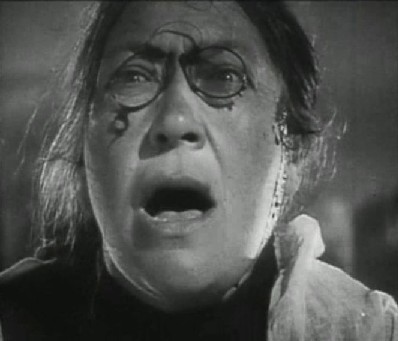
Chiriakhana (‘The Zoo’) is based on the famous crime novel of the same name by Saradindu Bandopadhyay. It features the detective Byomkesh Bakshi (which those of you who watched Doordarshan during the early 1990’s might remember from the superb TV series starring Rajit Kapur). The film was directed by Satyajit Ray, and though most feel that this is Ray’s worst film, it isn’t as bad as all that. It even won Ray a Golden Lotus at the National Film Awards.

Continue reading

El Verdugo (1963)

The past year has been a rather tragic one when it comes to classic cinema: Jean Simmons died in January; Lena Horne passed on in May, and then, just a little over a month back, Tony Curtis died. And, about a week ago, I got an e-mail from blog reader and friend Bawa to say that Spanish director Luis García Berlanga had died. Berlanga, the audacious film maker about whom Franco is supposed to have said, “Berlanga is not a Communist; he is worse than a Communist, he is a bad Spaniard.” Berlanga, creator of the superb Bienvenido, Mister Marshall!, which Bawa gave to me and helped spark off an enthusiasm for the work of this immensely talented film maker. Berlanga, who with this film derided capital punishment and made himself so unpopular with the Spanish government that they tried to stop the screening of El Verdugo at the Venice Film Festival… RIP.

Continue reading

I Soliti Ignoti (1958)

When I think of I Soliti Ignoti (literally, The Usual Unknown Thieves, though the English title of the film is Big Deal on Madonna Street), this is one of the scenes that comes to mind: one evening, a pawnshop is about to close for the day. A thief’s decided to hold up the pawnshop and steal all the jewellery in the safe. He arrives at the shop with a pistol in his hand, a newspaper draped over it.

When the last customer at the counter has gone, the thief steps up to the counter, points the gun at the man behind the counter and says, “Do you know it?”—indicating the gun.
The man behind the counter reaches over, grabs the gun, and has a quick look at it before saying, “Sure I know it. It’s a small calibre Beretta, in very poor condition. One thousand lira.”
When the thief stands there, gaping, the man adds, impatiently: “Well?!”
The thief snatches his gun back and leaves the pawnshop, too disgruntled to bother holding it up.

Continue reading

Agni Pariksha (1954)

Or Ogni Porikkha, if you want to be phonetically correct.

Over the last twenty-odd years, I’ve heard countless Bengalis rave about Uttam Kumar and Suchitra Sen as the ultimate onscreen romantic couple. I’ve seen both of them act (separately) in a few (admittedly Hindi) films, and have been very impressed.
So, finally: an Uttam Kumar-Suchitra Sen film, and one that was a big hit too. Agni Pariksha: ‘trial by fire’.

Continue reading

Bronenosets Potyomkin (1925)

Years ago, when I was a child, Bronenosets Potyomkin (The Battleship Potemkin) was shown on television. I must have been about 10, perhaps 11—but no more than that. Five minutes into the film and I got bored of the grainy, jerky picture (this was an unrestored version) and the lack of dialogue. A silent film? And that too about a mutiny? Um, no.
For some 25 odd years, that remained my only memory of Bronenosets Potyomkin, even long after I’d discovered that it’s regarded as a sort of cult classic.
An omission, I realised, that needed correction. It was time to dust off Sergei Eisenstein’s magnum opus and see what it was really about.

Continue reading

The Householder (1963)

Okay, one last post for Shashi Fest.

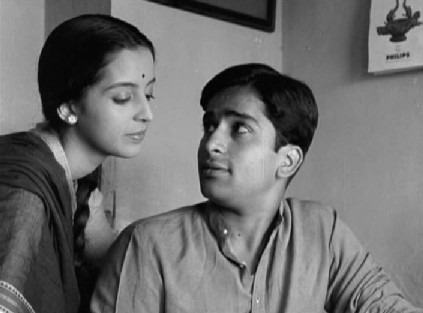
There’s something a little strange about seeing a film you’ve heard so much about. An English film, but with a primarily Bollywood star cast? With a story line that wavers between the usual hiccups of a middle class urban couple, doing the painful transition from carefree single existences to married life—and an American, floundering about as he tries to reach for a higher spirituality? Part Indian, part foreign outlook? And all of it with its roots in the Manusmriti, which says that of the four states of man, that of the grihastha (the householder) is the most important…?

Continue reading

Ladri di Biciclette (1948)

The first time I heard about this film, it was in connection with the Hindi film Do Bigha Zameen (1953), the story of a poor family that tries desperately to cling on to the one thing that stands between it and utter destitution—a tiny plot of land. I’d heard that Do Bigha Zameen was based on Vittorio De Sica’s Ladri di Biciclette (The Bicycle Thieves).
Having finally seen this, I have to admit I find little similarity between the two films. True, as in Do Bigha Zameen, here too only one thing can save the family from starvation: in this case, a bicycle. And here too, it’s the father and his young son who set out together in a desperate attempt to save themselves. Other than that, the tone, the story and the general mood of the two films is very different. And much as I admire Bimal Roy, I have to admit: De Sica wins. Ladri di Biciclette is much more powerful and haunting than the relatively melodramatic Do Bigha Zameen.

Continue reading

Shichi-nin No Samurai (1954)

I first heard about this film when I was a child—The Magnificent Seven was being shown on TV, and one of my parents said it was based on Seven Samurai. End of story, for then.
I’ve grown up since. I’ve heard about the brilliance of Akira Kurosawa. And I’ve recently read that Shichi-nin No Samurai (Seven Samurai) was supposedly the first film ever to use the concept of a group of unconnected people being brought together for a common cause. It therefore seemed high time to finally see the film for myself.
Having just finished watching it, I’m still stunned. This is a mind-blowing film, colossal and profound, gut-wrenching and brooding and action-packed and funny and romantic and… Well, simply unforgettable.

Continue reading

Les Vacances de Monsieur Hulot (1953)

Beth, commenting upon Arsenic and Old Lace, said she didn’t like films that she labelled `wackadoodle’ (what a delightfully apt word: each syllable says it all!): all that frantic running around and the ceaseless activity was just too exhausting for the viewer.
This review, therefore, even though I saw the film before Beth posted that comment, is dedicated to Beth. Because Les Vacances de Monsieur Hulot (Mr Hulot’s Holiday) is a film sure to appeal to anyone who likes their humour less fast-paced.

Les Vacances de Monsieur Hulot - poster

Continue reading

Goopy Gyne Bagha Byne (1968)

There are some films that offer deep, mind-searing insights into human life. There are some that allow one to escape for a couple of hours into a world of make believe where good and beautiful people always win and the bad always come to a sorry end.
And there are films like this one, which I seriously think should be prescribed as an anti-depressant. Goopy Gyne Bagha Byne (The Adventures of Goopy Gyne and Bagha Byne) isn’t  among Satyajit Ray’s most profound works—it’s not in the same league, perhaps, as the Apur trilogy or Nayak. It is, however, one of the most charming films ever made in India, and a sure cure for the blues. I adore this film. Every delightful little bit of it.

Goopy and Bagha

Continue reading