The Spiral Staircase (1946)

Years ago, when I first watched Wait Until Dark, I was blown away by the ingenuity of the idea: a blind woman trapped inside a house with a murderer on the loose. Audrey Hepburn was superb as the woman who must use all her wits to keep one step ahead of her pursuer, and if possible, to turn the tables on him.

That was the film I kept remembering when I was watching The Spiral Staircase, a story about a mute girl who is caught in a large mansion with a murderer coming after her.

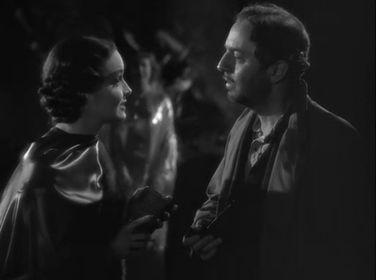
The story begins, not at the mansion, but at a small hotel in the nearby town. On the ground floor of the hotel, a film (silent, shown with an accompanying pianist providing the music) is being projected. A small but engrossed audience is in attendance, and this includes Helen (Dorothy McGuire), who is mute.

Continue reading

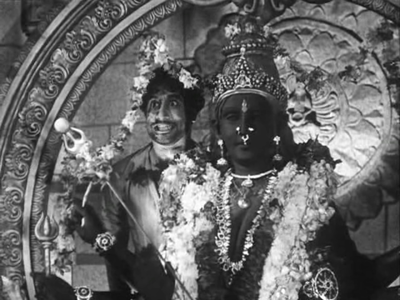
Aladdin aur Jaadui Chiraagh (1952)

Some weeks back, when I reviewed Police (1958), the thought that had stayed in my mind regarding Madhubala’s character—and her acting—in that film and otherwise, in the larger context of her career, was that she got sadly stereotyped. Too many people, film-makers most of all, ended up slotting her as the ravishingly beautiful woman who need only be cast for the fact that she could light up a screen like few others could. Her acting ability (which was actually very good) got overlooked far too often.

Something similar, though in a different way, happened to Meena Kumari. In Meena Kumari’s case, the ‘Tragedy Queen’ label got affixed fairly early in the actress’s career and branded her forever as the Main Chup Rahoongi type: the weepy, self-sacrificing, stoic Bhartiya naari. Despite films like Kohinoor, Azaad, Majhli Didi, Tamasha and Bandish, most people today associate Meena Kumari with ‘serious’ roles.

So, this film, which starred Meena Kumari in one of her lighter roles.

Continue reading

Bedazzled (1967)

If, like me, you were old enough to be watching films in 2000—and you watched Hollywood films—you might have come across the Brendan Fraser-Elizabeth Hurley comedy Bedazzled. It was about a geeky, socially inept but otherwise sweet fellow (Fraser) who makes a pact with the Devil (Hurley), who promises to grant him seven wishes in return for his soul. Unfortunately for our hero, all his wishes come to nought, leaving him even more distressed than he was originally. It was a funny film, and Brendan Fraser, in my opinion, shone as a comic actor.

I discovered, a few weeks ago, that the 2000 Bedazzled, directed by Harold Ramis, was actually a remake of a 1967 British film of the same name. Directed by Stanley Donen, Bedazzled was based on a story by Peter Cook and Dudley Moore, who also acted as the leads in the film: Dudley as Stanley Moon, Peter as the Devil.

The story begins in a church, where Stanley is praying very hard that God give him a sign. Something to assure a despondent Stanley that there is someone listening.

Continue reading

Police (1958)

If you’ve been reading this blog some years, you probably know by now that I am a fan of Madhubala’s. I’ve watched most of her films (several of which I have not got around to reviewing on this blog), I’ve done lists of my favourite songs of hers, and I have waxed eloquent every now and then about how much I like her.

One of the things I dislike about much of the online (at least) raving about Madhubala is that the praise is invariably just about her beauty. How gorgeous, how exquisite. Yes, indeed; but Madhubala’s beauty, I think, often comes in the way of people appreciating what a good actress she was, too. Watch her performances in films like Mughal-e-Azam and Amar, for instance, and if you can look past her face, you will see how well she holds her own against heavyweight thespians like Dilip Kumar and Prithviraj Kapoor.

And she was a fantastic comedienne too. The madcap way she matches Kishore Kumar in Chalti ka Naam Gaadi, for example. Or her airhead character in Mr & Mrs 55. Interestingly, Madhubala is often compared to Marilyn Monroe, almost entirely on the basis of their beauty and popularity; but I think the two stars had one more thing in common: both could portray the ditzy beauty very well. This, in fact, is just the type of woman Manju, of Police, is: nutty, silly, a clown. But so endearing too (and, it goes without saying, so gorgeous).

Continue reading

Paigham (1959)

This is a film that’s been on my radar for a while now. Dilip Kumar, Vyjyanthimala. A cast also boasting of Motilal and Johnny Walker. Some good songs. Paigham, I thought, might be worth a watch.

I will admit, though, that my heart sank a bit when I saw the opening credits and discovered that this is a Gemini Studios release. Like AVM, I now approach Gemini with trepidation: while their films often had great casts and excellent music, they were invariably just too melodramatic for my liking.

But I persevered.

Paigham begins by introducing us to Manju (Vyjyanthimala) who, along with her best friend Malti (B Saroja Devi), has just finished college: Manju at the top of her class, Malti at the bottom. Malti isn’t fazed by this; she’s a wealthy girl, her father Seth Sewakram (Motilal) a prosperous cotton mill-owner. Malti, in fact, has promised Manju that she will ask her father to give Manju (who’s done a course in shorthand and secretarial work) a job at the cotton mill, which is in a town named Rangpur.  

Continue reading

Bunny Lake is Missing (1965)

A little girl, an American newly arrived in England, goes missing from the nursery school she’s just joined. The police come to investigate, but things begin to get very puzzling soon after and the superintendent in charge of the case ends up wondering: Is Bunny Lake really missing? Does Bunny Lake even exist?

This film, produced and directed by Otto Preminger, was nominated for several BAFTA awards, and having seen it, I wonder why it didn’t win even a single award. It’s a gripping story, and moves swiftly from the very start.

It begins at a home in London, where Steven Lake (Keir Dullea) goes about picking up stuff, making sure everything is draped in covers, before he locks up the house and has a word with a couple of workmen who are there to help shift some stuff to another home. Much later in the film, when Steven and his sister Ann are talking to the police, it transpires that Steven, who is a journalist, has been working in London for some time and was staying in Frogmore End (which is the house shown in the opening frames).

Continue reading

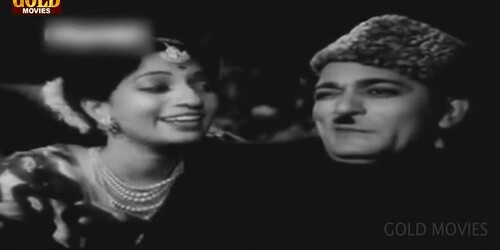
Lal-e-Yaman (1933)

Aka Parviz-Parizaad.

I had heard of Lal-e-Yaman (literally, ‘Rubies of Yemen’, though why it’s so named, I couldn’t tell) before, but it wasn’t until I read Manek Premchand’s Director’s Chair: Hindi Cinema’s Golden Age some weeks back that I was reminded of it: it appeared in JBH Wadia’s filmography, being the first film he produced and directed, along with his brother Homi Wadia. Premchand described Lal-e-Yaman as an ‘Arabian Nights kind of adventure’, and that piqued my interest.

The story is not explicitly set in Yemen, though it’s probably someplace in the Middle East. The King (Jal Khambatta) of a kingdom has recently remarried after having been widowed. He has a ten-year old son, Parviz (?) from his first wife; now the second wife (Mohini) is sitting beside him when a dervish arrives. This man prophesies that the new queen will wreak havoc, that the king will be much plagued because of her.

Continue reading

Penn (1954)

When I reviewed Zindagi (1964) some time back, blog reader Maitreyee, in a comment, asked me if I had watched any of Vjyyanthimala’s Southern films. I admitted I had not, and that mostly because it’s so difficult to find subtitled versions of South Indian films. I did have one Tamil film, with subtitles, bookmarked, and when Maitreyee too mentioned it (as a comedy), I decided it was high time I watched Penn, (in Tamil, ‘Girl‘).

The film begins by introducing us to Rani (Vyjyanthimala), a firebrand who goes about singing songs of women’s emancipation, gender equality, and the crushing of patriarchy. Rani walks the talk too: for instance, when she comes across a woman being beaten by her husband, Rani (who is an enthusiastic equestrienne) gets her whip out and uses it on the man.

Continue reading

The Three Worlds of Gulliver (1960)

A few weeks back, after years of telling myself I must read more of the classics, I finally got around to reading Jonathan Swift’s highly-acclaimed satirical novel, Gulliver’s Travels. Over a period of time, I’ve realized that books of this sort—extremely popular, appearing on just about every list of ‘must-read English novels’—are popular, too, among film-makers looking for material for screen adaptations. Of course, given that Gulliver’s Travels would require (I guessed) a fair bit of special effects, I had little hope that I’d come across anything from before the 70s; but guess what? It’s there: The Three Worlds of Gulliver, directed by Jack Sher and with special effects by Ray Harryhausen.

The story begins in Wapping, England, in 1699, where a physician, Lemuel Gulliver (Kerwin Mathews) is torn between his fiancée Elizabeth (June Thorburn) and his profession. It all actually boils down to his love for Elizabeth: she deserves more than to live in a hovel and subsist on next to nothing, because Gulliver is such a sweet welcome mat that he goes around treating people left, right and centre, often for free, or for payment in kind. Like cabbages and hens that run away.

Continue reading

Jhansi ki Rani (1953)

Given my penchant for history, it’s hardly surprising that I would, sooner or later, end up watching this film. It’s been on my radar for a while, though it was only last month that I was reminded of Jhansi ki Rani, because it showed up in my list of YouTube’s suggested videos. Oddly enough, what YouTube suggested wasn’t exactly this film but its English-language counterpart, The Tiger and the Flame, which was released in 1956. Sohrab Modi, who produced and directed (besides acting in) both versions of the film, went all out on creating a spectacular production, bringing in technicians and other crew from Hollywood, including Oscar-winning cinematographer Ernest Haller, who was responsible for the cinematography of Gone with the Wind.

This film was not just made in two languages, but with other differences between them too. The Tiger and the Flame is in Technicolor (the first India-made film in Technicolor) while Jhansi ki Rani is in black and white. Jhansi ki Rani has songs (composed by Vasant Desai with lyrics by Pandit Radheshyam), The Tiger and the Flame is minus the songs. Other than that, though, the films were much the same: the same cast, the same script.

Continue reading