Shiraz (1928)

This is a film that’s been on my radar for a long time—in fact, from when I first read about it on Memsaab’s wonderful but now sadly defunct blog. As those who have read my Muzaffar Jang books might know, I find certain sections of Mughal history (especially around the reigns of Akbar, Jahangir and Shahjahan) fascinating. So rich, so interesting, a period of such efflorescence, in different ways. Spirituality; art; architecture; beauty in myriad forms. Among the greatest examples of the Mughal contributions to culture is the exquisitely beautiful Taj Mahal, ‘a teardrop on the cheek of time’, as Rabindranath Tagore put it.

The Taj has been the subject of numerous films over the year (the latest one seems to be controversial enough to have run into trouble). Arguably the most famous film on the subject is the 1963 version, starring Beena Rai and Pradeep Kumar and directed by M Sadiq; there have been more recent ones, including a 2005 one named Taj Mahal: An Eternal Love Story, supposedly the most expensive Hindi film of its time.  

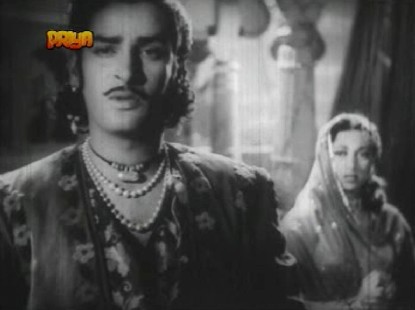
Long before all of these was this silent film, directed by the Bavarian film-maker Franz Osten and produced by Himanshu Rai (who also played the titular role in the film). Himanshu Rai’s interest in cinema had led him to visit Germany, where he had spent some time with the Emelka film production company, exploring ways of getting German collaboration to produce an Indian film. When Rai returned to India, he brought with him one of Emelka’s best directors, Osten, as well as several of their top technicians. Osten went on to direct 16 films in India over the years, of which the second was this one, a story about how the Taj came to be built.
Continue reading

Genghis Khan (1965)

Considering the last film I reviewed—about Genghis Khan’s grandson, Halaku (Hulegu Khan)—it seemed to me about time that I watched this one. What strengthened my resolve was that I happened to watch the Julie Andrews-Omar Sharif starrer The Tamarind Seed last week, and I was reminded that Omar Sharif starred as Genghis Khan here. ‘And Omar Sharif as Genghis Khan’, as the credits read. [An uncanny coincidence there, with—as in Halaku—the lead actor’s name appearing at the end of the credited cast].

Omar Sharif in and as Genghis Khan Continue reading

Taj Mahal (1963)

I ended up re-watching this film in a roundabout sort of way, which is a story in itself. A few months back, my sister (a historian, whose PhD was on 19th century Delhi) remarked, “I’d like to watch Lal Qila. I’ve never been able to find it in stores.” So, good little sister that I am (and a shameless opportunist), I figured out at least one of the things I’d gift my sister for Christmas.
Before gift-wrapping the VCD, I decided to watch Lal Qila, and write up a review right after. The latter didn’t happen – because Lal Qila is so badly written, so badly directed, and such a crashing bore, I couldn’t make head or tail of it most of the time. Only Rafi’s superb renditions of Bahadur Shah Zafar’s poetry – especially Na kisi ki aankh ka noor hoon – are a saving grace.

I was so peeved and disappointed after Lal Qila, that I needed this to buoy myself up. In any case, I told myself: logically, the two films are related (other than the fact that both feature Helen): the Lal Qila and the Taj Mahal were both built by Shahjahan.
Here we go, then. One of Hindi cinema’s better historicals, with a stellar cast and very good music.


Continue reading

Shama Parwana (1954)

This film stars Shammi Kapoor.
If you like Shammi Kapoor, do not watch this film. If you are a glutton for punishment and want to see it anyway, do not watch the last ten minutes. I can guarantee that you’ll be happier for it; you can decide for yourself what you would have liked the end to be, and spare yourself the trauma of sitting through what is definitely the most horrifying end I’ve ever seen in a Hindi film.

Continue reading

Shahjehan (1946)

After a longish hiatus, I’ve begun working on my next novel. Like my first book, The Englishman’s Cameo, this one too features the Mughal detective Muzaffar Jang, and is set during the final years of Shahjahan’s reign. I’ve been doing other bits of writing—very little of it related to history—and decided I needed something to help build up atmosphere and get me back in the mood. A historic film, set in Shahjahan’s time? Shahjehan? With Naushad’s hit score, and the chance to hear (and see) K L Saigal singing some of his best-known songs?

Alas. Alas, alas, alas. Or, to put it more bluntly: &$%@##%@!!!

Continue reading

The Vikings (1958)

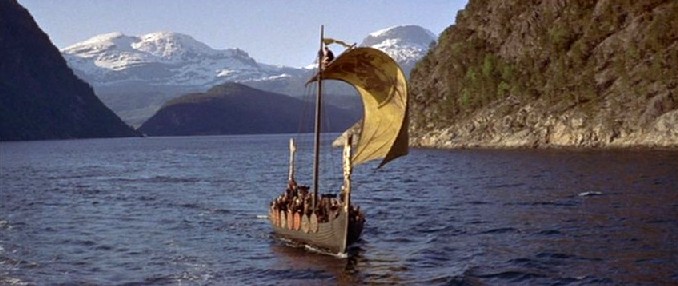
As I mentioned in a previous post, watching this film gave me a sense of déjà vu. There’s a lot about it that’s very reminiscent of classic Hindi cinema. The lost heir who can be identified by an amulet he wears; the long-lost brothers who don’t know they’re related and are at daggers drawn, partly because both love the same woman… fortunately, though, The Vikings is more than just a precursor to so many Hindi films. It’s also a very watchable film, with superb cinematography and a general air of having been made much, much later than it actually was.

Continue reading

Captain from Castile (1947)

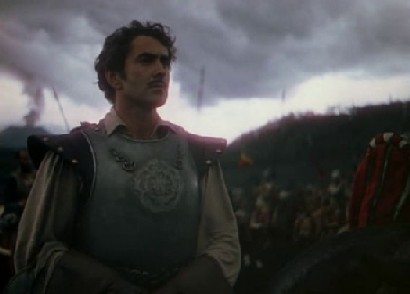
Not too long back, I got to see the Christopher Plummer starrer The Royal Hunt of the Sun (1969), an unusual and sensitive take on the European conquest of the Americas. When I heard about this film, also based on the same subject—and starring the delicious Tyrone Power, to boot (how on earth did I leave him out of my eye candy list?!): well, I had to see it.

Continue reading