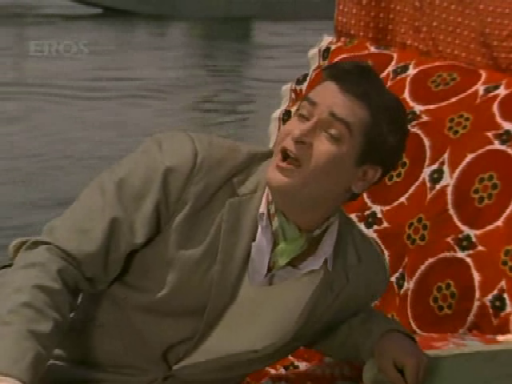
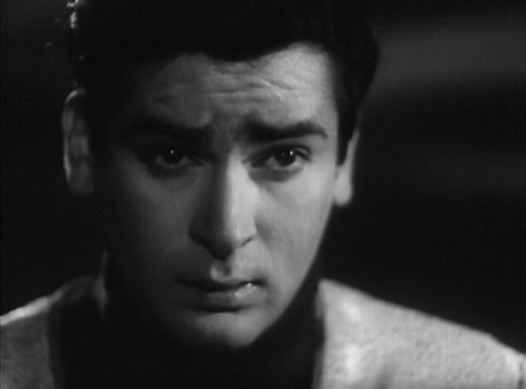
An Eye Candy Post to Begin Shammi Kapoor Week

Over a year ago, my husband remarked, “You’ve done special weeks on Robert Mitchum and Tyrone Power. You’re also going to be doing one on Johnny Walker. But what about your favourite actor? Don’t you think you should be doing a Shammi Kapoor Week sometime?”

Of course, I said. I just wanted to time it well – in time for Shammiji’s 80th birthday, which would be on October 21st, 2011. That would be quite an occasion, and the right time for me to spend an entire week gushing about my favourite film star.


Continue reading

Rafi in Ten Moods

The other day, after a long gap of 16 years, I met someone who used to teach me in college. I never knew back then that he was a Mohammad Rafi aficionado; and now, chatting with him about Dusted Off, I got a request: do a Rafi post.
So, as a sort of gurudakshina, here it is: a Rafi post. And since I cannot even begin to think of trying to narrow down my favourite Rafi songs to just ten (or even a hundred), I’m taking the easy way out. Rafi, in ten moods. Ten songs that showcase the breathtaking versatility of this man and his voice. There will always be dozens of other Rafi songs out there that reflect the same emotions behind these songs, but these are my favourites. And, in keeping with the rules I always set for myself, they’re all from the 50’s and 60’s, from films I’ve seen.

Continue reading

Ten of my favourite daaru songs

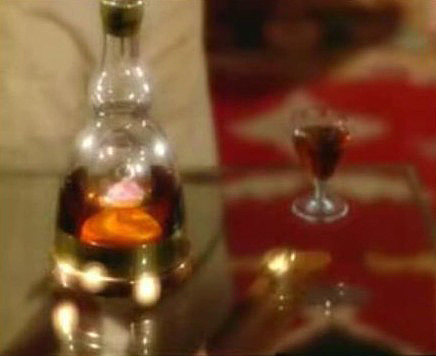
A friend of mine on Facebook recently posted her favourite daaru song, as she called it: Yeh jo mohabbat hai, from Kati Patang (1970). And since I’m not one to let inspiration go a-begging, I decided I had to do a post on my favourite daaru songs. Classic Hindi cinema is replete with these: songs induced by alcohol, songs praising alcohol, songs reviling alcohol (even if sung in an alcohol-induced half-stupor; remember Yeh laal rang kab mujhe chhodega)?
So here’s a list of ten of my favourite daaru songs, all from films of the 50’s and 60’s that I’ve seen. Cheers!

Ek jaam... jaam ke naam (a toast to a toast)

Continue reading

Ten of my favourite `Sung in transit’ songs

There was a snippet in the newspaper the other day about a Britisher who was fined by the police for laughing while driving. He’d been using a handsfree on his mobile to chat with a friend, but it wasn’t, apparently, the mobile that irked the police; it was the laughing.
That got me thinking: what would they make of characters in Hindi cinema who sing, play musical instruments, and sometimes even dance, while driving? That thought, of course, led to this post: ten of my favourite 50’s and 60’s songs, picturised on modes of transport. They’re all from films I’ve seen, and haven’t been included in any of my earlier posts (or, as one of my readers pointed out, not in one of my earlier Ten of my favourite… lists). Just to make it a little more interesting, no two songs are filmed on the same type of vehicle—and a song qualifies only if (a) the singer is on the vehicle (people sung to could be elsewhere) and (b) the singer stays on the vehicle through at least 80% of the song. And yes, a song figures on this list only if it’s good to look at and listen to.

A jeep and a car - from Dil Deke Dekho

Continue reading

Ten of my favourite O P Nayyar songs

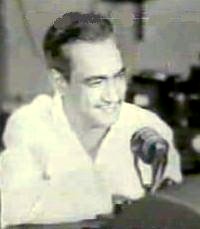
My sister gave me Ganesh Anantharaman’s Bollywood Melodies: A History of the Hindi Film Song for Christmas. Yes, I know, my sister’s a gem: I adore her. I also adore a lot of the people Anantharaman writes about in his book. He admits he’s biased towards classical music, but then he does go on to acknowledge the worth of people like O P Nayyar, who’s a classic example of unclassical.
Omkar Prasad Nayyar was born on January 16, 1926 (now you know why this post today, of all days). He grew up in Lahore, and was composing music for All India Radio Lahore by the time he was fifteen (makes me feel utterly worthless. All these child prodigies do). When India was partitioned in 1947, Nayyar left Lahore and came to Bombay. Thank heavens. The rest, clichéd though it may sound, is history.

O P Nayyar

Continue reading