Ten of my favourite ‘Housework Songs’

This needs some explaining. I don’t mean songs that extol the virtues of doing housework (as someone who does more housework than the average middle class Indian woman, I cannot imagine ever extolling the virtues or joys of housework—it’s possibly the most thankless, relentless and utterly monotonous job out there). But the monotony of housework, the fact that you can get nearly all of it done without really applying your mind or having to concentrate, means that you are free to do something else. Especially something musical.

My mother-in-law invariably turns on the radio and listens to songs as she goes about her work. But my mother, from as far back as I can remember, used to sing. As she went about dusting and the cooking and whatnot, I’d hear her singing. She still has a wonderful voice, and back in her heyday, it was stunning—and her repertoire was amazing, all the way from hymns to hits by Elvis and Jim Reeves (and some old Hindi songs: as lullabies, she sang O mere pyaar aaja to my sister, and Yehi woh jagah hai to me).  I too, when I’m doing housework—especially when I’m cooking—sometimes sing. All sorts of songs.

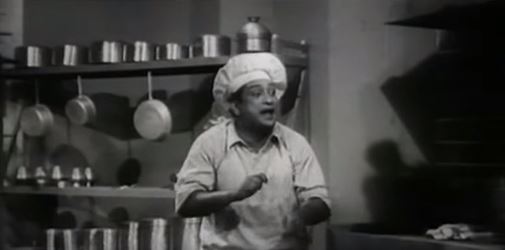
So, too, do a fair number of people onscreen. Here, then, are ten songs that feature people singing as they go about doing housework. Besides my usual criterion, about the film in question being a pre-70s one that I’ve seen—I’ve imposed one more rule: that the person should be doing some work in the course of the song (this is why Kismat ki hawa kabhi naram doesn’t feature on my list; while Bhagwan’s character is in a kitchen, surrounded by pots and pans and even wearing a chef’s cap, he never uses any of those for anything remotely connected to housework).
Continue reading

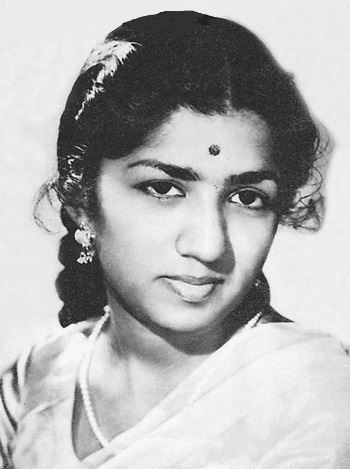
Lata Mangeshkar: Ten Solos, Ten Composers – Part 2

When Lata Mangeshkar passed away earlier this month, I wrote a tribute post in which I listed ten songs, all solos, that Lata had sung for ten different composers. Naturally—given Lata’s record number of songs—there were many, many songs and many composers that didn’t get covered in the list. Blog readers helpfully suggested other great songs that could have been part of the list, or which they especially liked; some wondered why I had not listed this song or that. Or why so-and-so composer had not been included.

Even when I had been compiling that post, I’d been thinking, there really ought to be a sequel to this. A post, at least, to include some of the other great music directors for whom Lata sang some exceptional songs. As well as the music directors who may not have been very famous, but who were nevertheless very talented.

Continue reading

The Pardesi Extra’s Story

Earlier this month, this blog hosted a guest post by Fred Miller, son of the talented (but alas, largely uncredited) Sam Millar. Fred had promised us another post, of his reminiscences from his days with his father in the big, bad world of Hindi cinema in the 50’s, and here it is: a delightful, very personal and up-close memory of an extra in the Indo-Soviet film, Pardesi (known in Russian as Khozhdenie Za Tri Moray). In Fred’s own words:

And now dear Dusted Off readers, the untold story of the early days of Bollywood continues with a look at my role in Pardesi, an Indo-Soviet film from 1953, tied up in post-production until its release in 1957…

Continue reading

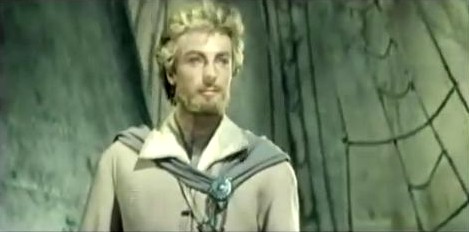
Khozhdenie Za Tri Moray (aka Pardesi) (1957)

Frequent readers of this blog have probably realised I have a soft spot for ‘real life’ stories: Gladys Aylward, Dr Kotnis, Changez Khan, Shahjahan: I’m game. Of course, I don’t always end up with films that bear any resemblance to the life of the person in question, but there’s no harm in trying.

So, another. Afanasy Nikitin was a horse trader from Tver in Russia, who came to India in the late 15th century, having started off from Tver in 1466. His travels took him down the Volga River, through Persia, and then via dhow to India. He is believed to have disembarked in present-day Maharashtra; over the years that followed, he travelled through a large part of peninsular India, including Bidar and Vijaynagar. He died in 1472 in Smolensk, on his way home; his travelogue of India, however, endures: entitled Khozhdenie Za Tri Moray (‘The Journey Beyond Three Seas’), it describes in detail all that Nikitin saw of what was to him a wild, exotic land like nothing he knew.

Continue reading