
What would you rather have? A Muzaffar Jang book as a paperback, for Rs 350? Or a Muzaffar Jang e-book for Rs 150 (or possibly less)? And yes, this isn’t merely a rhetorical question; I would like to know, because … Continue reading

What would you rather have? A Muzaffar Jang book as a paperback, for Rs 350? Or a Muzaffar Jang e-book for Rs 150 (or possibly less)? And yes, this isn’t merely a rhetorical question; I would like to know, because … Continue reading
Ah, well, the Valentine’s Day bandwagon and all that.
Seriously, I’ve blogged through five Valentine’s Days, and steered clear of the temptation to post something even vaguely romantic (largely because my idea of what constitutes ‘romantic’ is more often than not at odds with what old Hindi cinema, or even a lot of Hollywood, thought of as romantic). This year, however, I’ve decided to throw in the towel. Romance is in the air. And Hindi cinema, as any Hindi film buff will know, has always loved romance (especially in the 50s and 60s, when any self-respecting film had at least one romance in it, if not more).
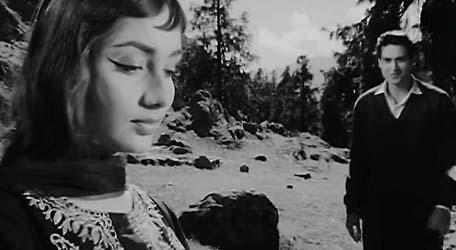
But, since I’m a bit of a non-conformist, I’m doing this with a twist: not necessarily a serenade to a loved one, and not necessarily two lovers billing and cooing to each other. Instead, romantic love in its different forms and shapes and tones and hues. All of these songs are about romantic love (not maternal/fraternal/patriotic/devotional or other forms of the sentiment), and they’re all from pre-70s films that I’ve seen. And they’re each in a distinct mood that shows some aspect of romantic love. Enjoy!
As part of my on-and-off series of articles on little-known historical (and secular) structures in Delhi, I wanted to write about the gates of Shahjahanabad. Only, I found it difficult to pick one gate out of the existing ones. This post, therefore, is going to be about the gates in toto.
 Kashmiri Darwaaza. Continue reading
RIP, Maximilian Schell.
Of the cinema personalities who have passed on recently and to whom I’ve posted tributes on this blog, nearly all have been people I’ve watched in at least a few films each. People (like Eleanor Parker, who for years I knew only as the Baroness from The Sound of Music) whom I may not initially have been utterly enamoured of, but whom I’ve grown to like and admire after having watched them in numerous roles. Joan Fontaine, Peter O’Toole, Suchitra Sen…
The Austrian-born Maximilian Schell (December 8, 1930-February 1, 2014) is the exception, because this is one actor whom I’ve seen—before I watched Topkapi—in only one role: as the earnest young lawyer in Judgment at Nuremberg. Just one performance (an Oscar-winning one), mind you, and that was enough to make me a Max Schell fan. Enough of a fan to mourn his passing.

Johnny Rockets—‘The Original Burger’—is an international diner chain that’s been around for 27 years and has over 300 outlets in the US and internationally. I was only aware, in a vague sort of way, of the chain’s name; I’d never … Continue reading
I grew up in a house that resonated with the sound of Hindi film music. My maternal grandfather had worked many years for HMV; my father, whose elder brother was a guitarist in Bombay’s film industry, had inherited his love … Continue reading
…and it’s a historical, again!
Frequent visitors to this blog would probably by now have realised that I have a weakness for history and historical films. Give me a sword and sandals epic, a Mughal extravaganza, or just about any film set in the ancient, medieval, or even early modern world, and I’m happy. Even happier when it’s a somewhat unusual setting. And more when the film maker has spent two years researching the film.
The Egyptian is set in the Egypt of 3,300 years ago. The main story plays out as a flashback, the memories of old Sinuhe (Edmund Purdom), who looks back on his life.
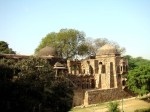
Continuing with my series on the lesser-known heritage buildings (and that too ones of a secular nature), this time I’m going to be focussing on the madarsa at Hauz Khas.
It’s sad that, over the past year or so, barely a month has passed without my having to post a tribute to yet another film personality who’s passed on. Last month, with Eleanor Parker, Joan Fontaine and Peter O’Toole passing away within days of each other, I thought it couldn’t get worse. And I hoped that 2014 would be better.
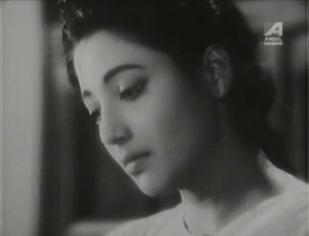
But, alas. We say goodbye to yet another luminary of the film world. This time, the beautiful and very talented (not to mention wildly popular) Suchitra Sen (April 6, 1931-January 17, 2014), who made a mark in Hindi cinema even in the few films she acted in (Bombai ka Babu, Devdas, Mamta and Aandhi being the best-known), but ruled Bengali cinema.

Delhi-based restaurateur AD Singh opened a Japanese restaurant called Ai in Delhi’s MGF Metropolitan Mall (in Saket) some years back. This mall happens to be not one of Delhi’s most happening, and since we visit it once in a blue … Continue reading


 Dustedoff