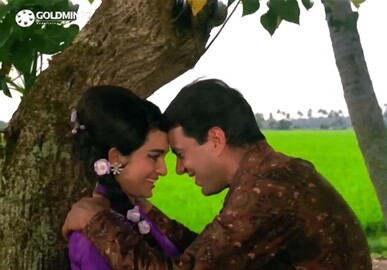
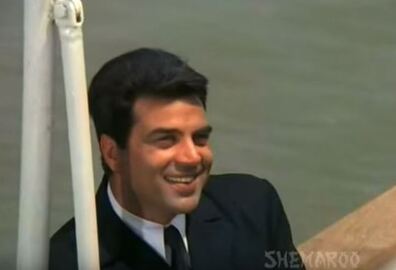
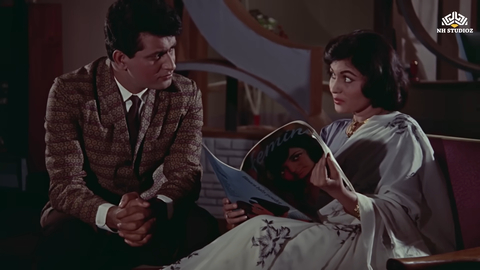
Ten of my favourite Dharmendra duets

RIP, Dharmendra.

After the recent fiasco—when several news sites (including some which are supposed to be responsible) posted the erroneous news of Dharmendra’s passing away—I was sceptical when I read, on November 24th, that he had died. Another hoax, I thought. He cannot be dead; this must be another TRP-raising technique by conscienceless brute journalists.

But no, sadly not. Dharmendra truly is gone. At the age of 89, after a very long innings as an actor. Starting as a supporting actor, then going on to play the romantic hero through the 60s (a period during which he also did some of his more nuanced roles, like in Satyakam and Anupama). In the 70s, Dharmendra finally donned the ‘Kutte main tera khoon pee jaaoonga’ persona that was to—unfairly, I think—become his defining onscreen character. He was the muscle-bound action hero, often seeking revenge, in so many films that people tended to forget that Dharmendra was actually a very versatile actor, capable of everything from comedy (remember him in Chupke-Chupke and Seeta aur Geeta?) to knee-weakeningly romantic roles, to restrained, subtle acting.

Also, of course, there was the fact that he was very handsome: one of the best-looking of Hindi cinema’s leading men. One could watch a film just to feast one’s eyes on Garam Dharam, the ultimate hottie.

Anyway, a tribute was definitely in order, because this is one person whose passing I sincerely and whole-heartedly mourn. I had done a post of my favourite Dharmendra solos back in 2014, to mark his 79th birthday. Commenting on that post, several blog readers had suggested songs of his that were duets, and which I had to regretfully nix. But I thought, back then, that a Dharmendra duets list was in order. So here it is. As always, these songs are all from pre-70s Hindi films (or rather, pre-1971, since a few of these were released in 1970) that I’ve watched.

Continue reading

Shaheed (1948)

RIP, Kamini Kaushal. Ms Kaushal, probably the oldest of Hindi cinema stars still living, passed away at the age of 98 on November 14, 2025.

Over the years I’ve been blogging, I’ve seen one after the other of some of my favourite stars pass out of our lives: Shammi Kapoor, Sadhana, Dilip Kumar, Kumkum… but with Kamini Kaushal, I have to admit to a somewhat pronounced sense of loss. Not because she was a particular favourite of mine (though I admitted to being quite impressed with her acting when I watched Biraj Bahu some months back). But because with her passing, the door seems to have shut firmly on those who heralded the start of the Golden Age in Hindi cinema.

Anyhow, a tribute seemed in order. A tribute to Kamini Kaushal, and to a film that I’ve been meaning to watch for a while now.

Continue reading

Celebrating International Literacy Day: People Reading Things in Hindi Cinema

Today, September 8, is International Literacy Day. In 1967, this day was designated as such by UNESCO to emphasize the importance of literacy in maintaining dignity and as a matter of basic human rights. Every year, a different theme related to literacy is used as the focus of special programmes and initiatives across the world: women’s empowerment, for instance; or the connection between literacy and controlling epidemics.

So what does that have to do with Hindi cinema? Not much, I admit, though there have been Hindi films—especially in the 50s, when India under Nehru was trying very hard to haul itself up into modernity—when there was the occasional film which made an attempt to underline the importance of being literate. Anpadh, for instance; or Bahurani, both of which showed how literacy can enlighten people. Similarly, Nartakee, and Ek ke Baad Ek, which too had literacy and education as important elements of the story.

While literacy may not be the point of most Hindi films, there’s no denying that few films go by without at least one character shown reading something. A book (to be seen in many films, even clearly identifiable books, as I’ve mentioned in these posts). A letter—at times so incriminating. A newspaper, often carrying some very vital piece of news, sometimes even shown rolling off the presses or being sold on the streets. A magazine (Life? Everybody fashionable in 60s cinema seemed to read Life).

Continue reading

Sapphire (1959)

Not even half an hour into this 1959 British film, directed by Basil Dearden, and I was wondering: “Why isn’t this one better-known? How come I hadn’t heard of it before?”

Having finished watching Sapphire, I think I know the answers to those questions. It’s not as if Sapphire is an obscure film; in Britain, in knowledgeable film circles, it’s probably fairly well-respected, given that it won the BAFTA Award for Best Film in 1960. But here in India, while British cinema of earlier years (Hitchcock’s early cinema, the films of Laurence Olivier and Leslie Howard in the 30s and 40s, for instance) were the stuff of my childhood film-watching—thanks to Doordarshan, which would air the great classics—by the 1950s and 60s, the cinema that seemed to be most popular was Hollywood. I am not talking of what English-language films were actually screened in India back then; I am talking of the 50s and 60s English-language films that were aired by Doordarshan in the 1980s and early 90s, when much of my film-watching was on TV.

Anyway, better late than never, I guess. I finally watched Sapphire (because of a serendipitous discovery on YouTube; the film is available here). And this, I can safely say, is one of the more unusual noir films I’ve seen. While it is a solid police procedural, a whodunnit revolving round a murdered woman, it is, too, a comment on society, on norms, what is right and what is wrong.

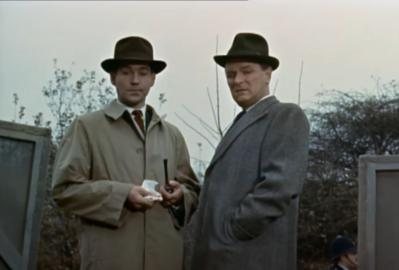
The story begins on Hamstead Heath, where two little children, playing with their ball, tumble onto the body of a young woman (Yvonne Buckingham) who’s been stabbed to death. The police are called in, and Chief Inspector Bob Hazard (Nigel Patrick) comes with his team to examine the scene of crime. The young woman’s body is taken away for autopsy.

Continue reading

The LO goes to Rajasthan, Part 1: Sariska

Given that we live in the National Capital Region, Rajasthan, rich in culture and natural beauty, would seem like the perfect destination for a holiday—but I guess here it’s a case of ghar ki murghi daal baraabar; familiarity breeds contempt. We invariably think of Rajasthan as a place we can always visit, after we’ve exhausted the places further away, the destinations more exciting and more exotic.

Also, I guess, because my husband and I, on multiple trips over the years before our daughter (the Little One, or LO) came into our lives, had visited a good bit of Rajasthan. We weren’t especially interested in revisiting the same places again and again.

But it has struck me recently that the LO really should get to see Rajasthan beyond Bharatpur—Keoladeo Ghana, Abhaneri’s Chand Baori, and the Neemrana Fort Palace, all of which she’s been to. All, by the way, before she turned three, so she has no recollection of any of these. Some more colourful culture, I thought, was in order. And more wildlife.

At Sariska: sambhar deer and peafowl
Continue reading

Jaagte Raho: A Night of Truth

(Click through to read my post on Learning and Creativity’s Silhouette Magazine)

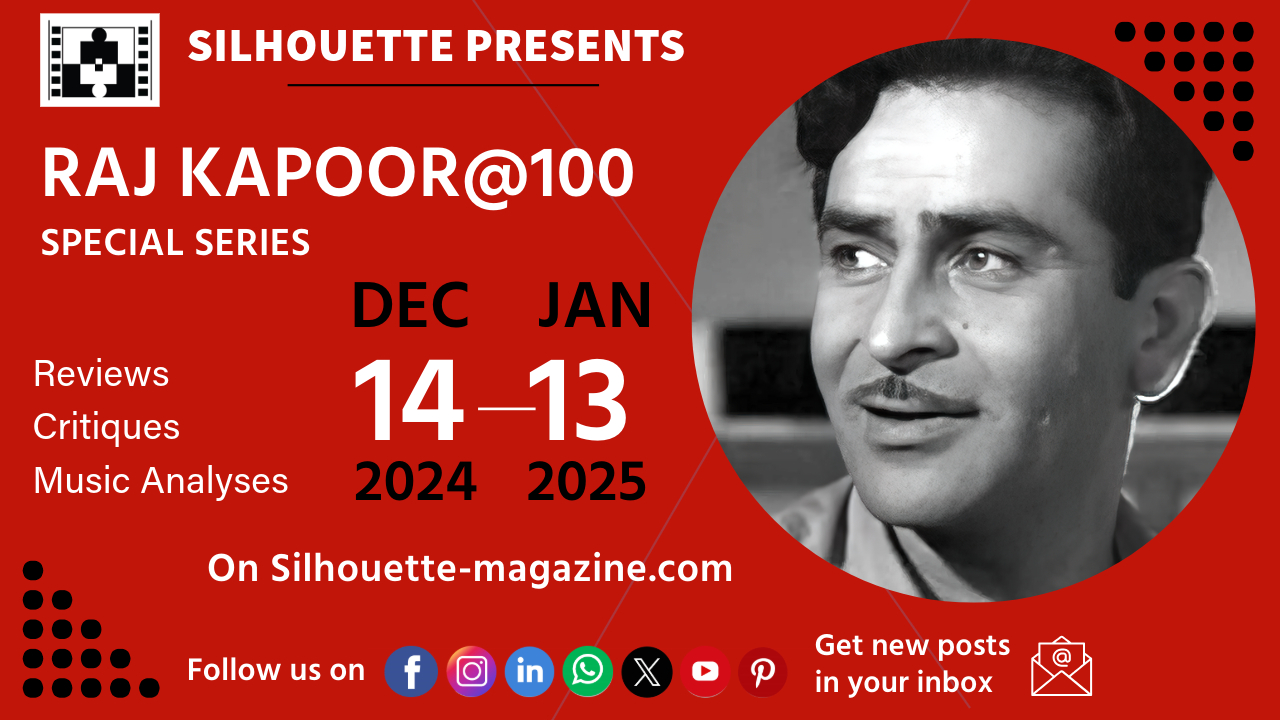
December 14th 2024 marked the birth centenary of actor/film-maker Raj Kapoor. I commemorated the day by posting a review of one of my favourite Raj Kapoor films (as an actor, not a director), the delightful Chori Chori. Simultaneously, the online magazine for cinema, art and literature, Silhouette, was hosting a month-long extravaganza on Raj Kapoor, the man, his films, his music, and more. The event is on till January 13th.

As part of this online celebration, I too was invited to contribute an article (as Anu, who curated the event, said: “I know there are RK movies you like!”). I chose to write on Jaagte Raho, a film I’d seen earlier (and reviewed, on this blog), and which I had liked enough to now want to rewatch it, and review. On purpose, I did not revisit my earlier blog post; I approached the film with new eyes, and found myself liking it even more than I had the last time.

Here, then, is my review of Jaagte Raho. Do also check out the other articles that form part of this RK fiesta: lots of good stuff here!

Bedazzled (1967)

If, like me, you were old enough to be watching films in 2000—and you watched Hollywood films—you might have come across the Brendan Fraser-Elizabeth Hurley comedy Bedazzled. It was about a geeky, socially inept but otherwise sweet fellow (Fraser) who makes a pact with the Devil (Hurley), who promises to grant him seven wishes in return for his soul. Unfortunately for our hero, all his wishes come to nought, leaving him even more distressed than he was originally. It was a funny film, and Brendan Fraser, in my opinion, shone as a comic actor.

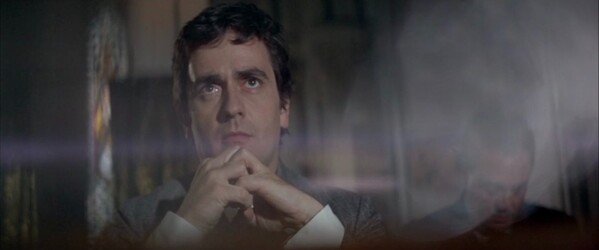
I discovered, a few weeks ago, that the 2000 Bedazzled, directed by Harold Ramis, was actually a remake of a 1967 British film of the same name. Directed by Stanley Donen, Bedazzled was based on a story by Peter Cook and Dudley Moore, who also acted as the leads in the film: Dudley as Stanley Moon, Peter as the Devil.

The story begins in a church, where Stanley is praying very hard that God give him a sign. Something to assure a despondent Stanley that there is someone listening.

Continue reading

Ten of my favourite cosmetics songs

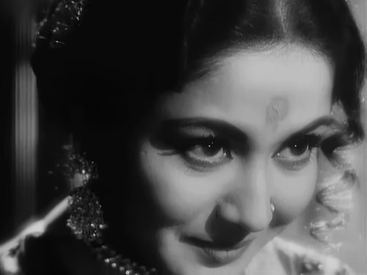
This song list actually had its genesis many years ago, when I posted my list of jewellery songs. Back then, it had occurred to me that there were also songs that celebrated other ways (less expensive ways!) of adorning oneself. Cosmetics, most of them the ‘traditional’ ones, rather than those that came to us, along with their names, from the West, are not all that uncommon in Hindi film songs. And with reason: after all, romance plays a major part in old Hindi cinema, and where there is romance, there is shringaar ras: the very essence of attraction. A woman (mostly, though there are instances of men too) is often praised for her beauty, and that beauty is accentuated by cosmetics: by kaajal (kohl) in the eyes, mehendi on the hands, sindoor in the parting of the hair, and so on.

Continue reading

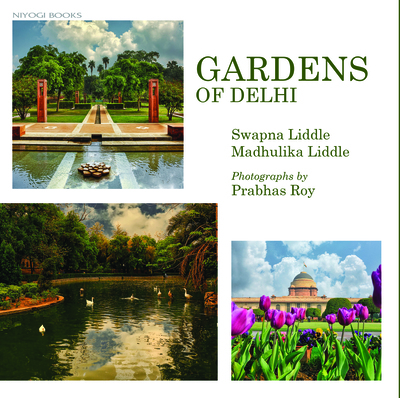
Announcing a New Book: Gardens of Delhi

This is a once-in-a-lifetime occasion for me: two books being launched in the same month. For someone who usually only has a new book coming out every two years (if that), it’s a very unusual thing to have not one, but two, books being released within a couple of weeks of each other.

Some of you might know that I have an elder sister, Swapna Liddle, who (like me) is an author. Like me, too, Swapna is deeply interested in history. That, however, is where the resemblance ends. Swapna is a much-respected historian and all her books have been well-researched, immensely insightful works on the history of Delhi (her field of specialization is Delhi of the 19th century). I, of course, primarily write fiction, when I’m writing in the long form: non-fiction, in the form of travelogues, book reviews and film writing, are reserved for short form articles.

This is where we finally come together: in a book about the gardens of Delhi.

Continue reading

Police (1958)

If you’ve been reading this blog some years, you probably know by now that I am a fan of Madhubala’s. I’ve watched most of her films (several of which I have not got around to reviewing on this blog), I’ve done lists of my favourite songs of hers, and I have waxed eloquent every now and then about how much I like her.

One of the things I dislike about much of the online (at least) raving about Madhubala is that the praise is invariably just about her beauty. How gorgeous, how exquisite. Yes, indeed; but Madhubala’s beauty, I think, often comes in the way of people appreciating what a good actress she was, too. Watch her performances in films like Mughal-e-Azam and Amar, for instance, and if you can look past her face, you will see how well she holds her own against heavyweight thespians like Dilip Kumar and Prithviraj Kapoor.

And she was a fantastic comedienne too. The madcap way she matches Kishore Kumar in Chalti ka Naam Gaadi, for example. Or her airhead character in Mr & Mrs 55. Interestingly, Madhubala is often compared to Marilyn Monroe, almost entirely on the basis of their beauty and popularity; but I think the two stars had one more thing in common: both could portray the ditzy beauty very well. This, in fact, is just the type of woman Manju, of Police, is: nutty, silly, a clown. But so endearing too (and, it goes without saying, so gorgeous).

Continue reading