Random Harvest (1942)

I am an unashamed romantic—but I have some stipulations. The romance mustn’t be the type that pops up out of the blue, just by two people looking at each other. It mustn’t consist of just staring, pop-eyed and with a silly grin, at each other. Most important, it must end happily. The ride into the sunset, or the fadeout on a heart-and-soul smooch, is of paramount importance.
That said, here’s one utterly lovely romance I saw a few weeks back. And then again yesterday, just because it was so wonderful.
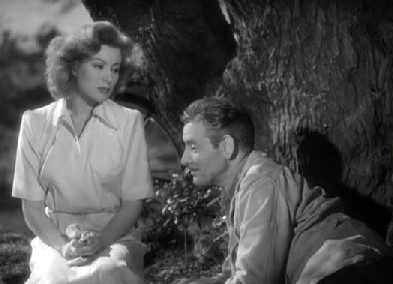
Greer Garson and Ronald Colman in Random Harvest

Continue reading

Usne Kaha Tha (1960)

I am occasionally inclined to see a film simply because I adore one particular song of the film. Unfortunately, I score more hits than misses using this criterion. Saranga (1960) is a case in point—it has the classic Saranga teri yaad mein nain hue bechain (one of the few hit songs of Anu Malik’s father, Sardar Malik), but not much else. With Usne Kaha Tha, I had better luck. The lovely Aha rimjhim ke yeh pyaare-pyaare geet liye is a wonderful song, and the film itself is an interesting one.

Sunil Dutt and Nanda in Usne Kaha Tha

Continue reading

The Prisoner of Zenda (1952)

Like Robert Mitchum, Stewart Granger is one of those actors who just needs to be in a film for me to want to see it. When the film in question boasts of Deborah Kerr opposite Granger, lots of swordplay and palace intrigue, a magnificently villainous villain, and some very fancy costumes: my day is made. And, best of all: not one Granger, but two: he’s in a double role here (well, one of the characters is hardly there, but still). Yippee!

Stewart Granger in The Prisoner of Zenda

Continue reading

Shaadi (1962)

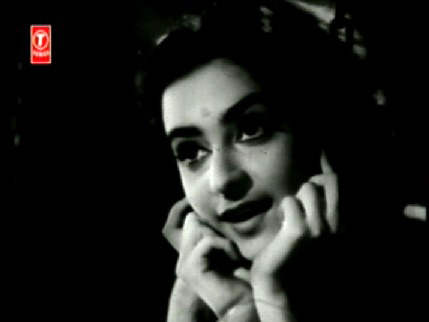
Shaadi isn’t one of the better films I’ve seen in recent times. In fact, it had some definitely irritating moments, and it called for more suspension of disbelief than is generally expected in Hindi films. On the other hand, it had quite a cast: Saira Banu, Manoj Kumar, Dharmendra, Indrani Mukherjee, Balraj Sahni, Om Prakash, Manorama, and others. Even more interestingly, it was Saira Banu’s second film and one of Dharmendra’s first few films. Overall bearable, especially since I didn’t have anything better to do.

Saira Banu in Shaadi

Continue reading

Westward the Women (1951)

On International Women’s Day, I’d like to raise a toast to all the women I admire. My mother, my sister, sundry relatives, old school and college friends whom I haven’t seen in years, ex colleagues, and even some women I’ve only met in cyberspace but whom I nevertheless respect and admire (memsaab, bollyviewer, and Banno: this is for you). And to Sabrina Mathew, one of the most intelligent, well-read and amazing people I’ve ever met. Here’s to all of us!

Ahem. That sounds like a dedication on a book or an Oscar acceptance speech. And though I mean it sincerely, this perhaps isn’t the forum to get emotional and teary. So back on track, and this time with an unusual film: a Western in which though the star is Robert Taylor, the real heroes are all heroines. A good watch for Women’s Day.

Westward the Women

Continue reading

Beti (1969)

There are some things I have very little patience with while I’m watching a film. Weepiness, for instance. Precocious children for another. Endless bhajans (unless the bhajan in question happens to be of the calibre of Allah tero naam or Man tadpat hari darshan). Mindless self-sacrificing which can’t possibly benefit anyone.
And much more. Beti, unfortunately, has all of these in ample doses. I saw it primarily because I like the lead pair (Nanda is an old favourite, and I haven’t given up on Sanjay Khan, despite the lamentable Ek Phool Do Maali). And when a film lists Rajendranath, Shyama and Asit Sen in its cast, one can hope for lots of entertainment.

Or so I thought.

Sanjay Khan and Nanda in Beti

Continue reading

Crossfire (1947)

I am a devoted fan of Robert Mitchum, droopy eyes, awesome walk and all. I am also very enthusiastic about film noir (not surprising, since a large portion of Mitchum’s work was noir). Crossfire, made just two years after the end of World War II, focusses on a largely ignored consequence of the war: the sudden demobilisation of soldiers—men who, after years of knowing exactly whom they were supposed to hate, suddenly found themselves with no target for all that festering anger and hatred.
This is a taut, suspenseful film, but also a thought-provoking one, and perhaps a little ahead of its time.

Robert Ryan, Robert Mitchum and Robert Young in Crossfire

Continue reading

Love in Tokyo (1966)

Love in Tokyo was before my time, but I can well imagine what its trailer should’ve been:

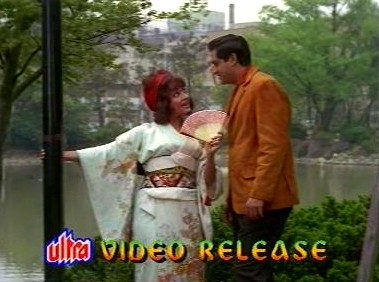
Japanese gardens! Asha Parekh in a kimono! Joy Mukherji in a wet shirt! Mehmood as a geisha! Mehmood as an Arab doctor! Mehmood as a nawab! Mehmood as Asit Sen!

And so on and so forth. It probably would’ve mentioned a few other attractions: Pran as a lecherous villain (so what’s new?), Lalita Pawar as a tyrannical matriarch with a soft heart (ditto), surprise revelations, a gold digger without a conscience, and a comic side plot without a shred of sense in it.
In spite of all that lunacy, though, this is an entertaining film with a certain mad charm about it.

Asha Parekh and Joy Mukherji in Love in Tokyo

Continue reading

The Bells of St Mary’s (1945)

I have a bunch of films waiting at home to be watched, and (uncharacteristically indecisive), I’ve been see-sawing between Wait until Dark, The Maltese Falcon, and It Happened One Night. What I ended up seeing was this: a sweet, poignant, sometimes overly optimistic film with some lovely music and a memorable performance from the matchless Ingrid Bergman.

Ingrid Bergman in The Bells of St Mary's

Continue reading

Marine Drive (1955)

Every now and then (recently, with alarming frequency) I come across films that do an about-turn midway through. Either they start off being happy and degenerate into utter despondency; or they are intelligent to start with and then descend into idiocy. Marine Drive is a prime example of a film that manages to become irritatingly nonsensical almost exactly at the half-way mark.

Bina Rai in Marine Drive

Continue reading