Ten of my favourite crooner/club songs

This post has been in the pipeline a long, long time. When I first started this blog way back in November 2008, the very first ‘ten favourites’ song list I compiled was for Madhubala songs—and (unlike what I now do, which is to steer clear of assigning ‘absolute favourite’ status to any particular song), I actually went out on a limb and marked one Madhubala song as my favourite. That was Aaiye meherbaan baithiye jaan-e-jaan. And, even as I was putting that down on my list, I thought to myself: “I must do a list of my favourite crooner and club songs someday.”

Well, here it is, finally. It’s not as if I’ve spent the last many years thinking of this post; but the ‘Crooner Songs’ folder has been there on my laptop all these years, even with some screenshots taken of the songs I knew had to be part of the list.

In any self-respecting, urban-centric film of the 50s and 60s, a club song was almost de rigueur. It would probably be picturized on someone of the likes of Helen, but not necessarily: at times, what was needed was not someone who was a fabulous dancer, but someone who could project the oomph one associated with the club singer.

Continue reading

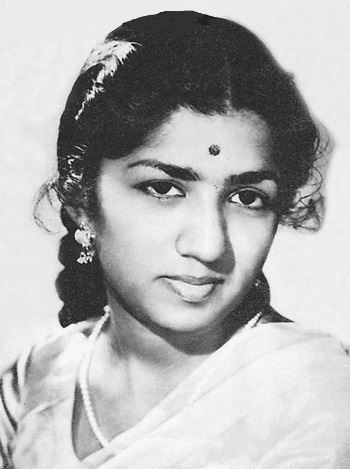
Lata Mangeshkar: Ten Solos, Ten Composers – Part 2

When Lata Mangeshkar passed away earlier this month, I wrote a tribute post in which I listed ten songs, all solos, that Lata had sung for ten different composers. Naturally—given Lata’s record number of songs—there were many, many songs and many composers that didn’t get covered in the list. Blog readers helpfully suggested other great songs that could have been part of the list, or which they especially liked; some wondered why I had not listed this song or that. Or why so-and-so composer had not been included.

Even when I had been compiling that post, I’d been thinking, there really ought to be a sequel to this. A post, at least, to include some of the other great music directors for whom Lata sang some exceptional songs. As well as the music directors who may not have been very famous, but who were nevertheless very talented.

Continue reading

Aakhri Khat (1966)

Hindi cinema has, for many decades (much of its existence?) been stereotyped. Mush, melodrama, music. The usual plot of countless films over the years has been dominated by a few given elements, even when the film’s main story may straddle other genres, such as thriller or comedy. You can’t have a Hindi film without romance, song and dance, and melodrama, seems to be the rule followed by most film makers.

Which is why the exceptions to the rule come as such a breath of fresh air. Majhli Didi, Dekh Kabira Roya, Kaanoon, Ittefaq… and this touching, tragic yet heartwarming story of a toddler wandering through the streets of big, bad Bombay.

Continue reading

Ten of my favourite Khayyam Songs

… and Khayyam, too, is no more. One of the last stalwarts of the Golden Age of Hindi cinema (and one who, like SD Burman, was able to reinvent himself and his music beautifully) passed away earlier this week, on August 19th.

Born on February 18th, 1927 in Rahon (Punjab), Mohammad Zahur ‘Khayyam’ Hashmi was so interested in music from a young age that he ran away to Delhi to become an actor, and ended up being enrolled to learn music—not an endeavour which lasted long, since his family hauled him back home to complete his studies. Khayyam did not show too much interest in studies, however. At the young age of 17, having gone to Lahore to learn music from the Punjabi music director Baba Chishti, he so impressed the man that Baba Chishti took him on as assistant music director.

After serving in the Army during World War II, Khayyam came to Bombay and the film industry, initially working as part of a team: as the Sharmaji of ‘Sharmaji-Varmaji’ (Rahman Varma was the ‘Varmaji’), he made his debut with Heer-Ranjha, in 1948. Varma left for Pakistan shortly after, and Khayyam struck out on his own, notching up, though slowly, some of Hindi cinema’s loveliest songs over the decades to come.

Continue reading