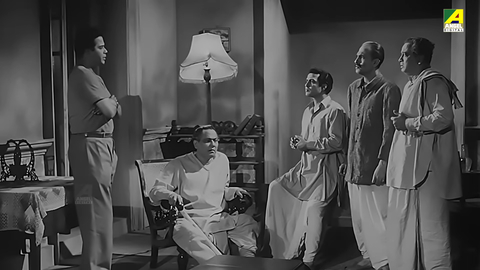
In 1947, as a birthday present for Queen Mary, Agatha Christie wrote a radio play called Three Blind Mice, about eight people snowed in, in a manor—one of them (who, we don’t know till the end) a murderer. Later adapted into a short story and then a theatrical play called The Mousetrap (because Three Blind Mice was already the title of a play), Christie’s work set a record. The Mousetrap, which saw its 30,000th performance in March 2026, is the longest-running play in history.
Such an iconic play, such a popular one, surely it must have been adapted for the screen many times (especially given the popularity of Christie’s books as source material for cinema)? But no; when the play was first staged at West End, one of the clauses in the contract was that no work on a cinematic adaptation could begin until the West End production had been closed for at least six months. And the play continues to be performed at West End…
But that, it seems, didn’t stop film-makers in other countries from using the story and making their own versions of it. The Bengali film Chupi Chupi Aashey (‘He Comes Stealthily‘) is an adaptation of The Mousetrap, and was supposedly the first Indian film to be based on a book by Agatha Christie.