Celebrating International Literacy Day: People Reading Things in Hindi Cinema

Today, September 8, is International Literacy Day. In 1967, this day was designated as such by UNESCO to emphasize the importance of literacy in maintaining dignity and as a matter of basic human rights. Every year, a different theme related to literacy is used as the focus of special programmes and initiatives across the world: women’s empowerment, for instance; or the connection between literacy and controlling epidemics.

So what does that have to do with Hindi cinema? Not much, I admit, though there have been Hindi films—especially in the 50s, when India under Nehru was trying very hard to haul itself up into modernity—when there was the occasional film which made an attempt to underline the importance of being literate. Anpadh, for instance; or Bahurani, both of which showed how literacy can enlighten people. Similarly, Nartakee, and Ek ke Baad Ek, which too had literacy and education as important elements of the story.

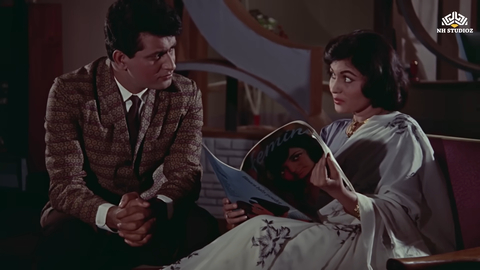
While literacy may not be the point of most Hindi films, there’s no denying that few films go by without at least one character shown reading something. A book (to be seen in many films, even clearly identifiable books, as I’ve mentioned in these posts). A letter—at times so incriminating. A newspaper, often carrying some very vital piece of news, sometimes even shown rolling off the presses or being sold on the streets. A magazine (Life? Everybody fashionable in 60s cinema seemed to read Life).
Continue reading

Ten of my favourite spooky songs

Some days back, I watched A Shamshir’s Woh Koi Aur Hoga (1967), starring Mumtaz, Feroz Khan, and Sohrab Modi. It turned out to be one of the most incoherent and illogical films I’d ever seen: Sohrab Modi’s character, a professor, is drugged (by Asit Sen in yellowface, a Chinese villain pretending to be the professor’s Indian servant) and made to do the dirty work of the Chinese: that is, inject hapless victims with something that will drain the blood from their bodies. The corpses are then covered with wax and sold off as mannequins to the wealthy gullible who want realistic-looking statues in their homes (and are possibly not averse to the frightful stench).

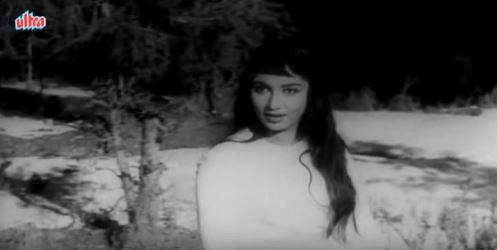
But, digressions aside: there was also, in the film, Mumtaz. Wearing a shimmery white dress and roaming about the hills at night, singing a sad song. Repeatedly.

Watching Ae raat ke andhere mujhko gale lagaa le, I was reminded of many other songs with a similar premise: a ghostly figure (invariably female), wandering about in the night and singing a signature spooky song. There is often an echo, sometimes other props, something else perhaps to suggest darkness, mystery, ghosts.

Continue reading

Raaz (1967)

For many years now, I’ve been fascinated by what I call the ‘supernatural’ subgenre of Indian suspense films. Offhand, I can’t recall too many [any?] non-Indian films that used a supposedly supernatural theme to veil what was a definitely corporeal, criminal deed. Yeh Raat Phir Na Aayegi, Mahal, Woh Kaun Thi?, Bees Saal Baad, Poonam ki Raat, Anita—all of these (and plenty more) used tropes such as spooky songs, ‘ghosts’ (invariably women in white), mysteriously creaking doors, swinging lampshades and seemingly haunted havelis, all forming part of a grand plan to convince someone that they were surrounded by bhoots when in reality they were surrounded by crooks.

Raaz is one of those films. And yet not.

Continue reading