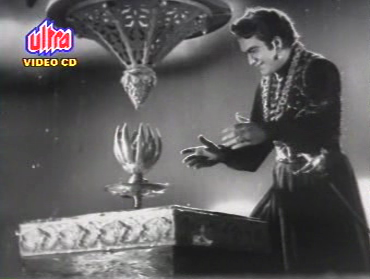
Baaz (1953)

Today, July 9, 2025, marks the 100th birth anniversary of one of Hindi cinema’s best-known film directors. Born in Mysore on this day in 1925 as Vasant Kumar Shivshankar Padukone, Guru Dutt studied in Calcutta before joining Uday Shankar’s India Culture Centre (in Almora, present-day Uttarakhand) to train in dance. By the time he turned 19, he had moved to Pune, where he began working as a choreographer for Prabhat Studios. By the time Prabhat Studios folded up (in the early 1950s), Guru Dutt had formed a close friendship with Dev Anand, because of whom he received his first break as a director: in 1951, he directed Navketan’s Baazi, starring Dev Anand, Geeta Bali and Kalpana Karthik in a noir thriller that was to become a defining film for Navketan: edgy, stylish, dark, very urban.

Guru Dutt is today revered more for the hard-hitting, cynical cinema he made: films like Pyaasa, Sahib Bibi aur Ghulam and Kaagaz ke Phool hold up the mirror to a world that is selfish, cruel and opportunistic. These are bitter films, films that plumb the depths of human nature; films that—despite following most of the standard tropes of commercial Hindi cinema (a romance between the lead couple; a fair number of songs; a comic character invariably played by Johnny Walker)—were quite different from other Hindi films.

These, too, are the films for which Guru Dutt is mostly remembered today. Is that because over the decades, people have seen how the tragedy and turmoil of Guru Dutt’s personal life was probably reflected in films like these? Is there a voyeuristic tendency to try and spot the man behind the director?

But Guru Dutt also made other films, on other subjects. This one, for instance, an adventure/patriotic film set on the high seas, with Geeta Bali starring as the eponymous ‘Baaz’ (falcon), a woman who becomes a pirate to free her land of a colonial tyrant.

Continue reading

Mem-Didi (1961)

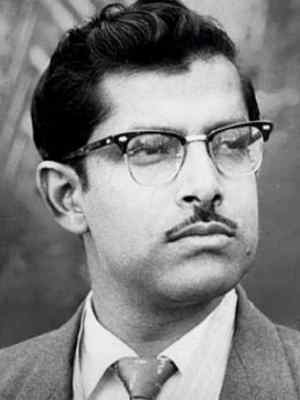
Today marks hundred years of the birth of one of Hindi cinema’s finest directors: Hrishikesh Mukherjee was born on September 30, 1922, in Calcutta.  Beginning in the late 1940s, Mukherjee worked as a film editor in Calcutta, before moving on to Bombay, where too he continued as editor, gradually moving on to direction as well. Mukherjee’s first film as director was Musafir (1957), and while it didn’t fare too well, it set the tone for a lot of Mukherjee’s later works: films about everyday people, with everyday triumphs and everyday sorrows. His were not the masala films that have always tended to dominate Hindi cinema, and yet—whether he was making classic comedies like Chupke-Chupke or Golmaal, or more nuanced, sensitive films like Majhli Didi, Satyakam, or Abhimaan, Hrishikesh Mukherjee made films that were hard to fault. He is one of the rare directors for whom I will watch a film just because it’s been made by this person.

Continue reading

Jhuk Gaya Aasmaan (1968)

Rajendra Kumar is one of those actors whom I’ve repeatedly mentioned as ‘not being one of my favourites’. Saira Banu, beyond her first few films (notably, Junglee and Shaadi), I find too shrill for my liking. Despite the fact that these two star in Jhuk Gaya Aasmaan, it remains one film I like a good deal—because it has such an unusual story.

A story to which there’s a brief nod in the first scene. Sanjay (Rajendra Kumar) and Priya (Saira Banu) meet in what looks like an obviously ‘indoor set’ representation of a cliff. There’s a little banter, she insisting that he’s irritating her with his wooing, he professing his love for her and asserting that he could do anything for her—even give up his life. Priya eggs him on: yes, please. Go ahead. Show us.

Priya begs Sanjay to jump off Continue reading

Abe-Hayat (1955)

I’ve been very busy the last couple of days, and the busy-ness doesn’t look like it’ll come to an end soon. My husband, therefore (and what a model of husbandly devotion!) offered to write the review of Abe-Hayat for me. This, mind you, without having seen the film, just on the basis of a very sketchy gist I’d narrated of the first half while we were on our evening walk. Tarun said he’d do a 3-sentence review:
Once there was an evil jaadugar named Saamri. There was a prince, and a princess. The prince killed Saamri, and then he and the princess lived happily ever after.

Continue reading