Ten of my favourite Nalini Jaywant songs

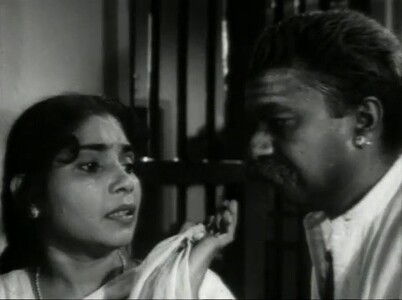
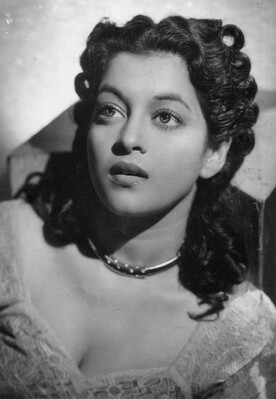
Nalini Jaywant is one of those actresses about whom I’ve changed my opinion over the course of my watching of her films. I remember, as a child (which includes my early teens, which was a peak period when it came to Hindi film viewing), not especially liking her. I was a callow youngster, and as shallow as I was callow. To me women like Madhubala or Meena Kumari were the ultimate in beauty: Nalini Jaywant, with her heavy-lidded eyes and her pouting mouth, didn’t strike me as beautiful. Also, even if I put aside the purely superficial aspect of her looks, there was the fact that I didn’t think her a good actress. I found her voice affected and thin, nothing to write home about.

Thank goodness I grew up. Grew up, widened my horizons, and realized that there are different kinds of beauty. Realized, too, that one shouldn’t pass judgment on the worth of an actor without having watched a wide-ish spectrum of their work. Nalini Jaywant, when I had watched Munimji, seemed just another effervescent filmi female, no more than arm candy; it was through Shikast and Kaala Paani, through Hum Sab Chor Hain and Railway Platform (and many more), that I discovered just how versatile she could be. Goofy, flirtatious, tragic, long-suffering, feisty… Nalini Jaywant aced so many roles, brought so many of her characters vividly to life.

Continue reading

Amar Jyoti (1936)

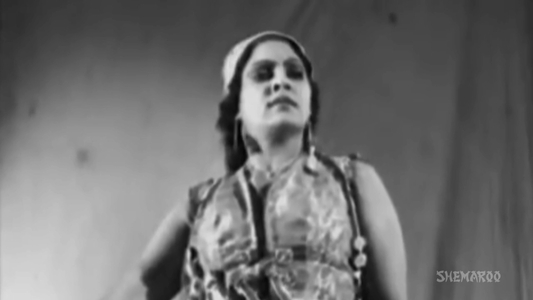
This is a film I first heard about many years ago, when Memsaab reviewed it on her blog. It’s been in the back of my mind to watch it sometime, but it kept getting put on the back burner. Then, some months back, when I was watching Baaz (1953) as part of my tribute on Guru Dutt’s 100th birth anniversary, I was reminded of Amar Jyoti. If Geeta Bali’s woman pirate in Baaz seemed a surprisingly progressive character for 1953, Durga Khote’s pirate queen Saudamini, playing the lead in V Shantaram’s Amar Jyoti in 1936, was even more progressive.

Continue reading

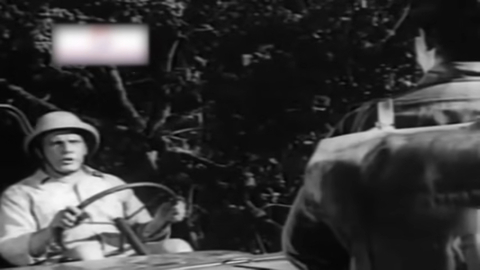
Shiraz (1928)

This is a film that’s been on my radar for a long time—in fact, from when I first read about it on Memsaab’s wonderful but now sadly defunct blog. As those who have read my Muzaffar Jang books might know, I find certain sections of Mughal history (especially around the reigns of Akbar, Jahangir and Shahjahan) fascinating. So rich, so interesting, a period of such efflorescence, in different ways. Spirituality; art; architecture; beauty in myriad forms. Among the greatest examples of the Mughal contributions to culture is the exquisitely beautiful Taj Mahal, ‘a teardrop on the cheek of time’, as Rabindranath Tagore put it.

The Taj has been the subject of numerous films over the year (the latest one seems to be controversial enough to have run into trouble). Arguably the most famous film on the subject is the 1963 version, starring Beena Rai and Pradeep Kumar and directed by M Sadiq; there have been more recent ones, including a 2005 one named Taj Mahal: An Eternal Love Story, supposedly the most expensive Hindi film of its time.  

Long before all of these was this silent film, directed by the Bavarian film-maker Franz Osten and produced by Himanshu Rai (who also played the titular role in the film). Himanshu Rai’s interest in cinema had led him to visit Germany, where he had spent some time with the Emelka film production company, exploring ways of getting German collaboration to produce an Indian film. When Rai returned to India, he brought with him one of Emelka’s best directors, Osten, as well as several of their top technicians. Osten went on to direct 16 films in India over the years, of which the second was this one, a story about how the Taj came to be built.

Continue reading

Kashmir ki Kali: The Shakti Samanta-OP Nayyar blockbuster

This is an important week in the history of Hindi cinema, because it marks the birth centenary of two of the industry’s most popular entertainers. Director Shakti Samanta was born on 13th January, 1926 in Bardhaman (Bengal), and three days later, on 16th January, across the country, OP Nayyar was born in Lahore. These two very different men were to come together in 1958 in the Ashok Kumar-Madhubala suspense thriller Howrah Bridge, and the magic they created between them in this tale of crime, deceit and romance set in Calcutta marked a milestone for both Samanta and Nayyar.

Continue reading

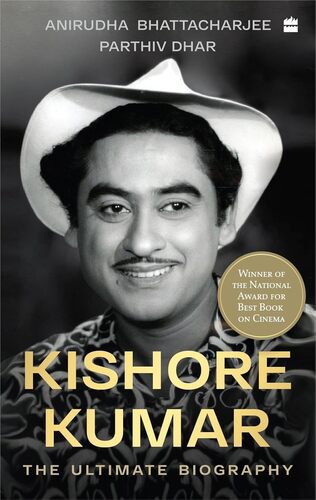
Book Review: Anirudha Bhattacharjee and Parthiv Dhar’s ‘Kishore Kumar: The Ultimate Biography’

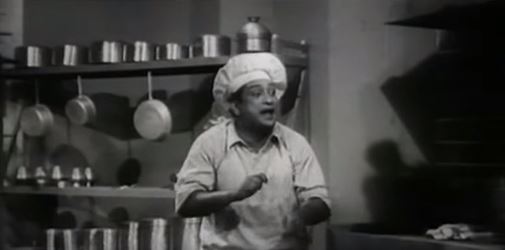
Anirudha Bhattacharjee—who has gifted me quite a few of his books on Hindi cinema in the past—sent me this book last year. I accepted his offer of the book for two reasons. For one, there isn’t a book by Anirudha that I have not enjoyed. For another, I really like Kishore Kumar the singer.

Note that disclaimer: the singer. When it comes to Kishore the actor, I’m not so sure. While I find him quite enjoyable in films like Pyaar Kiye Jaa and Chalti Ka Naam Gaadi, his over-the-top antics in films like Half Ticket and Naughty Boy make me grit my teeth, they’re so unfunny.

Given Anirudha’s obvious expertise (and interest) in film music, I’d guessed the focus of this book would be Kishore’s music, with perhaps some attention also being given to his acting and directing.

Continue reading

The Bishop’s Wife (1947)

For the first few years of blogging, I marked each Christmas with a review of a Christmas-themed film: The Shop Around the Corner, A Christmas Carol, Christmas in Connecticut, The Holly and the Ivy, and so on. Then, somewhere along the way, I fell out of the habit (I am, in some ways, not a creature of habit: I get bored too easily).

But this year, wondering what I should post next—after a slew of tributes—I decided that since Christmas was coming up, and there were several Christmas films I hadn’t yet watched, why not? Therefore, this: a film starring Cary Grant as an angel. Yes, you read that right. Cary Grant as an angel sent down on Earth at Christmastime to help out a beleaguered bishop.

The bishop in question is Henry Brougham (David Niven), a harried man because he’s trying to raise funds for the construction of a new cathedral. As the story progresses, we learn that Henry used to once be a kinder, gentler man, the sort of man who had time to go out for walks and meals with his wife Julia (Loretta Young), who could take time to visit his old parish and listen to the boys’ choir. A man less obsessed with the grandeur of a new cathedral…

Continue reading

On Salil’s Music for Madhumati

Last week, a little late in the day, I posted a list of my favourite Salil Chowdhury’s Hindi film songs. A ‘little late’ because the music director’s 100th birth anniversary had been on November 19. I had hoped to be on time for this one, because Salil is a favourite of mine.

Anyhow. Though I was late to the party, at least I managed to post that list. And now, here’s another post I wrote, also on Salil Chowdhury. For Learning and Creativity’s Silhouette Magazine, an article on Madhumati (1958). Madhumati is a film I’ve reviewed earlier, on my blog, but this time I look at the film primarily through the lens of the music Salil composed for it. It was a score that brought him the Filmfare Award for Best Music Director (the film itself won a whopping nine awards, a feat unparalleled until Dilwaale Dulhaniya Le Jaayenge, 37 years later). And while Madhumati is a good film, I think Salil’s music for it plays a huge part in the film’s success, and its ability to hold its own even now, close to 70 years after it was made.

Click here to read the entire article.

Ten of my favourite Salil Chowdhury songs

In the 17 years this blog has been in existence, I’ve created song lists for a large number of music directors: OP Nayyar, Madan Mohan, Naushad, Ravi, SD Burman… but somehow, I had never got around to creating a Salil Chowdhury song list. I realized this lacuna some years back, but then, realizing that Salil’s birth centenary was in 2025, I told myself I’d plan a list to mark that. I could not ignore Salil, who has long been one of my favourite music directors.

Continue reading

Aaye Din Bahaar Ke (1966)

(Coincidentally enough, I watched Aaye Din Bahaar Ke some weeks back, just after I’d posted my review of Phool aur Patthar. Back then I’d not known that we would be mourning the passing of Dharmendra so soon after. Consider this a tribute).

When I watched Phool aur Patthar some weeks back, I was reminded of the many fairly entertaining films Dharmendra worked in through the mid- and late-1960s. Not all of them were good (some, like Chandan ka Palna, were terrible), but quite a lot of them had at least good songs, a fair deal of entertainment value, and an undeniably handsome male lead to make them worth at least a one-time watch. Some of these (like Aankhen, arguably my favourite Dharmendra film) I’ve reviewed already; there are several others.

Here’s one. I last watched Aaye Din Bahaar Ke perhaps about 20-odd years ago, and actually remembered a fair bit of it. That I didn’t mind watching it again, even though the film is far from perfect, says a lot for it.

The story begins in Darjeeling, where Ravi (Dharmendra) lives with his widowed mother (Sulochana Latkar). Ravi is devoted to his mother: so much so that when Ma is doing her pooja, he tells her, “You may worship your gods, but I will worship only you.” She has devoted her life to looking after Ravi, educating him, etc, which is why this somewhat OTT sentiment.

Continue reading

The Spy Who Came in From the Cold (1965)

I can safely say that Richard Burton was the first English actor I could identify (Charlie Chaplin excluded: that man’s facial hair and other distinct elements of style made him impossible to mistake for anyone else, at least as far as onscreen appearances went; even a ten-year-old me knew that was Charlie Chaplin).

But Burton. Burton I first saw in Where Eagles Dare, and though at first viewing a callow me pegged Clint Eastwood as the star worth crushing on, I eventually ended up acknowledging the impressive presence of Richard Burton as Major Smith. He who, unlike other people [who have a sixth sense] … ‘has a sixth, a seventh, and an eighth.’ Who can be suave and sleek enough to play the double agent convincingly enough, yet whistles Lorelei perfectly. And has the most brilliant repartee in his dialogues with Lt Schaeffer.

Oddly enough, though I liked Burton a lot, Where Eagles Dare remained, for a long time, the only film in which I’d seen him. It was only much later, over several decades, that I saw Cleopatra; The Taming of the Shrew; Zulu; The Longest Day; Hamlet… and I realized just what a powerhouse of a talent was Burton’s.

Continue reading