Announcing the Answers – and the Winners!

Ever since I announced the classic Hindi cinema quiz last week, though I’ve published no new posts, I’ve had a lot of traffic on my blog – and a large amount of it to the quiz post. Thank you, everybody, who commented on it, gave up on it (!), and – very especially – sent in answers. Even if they weren’t all correct, even if they were just wild guesses. Your enthusiasm touched me and encouraged me. You’re the reason I keep this blog alive. Thank you.

Okay, we’ll get around to the winners in a little while, but first, the answers:

Q1. In the film Detective (1958), what is the profession of the character played by Pradeep Kumar?
Answer: A magician. Anu was the only one who came close – she thought he might be a street entertainer. (If you listen to the song Aankhon pe bharosa mat kar, duniya jaadoo ka khel hai – “Don’t believe all you see, this world is a magical show” – it does contain a hint).
The detective in the film is actually the father of the character Mala Sinha plays.

Continue reading

… And a revised quiz

All right, we had some hiccups with the original ‘Classic Bollywood’ quiz, because some readers got confused about how to submit answers. Never mind. I always have more trivia up my sleeve! So, an updated quiz. Forget about the last one; I’ve already posted the answers to most of those questions, at the end of the post.

What I’m doing is: I’m changing most of the questions (basically, the questions people didn’t get right). And here’s a mostly-new quiz.

Continue reading

How about a ‘Classic Bollywood’ quiz?

To begin with: don’t bother with this quiz; it isn’t valid any more (see my next post for the quiz that’s now THE quiz). You can scroll down to the end of this post to see the answers to most of the questions (the ones that didn’t get correctly answered are part of the latest quiz).

But first, an announcement regarding a mini project this blog’s been on.

Back in May this year, I set a target for myself: to create a series of posts, each of which would be linked to the post preceding it, and the post succeeding it, in some way or the other. Posts could share common themes, genres, crew (directors, writers, actors and actresses, whatever), or – well, just about any logical connection. I decided I’d continue until I either:

(a) Ran out of ideas, or
(b) Closed the loop – that is, ended up with a post that somehow connected with the post that began the series.

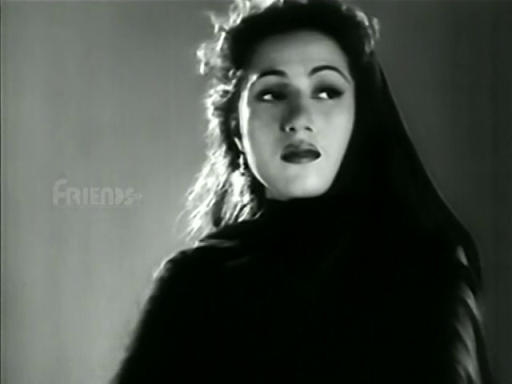
So here we are. The post I began with was Ek Saal (1957), which starred Ashok Kumar and Madhubala. The post I published last week was Mahal (1949), also starring Ashok Kumar and Madhubala. Loop closed.

Continue reading

Mahal (1949)

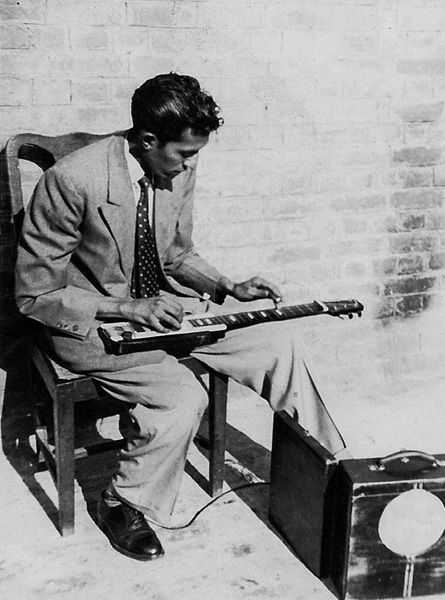
Since my last post was about my uncle, the guitarist David Vernon Kumar, it seemed appropriate to devote this post to one of the films for which he played. Mahal, made when my uncle was about 20 years old, featured the hauntingly melodious Aayega aanewaala, the song that shot Lata Mangeshkar into the limelight – also a song, which, if you listen carefully, has some beautiful guitar notes. Played by my Vernie tau.

Continue reading

Introducing ‘Kumar Sahib’

After having waxed so long and eloquent about my parents, my sister, my cousin, and a couple of other relatives (not to mention servants!) in the context of our love for cinema – it’s time to focus on the one link my family does have to cinema. The one person from our family who made it to the Hindi cinema industry in Bombay, back in the golden years.

David Vernon Liddle, who called himself David Vernon Kumar. People in the industry used to call him ‘Kumar Sahib’, and he was my father’s elder brother.

Continue reading

My Family and Other Film Fanatics

…with due apologies to Gerald Durrell.

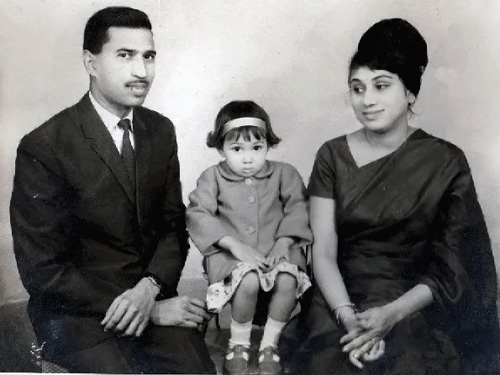
Since my review of Aan consisted to a large extent of my family’s almost constant commentary on the film, I figured it was time to introduce you to them – and show you what we’re all about, especially when it comes to watching, appreciating, and mangling cinema.

This is an early shot of the Liddles:

Continue reading

Aan (1953)

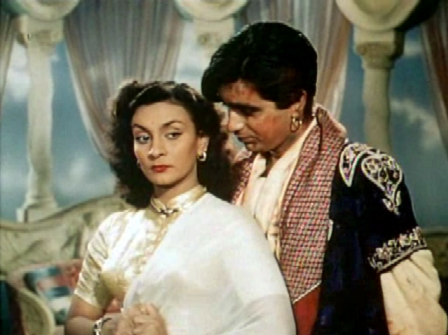
I’ve seen this film – a ‘raja-rani’ film, like Rustom-e-Hind – several times, but the most memorable viewing of it was at my parents’ home a couple of years ago.

Continue reading

Rustom-e-Hind (1965)

Mumtaz, as I mentioned in my last post, was one of the best things that happened to Mere Sanam. She may not have had much screen time in the film, but she certainly left her mark – more than she’d been doing in the B-grade films she’d mostly appeared in till then.
Rustom-e-Hind, made in the same year as Mere Sanam, is an example of that type of film. It’s basically a Dara Singh showcase – so there’s lots of showing off of wrestling – but Mumtaz gets to smile prettily and flutter her eyelashes, if nothing else.

Continue reading

Mere Sanam (1965)

Nasir Hussain may have made his Tumsa Nahin Dekha story into four separate – and equally successful – films, but did that induce others to be original? On the contrary. Narinder Bedi, at least, probably seemed to think that what worked for Nasir Hussain might well work for him. Therefore, Mere Sanam, which has a storyline similar in many ways to Tumsa Nahin Dekha. (Both films also have fantastic music by OP Nayyar, by the way).

Continue reading

Tumsa Nahin Dekha (1957)

If Rajkumar is the trademark ‘Shammi Kapoor at his peak’ film, then Tumsa Nahin Dekha is an equally – if not more – important film, because this is the one that made Shammi Kapoor into the icon he was by the mid-60s. Till Nasir Hussain got Shammi Kapoor to shave off his moustache and act as the devil-may-care hero of this film, Shammi was (as my father puts it), “Just another actor with a thin moustache and the usual roles. Nothing exceptional.” Tumsa Nahin Dekha gave him the opportunity to transform from the half-hearted, unexceptional sort-of-hero into a Shammi Kapoor who became almost an institution in himself.

Continue reading