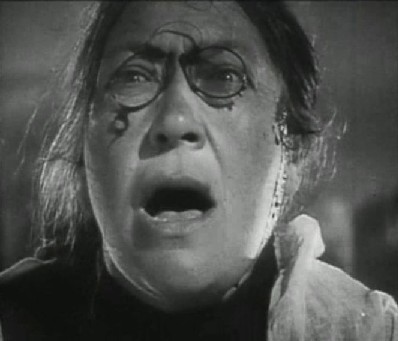
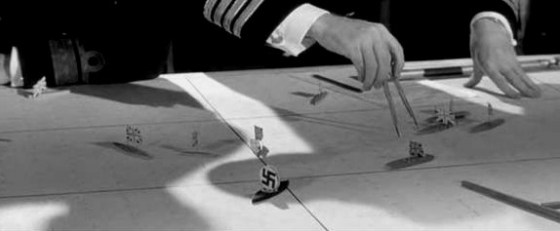
Years ago, when I was a child, Bronenosets Potyomkin (The Battleship Potemkin) was shown on television. I must have been about 10, perhaps 11—but no more than that. Five minutes into the film and I got bored of the grainy, jerky picture (this was an unrestored version) and the lack of dialogue. A silent film? And that too about a mutiny? Um, no.
For some 25 odd years, that remained my only memory of Bronenosets Potyomkin, even long after I’d discovered that it’s regarded as a sort of cult classic.
An omission, I realised, that needed correction. It was time to dust off Sergei Eisenstein’s magnum opus and see what it was really about.
Category Archives: Uncategorized
The Householder (1963)
Okay, one last post for Shashi Fest.
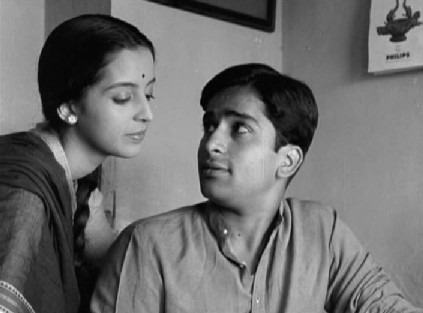
There’s something a little strange about seeing a film you’ve heard so much about. An English film, but with a primarily Bollywood star cast? With a story line that wavers between the usual hiccups of a middle class urban couple, doing the painful transition from carefree single existences to married life—and an American, floundering about as he tries to reach for a higher spirituality? Part Indian, part foreign outlook? And all of it with its roots in the Manusmriti, which says that of the four states of man, that of the grihastha (the householder) is the most important…?
Ladri di Biciclette (1948)
The first time I heard about this film, it was in connection with the Hindi film Do Bigha Zameen (1953), the story of a poor family that tries desperately to cling on to the one thing that stands between it and utter destitution—a tiny plot of land. I’d heard that Do Bigha Zameen was based on Vittorio De Sica’s Ladri di Biciclette (The Bicycle Thieves).
Having finally seen this, I have to admit I find little similarity between the two films. True, as in Do Bigha Zameen, here too only one thing can save the family from starvation: in this case, a bicycle. And here too, it’s the father and his young son who set out together in a desperate attempt to save themselves. Other than that, the tone, the story and the general mood of the two films is very different. And much as I admire Bimal Roy, I have to admit: De Sica wins. Ladri di Biciclette is much more powerful and haunting than the relatively melodramatic Do Bigha Zameen.
Shichi-nin No Samurai (1954)
I first heard about this film when I was a child—The Magnificent Seven was being shown on TV, and one of my parents said it was based on Seven Samurai. End of story, for then.
I’ve grown up since. I’ve heard about the brilliance of Akira Kurosawa. And I’ve recently read that Shichi-nin No Samurai (Seven Samurai) was supposedly the first film ever to use the concept of a group of unconnected people being brought together for a common cause. It therefore seemed high time to finally see the film for myself.
Having just finished watching it, I’m still stunned. This is a mind-blowing film, colossal and profound, gut-wrenching and brooding and action-packed and funny and romantic and… Well, simply unforgettable.
Les Vacances de Monsieur Hulot (1953)
Beth, commenting upon Arsenic and Old Lace, said she didn’t like films that she labelled `wackadoodle’ (what a delightfully apt word: each syllable says it all!): all that frantic running around and the ceaseless activity was just too exhausting for the viewer.
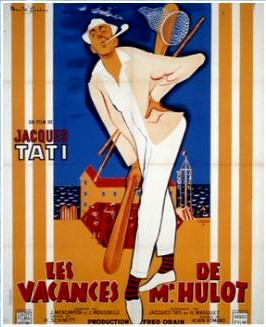
This review, therefore, even though I saw the film before Beth posted that comment, is dedicated to Beth. Because Les Vacances de Monsieur Hulot (Mr Hulot’s Holiday) is a film sure to appeal to anyone who likes their humour less fast-paced.

Goopy Gyne Bagha Byne (1968)
There are some films that offer deep, mind-searing insights into human life. There are some that allow one to escape for a couple of hours into a world of make believe where good and beautiful people always win and the bad always come to a sorry end.
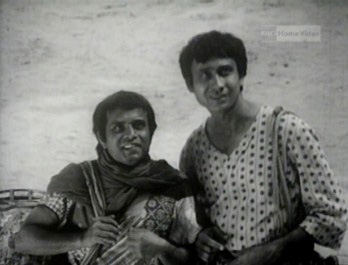
And there are films like this one, which I seriously think should be prescribed as an anti-depressant. Goopy Gyne Bagha Byne (The Adventures of Goopy Gyne and Bagha Byne) isn’t among Satyajit Ray’s most profound works—it’s not in the same league, perhaps, as the Apur trilogy or Nayak. It is, however, one of the most charming films ever made in India, and a sure cure for the blues. I adore this film. Every delightful little bit of it.

Bienvenido, Mister Marshall! (1953)
A while back, a discussion on one of my posts meandered its way into films that weren’t English or Hindi—basically, films I don’t generally watch, mainly because they’re difficult to get hold of. One of my readers, Bawa, mentioned Spanish cinema of the 50’s and 60’s, even taking the trouble of listing some of the classics. And as if that wasn’t generous enough, she went to the extent of searching high and low in Bilbao to find some of these films, with English subtitles, for me. She eventually found one, Beinvenido, Mister Marshall! (Welcome, Mister Marshall!) and gifted it to me while on a trip to India. I was, obviously, very grateful.
Having watched the film—an unforgettably heart-warming and funny take on rural Spain in the mid 20th century—I’m feeling even more blessed that I have readers such as this. Thank you, Bawa.
Sink the Bismarck! (1960)
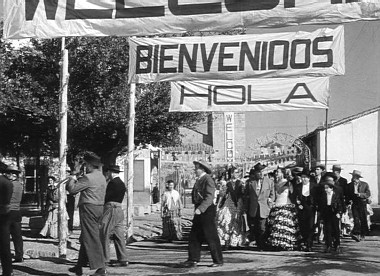
When I was about 13, an older cousin taught me how to play Battleships. For someone whose favourite genre of film was war, this was a high point in one’s existence. I spent the next few years teaching the game to anybody I could collar (usually my sister) and delighting in doing exciting things like guessing where my opponent’s submarines, battleships, cruisers, destroyers and aircraft carriers were positioned, then firing salvo after judicious salvo and rejoicing when I’d sunk ‘em all.
I don’t play Battleships any more, but I was reminded of the game when I saw this excellent World War II film, based on the real-life story of the famous German battleship, the Bismarck.

The Sundowners (1960)
If you have a quick look through the rest of my posts, you’ll notice I have a particular style when I review a film. I typically begin with an introduction—what made this film special for me, why I wanted to see it, and so on—and then I go on to a brief synopsis of the plot. Not a blow-by-blow account, and not giving away the climax, but enough to present a broad enough picture of what the story’s all about.
Not so with The Sundowners.
Dial M for Murder (1954)
Yes, I know. Another Alfred Hitchcock. But I really can’t help it: this man directed some of the most gripping suspense films ever, and he deserves more than just a passing mention in any site dedicated to the films. So here goes: a great film starring the lovely Grace Kelly, and with some brilliant twists and turns in the plot.