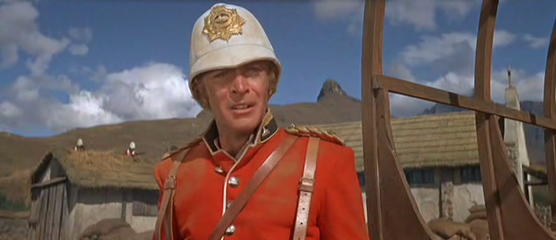
La Grande Guerra (1959)

My original plan had been to watch and review Neecha Nagar, and follow it up by watching and reviewing Kurosawa’s Donzoko (also based on The Lower Depths). By the time I’d read Gorky’s play and seen Neecha Nagar, that plan had changed a bit—because I was feeling sorely in need of a funny film.
La Grande Guerra was what I chose, because it had come highly recommended by friends whose judgment I trust.

Continue reading

Charulata (1964)

… and some random comparisons with Sahib Bibi aur Ghulam.

This Satyajit Ray film had been lying in my to-watch pile for a long time. Then, I learnt a few days back that the Indian government had finally decided to award a Dadasaheb Phalke to Soumitra Chatterjee for his contribution to Indian cinema. Better late than never, I guess (even though a number of people have said that it’s too late). The announcement, however, did give me a solid reason to watch Charulata (aka The Lonely Wife). And I ended up wanting to hit myself for not having seen this masterpiece earlier.

Continue reading

A Tale of Two Cities (1958)

Happy birthday, Mr Dickens!

Yes, Charles Dickens was born exactly 200 years ago today – on February 7, 1812, in Portsea. In his lifetime, he wrote a number of short stories and non-fictional works, besides about a dozen major novels. He was recognised as one of Britain’s greatest writers within his lifetime – and cinema took to his stories like a duck to water. Have a look at his filmography, and you’ll see what I mean. Dozens of adaptations, feature films, short films and TV series, have been made of Dickens’s work.

So, as a tribute to Charles Dickens, here’s one of them: a story of love and hate set against the backdrop of the French Revolution. A Tale of Two Cities.


Continue reading

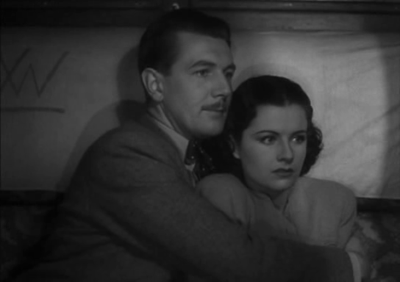
The Lady Vanishes (1938)

It’s been a long time since I reviewed a film by one of my favourite directors, so I decided this one merited a rewatch. Like The 39 Steps and Young and Innocent, The Lady Vanishes is one of Alfred Hitchcock’s early British suspense films. I saw it first when I was about 12 years old; but in the years since, I’ve never forgotten the story – I still remember almost every twist and turn of this film. And I still think that it’s one of the best train journey films ever made.


Continue reading

Don Camillo (1952)

I am not a party animal. I do not drink. I have two left feet. Loud music makes my head throb. I find it difficult to keep awake after 11 PM. So when friends ask, “What’re you doing on New Year’s Eve?” I say, “Watching a movie at home.”
And what better way to say goodbye to a bad year with a film that you hope will be a sign of things to come? A movie that embodies all the joy you want for the dawning year?

Don Camillo (Le Petit Monde du Don Camillo in French – it was a Franco-Italian production) is the story of a little town in the Po Valley in Italy. Even though it is named for its lead character, the Catholic priest of the town, the film is not just about the hot-headed Don Camillo and his arch-enemy, the communist Mayor Peppone, but about the little town itself.


Continue reading

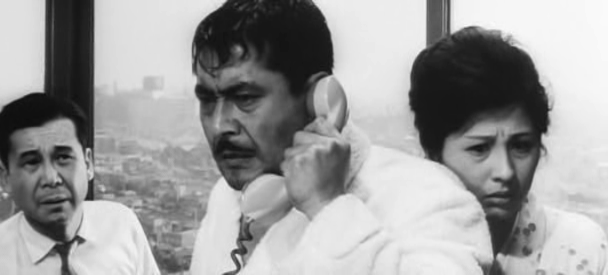
Tengoku to Jigoku (1963)

This blog’s been focussing on Hindi cinema for a while now, so I decided it was time to get back to being a bit more diverse. And this time with a film from one director whose work I admire a lot: Akira Kurosawa. If all you’ve seen of Kurosawa are his samurai films, I’d recommend Tengoku to Jigoku (High and Low) as a good way of getting introduced to the films he made in other genres. If you’ve never watched a Kurosawa, this is still one of his best films – and one of the best classic crime films I’ve seen.

Loosely based on King’s Ransom, a novel by American crime writer Ed McBain, Tengoku to Jigoku is about a kidnapping and its repercussions. The result is an unforgettable film that brilliantly combines the personal, the social, the psychological, the dramatic and the mundane, with the sheer sweat-and-drudgery of the police procedural.

Continue reading

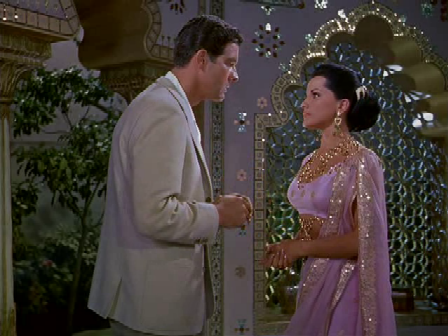
Der Tiger von Eschnapur (1959)

… and its sequel, Das Indische Grabmal, also 1959.

Fritz Lang made the visually stunning Metropolis in 1927. Over thirty years later, freed from the constraints of black and white and silence, he made two films, which are together known as ‘Fritz Lang’s Indian epic’. The second film was Das Indische Grabmal (‘The Indian Tomb’); the first was this one, Der Tiger von Eschnapur, or ‘The Tiger of Eschnapur’.

The story is basically the same as that of a film Lang had made even further back than Metropolis; in 1921, he had made Das Indische Grabmal, based on a book by his wife Thea von Harbou (who, as you’d recall, also wrote Metropolis). In the 1950s, Lang remade Das Indische Grabmal, this time cutting it into two parts. Both Der Tiger von Eschnapur and Das Indische Grabmal were released in 1959, and have been much acclaimed ever since.

Continue reading

Metropolis (1927)

As Samir pointed out in a comment on my last post, Pyaasa was one of the films (in fact, the only Hindi film) to find a place on Time Magazine’s all-time 100 best films list. That’s something Pyaasa shares in common with this film. Metropolis, a silent film made in Germany thirty years before Pyaasa, is also on the list. It was directed by Fritz Lang, who co-wrote the screenplay along with his wife Thea von Harbou. The result is a film like none other.

Continue reading

North-West Frontier (1959)

While I was writing the review of Ek Saal last week, I was reminded of this film. And that for what might seem an obscure reason to some: I S Johar was the man who suggested the story idea for Ek Saal, and he – now as actor, not writer – plays one of the important characters in this superb adventure film.

Continue reading

Triple Cross (1966)

Despite everything more fashionable cinema viewers may say, I love The Sound of Music. I love the songs, I love the mushy romance, I love the children. I love Julie Andrews. I love Christopher Plummer.
Which is why it’s always bothered me that Christopher Plummer used to refer to the film as The Sound of Mucus. Why, I wondered.

Well, this might just furnish some sort of answer to that question. Plummer stars in Triple Cross as a war-era safe breaker who offers his services to the Nazis as a spy in Britain. It’s not a frightfully demanding role, but it offers a glimpse of what Plummer was capable of. And I can understand why he might have thought of his role as Georg von Trapp as a little too much of a cakewalk.

Continue reading