“Let’s Celebrate!”: Ten festival songs

Every year, come October, a relative of ours says, “The festival season has begun.” She goes on to list every single celebration coming up over the next several months. Dussehra/Durga Puja, Govardhan Puja, Karva Chauth, Diwali, Bhai Dooj, and a gazillion smaller festivities, some which I didn’t even know about a few years ago. All the way up to Holi. “And then there’ll be a lull all through the summer and the monsoon,” we’re told, every year.

I don’t know if there’s a definitive answer for the question “Which country has the most festivals in the world?” but I could lay a safe bet that India would be pretty much among the top of the pack. Part of the reason probably is our immense diversity: we have people from widely differing regional cultures here, and following different faiths. As a result, there’s a merry mix of religious festivals, seasonal festivals related to harvest/sowing/etc, as well as secular festivals and celebrations. Some are celebrated pretty much across the country; some are so confined to a particular region that they’re rarely even known of outside that locale.

And these festivals, naturally, show up in Hindi cinema. With, almost invariably, a bonus: a song attached to the festival. After all, a festival is cause for celebration, and what better way to celebrate than with a song?

Continue reading

Miss India (1957)

Before I watched this film, the only other Nargis-Pradeep Kumar films I’d seen were Adalat and Raat aur Din. Both had them playing a married couple, both films had superb music. But they couldn’t have been more unlike each other. Adalat was tiresome, regressive, and depressing; Raat aur Din was intriguing and fast-paced, and overall a good mystery.

One good film, one a dud. Dared I hope that Miss India might be better than Adalat? This was a film I really knew nothing of, except that its music was by SD Burman.

There was only one way to find out: by watching it.

Miss India begins at a graduation ceremony in a Delhi college where the chief guest praises the ‘Miss Indias’, as he dubs them: the educated, self-reliant young women of India, the women who will make good wives for their husbands and good homes for their families. [I roll my eyes and mentally start pushing this into the Adalat slot. Same vibes]. Among the women graduating is the highly accomplished Rama (Nargis), who has graduated in law. [Ah. There has to be a reason for this. There is hope yet].

Continue reading

Black Narcissus (1947)

Today is the birth centenary of one of my favourite actresses, the superb Deborah Kerr. Born on September 30, 1921, Deborah Jane Trimmer got a break in the world of show business thanks to an aunt who was a radio star: Deborah began training in ballet at her aunt’s ballet school, and then went on to win a scholarship to Sadler’s Wells ballet school, which led to her appearing onstage as a dancer. Deborah soon came to the attention of the film producer Gabriel Pascal, who gave Deborah her first role in cinema, in Major Barbara (1941).  

Till 1947, Deborah worked in Britain; it was her role as Sister Clodagh in Black Narcissus that got her noticed across the pond and brought with it a contract with MGM. Over the decades that followed, Deborah Kerr became a name to be reckoned with in Hollywood as well: a major actress who went on to play very varied roles in very diverse films. From roles in classic adventure films (The Prisoner of Zenda, King Solomon’s Mines) to horror (The Innocents), from wartime romance-drama (From Here to Eternity, Heaven Knows Mr Allison, Vacation from Marriage – the last-named, in fact, was the basis of the very first review I ever posted on this blog) to musicals (The King and I) to period drama (Quo Vadis, Ivanhoe, Julius Caesar) to classic romance (An Affair to Remember) and many more… Deborah Kerr was always memorable, always likeable.

Which film should I watch to commemorate Deborah Kerr’s centenary? I have watched a good deal of her filmography (some more beyond the films I’ve already listed in the previous paragraph), so I decided I’d finally watch a film I’ve long been hearing praises of. Black Narcissus, which provided a big boost to Deborah Kerr’s career.

Continue reading

Adhey Kangal (1967)

Which means ‘The Same Eyes’.

The first Tamil film I ever reviewed on this blog was a suspense thriller, the excellent songless film Andha Naal. Since then, I’ve come across recommendations for other Tamil suspense films, and when I found a subtitled copy of this one—a major hit of its time—I was eager to watch. ‘Taut’ and ‘tense’ was how I’d seen it described by reviewers, and it sounded right up my street.

Adhey Kangal begins in a tense, suspenseful manner. A man is murdered—someone hangs him in his room—and the man’s wife (G Sakunthala) discovers her husband’s dead body. She has just about started screaming when the murderer (whom we do not see, except as two disjointed hands reaching for her) tries to strangle her.

It’s an aborted attempt: the murderer flees, and his would-be victim, shaken and traumatized, but not dead, is discovered by her family.

Continue reading

Wahan ke Log (1967)

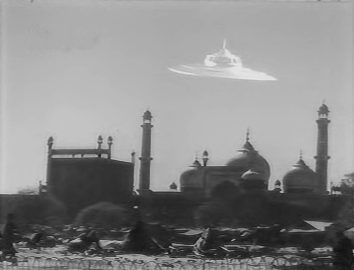
This is a film I’ve known about for many years now: I first heard about it on Greta’s blog, and have since been in two minds about whether to watch it or not. It sounded too nutty to miss (aliens toting laser rays and stealing diamonds? NA Ansari in a double role and Nilofer in a bad wig? Tanuja as ghost-who-sings?), but from my previous experiences of films directed by NA Ansari, I’ve realized that after a while, the madness of the script, the plethora of plot holes and the sheer pointlessness of much of what’s happening, can become very tedious.

But this is considered somewhat of a cult film, and one of the very few early Hindi films that had an element of sci-fi in it. So, if just for that (I like sci fi as a genre), I decided to watch Wahan ke Log.

Continue reading

Ten of my favourite male duets

Several years back, to mark International Women’s Day, I’d compiled a list of ten female duets: songs celebrating the friendship between women, women teasing friends, women performers dancing and singing together, women singing a devotional song together… a range of emotions and situations, but all featuring two women singing one song.

Sometime back, blog reader Naghma happened to come upon that post, and suggested I do a list of male duets. A great idea (and one I wondered why I hadn’t thought of). After all, there are plenty of instances of two men singing together: sometimes as friends, more often, it seems, in a competition of sorts. And more. Here, therefore, are ten songs I really like, all from pre-1970s Hindi films that I’ve seen, which feature two men singing: two actors (at least) onscreen, two playback singers contributing their voices to the song. An important caveat: these songs do not include trios, quartets or more singers; they’re only all duets.

Continue reading

Kannur Deluxe (1969)

I finally managed to get hold of a subtitled version of an old Malayalam film!

I should explain the reason for that exultation: one of the most frustrating aspects of my film-watching, film-reviewing career (or whatever) is that I find it so difficult to find subtitled versions of old Indian regional films. Every time a blog reader recommends a regional language film, I rush off searching the net for subtitled versions, but I usually end up disappointed. Unless the film happens to be a Bengali one (where chances of a subbed version are usually higher), I can pretty much expect a 0% chance of success.

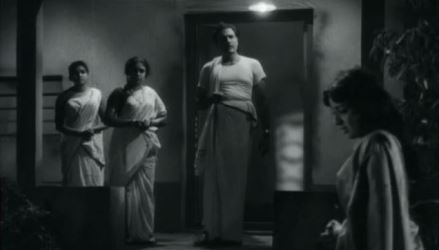
No-one recommended Kannur Deluxe to me, but when I stumbled across it on Disney Hotstar, I looked up reviews and found it was a thriller, and possibly the first Malayalam road film. That was enough to make me want to watch it.

The film begins at night. Jayasree (Sheela), being chased by a couple of policemen, takes shelter in the garden of a Mr KB Pillai (GK Pillai). The Pillais, husband, wife, son Venu (KP Ummer) and their maid emerge, but since they’ve not seen any woman running by, the cops go their way. The Pillais are about to return to their beds when Jayasree emerges, weeping and nervous. She says she isn’t a thief, and on being encouraged, tells a tragic tale of her woes.

Continue reading

Julie (1956)

Most of the Hollywood films I’ve watched over the past few years have been suspense films. And, oddly enough, a disproportionate number of those have ended up following a similar pattern. A wealthy woman falls head over heels in love with a very attractive man and marries him. They’re blissfully happy—and then, the shattering truth emerges: he wants to kill her. In several of these films (Midnight Lace, Sudden Fear, Love From a Stranger), the man’s motive for wanting to kill his wife (and to marry her, in the first place) is to get at her money.

Not so in Julie, where Louis Jourdan’s character, playing the evil husband, is out to kill his wife for a very different reason.

Continue reading

Sunghursh (1968)

This was the first film I watched after Dilip Kumar passed away on July 7 this year. The tributes and reminiscences were still in full flow two days later, on July 9, which marked what would have been the 83rd birthday of Sanjeev Kumar. On a Sanjeev Kumar tribute post on Facebook, I read a comment in which someone recalled Dilip Kumar’s remark about Sanjeev Kumar, who was his co-star in Sunghursh: “Is Gujarati ladke ne toh paseena nikaal diya!” (“This Gujarati boy made me sweat!”)

This, I thought, might be an interesting film to review by way of tribute to both Dilip Kumar as well as Sanjeev Kumar. But I had other Dilip Kumar films to also watch: Musafir and Sagina Mahato for the first time, Ram aur Shyam for a long-overdue rewatch. So, while I watched this and wrote the review, I decided the publishing of the review could wait for now.

Because today, August 21, 2021, marks the birth centenary of Harnam Singh Rawail, the director of Sunghursh.  HS Rawail, as he was usually billed, debuted in 1940 with the film Dorangia Daaku, but it wasn’t until 1949, with Patanga (of Mere piya gaye Rangoon fame) that he became famous. Rawail was to make several well-known films through the following decades, but his two best-known works are probably Mere Mehboob (1963) and Sunghursh.

The story, based on Mahashweta Devi’s Laayli Aashmaaner Aaina, begins in Banaras of the 19th century (the riverfront, sadly, looks very mid-20th century). Bhawani Prasad (Jayant), bearded and seemingly benevolent, walks back from the temple after pooja. At his heels follows his grandson Kundan (?). Bhawani Prasad is much venerated, and the way he hands out alms to the poor and blesses those bowing before him, one might be forgiven for thinking him a good man.

Continue reading

La Grande Vadrouille (1966)

Which literally translates as ‘The Great Ramble’, but the English title of this hilarious French film is Don’t Look Now—We’re Being Shot At.

And, that English title is explained within the first couple of minutes of the film itself. This is in the middle of World War II, somewhere over Germany.  An RAF plane, part of an operation to bomb this area, is flying along, commanded by Sir Reginald (Terry-Thomas), along with his co-pilots Pete Cunningham (Claudio Brook) and Alan MacIntosh (Mike Marshall). The operation is code-named Tea for Two, after the Irving Caesar/Vincent Youmans song.

The plane encounters some heavy anti-aircraft fire and sustains some damages. The worst damage of all seems to be to their map, which has a great big hole burnt through the middle of it, as a result of which Sir Reginald & Co. lose their way…

Continue reading