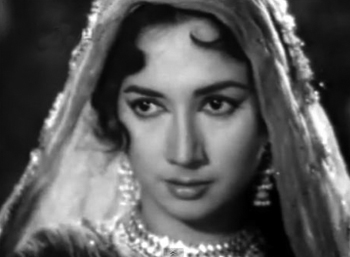
The other day, listening to old Hindi film songs while I went about my housework, I realised something: a lot of my favourite songs are songs the character onscreen sings to himself/herself. Not quietly hummed to oneself, not songs merely sung when no-one else is around: but songs whose lyrics are specifically addressed to the self.
To an aching heart, for instance, either offering it comfort or encouragement—or telling it to resign itself to the sorrow that looms. Or (and these are fewer), songs of joy, doubling one’s own happiness by exulting over it in the company of oneself.
A ‘very short novel’
I’ve written long fiction. I’ve written short fiction. I’ve even written some flash fiction. So, when I got a mail from Peter Griffin at Forbes India, asking if I’d like to contribute microfiction for a post on the Forbes India blog, I jumped at the idea.
The Flight of the Phoenix (1965)
While I was watching this film, I was reminded constantly of something Kurt Vonnegut had written when talking of the basics of creative writing. Basic rule #2 was: Give the reader at least one character he or she can root for. The next rule was: Every character should want something, even if it is only a glass of water.
In a very literal way, almost every scene of The Flight of the Phoenix resonates with that need for a glass of water. Chapped lips, cracked skin, a desperation for water—and the need to accomplish a task that certainly means the difference between life and death.
Chic Chocolate: the Mussoorie Connection?
Where I go, cinema seems to follow.
Well, not unusual, in this day and age, especially not in a country where cinema is so well-loved. But on a recent weekend trip to Mussoorie, I made a discovery that excited me so much, I had to share it.
Mussoorie, as some of you may know, has several filmi connections: actors Tom Alter and Victor Bannerjee are residents, as is the much-loved Ruskin Bond, author of A Flight of Pigeons (on which the 1979 film Junoon was based), as well as of the stories on which The Blue Umbrella and Saat Khoon Maaf were based.
On our last evening in Mussoorie, walking along the Mall, we found the road choked by a crowd. There were cameras, bright lights—and Neil Nitin Mukesh in a striped T-shirt, busy shooting.
Then I discovered, on a visit to Sisters Bazaar in Landour (and having referred to one of Ruskin Bond’s books on Mussoorie and Landour) that the long, low building that once housed the nuns, was later owned by Dev Anand.
Singapore (1960)
I’ve been exceptionally busy over the past few weeks, and even had to give up the idea of publishing a post last week—simply because I didn’t have the time. But today is the birthday of my favourite Hindi film star, Shammi Kapoor—how could I not post a tribute?
So, even though it’s meant doing some crazy juggling of schedules, here we go. A Shammi Kapoor film that, while it’s not classic Shammi, is at least fairly entertaining. And has the distinction of being the earliest Hindi film I’ve seen which was actually filmed abroad, not just set abroad.
In Tribute: ‘Verni’
Those of you who’ve been frequenting this blog for a year or more probably came across this earlier post, on my uncle David Vernon Liddle. Vernie Tau (tau is the Hindi word for a father’s older brother) was my father’s elder brother. He was born on October 12, 1929, and passed away when I was barely 9 years old. I do not remember much of Vernie Tau except for the fact that he was a witty, fun-loving man with (as a cousin of mine puts it) “a terrific sense of humour”. And he was a guitarist who played in some of Hindi cinema’s greatest hits from the early 50s.
Dr No (1962)
Over the years I’ve been writing this blog, I’ve posted tributes to dozens of personalities: directors, actors and actresses, singers, music directors, lyricists, even a writer. This time, therefore, I’m being a little different: I’m posting a tribute to a fictitious character. Ian Fleming’s suave spy, James Bond. Because today is Global James Bond Day, in celebration of fifty years of James Bond, onscreen—because Mr Bond first appeared in Dr No, released in 1962.
Twenty-four Bond films have been made. Bond has been portrayed by seven actors. But this one, starring Sean Connery as the first 007, seemed the appropriate Bond film to watch and review for this occasion.
Ten old Hindi films I’d recommend
This post came about because of my recent review of Rangeen Raatein. Another film-lover, an American, noticed that post and said that she thought it was time she began branching out into watching Hindi cinema too (she’d already seen a good bit of Satyajit Ray’s work). She thought she’d begin with Rangeen Raatein. I was quick to dissuade her, of course—even I, die-hard Shammi Kapoor fan that I am, probably couldn’t stomach a rewatch of that film.
But it made me think: if I had to introduce a newcomer to Hindi cinema (or, more specifically, pre-70s Hindi cinema, since that’s what I love most), which films would I recommend? They would have to be films that are available with English subtitles, of course.
So here it is: my list. I do not claim that these are the best Hindi films of that era; by no means. They just happen to be ten of my favourites. These are in no particular order.
Sharaabi (1964)
Today, September 26, 2012, would have been Dev Anand’s 89th birthday. To commemorate that occasion, I decided it was time to watch a film that had been sitting in my to-watch pile for nearly a year. Just looking at the cast and crew—Dev Anand, Madhubala, Lalita Pawar, Madan Mohan, Rajinder Krishan—and listening to some of the songs from the film made my mouth water.
Stalag 17 (1953)
This post came about as a result of a chance conversation with a friend who admitted that he often confused William Holden with Joseph Cotten. That reminded me, of course, of Holden (who happens to be among my favourite actors), and then of the shameful fact that I have never, not in the nearly-four years that this blog’s been in existence, reviewed a Holden film. [Though he is, even though you can’t see his face, part of the current blog header].